
Food & Beverage Instrumentation Fittings, Valves & Tubing
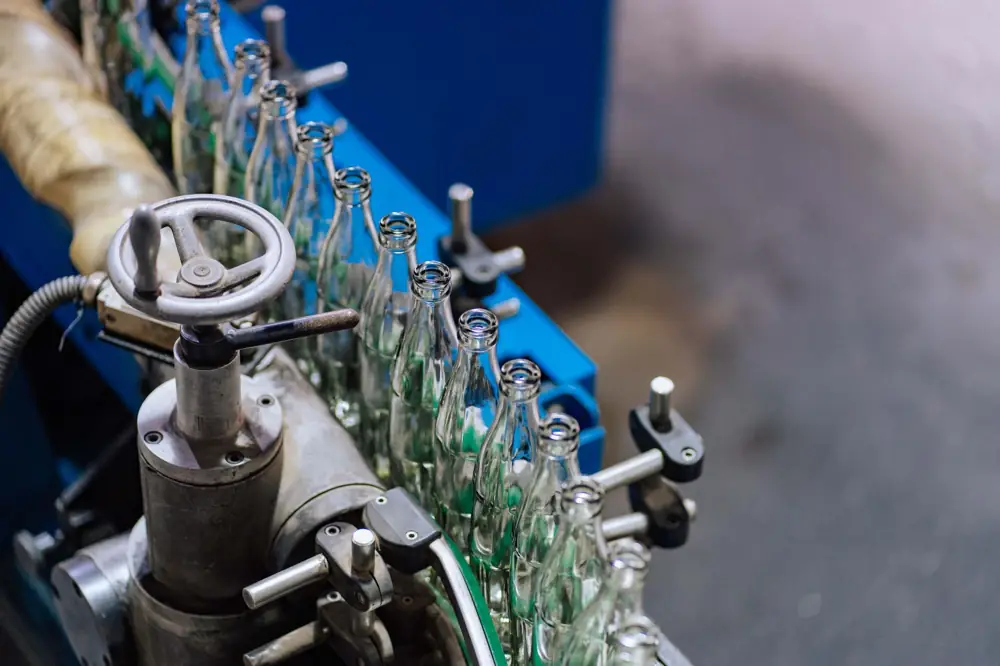
Food and beverage instrumentation is the family of stainless and corrosion-resistant-alloy fittings, valves, tubing, regulators, and sampling hardware that serves the measurement, control, clean-utility, and sampling circuits in food, beverage, dairy, brewing, distilling, winery, and ingredient plants. It's the instrument side of the plant, not the tri-clamp process piping that carries the product. Crestflo supplies this scope in 316/316L and higher corrosion-resistant alloys: compression tube fittings, packless clean-duty valves, electropolished instrument tubing, transmitter manifolds, and grab-sampling systems. Each is engineered for drop-in replacement, fully traceable, and built to serve customers across the US.
Every part is built to the applicable standard and can be customized to whatever the job requires. Each one is marked with its heat number, and delivery holds to the promise buyers actually want to hear: ready stock for standard items · made-to-order for specials · 6–8 week delivery. Scope note: on this page, "ball valve," "needle valve," "manifold" and "compression fitting" mean instrumentation components: measurement, isolation, sampling and utility service in stainless or CRA alloy. They aren't plumbing, carburetor or exhaust parts, and they aren't tri-clamp sanitary process piping either.
Also Known As: Sanitary, Hygienic & Food-Grade Instrumentation Fittings
Buyers and specifiers call this scope by more names than you'd expect. Same hardware, whatever label a plant's engineering standard happens to use. You'll see it specified as food and beverage instrumentation fittings, sanitary instrument fittings, hygienic instrumentation, food-grade stainless fittings, food-processing and beverage-processing instrumentation, dairy instrumentation, brewery and distillery instrumentation, CIP/SIP instrument valves, 316L sanitary tubing, and electropolished (EP) instrument tubing. The alloys carry standard UNS designations: 316/316L (S31600/S31603), 304/304L (S30400/S30403), 904L (N08904), AL-6XN (N08367), 254 SMO (S31254), and Duplex 2205 (S32205/S31803). Reference standards worth knowing include ASTM A269/A270/A213 for tubing, the 3-A Sanitary Standards, ASME BPE, ASTM A967 for passivation, ASTM G93 for cleaning, and EN 10204 3.1/3.2 for material test certification.
Where Crestflo Fits in a Food & Beverage Plant
Every food and beverage plant really runs on two separate hardware worlds. There's the product-contact process line: tri-clamp tube, gaskets, hygienic process valves. Then there's the instrument and clean-utility circuits that measure, isolate, sample and regulate around that line. Crestflo works in the second world. Walk into a dairy, a brewery, a distillery, a winery, a beverage or bottling plant, or an ingredient and flavor facility, and you'll find the same instrument scope showing up again and again: pressure and temperature hook-ups on tanks and lines, isolation and root valves ahead of transmitters and gauges, transmitter manifolds, clean isolation near CIP and SIP, utility gas and steam circuits, and representative sampling. These are the points where corrosion resistance, cleanability and full traceability determine whether the system holds up, and where the alloy and product family need to match both the media and the wash chemistry.
Recommended Alloys by Food & Beverage Service Condition
316/316L serves as the default stainless choice for food and beverage instrument service, thanks to its corrosion resistance and ease of cleaning. Where chloride load climbs, though, a corrosion-resistant alloy becomes the better choice. Brine, pickling, high-salt environments and seawater-cooled duty all push chloride pitting and stress-corrosion cracking to levels 316L can't always withstand. The table below maps each service circuit to its alloy, product family and reference standard. Values follow the applicable standard, and they can be adjusted to fit specific requirements.
| Food & beverage service / circuit | Corrosion or duty driver | Recommended alloy | Crestflo product family | Reference standard |
|---|---|---|---|---|
| General product & utility instrument hook-ups | Cleanability, mild corrosivity | 316/316L | Tube fittings, EP tubing, gauge root valve | ASTM A269, 3-A reference |
| CIP/SIP caustic + acid wash cycles | Thermal cycling + wash chemistry | 316/316L; packless valves | Diaphragm valve, bellows valve | Thermal-cycle tested; ASME B16.34 |
| Brine, pickling, high-salt, seawater-cooled | Chloride pitting / SCC | 904L · AL-6XN · 254 SMO · Duplex 2205 | Fittings, tubing, valves in CRA | NACE MR0175 where applicable |
| CO₂ / N₂ / compressed-gas beverage utilities | Clean, dry gas; regulation | 316/316L | Regulators, needle / ball valves | Oxygen-clean option, ASTM G93 |
| Steam & hot-water utility instrument lines | Temperature, thermal fatigue | 316/316L | Tube fittings, thermowells, root valves | ASTM A213 |
| Pressure / temperature measurement | Isolation + calibration | 316/316L | 2/3/5-valve manifolds, gauge savers, gauge accessories, flushing rings | 100% seat & shell leak test |
| Quality / analytical sampling | Representative sample, containment | 316/316L / CRA | Sample cylinders, grab sampling systems, in-line & tee-type filters | Analytical sampling |
Alloy Selection Quick-Guide: 316L, 904L, AL-6XN, 254 SMO & Duplex 2205
Each alloy page carries its own composition and PREN values, so there's one place you can trust for that data. This guide covers the F&B selection logic instead. Note the alloy on your RFQ, and the engineering team will confirm form and finish.
| Alloy | UNS | When to choose in food & beverage |
|---|---|---|
| 316 / 316L | S31600 / S31603 | Default for product and utility instrument service; low-carbon 316L for welded assemblies |
| 304 / 304L | S30400 / S30403 | Dry, low-chloride utility and structural instrument service |
| 904L | N08904 | Higher chloride, brine and dilute-acid wash where 316L pits |
| AL-6XN | N08367 | Aggressive chloride / CIP chemistry and salt exposure |
| 254 SMO | S31254 | High-chloride, seawater-cooled and pickling circuits |
| Duplex 2205 | S32205 / S31803 | Chloride pitting resistance with higher strength |
Instrument Fittings & Tubing for Food & Beverage
Crestflo offers compression tube fittings in single- and double-ferrule designs, choosing hardened or non-hardened ferrules to the requirement, across imperial and metric sizes up to 2" (50 mm) OD. Performance qualification to ASTM F1387 backs the whole line. That standard is the interchange anchor, the one that lets buyers drop these fittings in as replacements for common instrument-fitting brands.
For welded hygienic assemblies, orbital-weld fittings connect automated-weld tubing runs. Single-ferrule fittings and spare ferrules round out the family. Tubing comes as seamless and welded instrumentation tubing in stainless and alloy, and there's an electropolished option for cleanable, low-Ra instrument circuits. Tube clamps hold the runs in place and route them.
| Fitting / tubing family | Size range | End & thread options | Interchange basis |
|---|---|---|---|
| Compression tube fittings | To 2" (50 mm) OD, imperial & metric | Single / double ferrule, NPT, tube, socket-weld, butt-weld | ASTM F1387 performance-qualified |
| Orbital-weld fittings | Per tube schedule | Automated orbital butt-weld | ASME BPE reference geometry |
| Instrument tubing | Standard OD/wall per ASTM A269/A213 | Seamless & welded, EP option | Values per applicable standard |
Clean-Duty Valves: Diaphragm, Bellows, Ball, Needle & Manifolds for CIP/SIP
Packless diaphragm and bellows valves cover clean and steam-in-place duty. They isolate the media without a stem-packing leak path, and each one is thermal-cycle tested for the caustic-then-acid CIP/SIP cycle. Confirm elastomer and seat selection against your wash chemistry on the RFQ. For isolation and metering, Crestflo supplies ball valves, needle valves and check valves / NRVs. Add gauge root valves and compact monoflange valves for space-saving instrument hook-ups, plus bleed, purge and relief valves for venting and utility protection. Transmitter 2/3/5-valve manifolds all get a 100% seat- and shell-leak test. Gauge savers and gauge accessories protect and round out the pressure-gauge hook-up. In-line and tee-type filters keep particulate off instrument and sample lines. Instrument valves come sized 1/16" to 1", with threaded or tube-fitting ends, and they qualify to the valve standards that apply to their type: ASME B16.34 and the relevant API test standards. That's not the compression-fitting standard.
| Valve type | Function | Clean-duty note | Size range | Link |
|---|---|---|---|---|
| Diaphragm valve | Packless clean isolation | Designed for CIP/SIP; thermal-cycle tested | 1/16"–1" | Diaphragm valve |
| Bellows valve | Packless zero-leak isolation | Suited to steam & clean duty | 1/16"–1" | Bellows valve |
| Ball valve | On/off isolation | Full-port, low dead-leg options | 1/16"–1" | Ball valve |
| Needle valve | Metering / root isolation | Non-rotating tip option | 1/16"–1" | Needle valve |
| Check valve / NRV | Backflow prevention | Utility and sample lines | 1/16"–1" | Check valve |
| Monoflange valve | Compact isolate-and-vent | Space-saving instrument hook-up | 1/16"–1" | Monoflange valve |
| Bleed / purge valve | Venting & line purge | Utility and sample lines | 1/16"–1" | Purge valve |
| 2/3/5-valve manifold | Transmitter isolation & calibration | 100% seat & shell leak tested | Per manifold | 3-valve manifold |
Utility Circuits: CO₂, N₂, Steam & Instrument Air
Beverage and food plants build gas and steam utilities around the core process. Crestflo pressure regulators, covering single- and dual-stage, back-pressure and high-purity types, work alongside needle and relief valves to handle CO₂, N₂ and compressed-gas beverage utilities. There's an oxygen-clean option available per ASTM G93 where required. Looking for a dedicated utility scope? The sibling hubs cover instrument air and steam tracing.
Surface Finish, Cleaning & Passivation
Instrument tubing and fittings come with a choice of material finish, electropolish and passivation (per ASTM A967), plus oxygen or degrease cleaning when the service calls for it. Surface-roughness targets can be specified too. Standard hygienic EP targets follow ASME BPE / 3-A intent, so put your required Ra target on the RFQ and the team will confirm the finish route. Cleaning and passivation details live on the cleaning & oxygen/UHP page.
Standards & Compliance for Food & Beverage Instrumentation
Crestflo builds each product to the standards that apply to it and says so plainly. It keeps its quality-system certifications separate from product certifications, which get confirmed against a specific order.
| Standard | Scope | Applies to | Crestflo status |
|---|---|---|---|
| 3-A Sanitary | Hygienic design intent | Fittings, valves | Built to design intent; symbol authorization confirmed on request |
| ASME BPE | Bioprocessing equipment geometry / finish | Tubing, fittings | Reference geometry; product certification confirmed on request |
| ASTM A269 / A213 | Seamless & welded tubing | Instrument tubing | Manufactured to standard |
| ASTM F1387 | Compression-fitting performance | Tube fittings | Performance-qualified (company) |
| ASME B16.34 / API | Valve pressure-temperature & test | Instrument valves | Qualified per valve type |
| EN 10204 MTC | Material traceability | All parts | 3.1 standard, 3.2 on request |
| NACE MR0175 | Sour-service materials | CRA where applicable | Conformance where specified |
Crestflo runs a quality system certified to ISO 9001 / 14001 / 45001 and PED, and copies of the certificates sit on the quality pages. Testing covers hydraulic proof, burst and impulse, pneumatic, thermal cycling and PMI. Every manifold gets 100% seat and shell leak testing. NDT happens in-house, while destructive testing goes out to labs accredited to ISO/IEC 17025. Third-party inspection can be arranged on request.
Instrument Products & How to Buy
Crestflo serves end users and MRO buyers, EPC contractors and panel fabricators, OEMs and distributors, and each one gets a clear next step with no dead ends. Ask for a quote on a specific line, request a sample to qualify the interchange, or set up a private-label or distributor program.
- Request a quote, end users, MRO, EPC and panel fabricators
- Request a sample, qualify fit and finish before you commit
- Private-label program, OEM volume and consistency
- Become a distributor, line card and availability
- Switching from another brand? Request your Swagelok® or Parker® cross-reference from our engineering team.
Customers can get datasheets and CAD models on request; they aren't posted for public download. To reach the US team, contact sales@crestflousa.com or call +1 346 594 9005 (Houston, TX).
Why Crestflo for Food & Beverage Instrumentation
Crestflo is the instrumentation arm of an export house that's four decades old, recognized by the Government of India, with a proven delivery record across the Middle East. Real capability, real heritage, channeled into a focused instrumentation brand. For food and beverage buyers, that translates into a 6-8 week lead time, against the 20+ weeks typical of the major suppliers. The fitting line offers ASTM F1387 drop-in interchange, and buyers can count on small MOQs plus private-label options. The quality system holds ISO 9001, 14001 and 45001 certification, along with PED compliance. Heat-number traceability comes standard, backed by EN 10204 3.1/3.2 material test certificates. NDT is handled in-house, supported by destructive testing under ISO/IEC 17025. The product itself is of Indian origin, with US or European melt available on request and full material traceability throughout. We Engineer Confidence.
Frequently Asked Questions
What fittings are used in food & beverage plants?
Food and beverage plants rely on stainless, usually 316 or 316L, along with corrosion-resistant-alloy instrument fittings, tubing, isolation and root valves, transmitter manifolds and sample systems across measurement, control and clean-utility circuits. Product-contact lines are different. They use tri-clamp sanitary connections, and that falls outside Crestflo's instrumentation scope.
What are the different types of instrument tube fittings?
Instrument tube fittings aren't limited to one style. Compression (single and double ferrule), orbital-weld, socket-weld, butt-weld, flare, and face-seal designs are all available. Sizes run imperial and metric, up to 2" (50 mm) OD. Ferrules come hardened or non-hardened, whichever the job requires.
Are 316/316L fittings food grade?
316/316L is the go-to stainless for food and beverage instrument service, prized for its corrosion resistance and how easily it cleans. When conditions turn tougher, high-chloride environments, brine, or pickling duty, you need something stronger. Step up to 904L, AL-6XN, 254 SMO, or Duplex 2205. These grades hold up against chloride pitting and stress-corrosion cracking where 316/316L can't.
Are your valves CIP/SIP compatible?
Packless diaphragm and bellows valves are built for clean and steam-in-place duty, and they've been thermal-cycle tested through CIP/SIP cycles. Check the elastomer and seat selection against your specific wash chemistry when you submit the RFQ.
Do you supply electropolished tubing for food & beverage?
Yes, stainless and alloy instrumentation tubing comes with an electropolish option, in either seamless or welded form. Note your required Ra target on the RFQ against ASME BPE or 3-A intent, and the engineering team will confirm the finish route.
Are these fittings 3-A or ASME BPE certified?
Crestflo designs and builds to 3-A and ASME BPE intent, and it holds ISO 9001, 14001, and 45001 certification, along with PED and ASTM F1387 qualification. Formal 3-A symbol authorization and ASME BPE product certification, though, get confirmed on a per-order basis. Don't assume it applies to yours; ask for confirmation when you submit your RFQ.
Are your elastomer seals FDA compliant?
FDA 21 CFR 177-grade elastomer options are available, so if that's your compliance requirement, note it on the RFQ and our engineering team will confirm the seat and O-ring material for your service.
What alloy should I use for brine or high-salt service?
For high-chloride brine, pickling and salt service, pick 904L, AL-6XN, 254 SMO or Duplex 2205 over 316L. They hold up against chloride pitting and stress-corrosion cracking far better. Composition and PREN details sit on each alloy's own page.
Do you provide material traceability?
Every part gets a heat or lot number, and it ships with an EN 10204 3.1 material test certificate as standard. Need 3.2 certification instead? Just ask.
Are these made in the USA?
Crestflo serves the US market, though the product itself is made in India. US or European melt is available if you request it, and every part comes with full material traceability. Parts are built as drop-in replacements, and delivery runs 6–8 weeks, standard items ship from ready stock, while specials are made to order.
Can you private-label or supply small quantities?
Yes. Small minimum order quantities are on offer, and so are private-label programs for OEMs and distributors. Get in touch with the engineering team to talk through volume, kitting and consistency.
How fast can you deliver?
Lead time typically runs 6 to 8 weeks. Standard items ship from ready stock; specials are made to order. Compare that to the 20-plus weeks you'll often wait on from the major brands.
Related Pages
- Materials we work with: 316/316L, 904L, AL-6XN, 254 SMO, and Duplex 2205
- Products: tube fittings, electropolished tubing, diaphragm valve, bellows valve, 3-valve manifold, and regulators
- Governing standards: 3-A Sanitary, ASME BPE, ASTM A269, and ASTM F1387
- Related industries: pharmaceutical & biotech, analytical sampling systems, instrument air, and steam tracing
- On trust and quality: traceability, US-origin & compliance, and request a quote