
Thermowells: Bar-Stock, Threaded & Flanged, in Stainless & High-Nickel Alloys
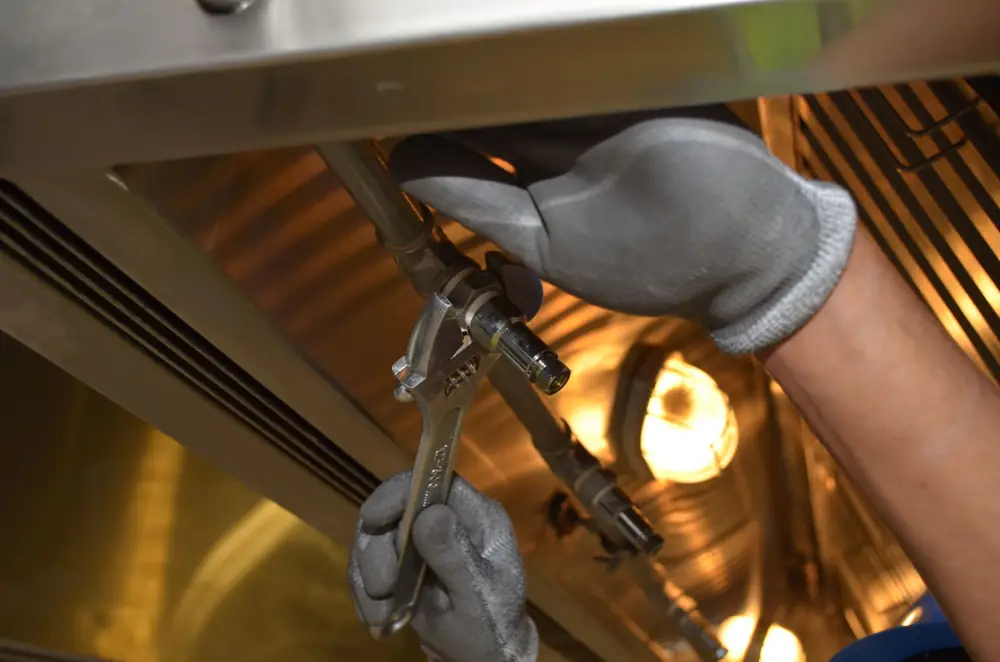
A thermowell is a bored, pressure-tight barrier machined from solid bar stock that houses a temperature sensor, a thermocouple, RTD or bimetal thermometer, and isolates it from process pressure, flow, corrosion and abrasion so the sensor can be removed or replaced without breaching the process.
Crestflo manufactures bar-stock thermowells in threaded and flanged forms, up to 1 m insertion length, across the widest stainless and high-nickel alloy range on the accessories line, from 316/316L through Duplex, 254 SMO, Hastelloy, Inconel, Monel and Titanium. Ready stock for standard items, made-to-order for specials, 6–8 week delivery, with a heat/lot number marked on every part. A thermowell is the protective well, not the sensor: Crestflo machines the well; the thermocouple or RTD element is supplied by others. Request a quote with your stem style, connection, insertion length and alloy.
What Is a Thermowell? How the Well Protects a Thermocouple or RTD
Installed in piping or a vessel wall, a thermowell works as a closed, one-end tube whose bore holds the sensor while its wall carries the full process pressure. The sensor reads temperature by conduction through the tip, so the process fluid, its pressure and its corrosive or abrasive action never touch the element. Because the well remains installed and sealed, an operator can pull and swap the thermocouple, RTD or dial thermometer while the line stays in service. That combination, pressure retention, sensor protection and hot-swap serviceability, is why almost every pressurized or high-velocity temperature point in oil and gas, refining, petrochemical, LNG, power and steam-tracing service uses one.
Also Known As: Thermowell Designations and Synonyms
Specifying engineers, EPC contractors and panel fabricators call the same component by several names. On drawings and datasheets a thermowell may appear as a thermo well, thermo-well, temperature well, sensor well, protection well or protecting well; process-side, it is often written as a thermocouple well or RTD well. Related call-outs include instrument thermowell, thermowell fitting, thermowell tube and thermowell assembly. All describe the bar-stock protective barrier covered here.
Thermowell Stem Styles: Straight, Tapered & Stepped Bar-Stock Profiles
Crestflo machines thermowells from solid bar in the three standard stem profiles, each cut to your specified length and diameter. Stem style is chosen to balance response time against wake-frequency margin under flow-induced vibration.
| Stem style | Profile | Best suited to | Wake-frequency note |
|---|---|---|---|
| Straight (straight-shank) | Constant outside diameter, full length | General service, standard velocities, easy replacement | Baseline stiffness; verify length against velocity |
| Tapered | OD reduces from root to tip | Higher-velocity and high-vibration lines | Highest natural frequency for a given length; best margin |
| Stepped | Full-diameter shank stepping down to a reduced tip | Faster sensor response where velocity is moderate | Reduced tip improves response; check margin per PTC 19.3 |
All three are drilled-bar wells, the bore is drilled from solid bar (machined-from-solid), not fabricated or built up. A spring-loaded thermowell tip can be specified to hold the sensor against the base of the bore for faster response. Specify the profile, or share your process data and the engineering team will recommend one.
Thermowell Connection & Mounting Types: Threaded, Flanged, Weld-In & Van Stone
The process connection fixes the well into the pipe or vessel. Crestflo supplies threaded and flanged thermowells as standard forms; weld-in (including weld-neck), socket-weld, van-stone (lap-joint) and sanitary mounts are available made-to-order to your drawing.
| Connection | Description | Typical use | Availability |
|---|---|---|---|
| Threaded (NPT) | Screwed male thread into a coupling or boss | General plant, MRO, retrofits | Standard form |
| Flanged | Integral flange bolted to a mating flange | Higher pressure/temperature, larger bore | Standard form |
| Weld-in / weld-neck | Stem or weld-neck mount welded directly into the pipe wall | Permanent, high-integrity points | Made-to-order |
| Socket-weld | Well seated in a socket-weld boss | Compact welded installations | Made-to-order |
| Van Stone (lap-joint) | Rotatable loose flange for bolt-hole alignment | Field-orientable flanged points | Made-to-order |
Connection size, rating and thread standard are cut to the applicable published standard (for example ASME B1.20.1 for NPT) and customizable to requirement.
Thermowell Sizing: Insertion (U), Lagging (T) & Bore Dimensions
Thermowell length is specified by three reference dimensions; the stem cross-section is set by root diameter, tip diameter and wall thickness, and the bore is sized to the sensor outside diameter. Crestflo machines immersion (U) lengths up to 1 m (1,000 mm).
| Dimension | Meaning | How it is specified |
|---|---|---|
| U (immersion / insertion) | Immersion length from the tip to the underside of the connection | From pipe size and the sensor-tip position in the flow |
| T (lagging) | Extension length that clears pipe insulation/lagging | From insulation thickness at the tap |
| S (below thread/flange) | Length of stem below the process connection face | From connection geometry |
| Root diameter | Stem outside diameter at the mount (root) | Set for stiffness and wake-frequency margin |
| Tip diameter | Stem outside diameter at the closed tip | Reduced on tapered/stepped stems for faster response |
| Wall thickness | Metal between the bore and the outside diameter | From pressure/temperature and the bore-to-OD relationship |
| Bore | Internal diameter that receives the sensor | To the sensor OD; a 1/2" NPT internal instrument thread is common |
Immersion (U) length sets how deep the sensor sits in the flow and, with root diameter, tip diameter and wall thickness, drives both accuracy and wake-frequency behavior; values are per the applicable standard and customizable to requirement.
Thermowell Wake-Frequency Design & ASME PTC 19.3-TW
The governing dimensional-integrity standard for thermowells is ASME PTC 19.3-TW, which qualifies a well against flow-induced vibration and dynamic stress. Flowing fluid sheds vortices behind the stem; if the vortex-shedding (wake) frequency approaches the well's natural frequency, resonance can fatigue and break the stem, dropping the tip into the process. The PTC 19.3-TW frequency-ratio check compares those frequencies for the specified stem style, length, diameter and process velocity, temperature and pressure. A tapered profile or a shorter insertion length raises the natural frequency and the safety margin; where a straight stem must stay long, a thermowell velocity collar (support collar) can be added at the mount to shorten the unsupported span and lift the natural frequency. Share your flow, temperature and pressure data with your RFQ and the Crestflo engineering team will confirm the stem geometry against ASME PTC 19.3-TW for the service, values per the applicable standard, customizable to requirement.
Thermowell Materials & Alloys: 316/316L Stainless Through Hastelloy, Inconel & Monel
Crestflo machines thermowells across stainless, duplex, super-austenitic, high-nickel and titanium grades, well beyond the 304/316 that catalog sellers stock. Grade is selected for the process media and temperature; sour-service points use NACE MR0175 / ISO 15156 alloys. Each grade below links to its material page for full composition and properties; Crestflo offers these alloys in instrumentation forms, including thermowells.
| Alloy | UNS | When to choose | Sour service (NACE) |
|---|---|---|---|
| 316/316L stainless | S31600 / S31603 | General process, mild corrosives, wide temperature | Yes, within limits |
| 904L | N08904 | Sulfuric/phosphoric and chloride exposure | Yes |
| Duplex 2205 | S32205 | Chloride stress-corrosion resistance with strength | Yes |
| Super Duplex 2507 | S32750 | Seawater, high-chloride, high-strength service | Yes |
| 254 SMO | S31254 | Warm seawater and aggressive chlorides | Yes |
| Inconel 625 | N06625 | High temperature plus corrosion resistance | Yes |
| Inconel 825 | N08825 | Reducing acids, sour hydrocarbons | Yes |
| Hastelloy C-276 | N10276 | Wet chlorine, strong oxidising/reducing acids | Yes |
| Monel 400 | N04400 | Hydrofluoric acid, brine, seawater | Yes |
| Titanium Gr2 | R50400 | Oxidising chlorides, seawater, light weight | — |
The full range spans 304/304L, AL-6XN, Alloy 20, Inconel 600/601/718, Incoloy 800/800H, Monel K500, Hastelloy C-22/B-2/B-3/X and Nickel 200/201. See the complete materials range or the sour-service alloy selection guide. Compositions are per the applicable ASTM/UNS standard; no brass is offered.
Thermowells for Thermocouples, RTDs, Gauges & Dial Thermometers
The bore and internal instrument thread are matched to the sensor: a thermocouple, RTD, bimetal dial thermometer or temperature gauge. The thermowell is the protective, pressure-retaining well, not the sensor; Crestflo machines the well, while the thermocouple element, RTD element and transmitter are supplied by others. An RTD does not electrically require a well, but one is used at almost all pressurized, high-velocity, corrosive or removable-sensor points so the element can be changed without breaching the process. Specify the sensor OD and instrument-connection size and the bore is machined to suit.
Standards, Certifications & Traceability
Crestflo is ISO 9001 / 14001 / 45001 & PED certified. Thermowell bar stock is supplied to the applicable material specifications (ASTM A479 / ASTM A276); wake-frequency design follows ASME PTC 19.3-TW; sour-service alloys conform to NACE MR0175 / ISO 15156. Every part carries a heat/lot number and ships with an EN 10204 MTC 3.1 certificate as standard, 3.2 on request. PMI and in-house NDT are available, with destructive testing at ISO/IEC 17025-accredited labs and third-party inspection on request. Datasheets and CAD are available to customers on request. Crestflo is the instrumentation division of a four-decade-old, Government-of-India-recognized export house with a Middle-East delivery track record, parent heritage behind a newer manufacturing brand.
Why Choose Crestflo for Thermowells
As a US-serving thermowell supplier and manufacturer, Crestflo pairs the alloy breadth of an exotic-material shop with a workable lead time. Buyers comparing thermowell suppliers in the USA get exotic-alloy depth without the long lead of the majors. The differentiators for a temperature-measurement buyer:
- Widest alloy range, 316/316L through Hastelloy, Inconel, Monel, Duplex, 254 SMO and Titanium Gr2, including the CRA grades that catalog SKUs do not stock.
- 6–8 week delivery, ready stock for standard items, made-to-order for specials, versus the long lead times typical of the majors. See lead time.
- Full traceability, heat/lot number on every part plus EN 10204 MTC 3.1 (3.2 on request). See material traceability.
- Small MOQ, private label and made-to-print, send a drawing for a custom thermowell or ask about the private-label program.
- Honest origin, Indian origin; US / European melt available on request with full material traceability. TAA and DFARS routing is handled on US-origin compliance.
We Engineer Confidence. Talk to the engineering team via contact, sales@crestflousa.com, +1 346 594 9005, Houston, TX.
How to Order Thermowells: Specify Your Configuration
To quote a thermowell, send the stem style, process connection and rating, insertion (U) and lagging (T) lengths, bore and sensor type, alloy, and quantity. For a repeat line or a distributor program, request the thermowell ordering-code guide from the engineering team and we will map your configuration to it. Thermowell price and thermowell cost track the alloy, stem style and length, so to buy thermowells, request a quote and this US-serving thermowell company responds with dimensions, alloy and lead time.
Frequently Asked Questions About Thermowells
How does a thermowell work?
A thermowell is a closed, pressure-tight tube bored to hold a temperature sensor. The sensor reads process temperature by conduction through the well wall and tip, while the well keeps process fluid, pressure, corrosion and flow off the element and lets you replace it without shutting down the line.
How is a thermowell installed?
The well is mounted into the process through its threaded, flanged or welded connection so the stem is immersed in the flow; the sensor is then inserted into the bore from outside. Insertion length and orientation are confirmed against the pipe or vessel and against a wake-frequency check before installation.
How many types of thermowells are there?
By stem profile: straight, tapered and stepped. By connection: threaded, flanged, weld-in, socket-weld and van-stone. Crestflo supplies bar-stock threaded and flanged thermowells as standard forms, with the other mounts made-to-order to your drawing.
Does an RTD need a thermowell?
Not electrically, but a thermowell is used in almost all pressurized, high-velocity, corrosive or removable-sensor applications so the RTD can be changed out without breaching the process. The well also protects the element from vibration and abrasion.
What is a thermowell U (insertion) length?
U is the immersed length from the tip to the underside of the process connection. It sets how deep the sensor sits in the flow and is chosen from the pipe size and the desired sensor-tip position. Crestflo machines insertion lengths up to 1 m.
What materials are thermowells made from?
304/304L, 316/316L, 904L, Duplex 2205, Super Duplex 2507, 254 SMO, AL-6XN, Alloy 20, Inconel, Incoloy, Monel, Hastelloy, Nickel 200/201 and Titanium Gr2, including NACE MR0175 alloys for sour service. Grade is selected for the process media and temperature.
What is a wake-frequency (ASME PTC 19.3) calculation?
It verifies that a thermowell will not resonate and fail under flow-induced vibration by comparing the vortex-shedding frequency with the well's natural frequency for the specified geometry and process conditions. A tapered profile or a shorter stem raises the safety margin. Send your process data and the engineering team will confirm the geometry against ASME PTC 19.3-TW.
Can you supply custom or private-label thermowells?
Yes. Crestflo supports small MOQ, made-to-print and private-label thermowells, machined to your drawing with a heat/lot number on every part and EN 10204 MTC 3.1 (3.2 on request).
What is the lead time, and where are Crestflo thermowells made?
Ready stock for standard items, made-to-order for specials, with 6–8 week delivery. Thermowells are of Indian origin, with US or European melt available on request and full material traceability; TAA and DFARS routing is covered on the US-origin compliance page.
Do thermowells come with a material test certificate?
Yes. Every thermowell carries a heat/lot number and ships with an EN 10204 MTC 3.1 certificate as standard, with 3.2 available on request. PMI and NDT are available, and third-party inspection can be arranged.
Related Products & Resources
Explore the full instrumentation accessories range, including syphons, condensate pots, snubbers and gauge savers. For temperature-measurement points by sector, see steam tracing, downstream refining, LNG & cryogenic and power generation & nuclear service, or the matching instrumentation tubing.