
High-Purity Gas Regulators
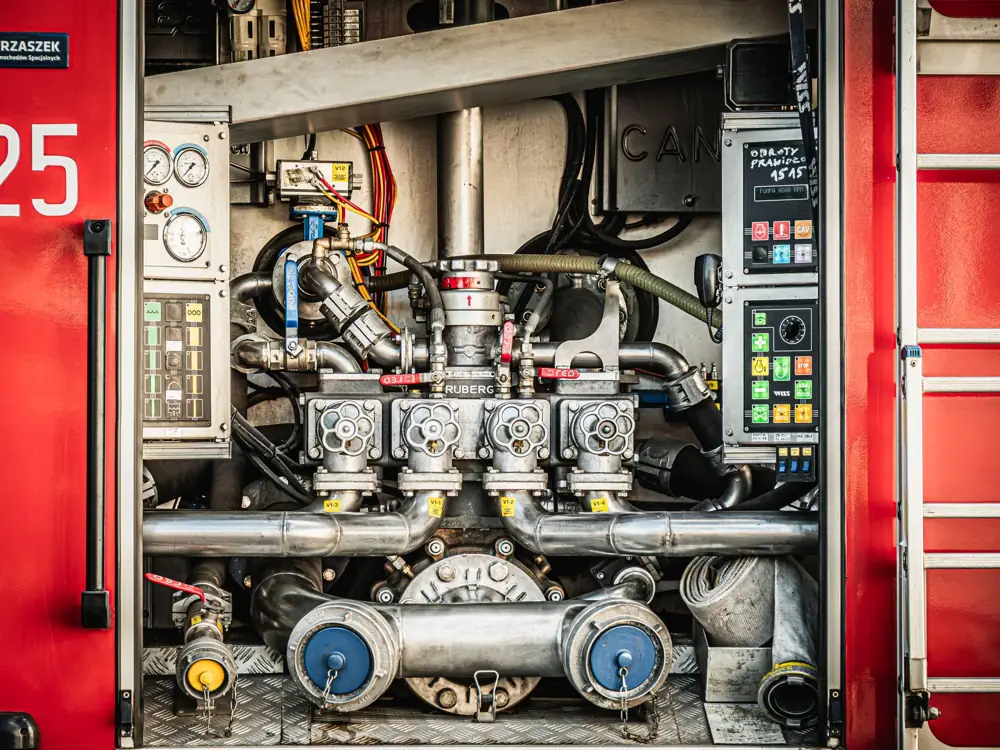
A high-purity gas regulator reduces and controls pressure through clean, low-dead-volume, inert wetted surfaces. That's what lets it deliver high-purity (HP) or ultra-high-purity (UHP) process gas without adding particles, moisture, or outgassed contamination to the stream. Crestflo builds these regulators in 316/316L stainless steel and corrosion-resistant alloys, with electropolished internals and oxygen cleaning available for semiconductor, specialty-gas, hydrogen, and analytical service. One clarification on scope: this is a gas pressure regulator for high-purity process gas. It's not a voltage regulator, a water-pressure regulator, or an LP/propane appliance regulator.
Every unit leaves the shop with EN 10204 3.1 material test certificates and a heat/lot number stamped right on the part. It's built as a drop-in replacement for the US market. Standard items sit ready in stock; specials are made to order, with delivery running 6-8 weeks. Request a quote, or speak with an engineer about your gas service and connection map.
Also Known As: UHP, Specialty-Gas & Semiconductor Regulator Designations
Crestflo covers this device under a long list of names buyers and specifiers actually use. On the high-purity side: high-purity regulator, high-purity gas regulator, high-purity pressure regulator, high-purity gas pressure regulator, and high-purity pressure-reducing regulator. Then there's the ultra-high-purity family, which includes ultra-high-purity regulator, ultra-high-purity gas regulator, and UHP regulator. Application and configuration names show up too: specialty gas regulator, semiconductor gas regulator, point-of-use (POU) regulator, high-purity line regulator, tied-diaphragm or diaphragm-sensing regulator, electropolished (EP) regulator, 316L or stainless steel regulator, and corrosive-gas regulator. Gas-specific labels like high-purity nitrogen, argon, helium, oxygen, hydrogen, ammonia, HCl, or chlorine regulator all point to the same underlying platform, just configured for that particular gas group.
What Is a High-Purity Gas Regulator?
A high-purity gas regulator takes a variable, high inlet pressure and turns it into a stable, controlled delivery pressure, all while keeping the gas clean. Standard industrial regulators can't handle HP and UHP service, and the reasons are predictable. Internal dead volume traps moisture and drags out purge-down time. Non-inert or rough wetted metals shed particles and soak up contaminants. Elastomer-heavy sensing elements outgas. A high-purity design tackles each of these problems directly: a tied metal diaphragm isolates the gas and keeps internal volume to a minimum, wetted surfaces are electropolished, corrosion-resistant alloys are matched to the specific gas, and seats are built from high-integrity metal or engineered polymer. What you end up with is a regulator that holds its set pressure without dumping particulates, moisture, or outgassed material into the gas stream.
High-Purity vs. Ultra-High-Purity (UHP) Gas Regulators
Both grades keep the gas clean; what separates them is how tightly you control the wetted path, the surface finish, and the moisture and particle targets. Ultra-high-purity sits at the demanding end, reserved for the most sensitive semiconductor and analytical gases. The thresholds listed below are industry reference targets you specify against, not fixed Crestflo ratings. Confirm your cleanliness class, surface finish, and moisture target on the RFQ.
| Parameter | High-Purity (HP) | Ultra-High-Purity (UHP) |
|---|---|---|
| Typical purity band | 99.999% (5.0) and better | 99.9999% (6.0) and better |
| Wetted surface finish | Electropolished, smooth bore | Electropolished to a tighter Ra target |
| Reference Ra target | Per SEMI / ASME BPE for HP service | Standard UHP EP targets ≤10 µin Ra per SEMI / ASME BPE, specify your target |
| Moisture / particle control | Controlled | Tightest control for critical gases |
| Typical gases | N₂, Ar, He, O₂, mixed gases | Silane, HCl, Cl₂, NH₃, dopants, calibration gases |
| Typical use | Lab, general fab utility gas | Fab process gas, analytical, metrology |
Values per applicable standard; customizable to requirement. For help matching class to alloy and finish, see the high-purity regulator selection guide.
Working Principle: Tied Metal-Diaphragm Sensing, Single-Stage & Dual-Stage
A high-purity regulator reads delivery pressure through a diaphragm that works against a load spring. In a high-purity build, that diaphragm is a tied metal diaphragm, not an elastomer. This keeps the wetted path inert, low in volume, and free of outgassing. Single-stage regulators cut pressure in one step. They work well for stable supply and simple point-of-use control, though delivery pressure drifts slightly as inlet, or cylinder, pressure falls. That's the supply-pressure effect. Dual-stage, or two-stage, regulators cut pressure in two steps instead, and they hold delivery pressure far steadier as the cylinder empties. That's why they're the choice for precision, analytical, and long-duration work.
High-Purity Regulator Configurations: Single-Stage, Dual-Stage, POU & Panel-Mount
The platform's setup matches the exact point it serves in the gas system. Sibling pages own the related pressure-control functions; find them linked below.
| Configuration | When to use | Notes |
|---|---|---|
| Single-stage high-purity regulator | Stable supply; simple POU control | See single-stage pressure-reducing regulator |
| Dual-stage / two-stage high-purity regulator | Precision delivery as cylinder pressure decays | See dual-stage pressure-reducing regulator |
| Point-of-use (POU) / line regulator | Final control at the tool or panel | Compact, low internal volume |
| Panel-mount / rod-mount | Gas cabinets, VMBs, distribution panels | Mounting configured to panel drawing |
| High-purity back-pressure regulator | Upstream pressure hold | See back-pressure regulator |
| Changeover / manifold service | Continuous supply across cylinders | See cylinder changeover regulator |
High-Purity Regulator Materials: 316L Stainless, Hastelloy C-22/C-276, Monel 400 & Nickel 200/201
The default wetted material is 316/316L stainless, and it suits inert and mildly reactive high-purity gases just fine. Corrosive and halide gases are a different story: they call for corrosion-resistant alloys (CRA) with the pitting and general-corrosion resistance those services demand. Crestflo offers the high-nickel palette below. Select against your specific gas, not a general grade.
| Component | Standard option | Corrosive / halide-gas option | Learn about the grade |
|---|---|---|---|
| Body | 316 / 316L stainless | Hastelloy C-22, Hastelloy C-276, Monel 400, Nickel 200/201 | 316/316L · Hastelloy C-22 · Hastelloy C-276 |
| Diaphragm | 316L stainless | Hastelloy C-22 / high-nickel alloy | Monel 400 |
| Seat / seal | Metal-to-metal or engineered polymer (PCTFE, PTFE, Vespel) per gas | Alloy seat / metal seal for aggressive gas | Nickel 200/201 |
| Load spring | Alloy steel / stainless (isolated from gas) | Isolated by tied diaphragm | — |
Crestflo covers each alloy in detail on its material page, and it supplies that alloy in instrumentation forms: regulators, valves, fittings, and tubing. It doesn't sell bar, sheet, plate, or mill product. Compositions and mechanical properties follow the applicable ASTM or UNS standard, and they can be adjusted to meet specific requirements.
Surface Finish, Cleanliness & Oxygen Cleaning (ASTM G93 / CGA G4.1)
High-purity performance rides on the wetted finish. Crestflo can electropolish and passivate the internal gas path, and on request, assemblies get oxygen-cleaned to ASTM G93 or CGA G4.1, then clean-packed. Surface-finish Ra targets follow SEMI and ASME BPE reference values for HP and UHP service. Standard UHP electropolish targets land at ≤10 µin Ra, and you specify the finish class, cleaning specification, and packaging on the RFQ. For companion clean-gas components, look at electropolished high-purity tubing, orbital-weld high-purity fittings, and VCR metal face-seal connections. Cleaning and oxygen-service processing get covered in more depth under oxygen cleaning for UHP.
Gas Service & Alloy Selection: Inert, Oxidizing, Corrosive Halide & Toxic/Pyrophoric
Match the body alloy and seat to the gas group, not to one grade. What follows is general engineering guidance, so confirm the exact build for your gas and pressure on the RFQ.
| Gas group | Example gases | Recommended body alloy | Seat / note |
|---|---|---|---|
| Inert | N₂, Ar, He | 316 / 316L stainless | Metal or PCTFE seat; standard EP |
| Oxidizing | O₂, N₂O | 316L, oxygen-cleaned | Oxygen-clean to ASTM G93 / CGA G4.1 |
| Corrosive halide | HCl, Cl₂, HBr, BCl₃ | Hastelloy C-22 / C-276 | Metal or engineered-polymer seat |
| Halide / HF | HF, WF₆ | Monel 400, Nickel 200/201 | Alloy seat; dry-gas handling |
| Toxic / pyrophoric | Silane (SiH₄), NH₃, PH₃ | Hastelloy C-22 / 316L per gas | High-integrity seal; check fab codes |
Looking for details on hydrogen delivery? Crestflo's hydrogen service page covers it. Fab process gas gets its own treatment in the semiconductor gas systems section. And when the choice comes down to alloy versus gas, the high-purity semiconductor selection guide walks through that decision in detail.
Connections & Sizes: VCR Face-Seal, VCO, Tube-Fitting & NPT
Crestflo's high-purity regulators ship with VCR metal face-seal, VCO O-ring face-seal, tube-fitting (compression), and NPT end connections, plus inlet and outlet gauge ports where needed. Face-seal connections are the preferred choice for UHP service, since the metal gasket gives a leak-tight, particle-free joint. Sizes run in both imperial and metric, covering the ranges typical of high-purity gas systems (1/8″, 1/4″, 3/8″ and larger), all configured to your panel drawing. You'll find full details at VCR face-seal fittings and VCO O-ring face-seal fittings. Engineering can supply exact port maps and ordering codes; just request the ordering-code guide with your inquiry.
Specifications, Pressure/Flow Range & Ordering
Inlet and outlet pressure ranges, flow coefficient (Cv), operating temperature, and mounting get configured per model and per gas service rather than locked to one fixed rating. The platform covers low-pressure high-purity regulators, built for fine point-of-use and analytical delivery set-points, and high-pressure high-purity regulators, meant for elevated inlet and delivery duty. For the high-pressure variant, see the high-pressure regulator. Crestflo scales these units to the application and supplies the full spec against your requirement. Request the current specification and ordering-code guide through the RFQ. Datasheets and CAD are available to customers on request; there are no public per-product datasheet or CAD downloads.
| Attribute | Basis |
|---|---|
| Inlet / outlet pressure | Configured per model and gas service; specify on RFQ |
| Flow coefficient (Cv) | Configured per model; high-flow option on request |
| Operating temperature | Per seat/seal material selection; customisable |
| Wetted materials | 316/316L, Hastelloy C-22/C-276, Monel 400, Nickel 200/201 |
| Surface finish | Electropolish + passivation; oxygen-clean on request |
| Connections | VCR, VCO, tube-fitting, NPT; imperial + metric |
| Traceability | EN 10204 3.1 MTC (3.2 on request) + heat/lot number |
Values per applicable standard; customizable to requirement.
Standards, Certifications & Traceability
Crestflo holds ISO 9001, ISO 14001, ISO 45001 and PED certification, along with the standard approvals that apply to high-purity gas components. Cleaning follows ASTM G93 / CGA G4.1 oxygen-cleaning practice. Hygienic builds follow ASME BPE where specified. Corrosion-resistant alloy selections line up with NACE MR0175 / ISO 15156 for aggressive service.
Material traceability comes as EN 10204 3.1 MTC by default, with 3.2 available on request, and every part carries a heat/lot number. In-house testing takes in pneumatic and hydraulic proof, helium leak checks, and seat and shell leak checks. Add to that positive material identification (PMI), in-house NDT, destructive testing at ISO/IEC 17025-accredited labs, and third-party inspection when requested.
Certificates ship with the goods. Certification records sit in the quality section rather than being numbered on product pages.
Drop-In Interchange & Replacement for Incumbent High-Purity Regulators
Crestflo builds high-purity regulators that match common incumbents in both dimensions and function, offering interchange for units such as TESCOM®, APTech®, Parker Veriflo®, Swagelok® HF, Harris®, and Matheson®. These brand names belong to their respective owners. Crestflo operates independently and isn't affiliated with, endorsed by, or sponsored by any of them; the names appear here only to describe interchange and equivalence. Crestflo doesn't publish a part-number interchange table. Instead, request your regulator cross-reference and our engineering team will pin down the equivalent build for your incumbent model, gas service, and connections.
Why Crestflo for High-Purity & UHP Regulators
Crestflo is a high-purity regulator manufacturer and supplier, the instrumentation arm of a four-decade-old, Government-of-India-recognized export house with a long delivery record across the Middle East, and it now serves the US market. The regulator program builds on that manufacturing heritage with electropolish, passivation, and oxygen-clean capability. There's a deep corrosion-resistant alloy palette on offer too: Hastelloy C-22/C-276, Monel 400, Nickel 200/201, suited to corrosive and halide gases. Small MOQ and private-label options are available, backed by ISO 9001/14001/45001 and PED quality standards, with EN 10204 3.1/3.2 traceability. Regulators are of Indian origin. US or European melt can be arranged on request, and full material traceability comes standard. They're engineered as drop-in replacements for the US market: ready stock on standard items, made-to-order for specials, and delivery in 6-8 weeks. We Engineer Confidence. See US-serving origin and compliance and the private-label regulator program.
Applications: Semiconductor, Specialty Gas, Hydrogen & Pharma/Biotech
High-purity and UHP regulators serve semiconductor fabs and gas cabinets, specialty and analytical gas systems, hydrogen delivery, and pharmaceutical and biotech process gas, along with analytical sampling systems. Crestflo has matched industry pages worth a look: semiconductor, hydrogen, pharmaceutical & biotech, and analytical sampling systems.
Frequently Asked Questions
What is a high-purity gas regulator?
This is a pressure-reducing regulator with electropolished, low-dead-volume, inert wetted surfaces. It's built to deliver high-purity or ultra-high-purity gas without adding particles, moisture, or outgassed contamination. Crestflo builds these regulators in 316L and other corrosion-resistant alloys, and oxygen cleaning to ASTM G93 / CGA G4.1 is available on request.
What is the difference between high-purity and ultra-high-purity (UHP) regulators?
Gas cleanliness holds up either way. Where UHP pulls ahead is in surface finish, moisture control, and particle limits, tightened for the most sensitive semiconductor and analytical gases. Standard UHP electropolish targets sit at ≤10 µin Ra, based on SEMI / ASME BPE reference values. You'll specify the cleanliness class and finish target on the RFQ.
What materials are used for corrosive-gas high-purity regulators?
Aggressive gases like HCl, Cl₂, HF, and NH₃ call for something tougher than standard 316L. Crestflo answers with wetted parts in Hastelloy C-22, Hastelloy C-276, Monel 400, and Nickel 200/201. Pick the alloy that fits your specific gas by consulting the high-purity semiconductor selection guide.
Are the regulators oxygen-cleaned?
Assemblies get electropolished, passivated, and oxygen-cleaned to ASTM G93 / CGA G4.1 on request, then packed clean. You'll spell out the cleaning specification and packaging on the RFQ. Values follow the applicable standard, and we tailor them to what the job requires.
Single-stage or dual-stage, which do I need?
Single-stage setups work fine for stable supply and basic point-of-use control. Dual-stage regulators hold delivery pressure far steadier as cylinder pressure drops, which is why they're the better choice for precision and analytical work, where any set-point drift matters.
What connections and sizes are available?
Fitting options include VCR metal face-seal, VCO O-ring face-seal, tube-fitting (compression), and NPT, available in both imperial and metric sizes, covering the ranges typical of high-purity gas systems. For UHP joints, face-seal connections are the preferred choice. Get the exact port map and ordering-code guide from engineering.
Can Crestflo supply a drop-in for my TESCOM, APTech, Veriflo, or Swagelok HF regulator?
Yes. Crestflo builds high-purity regulators that match competing brands dimensionally and functionally, so they can be swapped in directly. Those brand names belong to their respective owners, and Crestflo has no affiliation with them. Send in your regulator cross-reference, and our engineering team will pin down the equivalent build for your model and gas service.
What certifications and traceability come with the regulator?
Crestflo holds ISO 9001, ISO 14001, ISO 45001 and PED certification. Each part ships with EN 10204 3.1 material test certification, with 3.2 available on request, and every one carries a heat/lot number. Backing that up: PMI, in-house NDT, helium testing, seat/shell leak testing, and third-party inspection when it's requested.
Where are the regulators made and what is the lead time?
Indian-origin material engineered specifically as a drop-in replacement for the US market. US or European melt is available on request, and full material traceability comes standard. Standard items ship from ready stock; specials are made to order, with 6-8 week delivery. Houston, TX serves as the US sales contact point only, not a warehouse.
What pressure and flow range do the regulators cover?
Inlet and outlet pressure ranges and the flow coefficient (Cv) aren't fixed to a single rating. Both get configured per model and per gas service. Ask for the current specification and ordering-code guide through the RFQ, and be sure to specify your inlet, delivery, and flow requirement.
Do you offer private-label or small-MOQ high-purity regulators?
Yes. The Crestflo capabilities team offers small MOQ runs and private-label programs, which means OEMs and distributors can put their own brand on high-purity regulators without losing full traceability.
Request a High-Purity Regulator Quote
Give us the gas service, purity class, pressure and flow requirement, connections, and quantity, and Crestflo's engineering team will work out the alloy, finish, and configuration and send back an RFQ. Reach the team at sales@crestflousa.com or +1 346 594 9005, or request a quote. Customers can also request datasheets and CAD files. Distributors, for their part, can become a distributor and add high-purity regulators to their line card.