
Instrumentation Fittings, Valves & Tubing for LNG & Cryogenic Service
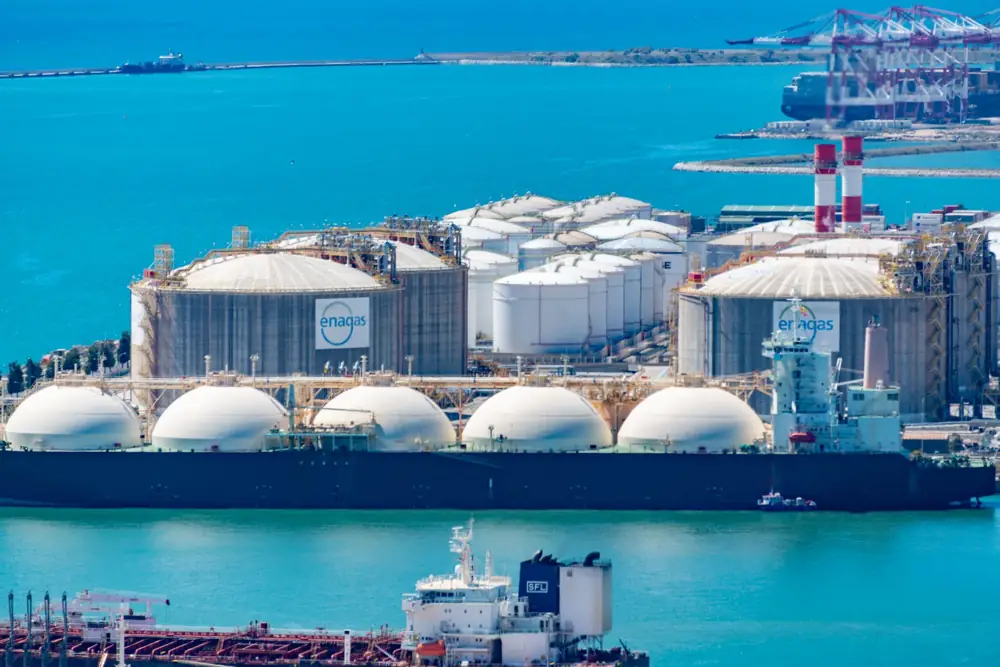
LNG and cryogenic instrumentation covers the small-bore tube fittings, valves, manifolds, regulators and tubing built to stay leak-tight and ductile at process temperatures below −150 °C (−238 °F). That's the deep-cold territory of liquefied natural gas, sitting at roughly −162 °C (−260 °F), plus the industrial cryogens around it. Crestflo makes this instrumentation in cold-tough austenitic stainless and high-nickel alloys. It serves US customers with drop-in interchange and typically delivers within 6–8 weeks of an RFQ.
On this page, the terms "valve," "ball valve," "needle valve," "manifold," "ferrule" and "compression fitting" refer to instrumentation (small-bore) components built for cryogenic process and sampling systems. Nothing else. They don't cover plumbing, PEX, exhaust manifolds, carburetor needles, or medical cryotherapy gear. "Cryogenic" here means sub-−150 °C process service.
Also Known As: Cryogenic Valves, Low-Temperature & Deep-Cold Instrumentation
Buyers and specifiers describe this scope in a dozen different ways. The same components show up as cryogenic valves, cryogenic ball valves, cryogenic needle valves, cryogenic globe and check valves, cryogenic manifolds, and cryogenic tube fittings or compression fittings. The service condition itself gets labeled low-temperature service, sub-ambient service, deep-cold or cold-box service, and LNG service, covering LNG terminals, bunkering, liquefaction, regasification, and air separation. Packless designs go by bellows-sealed or diaphragm valves. Long-stem constructions are called extended-bonnet valves. Crestflo covers all of it under one alloy-aware, instrumentation-only program.
What LNG & Cryogenic Service Demands of Instrumentation
A cryogenic valve or fitting is one engineered to hold pressure and seal without leaking, even through repeated exposure to cryogenic cold: temperatures below −150 °C (−238 °F). Four physical effects drive failure in cold service, and they're what set the design rules:
- Loss of toughness (embrittlement): body-centered-cubic metals like carbon steel go through a ductile-to-brittle transition, and at low temperature they can fracture outright. Face-centered-cubic (FCC) austenitic stainless steels and high-nickel alloys don't share this weakness; they stay ductile even in deep cold.
- Thermal-cycle fatigue: every fill and boil-off cycle drags components between ambient temperature and deep cold. Seats, seals and bodies take the fatigue hit each time.
- Stem-seal freeze: packing sitting right against the cold process can ice over and start leaking. That's the reason extended-bonnet and packless designs exist.
- Differential contraction: materials don't all contract at the same rate. When they're paired in one assembly, that mismatch can compromise seal integrity as temperature drops.
Cryogenic & LNG Temperature Reference
| Fluid | Boiling point (°C) | Boiling point (°F) | Typical service |
|---|---|---|---|
| LNG / methane | −162 | −260 | LNG terminals, bunkering, liquefaction |
| Liquid nitrogen (LN₂) | −196 | −321 | Air separation, industrial gas |
| Liquid argon (LAr) | −186 | −303 | Industrial gas |
| Liquid oxygen (LOX) | −183 | −297 | Air separation, medical/industrial gas |
| Liquid hydrogen (LH₂) | −253 | −423 | Hydrogen, see hydrogen service |
| Cryogenic threshold | −150 | −238 | Definition of cryogenic service |
These figures reflect standard published boiling points. By convention, anything colder than −150 °C counts as cryogenic service.
Alloys That Stay Ductile in the Cold: 316/316L, 904L, Monel & Inconel
Austenitic stainless steel is the default pick for LNG and other cryogenic service. Its FCC crystal structure never hits a ductile-brittle transition, which means grades like 304/304L, 316/316L and super-austenitic 904L hold onto their impact toughness all the way down to cryogenic temperatures. When conditions turn especially harsh, whether it's extreme cold, aggressive corrosion, or the need for specialty toughness, high-nickel alloys take over: Monel 400, Inconel 625/718 and Nickel 200/201. Brass, carbon steel and aluminum fall outside Crestflo's US cold-service scope, so they don't get promoted here.
| Alloy | UNS | Structure | Retains toughness at cryogenic temperature | Material page |
|---|---|---|---|---|
| 304 / 304L | S30400 / S30403 | Austenitic (FCC) | Yes | 304/304L |
| 316 / 316L | S31600 / S31603 | Austenitic (FCC) | Yes | 316/316L |
| 904L | N08904 | Super-austenitic (FCC) | Yes | 904L |
| Monel 400 | N04400 | Nickel-copper (FCC) | Yes | Monel 400 |
| Inconel 625 | N06625 | Nickel-chromium (FCC) | Yes | Inconel 625 |
| Inconel 718 | N07718 | Nickel-chromium (FCC) | Yes | Inconel 718 |
| Nickel 200 / 201 | N02200 / N02201 | Nickel (FCC) | Yes | Nickel 200/201 |
UNS designations and their structure come straight from the published standard; grade selection, though, is customizable to whatever the job needs. For the full decision walk-through, see the cryogenic & LNG alloy-selection guide from Crestflo.
Valves for LNG & Cryogenic Service: Ball, Needle, Check, Manifold & DBB
Crestflo builds cryogenic-service instrumentation valves in 1/16″–1″ sizes, metric or imperial, with threaded or tube-fitting ends. Every type listed below comes in the cold-tough alloys described above, and it's built to the applicable valve standard: ASME B16.34 pressure-temperature ratings, along with the relevant API valve-test standards. Specifications can be customized to your requirement.
| Valve type | Cryogenic role | Product page |
|---|---|---|
| Ball valve | On/off isolation, full-port flow | cryogenic ball valves |
| Needle valve | Throttling, metering, gauge isolation | cryogenic needle valves |
| Check valve / NRV | Non-return, back-flow protection | check valve |
| 2/3/5-valve manifold | Instrument isolation & equalisation | instrument manifolds |
| Double block & bleed | Positive isolation with bleed | DBB valves |
| Bleed / gauge-root | Venting, gauge tapping | bleed valve · gauge-root valve |
| Plug / metering / relief | Diverting, fine metering, over-pressure | plug · metering · relief |
For high-pressure cryogenic valves, manifolds go through a 100% seat and shell leak test, with standard ratings up to 10,000 psi. Double-block-and-bleed valves are built to ASME B16.34, with standard ratings up to 3,000 psi. These figures follow the applicable standard, and they can be adjusted to fit specific requirements. Solenoid, or electrically actuated, valves fall outside Crestflo's cryogenic instrumentation scope, so they aren't offered.
Stem-Seal & Bonnet Design for Cold Service: Extended-Bonnet, Bellows & Diaphragm
The stem seal makes or breaks cold service. Two design approaches keep it reliable, and Crestflo supports both.
| Design | How it handles cold | Leak behavior | Crestflo page |
|---|---|---|---|
| Extended-bonnet (packed) | A long stem moves the packing seal away from the cold process into a warmer zone so it does not ice up | Depends on packing; specify bonnet length on RFQ | instrumentation valves |
| Bellows-sealed (packless) | A welded metal bellows replaces packing entirely, nothing to freeze | Zero-leak stem seal, low fugitive emission | packless bellows valves |
| Diaphragm (packless) | A diaphragm isolates the process from the stem | Zero-leak, high-integrity | diaphragm valves |
Cryogenic seat and seal materials come down to process temperature. PCTFE, PTFE and PEEK are the standard picks for cold service, so specify your seat and seal target on the RFQ. Extended-bonnet length and orientation get built to whatever the job requires.
Fittings & Tubing for Cryogenic Systems
Around cryogenic instruments, where tube runs and connections take a beating from temperature extremes, Crestflo supplies cryogenic tube fittings: compression tube fittings with single or double ferrules, in end connections up to 2″ (50 mm) OD, made from stainless and high-nickel alloys. Single and double ferrules come hardened or non-hardened, depending on what the job calls for. Instrumentation tubing, meanwhile, is available seamless or welded, with electropolished options, in matching cold-tough alloys. As for end and thread options, there's NPT (ASME B1.20.1), compression tube-fitting, socket-weld, butt-weld and orbital-weld, all offered in metric and imperial.
Regulators for Cryogenic Gas & Boil-Off
Crestflo covers boil-off and gas handling with cryogenic pressure regulators. That includes single- and dual-stage pressure-reducing and back-pressure instrumentation regulators, built in cold-service alloys. Before you submit an RFQ, nail down the exact cold-service temperature range and set-pressure your application needs.
Testing, Qualification & Standards for Cryogenic Instrumentation
Cryogenic testing exists to prove a component still seals and holds pressure after cold exposure and thermal cycling. Crestflo runs this in-house: thermal cycling, hydraulic proof, burst and impulse, pneumatic, vibration and vacuum testing, positive material identification (PMI), and a 100% seat and shell leak test on manifolds. Helium mass-spectrometer leak testing is the standard check for cryogenic leak-tightness when a measured leak rate is required. If your specification calls for helium leak testing, specify it on the RFQ. In-house NDT is backed by destructive testing at ISO/IEC 17025-accredited laboratories, with third-party inspection available on request. We can also provide low-temperature impact (Charpy V-notch) toughness data to the applicable material standard, on request.
Cryogenic valves and cold-service materials fall under a handful of standards: BS 6364 for valves in cryogenic service, MSS SP-134 and ISO 28921-1 for low-temperature isolating valves, BS EN ISO 21011 for cryogenic-vessel valves, ASME B16.34 for valve pressure-temperature ratings, and ASTM A320 for low-temperature bolting. Crestflo builds its instrumentation to whichever standard fits the product: valves to ASME B16.34 and API, compression fittings to ASTM F1387. Qualification against a named cryogenic standard, say BS 6364 or ISO 28921-1, is available on request. Sour or chloride-bearing cold service isn't treated the same way; it falls under NACE MR0175 / ISO 15156. Every part ships with a heat/lot number and an EN 10204 3.1 material test certificate (MTC) as standard. A 3.2 certificate is available on request. See traceability for details.
Where LNG & Cryogenic Instrumentation Is Used
These components aren't confined to a single application: they serve LNG import and export terminals, liquefaction and regasification trains, LNG bunkering, air-separation units, industrial-gas plants (LN₂, LOX, LAr), and cryogenic research. Crestflo covers LNG and cryogenic work along the Texas and Louisiana Gulf Coast, with locations in Beaumont, Corpus Christi and Lake Charles. Deep-cold applications close by fall under two other headings: hydrogen service (LH₂, −253 °C) and carbon capture / CCS.
Why Crestflo for LNG & Cryogenic Instrumentation
Crestflo operates as the instrumentation division of an export house that's been around for four decades, carrying Government of India recognition and a delivery track record built across the Middle East. That's engineering-grade capability standing behind a brand focused squarely on serving the US.
- Drop-in interchange with Swagelok, Parker, Hoke, Hy-Lok and Fitok: Crestflo fittings meet ASTM F1387 for compression fittings, so swapping brands won't force a redesign. Request your cross-reference and check it yourself.
- Lead time: standard items ship from stock. Specials are made to order, with delivery running 6–8 weeks. Full details are on the lead time page.
- Cold-tough alloys from 304/304L through Inconel, both imperial and metric.
- Traceability: heat-number marked on every part with 3.1 MTC standard, 3.2 on request.
- Small MOQ and a private-label program for OEMs.
Honest origin: Material comes from India. Need US or European melt instead? We can get it on request, and every batch carries full material traceability. See US origin & compliance.
Datasheets and CAD files are available to customers on request. We Engineer Confidence. Ready to specify? Request a quote with your Name, Company, Email, Phone and what you need, and you'll hear back from our engineering team at Crestflo. For US inquiries: sales@crestflousa.com, +1 346 594 9005, Houston, TX.
Frequently Asked Questions
What is a cryogenic valve?
A cryogenic valve is built to stay leak-tight and ductile at cryogenic temperature, below −150 °C (−238 °F), the kind of cold you get with LNG at around −162 °C. It relies on cold-tough austenitic stainless or high-nickel alloys, paired with a stem-seal design, extended-bonnet or packless, that resists freezing. That's what lets it seal reliably even after repeated thermal cycling.
Why do cryogenic valves have long stems or extended bonnets?
An extended bonnet pulls the packing seal out of the cold process and into a warmer zone, so it doesn't ice up and leak. Packless bellows-sealed and diaphragm valves go a step further. They remove the packing altogether, delivering a zero-leak stem seal and low fugitive emissions.
What types of cryogenic instrumentation valves are available?
Ball, needle, check/NRV, 2/3/5-way manifolds, double-block-and-bleed, bleed, gauge-root, plug, metering and relief valves. Packless bellows and diaphragm valves round out the lineup. Sizes span 1/16″ to 1″, metric or imperial, with threaded or tube-fitting ends.
What is cryogenic testing of valves used for?
It confirms a valve still seals and holds pressure after cold exposure and thermal cycling. Crestflo's regime covers thermal cycling, seat and shell leak testing, and PMI. Low-temperature Charpy impact toughness data to the applicable material standard is available on request.
Which alloys are best for LNG and cryogenic service?
Austenitic stainless steels, 304/304L, 316/316L and 904L, are the default choice. Their FCC structure doesn't have a ductile-brittle transition. That's what lets them keep their toughness at cryogenic temperatures. For extreme cold and corrosive cryogens, high-nickel alloys like Monel 400 and Inconel 625/718 are the better fit.
Do you supply brass cryogenic valves?
No. Brass and carbon steel fall outside Crestflo's US cold-service scope. The cryogenic program starts with austenitic stainless and high-nickel corrosion-resistant alloys instead, since these hold onto their toughness even at low temperatures.
Are your cryogenic fittings drop-in replacements for Swagelok or Parker?
Yes, the compression tube fittings match dimensionally and carry ASTM F1387 performance qualification. Ask our engineering team for your part-number cross-reference. Swagelok® and Parker® are trademarks of their respective owners. Crestflo has no affiliation with them and isn't endorsed by them.
What certifications and traceability do you provide?
Crestflo holds ISO 9001, ISO 14001 and ISO 45001 certification, plus PED. Every part gets a heat/lot number, and it comes standard with an EN 10204 3.1 material test certificate. Need a 3.2 instead? Just ask. You won't find these certificates printed on the product pages themselves; they're kept on the quality page.
What is the lead time, and are these made in the USA?
Standard items ship from ready stock. Specials are made to order, with delivery running 6–8 weeks. The parts themselves are of Indian origin, engineered to drop in as a direct replacement for US parts. US or European melt is available on request, and full material traceability comes standard. These aren't made in the USA, and that fact is addressed plainly on the origin and compliance page.
What pressure and temperature can they handle in cold service?
Ratings depend on the product, the alloy and the construction. Standard manifolds run to 10,000 psi, for example, while DBB units carry a rating of 3,000 psi under ASME B16.34. That's adjustable to your requirements.
Need the cryogenic pressure-temperature rating for a specific valve or fitting? Put it on the RFQ.
Related Pages
Browse Instrumentation valves, tube fittings, instrumentation tubing, and regulators.
Crestflo works in 316/316L, 904L, Monel 400, and Inconel 625.
Check the All industries page, or go straight to hydrogen and carbon capture / CCS.