
3-A Sanitary Standards: Hygienic Design Requirements for Fittings, Valves & Process Equipment
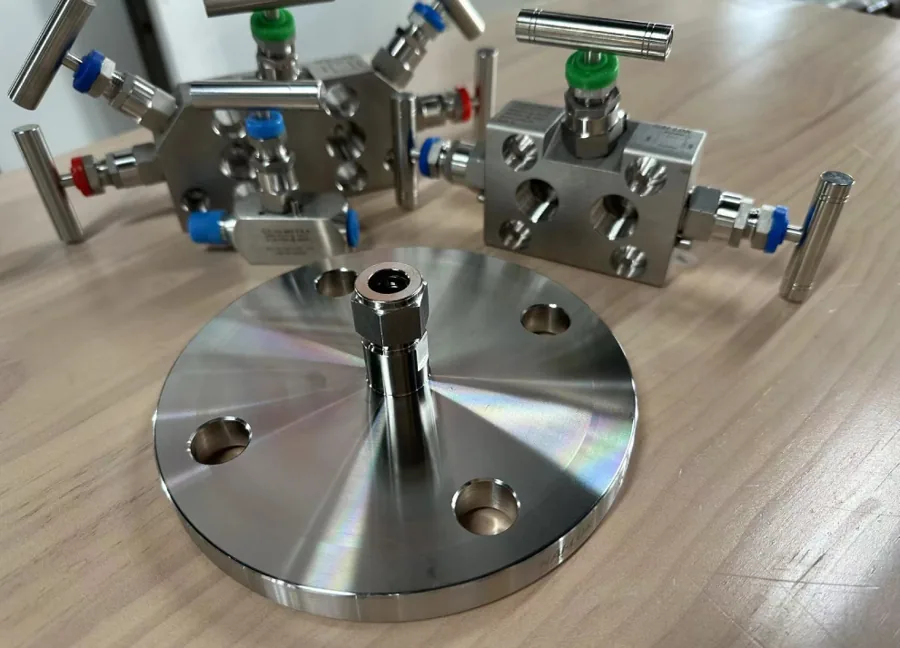
Crestflo manufactures 316/316L and higher-alloy instrumentation fittings and valves, including high-purity and orbital-weld forms with electropolish and passivation, built to a specified surface finish and delivered with EN 10204 3.1 / 3.2 material test certificates and heat-number traceability. In one line, the 3-A Sanitary Standards are voluntary hygienic-design and fabrication standards. 3-A Sanitary Standards, Inc. (3-A SSI) publishes and administers them for equipment that touches food, dairy, beverage and pharmaceutical products.
These standards call for product-contact surfaces that are non-toxic, corrosion-resistant, easy to clean and free of features that could harbor contamination. That usually means a metal surface finish of ≤ 32 µin (0.8 µm) Ra, geometry that can be cleaned in place, and materials such as 316/316L stainless.
Scope note: "3-A Sanitary Standards" cover hygienic design for food, dairy, beverage and pharmaceutical process equipment. They aren't generic "sanitary" plumbing or drainage fittings, and they're not a material grade. On this site, the related components are instrumentation fittings, valves and tubing, not process pumps or tanks. Looking for bioprocessing and pharmaceutical process hygiene instead? See the companion ASME BPE standard.
Request a hygienic-service 316L fitting quote → · sales@crestflousa.com · +1 346 594 9005
Also known as: 3-A designations & related terms
Buyers and specifications refer to these standards in several ways, but the terms below all point to the same body of hygienic-design standards.
| Category | Terms covered |
|---|---|
| Primary designation | 3-A Sanitary Standards, 3-A, 3A, "3 A", 3-A Sanitary Standard, 3A Sanitary Standard |
| Governing body | 3-A Sanitary Standards, Inc., 3-A SSI, 3-A Sanitary Standards Inc |
| Mark / authorization | 3-A Symbol, 3-A Symbol authorization, 3-A certification, 3A certified fittings (colloquial, formally an authorization) |
| Related documents | 3-A Accepted Practices, 3-A Culinary Steam standard, 3-A dairy standards, 3a dairy standard, 3-A hygienic standards |
| Spec-number call-outs | 3-A Sanitary Standard No. 63- (sanitary fittings), No. 18- (multiple-use rubber), No. 20- (multiple-use plastics) |
| Attribute / product tails | 3-A surface finish, 32 Ra, 32 µin Ra, 0.8 µm Ra, 3-A sanitary fittings, sanitary tube fittings, sanitary process fittings, 3a sanitary tubing, hygienic tube fittings, hygienic fittings standard, food grade fittings standard, 316L sanitary, passivated 316L |
| Reversed / alternate word orders | sanitary standards 3-A, 3-A standard for sanitary fittings, sanitary 3-A design |
3-A Sanitary Standards at a glance
| Attribute | Value / detail |
|---|---|
| Standard name | 3-A Sanitary Standards (and 3-A Accepted Practices) |
| Governing body | 3-A Sanitary Standards, Inc. (3-A SSI), an independent, not-for-profit organization |
| Standard type | Voluntary hygienic-design & fabrication standards |
| Scope / purpose | Product-contact equipment surfaces must be non-toxic, corrosion-resistant, cleanable and free of contamination-harboring features |
| Origin / history | Rooted in 1920s dairy-industry hygienic practice, with U.S. Public Health Service participation from 1944; the 3-A Symbol was introduced for commercial use in 1956 |
| Target industries | Dairy, food, beverage and pharmaceutical processing |
| Covered equipment | Pumps, tanks, valves, fittings, heat exchangers, homogenizers, instruments and other product-contact equipment |
| Surface finish | Product-contact metal surfaces typically ≤ 32 µin (0.8 µm) Ra, free of pits, folds and crevices |
| Verification | Third-Party Verification (TPV) by a Certified Conformance Evaluator (CCE) before the 3-A Symbol may be displayed |
Values reflect the widely published requirements of the applicable 3-A standard. The numeric limits and the individual standard numbers are set by the current edition administered by 3-A SSI, and they're published in full in the applicable 3-A Sanitary Standards PDF.
What are the 3-A Sanitary Standards?
3-A Sanitary Standards are voluntary guidelines that spell out how equipment for handling, processing and packaging food, dairy, beverage and pharmaceutical products needs to be designed and built so it can be kept clean. 3-A Sanitary Standards, Inc. (3-A SSI) publishes and administers them. The standards set requirements for materials, surface finish and geometry on every surface that touches the product. That's what keeps those surfaces non-toxic, corrosion-resistant and cleanable over the equipment's working life.
A 3-A standard, unlike a material grade or a plumbing "sanitary" fitting, governs hygienic design and fabrication. A component doesn't earn recognition through chemistry alone. It has to demonstrate that its design, finish and construction meet the applicable 3-A standard, and that gets verified independently before anyone can apply the registered 3-A Symbol.
Who governs the 3-A Sanitary Standards?
3-A SSI, an independent, not-for-profit organization, develops and administers the standards. Equipment fabricators, processors, regulatory sanitarians and public-health authorities all contribute input to the writing process. That collaboration is what has earned 3-A its long-standing acceptance across the U.S. food and dairy industries.
From dairy origins to modern hygienic processing
3-A got its start as hygienic standards for dairy-processing equipment in the 1920s. The U.S. Public Health Service joined in 1944, and the 3-A Symbol arrived for commercial use in 1956. Today the program covers a much wider range of food, beverage and pharmaceutical equipment. That's the reason "3-A dairy standards" and the modern 3-A Sanitary Standards are really the same lineage, just grown up.
What the 3-A Sanitary Standards require
So how do you actually meet 3-A standards? The 3-A sanitary requirements rest on four pillars that work together: hygienic geometry, surface finish, safe materials, and cleanability. They're connected, not separate boxes to check. The table below breaks down what each one demands and why it matters.
| Requirement area | What it demands | Why it matters |
|---|---|---|
| Hygienic geometry | Self-draining surfaces; no dead legs, crevices or sharp internal corners; smooth, continuous welds | Eliminates places where product residue, moisture or bacteria can lodge |
| Surface finish | Product-contact metal typically finished to ≤ 32 µin (0.8 µm) Ra, free of pits and folds | Smooth surfaces release soil during cleaning and resist microbial attachment |
| Metal materials | Corrosion-resistant, non-toxic, non-absorbent metals, commonly 300-series stainless (316/316L) | Prevents contamination and corrosion products from entering the product stream |
| Polymer & elastomer materials | Multiple-use rubber and plastic materials meeting dedicated 3-A criteria (e.g. Standard No. 18- rubber, No. 20- plastics) | Seals and non-metallic parts must also be non-toxic and cleanable |
| Cleanability | Designed for Clean-In-Place (CIP) / Sterilize-In-Place (SIP); cleanability verified under accelerated conditions | Equipment can be cleaned reliably without disassembly |
3-A surface finish: ≤ 32 µin (0.8 µm) Ra
Product-contact metal surfaces under 3-A are typically finished to 32 µin (0.8 µm) Ra or smoother, with no pits, folds or crevices allowed. A smoother surface holds less soil, releases residue during CIP, and leaves bacteria fewer places to grab hold. That's why finish gets measured rather than just written down on a spec sheet. Crestflo can machine instrumentation components to a specified Ra target, just state your required finish on the RFQ.
3-A material requirements: 316/316L stainless and qualified non-metallics
For metals, 3-A calls for corrosion-resistant, non-toxic and non-absorbent materials, most commonly 300-series stainless such as 316/316L, the workhorse alloy for hygienic instrumentation. Polymers and elastomers used in multiple-use service must meet dedicated 3-A material criteria (for example, Standard No. 18- for rubber and No. 20- for plastics). Learn more about the metal on the 316 / 316L material page, where the grade is offered in instrumentation fitting, valve and tubing forms.
Equipment the 3-A Sanitary Standards cover
3-A standards and Accepted Practices cover the equipment that touches product across a processing line, including pumps, tanks, valves, fittings, heat exchangers, homogenizers, instruments and connecting components. Sanitary fittings get their own standard (No. 63-Sanitary Fittings). That's why "3-A sanitary fittings" and "sanitary tube fittings" show up so often as search terms. Fittings are, after all, one of the most frequently specified 3-A component classes in a hygienic system.
The 3-A Symbol and how equipment earns it
The 3-A Symbol is a registered mark, and it identifies equipment that meets the applicable 3-A standard. You can't just slap it on, a component has to be designed to the standard and independently verified before that Symbol is allowed to appear.
| Step | What happens |
|---|---|
| 1. Design to the standard | The component is engineered to the applicable 3-A Sanitary Standard for its equipment class |
| 2. Engage a CCE | The fabricator engages an independent Certified Conformance Evaluator (CCE) |
| 3. Third-Party Verification | The CCE conducts Third-Party Verification (TPV) of the design and fabrication |
| 4. Symbol authorization | On a passing evaluation, a 3-A Symbol authorization is granted for that equipment/component design |
Because verification is per design, "3-A certified" really means a Symbol authorization granted for a specific component. Colloquially people use the two terms as if they're the same thing, but formally 3-A grants an authorization after independent evaluation. It doesn't hand out a blanket certification of a brand.
3-A vs ASME BPE and related hygienic standards
3-A is one of several frameworks governing hygienic and high-purity process equipment. Which one applies depends on the industry and whatever code your project references. The usual questions are 3-A vs ASME BPE and 3-A vs EHEDG, and plenty of pharmaceutical projects end up referencing more than one.
| Standard | Focus | Primary use | Reference |
|---|---|---|---|
| 3-A Sanitary Standards | Hygienic design & fabrication of product-contact equipment | Food, dairy, beverage & general hygienic processing | This page |
| ASME BPE | Bioprocessing equipment design, surface finish & documentation | Pharmaceutical & biotechnology process systems | ASME BPE |
| EHEDG | European hygienic design guidance & testing | Food & beverage hygienic engineering (Europe / global) | External body |
| FDA 21 CFR | Material safety for food-contact substances | Regulatory material compliance (U.S.) | External regulation |
| ASTM A270 | Seamless & welded sanitary stainless tube | Sanitary tubing product form | External standard |
In short: 3-A targets food, dairy and beverage and general hygienic processing, while ASME BPE targets bioprocessing and pharmaceutical systems. 3-A adds hygienic design and fabrication rules on top of FDA material compliance alone, a fitting can be made of an FDA-acceptable alloy yet still fail 3-A if its geometry or finish is not cleanable.
Hygienic instrumentation from Crestflo: 316/316L fittings, valves & tubing
Crestflo makes the exact material-and-finish attributes hygienic-design standards call for. It doesn't sell process pumps or tanks. Instead, it supplies the instrumentation fittings, valves and tubing that connect a hygienic system, in the alloys and finishes a 3-A or ASME BPE build specifies.
| Hygienic attribute | Crestflo capability |
|---|---|
| Alloys | 316/316L stainless and higher CRA alloys (904L, duplex, super-austenitic, nickel alloys), see 316 / 316L |
| Finishes | Material finish, electropolish and passivation, produced to a specified Ra target on request, see cleaning & surface finishing |
| Product forms | High-purity and orbital-weld tube fittings, instrumentation tube fittings, valves and electropolished tubing |
| Traceability | EN 10204 3.1 material test certificate (3.2 on request) with a heat/lot number on every part |
| Approvals held | Fittings tested for interchange per ASTM F1387; valves qualified to ASME B16.34 / API; ISO 9001 / 14001 / 45001 & PED certified |
Crestflo builds hygienic-design-relevant components to a specified material and finish, with the material-test documentation a hygienic-system auditor asks for. Whether a specific component line carries a 3-A Symbol authorization is confirmed per project, request the applicable conformance and finish evidence from our engineering team so we can match your specification. Route sanitary-tubing and fitting requirements to our orbital-weld / high-purity fittings, and see food & beverage and pharmaceutical & biotech applications.
Request a hygienic-service 316L fitting quote →
Why Crestflo for hygienic instrumentation
The finish is specifiable, and the paper backs it up. Electropolish and passivation run to a specified Ra target, delivered with an EN 10204 3.1 MTC (3.2 on request) and a heat number on every part. That's the finish-and-traceability evidence a hygienic audit expects.
Alloys come in the right instrumentation forms, too. 316/316L and higher CRA alloys show up as fittings, valves and tubing, including high-purity and orbital-weld forms. Not bar stock, not sheet, not mill product.
Drop-in replacement, and it's proven out. Fittings are tested for interchange per ASTM F1387, while valves are qualified to ASME B16.34 / API. A specified line gets replaced without any redesign.
- Lead time that moves projects. Ready stock for standard items, made-to-order for specials, 6–8 week delivery.
- Honest origin. Indian origin; US / European melt available on request, with full material traceability.
- Small MOQ and private label, both imperial and metric, customizable to requirement.
- Certified quality system: ISO 9001 / 14001 / 45001 & PED certified.
Crestflo is the instrumentation arm of a family-run export house that's been in business for four decades and carries Government-of-India recognition, with a long track record delivering into the Middle East. Manufacturing runs deep here; on top of it sits a focused, US-serving instrumentation brand. We Engineer Confidence.
Request a hygienic-service quote
Send your requirement to Crestflo, alloy, product form, size and quantity, required surface finish (Ra), and any hygienic standard (3-A, ASME BPE) or documentation your specification references. The Engineering Team will confirm the conforming material, finish and traceability for your parts.
RFQ, tell us what you need:
- Name
- Company name
- Phone
- Requirement description (product, alloy, size, quantity, surface finish, service conditions)
Request a quote → · Request a sample → · Talk to an engineer →
US contact: sales@crestflousa.com · +1 346 594 9005 · Houston, TX.
Frequently asked questions
What are the 3-A Sanitary Standards?
3-A Sanitary Standards are voluntary guidelines for hygienic design and fabrication, published by 3-A Sanitary Standards, Inc. (3-A SSI) for equipment that touches food, dairy, beverage and pharmaceutical products. Surfaces that contact the product must be non-toxic and corrosion-resistant. They also need to be cleanable, with no features that could harbor contamination.
What are "sanitary standards" in general?
"Sanitary standards" are the requirements that make sure product-contact equipment can actually be cleaned and won't contaminate whatever passes through it. In the U.S. food, dairy and beverage industries, the 3-A Sanitary Standards serve as the go-to framework for hygienic equipment design.
What are the 3-A dairy standards?
3-A traces back to hygienic standards for dairy-processing equipment set in the 1920s. The U.S. Public Health Service joined in 1944, and the 3-A Symbol arrived in 1956. Today the program stretches across food, beverage and pharmaceutical equipment more broadly. So those old "3-A dairy standards" are really the root of what we now call the 3-A Sanitary Standards.
What do the 3-A standards require for stainless-steel fittings?
3-A calls for a corrosion-resistant, non-toxic metal, usually 316/316L stainless, with smooth geometry free of crevices. The product-contact surface finish is typically held to ≤ 32 µin (0.8 µm) Ra, and the whole assembly must be cleanable in place. Sanitary fittings fall under 3-A Sanitary Standard No. 63-.
What surface finish does 3-A require?
Product-contact metal surfaces under 3-A are typically finished to 32 µin (0.8 µm) Ra or smoother, with no pits or folds allowed. This smoother finish lets the surface shed soil more easily during cleaning and resists microbial attachment.
How does equipment earn the 3-A Symbol?
The component has to be designed to the applicable 3-A standard, and only then can it pass Third-Party Verification (TPV) by an independent Certified Conformance Evaluator before the registered 3-A Symbol can be displayed. Authorization is granted per equipment or component design.
Is "3-A certified" the same as "3-A authorized"?
Formally, 3-A grants a Symbol authorization for a specific component design after independent verification. It's not a blanket certification of a brand, though people use the terms interchangeably in everyday speech.
3-A vs ASME BPE, which applies to me?
3-A covers food, dairy and beverage plants along with general hygienic processing. ASME BPE, by contrast, is built for bioprocessing and pharmaceutical systems. Plenty of pharmaceutical projects end up referencing both standards, see the ASME BPE standard for bioprocessing design and documentation.
What materials meet 3-A?
Corrosion-resistant, non-toxic, non-absorbent metals such as 300-series stainless (316/316L) or better are required. Polymers and elastomers used in multiple-use service have to meet dedicated 3-A material criteria, Standard No. 18- for rubber, and No. 20- for plastics.
Does Crestflo supply hygienic 316L fittings?
Crestflo makes 316/316L and higher-alloy instrumentation fittings and valves, including high-purity and orbital-weld forms finished with electropolish and passivation to a specified surface finish. Each order ships with EN 10204 3.1 / 3.2 material test certificates and heat-number traceability. As for 3-A Symbol authorization, that gets confirmed per project on a given line, just ask for the evidence your specification calls for.
Can Crestflo build to a specified sanitary surface finish?
Yes. We offer material finish, electropolish, and passivation, and parts can be produced to a specified Ra target on request. Just note your required finish on the RFQ, and the engineering team will confirm what's achievable for your component.
What documentation comes with hygienic-service orders?
Every order can come with an EN 10204 3.1 material test certificate as standard, with 3.2 available on request. Heat and lot numbers go on every part. PMI is included, and where the job calls for it, we add in-house NDT and third-party inspection too.
Explore related standards, materials & products
Standards: Standards hub · ASME BPE · ASME B16.34 · ASTM F1387 · ASTM A269 · ASTM A213 · EN 10204 MTC
Materials: 316 / 316L · 904L · Duplex 2205 · Super Duplex 2507
Products: Orbital-weld / high-purity fittings · Tube fittings · Instrumentation valves · Electropolished tubing
Quality: Cleaning & surface finishing · MTC & traceability
Industries: Food & beverage · Pharmaceutical & biotech