
Grab Sampling Systems: Closed-Loop Liquid & Gas Sample Panels
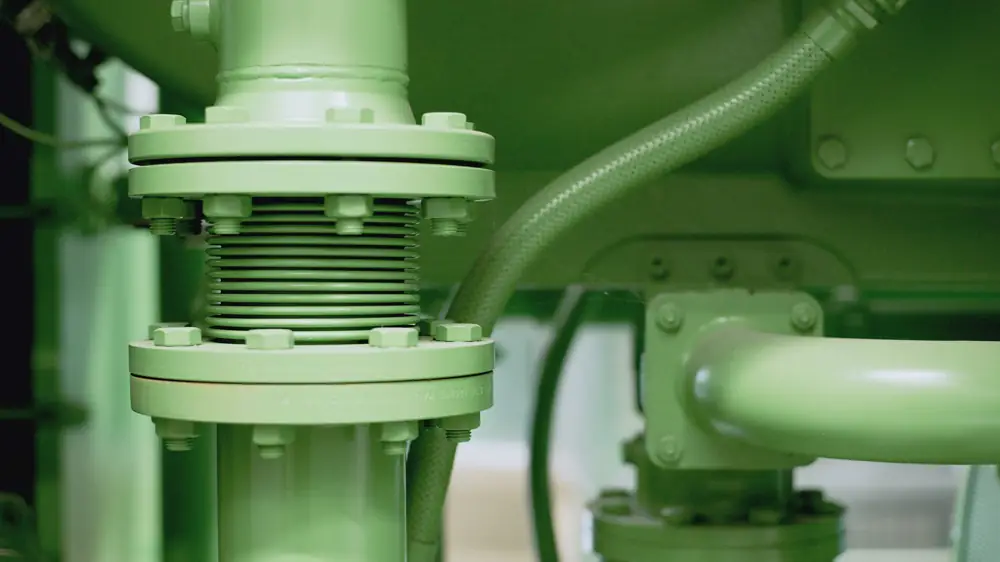
A grab sampling system is a panel-mounted assembly built from isolation valves, a purge line and a sample cylinder or bottle. It captures a discrete, point-in-time ("grab" or spot) sample of a pressurized process liquid or gas so a lab can run off-line analysis on it. Crestflo builds these systems from US-serving instrumentation valves, tube fittings, sample cylinders and filters, spanning stainless steel through nickel and CRA alloys. They come in open-loop and low-emission closed-loop configurations, and delivery runs 6-8 weeks.
What a Grab Sampling System Is (Spot, Process & Sample-Collection Systems)
A grab sampling system captures a single sample at one moment in the process. That sets it apart from a continuous analyzer feed or a composite sampler, which blends many aliquots over time. The panel taps a live, pressurized line, isolates a fixed volume, and sends it into a sample cylinder or bottle for transport to a lab. Since the sample reflects current process conditions, this is the standard tool for routine quality checks, custody-transfer verification, troubleshooting an upset, and periodic corrosion or contamination monitoring.
A well-built system's real value comes down to one thing: a representative sample, taken safely. First, a purge step flushes stagnant fluid out of the dead leg between the process tap and the sample point. That way, what lands in the cylinder reflects the bulk stream, not fluid that's been sitting there aging. Closed-loop designs go a step further and route that purge fluid back to a lower-pressure process point instead of venting it outright, which protects the operator and cuts fugitive emissions. Crestflo supplies the valves, fittings, cylinders and filters that make up that panel, each one alloy-matched for sour, chloride, acid, cryogenic and high-purity service.
Also Known As: Grab Sampler, Spot Sampling System & Closed-Loop Sampler
Engineers know this equipment by several names, depending on the plant and the process phase involved. A grab sampling system also goes by grab sample system, grab sampler, or spot sampling system. When the purge returns to process, it becomes a closed-loop grab sampling system, closed-loop sampling system, or closed-loop sampler. When it vents or drains the purge instead, it's an open-loop or vent-to-atmosphere system. Sorted by phase, you'll hear liquid grab sampling system or liquid sampling system, and gas grab sampling system or gas sampling system. By form factor, it's a grab sampling panel, sampling panel, sample module, cabinet, or enclosure. And by function, engineers call it a representative sampling system, a process grab sampling panel, or just a sample-collection system.
How Grab Sampling Works: Isolate, Purge, Capture & Disconnect
The grab sampling method is a short, repeatable sequence any operator can run right at the panel.
- Isolate the sample point from the process with the primary isolation valve (needle or ball).
- Purge the dead leg of its stagnant fluid: send it to a drain or vent if the system is open, or route it back to a lower-pressure process point or flare if the loop is closed. Keep flushing until what's coming through is fresh and representative.
- Capture that fresh fluid into the sample cylinder or bottle through the fill valve. Watch the flow rate closely, and for gas, keep an eye on pressure too, so the cylinder fills cleanly.
- Close the valves to trap the sample at process pressure and seal the cylinder.
- Disconnect the cylinder at the quick-connect and transport it to the laboratory.
Getting enough purge volume before you take the sample matters more than people think. Size the purge path too small, or leave a dead leg that's too long, and what you capture won't represent the process at all, it'll just be stale fluid sitting in a dead zone. With flashing or two-phase liquids, a constant-pressure floating-piston cylinder solves this: it holds the sample as a single phase the whole way from tap to lab.
Open vs Closed-Loop vs Fast-Loop Grab Sampling Systems
The loop type dictates how purge fluid gets handled. It also drives how much operator exposure and fugitive emission the system generates.
| Loop type | How purge is handled | Emission / exposure | Best for |
|---|---|---|---|
| Open (vent-to-atmosphere / drain) | Purge fluid vents or drains locally before capture | Highest, operator and atmosphere see purge fluid | Non-hazardous, low-toxicity, low-volatility streams |
| Closed-loop (purge-to-process) | Purge returns to a lower-pressure process point or flare header | Lowest, no local venting of process fluid | Toxic, sour (H₂S), volatile or high-value streams |
| Fast-loop / by-pass | A continuous fast side-stream keeps fresh fluid at the panel; the grab is taken from it | Low, with a fresh sample and short lag | Long tap-to-panel runs and streams that stratify or age |
On modern refinery, petrochemical and gas-processing units, exposure and emission limits call the shots, so closed-loop and fast-loop designs have become the standard choice. Open-loop's still fine for utility and non-hazardous service, though. Crestflo builds all three from one interchangeable set of valves and fittings.
Liquid vs Gas Grab Sampling Systems
Liquid and gas systems follow the same isolate-purge-capture logic, but the capture vessel and the flow control they need aren't the same.
| Attribute | Liquid grab sampling system | Gas grab sampling system |
|---|---|---|
| Capture vessel | Sample cylinder or bottle; constant-pressure cylinder for flashing service | DOT/TC sample cylinder filled to a controlled pressure |
| Flow / pressure control | Metering or needle valve controls flush and fill rate | Pressure-reducing regulator plus flow control |
| Key risk | Flashing / vaporization of light ends on pressure drop | Condensation of heavy ends; over-pressuring the cylinder |
| Typical add-ons | Sample cooler / cooling coil for hot liquids | Regulator, flow indicator (rotameter), particulate filter |
For gas service, pair the panel with a single-stage pressure-reducing regulator; for flashing or hot liquids, a cooling coil and a constant-pressure cylinder keep the captured sample representative.
What's Inside a Crestflo Grab Sampling System: Valves, Cylinders & Filters
A grab sampling system is really just an assembly. Every building block in it is a Crestflo instrumentation product. That's what lets you specify the whole panel in one alloy, to a single traceability standard, with one lead time.
| Component | Function in the system | Crestflo product |
|---|---|---|
| Isolation valve | Isolates the sample point from the live process | Needle valve · Ball valve |
| Purge / bleed valve | Flushes the dead leg; vents trapped pressure safely | Purge valve · Bleed valve |
| Sample cylinder | Holds the captured liquid or gas sample | Sampling cylinders (DOT/TC) |
| Quick-connect / quick-disconnect coupling | Connects and disconnects the cylinder cleanly | Quick-connect couplings |
| Particulate filter | Keeps solids out of the sample and the valves | Inline filters · Tee-type filters |
| Check valve | Prevents back-flow of purge or sample | Check valve |
| Regulator (gas) | Reduces and controls sample-gas pressure | Pressure-reducing regulator |
| Sample tubing | Connects tap, panel and cylinder | Instrumentation tubing |
These same components cover light sample conditioning at the panel, coarse particulate filtration, pressure reduction and temperature control so the fluid reaches the cylinder clean and single-phase; deeper analyzer-grade sample conditioning is handled on the analytical sampling systems page.
Tube-fitting connections carry performance qualification to ASTM F1387, and they interchange dimensionally with the major instrumentation brands. The isolation and control valves are a different matter: they're built and rated to the valve standards that actually apply, ASME B16.34 and the relevant API valve-test standards, not to any compression-fitting standard.
Grab Sampling System Materials: 316L, 904L, Duplex, 254 SMO & Nickel Alloys
Material choice tracks the corrosivity of the sampled stream. Every wetted component in the path, valves, fittings, cylinder, tube, comes from one matched alloy. No mismatched metals, no contamination risk, and the panel holds up under service. The UNS designations below are the standard published grade identifiers.
| Grade (UNS) | Family | Choose when |
|---|---|---|
| 316 / 316L (S31600 / S31603) | Austenitic stainless | General refinery, chemical and utility sampling |
| 904L (N08904) | Super-austenitic stainless | Sulfuric / phosphoric acid and higher-chloride streams |
| Duplex 2205 (S32205) | Duplex stainless | Chloride stress-corrosion risk with higher strength |
| Super Duplex 2507 (S32750) | Super duplex | Seawater, brine and aggressive chloride service |
| 254 SMO (S31254) | 6Mo super-austenitic | High-chloride, oxidizing and pitting-prone media |
| AL-6XN (N08367) | 6Mo super-austenitic | Strong chloride and seawater sampling |
| Alloy 20 (N08020) | Nickel-iron-chromium | Hot sulfuric acid streams |
| Monel 400 (N04400) | Nickel-copper | Hydrofluoric acid and reducing service |
| Inconel 625 (N06625) | Nickel-chromium | High-temperature and mixed-acid corrosion |
| Hastelloy C-276 (N10276) | Nickel-molybdenum-chromium | Wet chlorine, hypochlorite and severe acids |
| Titanium Gr2 (R50400) | Titanium | Oxidizing chlorides and seawater |
Wetted components for sour service are supplied to NACE MR0175 / ISO 15156 material requirements. Higher chloride levels. A jump in acid concentration. More H₂S. Each pushes the required material further from 316L, toward 6Mo, Super Duplex, Alloy 20, or the nickel alloys. That's covered in more depth in the material selection by service guide and sour-service selection under NACE.
Grab Sampling System Specifications: Pressure, Temperature, Cylinders & Connections
The system's overall limits come down to whichever component rates lowest, usually the sample cylinder, and to the seal material chosen for the job. The figures given below follow the relevant published standard, though they can be adjusted to fit your needs. We confirm the exact rating for your specific configuration when we send the quote.
- Pressure rating: The cylinder and valve build determines this. Instrumentation valves, fittings, and cylinders come in the standard instrumentation pressure classes, and sample cylinders carry their marked DOT/TC service pressure. The panel takes on the rating of whichever wetted-path element rates lowest.
- Temperature rating: This comes down to the seal and packing material, plus whatever media you're sampling. PTFE seals top out around 232 °C (450 °F); PEEK and graphite handle more heat. For hot liquids, add a sample cooler or a cooling coil.
- Sample cylinder: DOT/TC-rated cylinders, constant-pressure floating-piston versions included for flashing and two-phase service. Sizes and end connections are listed on the sampling-cylinders page.
- End / connections: Inlet and outlet come as tube-fitting (compression, ASTM F1387-qualified) or threaded (NPT per ASME B1.20.1), with a quick-connect fitted at the cylinder. Both imperial and metric are available.
- Cleaning: Electropolish and passivation come standard on request. Oxygen and ultra-high-purity cleaning follow the applicable cleanliness specification for O₂ and UHP service.
Configure & Specify Your Grab Sampling System
A grab sampling system is engineered around the specific stream, so it's quoted per configuration rather than sold as a fixed catalog item. Specify the sample phase (liquid or gas), the loop type (open, closed-loop or fast-loop), wetted material, pressure class, sample-cylinder type and size, valve set, cleaning level, and mounting or enclosure. Send that specification, a P&ID extract, or a datasheet. Crestflo configures and quotes the panel to match. Datasheets and CAD models are available on request, and the engineering team can supply the ordering-code guide for a standard configuration. Check how to specify instrumentation fittings and valves for the full data checklist, then request a quote.
Standards, Certifications & Traceability for Grab Sampling Systems
Crestflo holds ISO 9001 / 14001 / 45001 & PED certification. Every component in the panel carries a heat/lot number and ships with an EN 10204 3.1 material test certificate as standard; a 3.2 certificate's available on request. Tube-fitting connections are performance-qualified to ASTM F1387. Isolation and control valves are built to ASME B16.34 and tested against the applicable API valve standards. Sour-service builds meet NACE MR0175 / ISO 15156. Testing covers PMI, in-house non-destructive testing, and hydraulic-proof testing, with destructive testing carried out at ISO/IEC 17025-accredited laboratories. Third-party inspection, on request. Full details sit at material test certificates & traceability and oxygen / UHP cleaning.
Where Grab Sampling Systems Are Used: Refining, Petrochemical, LNG & Analyzer Feed
Grab sampling systems serve any plant that needs an off-line sample of a pressurized stream to reflect what's actually flowing. In downstream refining, that means crude and product sampling. Petrochemical and chemical plants rely on them for feedstock and product checks. In LNG and cryogenic service, they cover spot sampling and custody verification, and they feed analytical sampling systems in the lab. Closed-loop panels come into play whenever the stream is toxic, sour, volatile or high-value, and venting locally just isn't acceptable.
Why Buy Grab Sampling Systems from Crestflo
Crestflo is a US-serving grab sampling system manufacturer and supplier/vendor. It's the instrumentation division of an export house that's been operating for four decades, carries Government-of-India recognition, and has a long track record delivering into the Middle East. Behind the focused instrumentation brand sits a heritage of engineered, traceable supply. For grab sampling systems, that means:
- One alloy, one panel: the entire wetted path (valves, fittings, cylinder, filter and tube) ships matched in a single material line, stainless through nickel and CRA alloys. It handles sour, chloride, acid, cryogenic and high-purity service without swapping components.
- Interchange, proven: tube-fitting components carry performance qualification to ASTM F1387 and interchange dimensionally with the majors' parts. That means panels drop straight into existing designs, no redesign required.
- Delivery you can plan: standard items sit ready in stock; specials get built to order. Lead time runs 6-8 weeks, against the 20-plus weeks common from the majors.
- Traceability as standard: every part is marked with a heat number and comes with an EN 10204 3.1 MTC, 3.2 on request. PMI and NDT back each one up.
- Small MOQ and private label for OEMs and panel fabricators, cost-competitive after US duties.
Indian-origin material with complete traceability from source to finished product. Need US or European melt instead? That's available on request for jobs requiring domestic-melt or TAA-eligible supply.
Reach out to Crestflo's engineering team directly at sales@crestflousa.com · +1 346 594 9005, based in Houston, TX. Ready to move forward? Request a quote, request a sample, or become a distributor.
Grab Sampling System FAQ
What is a grab sampling system?
A grab sampling system is a panel-mounted assembly built from isolation valves, a purge line, and a sample cylinder or bottle. Its job is to capture a single, point-in-time sample of a pressurized process liquid or gas for lab analysis later on. The system taps into a live line, purges out the stagnant fluid so what's left is truly representative, and then traps fresh fluid in a cylinder for transport to the lab.
What is the difference between a grab sample and a composite sample?
A grab sample, also called a spot sample, captures conditions at a single moment in time. A composite sample works differently: it blends multiple aliquots collected over a period to give you an average picture. Process streams typically rely on grab sampling for routine checks, custody verification and troubleshooting. Composite or continuous methods, on the other hand, track a running average over time. Environmental composite-versus-grab comparisons fall under separate regulatory rules and aren't covered here.
What is the grab sampling method?
Start by isolating the sample point from the process. Then purge the stagnant fluid, sending it to a drain, a vent, or, in a closed-loop system, back into the process. Once that's done, capture fresh fluid into the cylinder and close the valves to trap it. Disconnect the cylinder and carry it to the lab. One thing matters most: purge enough volume before you capture the sample, or it won't represent the process fluid accurately.
What is a closed-loop grab sampling system?
A closed-loop grab sampling system sends the purge fluid back to a lower-pressure process point or a flare header, rather than venting or draining it on site. No local release. Operator exposure drops, fugitive emissions drop with it, and that's exactly why closed-loop setups are standard practice for toxic, sour, volatile and high-value streams.
Can Crestflo build both liquid and gas grab sampling systems?
Yes. For liquids, the setup relies on a sample cylinder or bottle with a controlled flush. Flashing service calls for a constant-pressure cylinder, and hot liquids need a cooling coil. Gas systems work differently: they add a pressure-reducing regulator and flow control to fill a DOT/TC cylinder cleanly. Pricing for both comes per application, built from the same interchangeable set of valves and fittings.
What materials are available for grab sampling systems?
We supply stainless steels 304, 304L, 316 and 316L, along with 904L. The duplex and super-austenitic lineup covers Duplex 2205, Super Duplex 2507, 254 SMO, AL-6XN and Alloy 20. On the nickel side there's Monel, Inconel, Incoloy, Hastelloy and Nickel 200/201, plus Titanium Gr2. Every material gets matched to the corrosivity of the sampled stream, and the whole wetted path ships in one consistent alloy.
Are grab sampling systems available for sour (H₂S) service?
Yes. Every wetted component is supplied to NACE MR0175 / ISO 15156 material requirements for sour service. The CRA grade itself is selected specifically for the stream's H₂S, chloride and temperature conditions.
Can the wetted parts be oxygen- or UHP-cleaned?
Yes. We offer oxygen and ultra-high-purity cleaning on request, along with electropolish and passivation, to whatever cleanliness spec applies. Just specify the target cleanliness level on the RFQ.
Is a Crestflo grab sampling system a Swagelok or Parker alternative?
Crestflo builds its systems from ASTM F1387-qualified instrumentation fittings and valves, engineered to interchange dimensionally with the major brands. Swagelok® and Parker® are trademarks of their respective owners, and Crestflo isn't affiliated with them or endorsed by them. Need a specific part-number match? Request your cross-reference from the engineering team through the cross-reference program.
What certifications and traceability come with the system?
Crestflo holds ISO 9001, 14001, and 45001 certification, along with PED certification. Every part ships with a heat/lot number and an EN 10204 3.1 material test certificate as standard; a 3.2 certificate is available on request. It's backed by PMI checks, in-house NDT, and hydraulic-proof testing. Destructive testing happens at ISO/IEC 17025 laboratories, with third-party inspection available on request.
What is the lead time, and where are the systems made?
Typical delivery runs 6-8 weeks. That's faster than the 20-plus weeks common from the majors. Ready stock covers standard items, while specials are made to order, and both small MOQ and private-label options are available. Standard product is of Indian origin with full material traceability. US and European melt can be arranged on request wherever domestic-melt or TAA-eligible material is required.
Related Products & Resources
- All instrumentation accessories
- Sampling cylinders (DOT/TC) · Needle valves · Ball valves · Quick-connect couplings
- Purge valves · Bleed valves · Inline filters · Pressure-reducing regulator
- Analytical sampling systems · Downstream refining · LNG & cryogenic
- 316/316L material · NACE MR0175 · ASTM F1387 · Oxygen / UHP cleaning
- Reviewed by the Crestflo Engineering Team