
ASME BPE Standard (Bioprocessing Equipment): Scope, Parts, Surface Finishes & Conforming Instrumentation
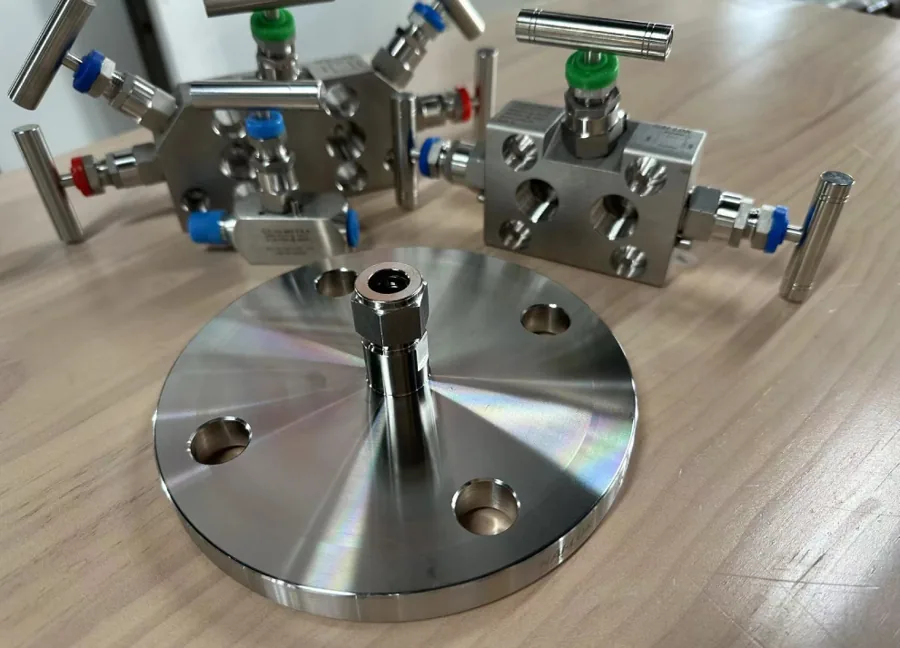
ASME BPE (Bioprocessing Equipment) is an American National Standard covering the design, materials, surface finish, dimensions, joining, seals, and documentation of equipment used in bioprocessing, pharmaceutical, and personal-care manufacturing. The ASME BPE Standards Committee develops and maintains it, and it stands as the reference specification for hygienic, high-purity fluid systems, systems where cleanability, drainability, and surface quality can't be an afterthought.
On this page, "BPE" refers to the ASME Bioprocessing Equipment standard for hygienic process systems. It doesn't mean "biomass power," "bisphenol," or "business process," even though those share the same letters.
Also Known As: ASME-BPE, BPE Standard & Bioprocessing Equipment
Engineers and specifiers refer to this standard by several names. Some write it as ASME BPE, others as ASME-BPE, and plenty just call it the BPE standard. Spelled out, it becomes ASME Bioprocessing Equipment or Bio-Processing Equipment. Cited by edition, you'll see ASME BPE-2019, BPE-2022, or BPE-2024. In hygienic-system drawings and specifications, the same document shows up as the bioprocessing equipment standard or the high-purity / sanitary process-equipment standard.
Every one of these labels points to the same ANSI-accredited consensus document. The acronym, the full name, and the expanded phrase all mean one thing: the BPE acronym stands for Bioprocessing Equipment. So when someone asks what is ASME BPE?, the answer is this single standard, most often referenced by whichever edition is current.
What ASME BPE Covers: Scope of the Bioprocessing Equipment Standard
ASME BPE covers every part of a hygienic process system that touches the product or the clean-in-place media.
- Hygienic and high-purity fluid systems (e.g., Water-for-Injection, high-purity water, buffers, clean media)
- System design for cleanability and drainability, slope, dead-leg limits, and self-draining geometry
- Metallic and polymeric materials of construction
- Surface finish, including mechanically polished and electropolished grades
- Automatic (orbital) tube welds and hygienic-clamp joining
- Dimensions and tolerances of process components (fittings, tube, ferrules)
- Sealing components and hygienic unions
- Process instrumentation connections
- Documentation, examination, and material traceability
ASME BPE is not a pressure-integrity code. Process-piping codes cover pressure design in parallel, ASME B31.3 and, where applicable, the ASME Boiler and Pressure Vessel Code. Both apply alongside BPE, not in place of it.
ASME BPE Parts & Section Structure (GR, SD, DT, MJ, SF, MM, PM, SG, PI)
ASME BPE breaks down into lettered Parts, and each one governs a different aspect of hygienic-equipment specification. Which Parts appear depends on the licensed edition; what follows just reflects how the standard is actually organized.
| Part | Name | What it governs |
|---|---|---|
| GR | General Requirements | Terminology, general scope, and common requirements |
| SD | Systems Design | Cleanability, drainability, slope, and dead-leg limits |
| DT | Dimensions & Tolerances | Process-component dimensions, fitting, tube OD/wall tolerances, and delta-ferrule / ferrule dimensions |
| MJ | Material Joining | Weld qualification, orbital welding, and inspection |
| SF | Surface Finish | Ra limits for mechanically polished and electropolished grades |
| SG | Sealing Components | Gaskets, seals, and hygienic unions |
| PM | Polymeric & Nonmetallic Materials | Elastomers and plastics |
| MM | Metallic Materials | 316L and higher corrosion-resistant alloy requirements, traceability |
| PI | Process Instrumentation | Hygienic instrument connections |
Part designations and content follow whichever edition of ASME BPE applies; check the exact roster and requirements against the licensed standard itself.
ASME BPE Surface Finish (SF1–SF6): Ra Limits in µin and µm
The Surface Finish (SF) Part sets maximum arithmetic-average roughness (Ra) limits across a set of designations, covering both mechanically polished and electropolished product-contact surfaces. Electropolishing doesn't always produce a lower Ra than mechanical polishing at a given grade. What it does deliver is different: a smoother, more passive, chromium-enriched surface, and that's what drives better corrosion resistance and easier cleaning.
| SF grade | Method | Ra max (µin) | Ra max (µm) |
|---|---|---|---|
| SF1 | Mechanically polished | ≤ 20 | ≤ 0.51 |
| SF2 | Mechanically polished | ≤ 25 | ≤ 0.64 |
| SF3 | Mechanically polished | ≤ 30 | ≤ 0.76 |
| SF4 | Electropolished | ≤ 15 | ≤ 0.38 |
| SF5 | Electropolished | ≤ 20 | ≤ 0.51 |
| SF6 | Electropolished | ≤ 25 | ≤ 0.64 |
Values follow the widely published ASME BPE SF tables. Check the exact Ra limits against the current licensed edition before you specify anything. When ordering, state your target SF grade and Ra so the finish gets manufactured to your requirement. Crestflo's electropolished tubing page covers both mechanically polished and electropolished forms.
ASME BPE Materials & Seals (MM, PM, SG): 316L and CRA Requirements
The workhorse metallic material for BPE product-contact surfaces is 316L stainless steel; higher corrosion-resistant alloys are permitted where the process chemistry demands them. Polymeric and elastomeric seal materials specified under PM and SG are expected to meet biocompatibility and cleanability expectations such as USP Class VI and cGMP practice. Crestflo manufactures hygienic instrumentation forms in 316/316L, with a broader alloy range, 904L, Duplex 2205, Super Duplex 2507, 254 SMO, AL-6XN, Alloy 20, and nickel alloys, available for demanding media. Grade composition and property detail is covered on the 316/316L material page.
ASME BPE vs 3-A, B31.3, BPVC & ASTM A270/A269/A213
ASME BPE is one of several standards a hygienic system references. The comparison below shows where each one fits.
| Standard | What it governs | Relationship to ASME BPE |
|---|---|---|
| ASME BPE | Hygienic-equipment design, finish, joining, documentation | The subject standard |
| 3-A Sanitary Standards | Dairy and food sanitary equipment | Parallel hygienic standard for food/dairy rather than pharma/biopharma |
| ASME B31.3 | Process-piping pressure integrity | Applies in parallel for pressure design; BPE does not cover it |
| ASME BPVC | Pressure vessels | Applies where the system includes coded vessels |
| ASTM A270 / A269 / A213 / A249 | Stainless tube material and product specifications | Feed the material and tube requirements a BPE system draws on |
| EN 10357 / ISO 1127 | European and international tube dimensions | Alternative dimensional bases outside the BPE DT system |
| USP Class VI, cGMP/FDA, EHEDG | Biocompatibility and hygienic-design context | Regulatory and design context BPE conformance supports |
Standards & Proof: Documentation Behind BPE-Aligned Supply
ASME BPE conformance is demonstrated by declaration plus documentation, there is no ASME stamp or mark for BPE. The evidence a hygienic system relies on is material certification, weld and examination records, and surface-finish verification. Crestflo supports this with EN 10204 3.1 material test certificates (3.2 on request) and heat/lot-number marking on every part, see EN 10204 MTC and material traceability. Verification includes PMI (positive material identification), in-house NDT, destructive testing at ISO/IEC 17025-accredited laboratories, and electropolish/passivation records, with third-party inspection available on request. Crestflo is ISO 9001 / 14001 / 45001 & PED certified.
BPE-Aligned Crestflo Instrumentation: Fittings, Tubing & Valves
Crestflo delivers BPE-aligned, high-purity instrumentation, backed by the material verification that BPE documentation requires. Match your BPE need to the product that meets it:
| BPE need | Crestflo product | Documentation |
|---|---|---|
| Automatic-weld / hygienic tube fittings | Orbital-weld tube fittings | EN 10204 3.1/3.2 MTC, heat number, PMI |
| Electropolished, SF4–SF6-target tubing | Electropolished tubing | EP/passivation records, Ra to specified target |
| Hygienic shut-off / control valves | Diaphragm valves | ASME B16.34 / API qualification, traceability |
| 316L and higher-alloy material | 316/316L material | Full heat-number traceability |
Components are made to the applicable ASME BPE requirements: BPE-compliant fittings with automatic OD tube weld ends or hygienic clamp ends, and BPE tubing dimensions and OD tolerances. They can be customized to your specified SF grade, alloy, and end configuration. Fittings are performance-qualified to ASTM F1387 for drop-in dimensional interchange. Hygienic valves qualify to ASME B16.34 / API. On stock and lead time, standard items ship from ready stock, specials are made to order, and delivery runs 6-8 weeks. Origin is Indian, though US or European melt is available on request, and full material traceability comes standard.
Specifying to ASME BPE? Send your line list or drawing and request a quote on BPE-aligned high-purity fittings, EP tubing, and diaphragm valves, or request a sample. Reach the US sales team at sales@crestflousa.com or +1 346 594 9005 (Houston, TX).
Who Uses ASME BPE: Pharma, Biotech & High-Purity Semiconductor
Crestflo has seen ASME BPE specified across pharmaceutical and biotech manufacturing, biopharma and vaccine production, personal-care processing, and high-purity / semiconductor ultrapure-water systems. Wherever hygienic design, surface finish, and full material traceability govern product contact, this standard tends to show up.
Why Crestflo for BPE-Aligned Instrumentation
Crestflo is the instrumentation division of a four-decade-old export house recognized by the Government of India, with a delivery track record across the Middle East. That heritage stands behind a hygienic instrumentation line built for US drop-in supply: ASTM F1387-qualified interchange on fittings, a 6–8 week lead time against the 20-plus weeks typical of the majors, small MOQ and private-label options, and full heat-number traceability with EN 10204 3.1/3.2 MTC on every part. We manufacture to the applicable ASME BPE requirements, and we customize finish, alloy, and connection to your specification. We Engineer Confidence.
Frequently Asked Questions About ASME BPE
What does ASME BPE stand for?
ASME BPE stands for Bioprocessing Equipment, an American National Standard covering hygienic, high-purity process-system equipment. The ASME BPE Standards Committee maintains it.
What is the ASME BPE pipe standard?
ASME B31.3 and ASME BPVC govern pressure integrity, which this document doesn't address. What it covers instead is design, materials, surface finish, dimensions, joining, seals, and documentation for tubing, fittings, and components used in bioprocessing and pharmaceutical systems.
What is BPE pipe or tubing?
BPE tubing is hygienic, high-purity tube, usually 316L, mechanically polished or electropolished. It's built to ASME BPE surface-finish and dimensional requirements for clean media such as Water-for-Injection.
What is the current version of the ASME BPE standard?
ASME updates BPE roughly every two years; the recent editions are BPE-2019, BPE-2022, and BPE-2024. Check your project specification for the edition it names, and reference the current licensed standard.
What are the ASME BPE surface finish (SF) grades?
SF designations cover mechanically polished surfaces (SF1–SF3) and electropolished surfaces (SF4–SF6), each carrying a maximum Ra. Check the SF table above for the µin and µm limits.
What Ra does ASME BPE require?
Ra limits depend on SF grade, roughly ≤15–30 µin (≤0.38–0.76 µm) across the common ones. Check the licensed edition for exact figures, and be sure to spell out your target Ra when you place an order.
Is there an ASME BPE certification or stamp?
No ASME mark or stamp exists for BPE. Conformance instead rests on declaration plus documentation: material certificates, weld and examination records, and surface-finish verification.
What is the difference between ASME BPE and 3-A?
ASME BPE covers hygienic equipment for pharmaceutical and biopharma work. 3-A Sanitary Standards, by contrast, apply to dairy and food sanitary equipment. Each is a hygienic standard, just aimed at a different industry.
What materials does ASME BPE use?
316L stainless steel makes up most of the build, though higher corrosion-resistant alloys are allowed where the chemistry demands it. Polymeric seals need to meet USP Class VI and cGMP expectations.
Does Crestflo supply ASME BPE-aligned components?
Crestflo offers BPE-aligned high-purity/orbital-weld fittings, electropolished tubing, and hygienic diaphragm valves in 316/316L and higher alloys. Each shipment comes with EN 10204 3.1/3.2 MTC, heat-number traceability, PMI, and ISO/IEC 17025 destructive testing.
Where can I get the ASME BPE PDF?
The standard has to be purchased from ASME; there's no free download available. For authoritative Part rosters and Ra values, reference the current licensed edition.
Is ASME BPE mandatory?
ASME BPE is a voluntary consensus standard, though pharmaceutical and biopharma owners often make it a contractual requirement. CGMP practice frequently demands it too.