
Back Pressure Regulators: Stainless & High-Nickel Alloy
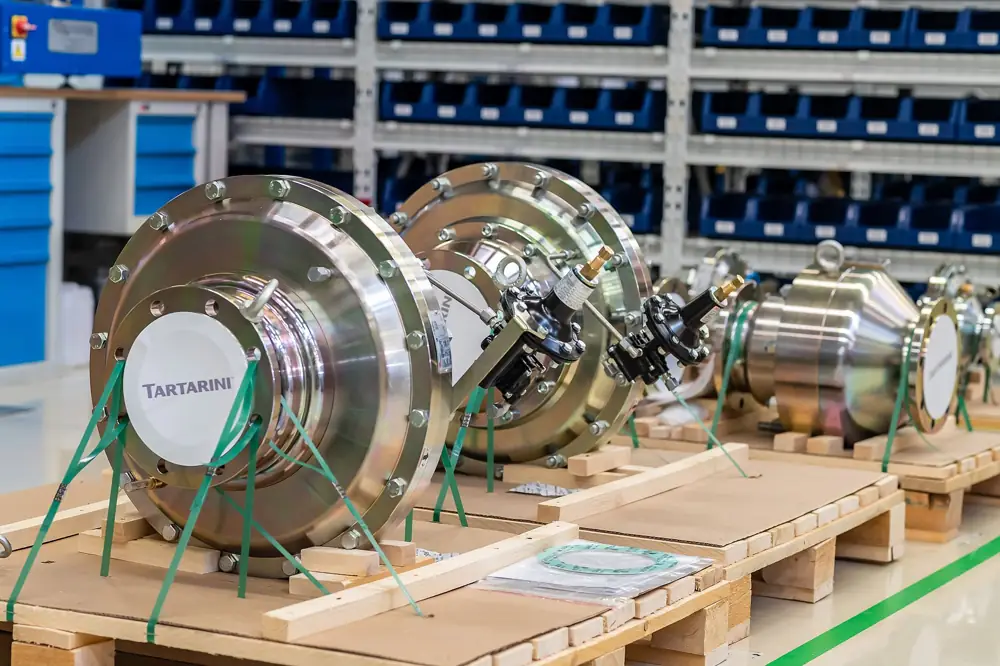
A back pressure regulator, or BPR, is a self-actuated device that holds steady, set pressure upstream of its inlet. When that upstream pressure climbs above the setpoint, it opens gradually and bleeds off the excess downstream. Crestflo builds its instrumentation back pressure regulators in 316 and 316L stainless, plus duplex, super-austenitic and high-nickel alloys. Actuation comes spring-loaded or dome-loaded, ends are tube-fitting or threaded, and every part carries a heat and lot number. EN 10204 MTC 3.1 certification is standard, not an option you pay extra for. Standard items ship from stock; anything else is made to order, with delivery running six to eight weeks. Either way, the unit drops straight in as a replacement for the major brands.
On this page, back pressure regulator refers to an instrumentation or process flow-control device that holds a set upstream pressure. It isn't an automotive exhaust back-pressure component, and it isn't a plumbing backflow or backwater preventer. It also differs from a pressure-reducing regulator, which controls downstream pressure instead, and from a relief or safety valve, a fail-open device that responds only to over-pressure rather than providing continuous modulating control.
Also Known As: Back Pressure Valve, Control Valve & BPR
A back pressure valve goes by several names: back pressure control valve, back-pressure regulator valve, backpressure regulator as one word, or just BPR. Loading type sorts it further, spring-loaded, dome-loaded (air- or gas-loaded), diaphragm or piston type, and electronic or electro-pneumatic, which covers pilot- or I/P-loaded versions. Service gives you another set of labels: gas, liquid, low-flow, high-pressure, sanitary. By function, people call it a back pressure sustaining valve or an overflow valve.
When placing an order, specifiers need to nail down the loading type, the set-pressure range, body and seat material, plus size and end connection.
How a Back Pressure Regulator Works: Working Principle & P&ID Symbol
The regulator works on the opposite principle of a pressure-reducing valve. A sensing element, either a diaphragm or a piston, faces the inlet (upstream) pressure on one side and a reference load on the other, which might be a spring or a dome pressure. By default the valve stays normally closed. As long as upstream pressure sits below the setpoint, that reference load keeps the seat shut tight. Once upstream pressure climbs past the setpoint, though, it overpowers the reference load, lifts the sensing element, and cracks the seat open. Just enough flow passes downstream to hold the inlet at the set value. Increase the spring load or the dome pressure and the regulator will hold a higher upstream pressure. Decrease it and the regulator holds less.
On a P&ID, the back pressure regulator shows up as a self-actuated regulator symbol, a valve body with an integral diaphragm/spring actuator. The pressure tap comes off the upstream line. That's the detail that sets it apart on a drawing from a downstream-sensing pressure-reducing regulator.
Back Pressure Regulator Types: Spring-Loaded, Dome-Loaded, Diaphragm & Pneumatic
How a regulator loads and senses pressure determines its accuracy, adjustability and turndown. The table below shows each type, how it's set, and where it fits best. Crestflo confirms which loading types it builds for a given service on the RFQ.
| Loading / sensing type | How the setpoint is set | Sensing element | Best suited to |
|---|---|---|---|
| Spring-loaded | Manual adjustment screw changes spring load | Diaphragm or piston | General, self-contained upstream pressure holding |
| Dome-loaded (air/gas-loaded) | External reference (dome) pressure set remotely | Diaphragm | Wide turndown, remote or precise set, fast response |
| Diaphragm-sensed | Spring or dome reference against a diaphragm | Diaphragm | Low-flow, sensitive, low-to-moderate pressure |
| Piston-sensed | Spring or dome reference against a piston | Piston | Higher pressure, more robust seat load |
| Electronic / electro-pneumatic (pilot- or I/P-loaded) | Loading pressure from a pilot or I/P transducer | Diaphragm | Automated or setpoint-tracking control loops |
An adjustable back pressure regulator isn't a distinct design; it's simply any of the types above fitted with a field-settable spring or dome. For self-contained duty, engineers default to the spring-loaded diaphragm type. When the setpoint has to track a process variable or be trimmed remotely, the dome-loaded type takes over.
Back Pressure Regulator vs Pressure-Reducing Regulator vs Relief Valve
People mix up these three devices all the time, and it's easy to see why: each one modulates against a spring or a reference load. The real difference comes down to two things. Which pressure each one controls, and how it behaves under normal operating conditions.
| Device | Pressure it controls | Normal state | Function |
|---|---|---|---|
| Back pressure regulator | Upstream / inlet | Normally closed | Continuously holds a set upstream pressure, relieving excess downstream |
| Pressure-reducing regulator | Downstream / outlet | Normally open | Continuously holds a set downstream pressure, throttling supply |
| Relief / safety valve | Upstream (set-point) | Normally closed | Opens only on over-pressure as a safety device, then reseats |
A back pressure regulator and a relief valve share a basic instinct: both sense upstream pressure and open when it climbs. Where they differ is behavior. A BPR modulates continuously, holding a steady process pressure through normal running. A relief valve, by contrast, is a fail-safe device. It stays shut until an over-pressure event occurs.
Need downstream or outlet control? See the single-stage pressure-reducing regulator or the dual-stage pressure-reducing regulator. For a dedicated over-pressure safety device, see the relief valve.
High-Pressure & Low-Flow Back Pressure Regulator Ratings
Set-pressure span, maximum working pressure, flow coefficient (Cv) and turndown all come down to the model, orifice, spring range and sensing element chosen. These are matched to the service; none of them is fixed to a single catalog number. Body pressure-temperature capability follows the design standard that applies to the body alloy and connection in question. Maximum service temperature, though, is set by the seat, diaphragm and seal material, not the body metal. Values follow the applicable standard and can be adjusted to what the requirement calls for.
For high-pressure back-pressure work, the piston-sensed build paired with the dedicated high-pressure regulator family stretches the range further. Low-flow analytical and reactor duty calls for something different: a sensitive diaphragm build with a small orifice, built for fine control right at the setpoint. Need the certified set-pressure range, Cv, and MWP for a specific model? Submit an RFQ with your fluid, flow, and upstream pressure, and ask our engineering team for the ordering-code and rating guide.
Back Pressure Regulator Materials: 316L Stainless to Hastelloy C-276
Wetted bodies and internals are machined from bar stock, built to ASTM A479/A276 in stainless, duplex, super-austenitic and nickel alloys. Brass isn't used. Each grade links out to its own material page, and the regulator ships only in instrumentation form, not as bar, sheet or mill product.
| Family | Grade (UNS) | Typical driver |
|---|---|---|
| Stainless | 316/316L (S31600/S31603), 304/304L (S30400/S30403), 904L (N08904) | General gas and liquid service; 904L for higher chloride resistance |
| Duplex / super-austenitic | Duplex 2205 (S32205), Super Duplex 2507 (S32750), 254 SMO (S31254), AL-6XN (N08367), Alloy 20 (N08020) | High-chloride, offshore and acid service needing strength plus pitting resistance |
| Nickel | Monel 400 (N04400), Inconel 625 (N06625), Inconel 718 (N07718), Hastelloy C-276 (N10276) | Sour, halide and aggressive-chemical service; reducing acids and seawater |
| Titanium | Titanium Gr2 (R50400) | Seawater and oxidising-chloride service |
Sour-service material options meet the requirements of NACE MR0175 / ISO 15156. Finish options run wide: material finish, electropolish, passivation, silver anti-galling plating, plus custom builds tailored to your spec. Need oxygen service cleaning? Crestflo handles that on request. Browse all instrumentation materials here.
Back Pressure Regulator Sizes & End Connections: Tube-Fitting, NPT, VCR & Flanged
Back pressure regulators come in both imperial fractional and metric sizes, and the end connection is chosen to match the line. Thread and OD dimensions follow the applicable standard, though they can be customized as needed.
| End type | Standard basis | Sizes |
|---|---|---|
| Compression tube-fitting | ASTM F1387 (end connections) | Imperial 1/8″–1″ and metric 3–25 mm |
| NPT threaded | ASME B1.20.1 | 1/8″–1″ |
| VCR / face-seal | Metal face-seal | 1/4″–1/2″ |
| Flanged | Applicable flange standard | To requirement |
Compression tube-fitting ends take hardened or non-hardened ferrules, whichever the job calls for, and the end connections themselves are qualified to ASTM F1387. For a drop-in swap on an existing installation, you'll need to request your Swagelok®, Equilibar® or Emerson® cross-reference and specify the size, ends, loading type and material.
Seat & Diaphragm Materials: Temperature Limits
What sets the maximum service temperature isn't the body alloy at all. It's the soft-goods: the seat, the diaphragm, the seals. Below are the commonly published continuous-service limits for each material. Crestflo supplies the seat and diaphragm combination best matched to the service.
| Seat / diaphragm / seal material | Typical continuous-service temperature (published limits) |
|---|---|
| PTFE | –65°F to +450°F (–54°C to +232°C) |
| PEEK | up to approx. +550°F (+288°C) |
| FKM (fluoroelastomer) | –15°F to +400°F (–26°C to +204°C) |
| EPDM | –65°F to +300°F (–54°C to +149°C) |
| FFKM (perfluoroelastomer) | up to approx. +550°F (+288°C) |
Values follow the applicable material standard and can be tailored to your requirements. Don't forget to confirm the seat and diaphragm selection for your temperature and media on the RFQ.
Back Pressure Regulator Applications: Sampling, Flow Chemistry & Pump Discharge
Back pressure regulators keep upstream pressure steady wherever a process needs a fixed reference point. That covers analytical sampling systems and grab-sampling loops, flow-chemistry and continuous reactor rigs, chromatography and HPLC back-pressure control, pump-discharge and bypass loops, and skids holding gas, liquid, steam, or two-phase pressure. Crestflo's units show up in the field across analytical sampling systems, oil and gas, petrochemical and chemical, and hydrogen plants. Sanitary and hygienic builds, plus high-purity requirements, are handled by the high-purity regulator.
How to Adjust a Back Pressure Regulator
On a spring-loaded back pressure regulator, turn the adjustment screw or knob to change the spring load. Tighten it and the upstream pressure the regulator holds goes up; loosen it and that pressure drops. A dome-loaded regulator works differently: you change the reference pressure fed into the dome, and the regulator will hold an upstream pressure that's essentially equal to whatever that dome pressure is. Watch a gauge on the inlet line as you adjust, and move in small increments while the system is flowing so the seat has time to settle at the new setpoint. Each unit ships with its own model-specific set-up procedure.
Standards, Certifications & Traceability
Crestflo holds ISO 9001, ISO 14001, ISO 45001 and PED certification. Its back pressure regulators carry the standard approvals expected of instrumentation flow-control components: ASME B1.20.1 for NPT threads, ASTM A479 / A276 for bar stock, and ASTM F1387 for compression tube-fitting end connections. For sour service, material options meet NACE MR0175 / ISO 15156.
Every regulator carries a heat/lot number stamped right on the part and comes standard with an EN 10204 MTC 3.1 certificate. Need third-party sign-off? MTC 3.2 is available on request. Crestflo keeps certificates on file within the quality system, and content pages simply state conformance rather than listing certificate numbers.
Testing & Quality Assurance
Every regulator goes through hydraulic proof and burst testing, pneumatic and seat-leak checks, and positive material identification (PMI) to confirm the alloy. In-house staff handle non-destructive testing; destructive testing gets sent out to ISO/IEC 17025-accredited laboratories, and third-party inspection is available on request. That's what backs the drop-in interchange claim. The regulator earns its qualification through testing, not a line in a catalog.
Why Buy Crestflo Back Pressure Regulators
Crestflo makes and supplies back pressure regulators for US buyers. It's the instrumentation division of a four-decade-old export house recognized by the Government of India, with a proven record of delivery across the Middle East. Established heritage stands behind this focused new manufacturing brand. For US buyers, that adds up to a clear offer:
- Drop-in dimensional interchange for Swagelok®, Equilibar®, Emerson® and Cashco® back pressure regulators. Skip re-engineering the loop and request your part-number cross-reference instead.
- Ready stock for standard items, made-to-order for specials, 6-8 week delivery. Compare that to the 20-week-plus lead times the majors typically quote.
- Full alloy breadth, spanning 316L through Monel, Hastelloy, Duplex and Titanium, all machined in-house in imperial and metric.
- Small MOQ and private-label programs for OEMs and distributors, with kitting to print.
- ISO 9001 / 14001 / 45001 and PED certified, MTC 3.1 and heat-number traceability on every part.
Indian-origin material, with US or European melt available on request. Full material traceability comes standard for TAA/DFARS-driven projects.
We Engineer Confidence. Request a quote, request a sample, or become a distributor. Reach Crestflo's US sales team at sales@crestflousa.com or +1 346 594 9005, based in Houston, TX.
Back Pressure Regulator FAQs
What does a back pressure regulator do?
It maintains a constant, set pressure upstream of its inlet. When that pressure climbs above the setpoint, it opens and releases excess media downstream. This keeps process pressure steady on the supply side, a pump discharge, a sampling loop, a flow reactor, without anyone standing there throttling a valve by hand.
What is the difference between a pressure regulator and a back pressure regulator?
A standard pressure-reducing regulator manages the pressure downstream of itself. It's normally open, throttling the supply to hold a set outlet pressure. A back pressure regulator works the opposite way: it controls pressure upstream of itself, stays normally closed, and opens only to relieve flow so the inlet pressure holds at the setpoint. Downstream gets protected and stabilised by the first regulator; upstream, by the second.
What is another name for a back pressure valve?
It is also known as a back pressure regulator, a back pressure control valve, or a back-pressure regulator valve. Some call it a back pressure sustaining valve or an overflow valve, depending on what it does. BPR is the common shorthand. People sometimes use the term loosely for a simple relief-style device that builds back pressure, calling that a back pressure valve too, but a true regulator isn't the same thing. It modulates continuously. A relief device just opens when pressure gets too high.
Is a back pressure regulator the same as a relief valve?
No. A relief valve is a fail-open safety device. It stays shut until an over-pressure event forces it open, then reseats once the excess is gone, protecting the equipment downstream. A back pressure regulator works differently: it modulates continuously during normal operation, holding upstream pressure steady. The two can look alike, and both sense upstream pressure, but that's where the resemblance ends. One's a safety device. The other's a process-control device.
How do I adjust a back pressure regulator?
On a spring-loaded regulator, turn the adjustment screw to change the spring load. Tighten it and the held upstream pressure rises; loosen it and the pressure drops. A dome-loaded regulator works differently: change the reference pressure fed to the dome, and the regulator holds an upstream pressure close to that dome pressure. Make adjustments against an inlet-line gauge, in small increments, while flowing.
What materials are back pressure regulators available in?
304/304L and 316/316L stainless make up the core lineup, alongside 904L, Duplex 2205, Super Duplex 2507, 254 SMO, AL-6XN and Alloy 20. Monel 400, Inconel 625, Inconel 718, Hastelloy C-276 and Titanium Gr2 round it out. Sour-service builds meet NACE MR0175 / ISO 15156. Brass isn't offered. Bodies and internals get machined from ASTM A479/A276 bar stock.
What pressure and temperature can a back pressure regulator handle?
Set-pressure span, maximum working pressure and Cv depend on the model, spring range, orifice and sensing element, and get matched to the service. Ratings follow the applicable standard, but they can be customized to requirement.
The seat and diaphragm material sets the maximum temperature. PTFE, for instance, handles about +450°F, while PEEK reaches roughly +550°F. Confirm the certified ratings for your model on the RFQ.
What connections and sizes are available?
Sizes come in imperial and metric. Ends can be compression tube-fitting, NPT (per ASME B1.20.1), VCR/face-seal, or flanged. The compression tube-fitting connections meet ASTM F1387 qualification and take hardened or non-hardened ferrules as needed. When you submit your RFQ, you'll want to specify the size and end type for your line.
Can Crestflo supply a drop-in replacement for another brand's back pressure regulator?
Yes. Our regulators are engineered for dimensional interchange with the major brands, and the compression tube-fitting ends are qualified by test to ASTM F1387. Swagelok®, Equilibar®, Emerson® and Cashco® are trademarks of their respective owners. Parts are interchange/equivalent, not compatible/intermix. Reach out to our engineering team for your part-number cross-reference.
What is the lead time and minimum order?
Ready stock covers standard items; specials are made to order, with delivery running 6-8 weeks. Small MOQs and private-label options are both available. Standard product is of Indian origin, though US or European melt can be arranged on request wherever domestic-melt or TAA compliance is needed.
What traceability and certification do you provide?
Each regulator comes standard with an EN 10204 MTC 3.1 certificate, and 3.2 is available on request. Every part carries a stamped heat/lot number. Crestflo manufactures under ISO 9001, ISO 14001, ISO 45001 and PED certification. PMI, in-house NDT and third-party inspection can all be arranged on request.
Related Pages
- All instrumentation pressure regulators
- Crestflo offers both options for step-down pressure control: Single-stage pressure-reducing regulator and Dual-stage pressure-reducing regulator.
- For demanding applications, there's the High-pressure regulator and, where purity matters most, the High-purity regulator.
- Relief valve
- NACE MR0175 sour-service compliance · ASTM F1387 interchange proof
- Swagelok cross-reference