
Hydrogen Instrumentation Fittings, Valves & Tubing for H₂ Service
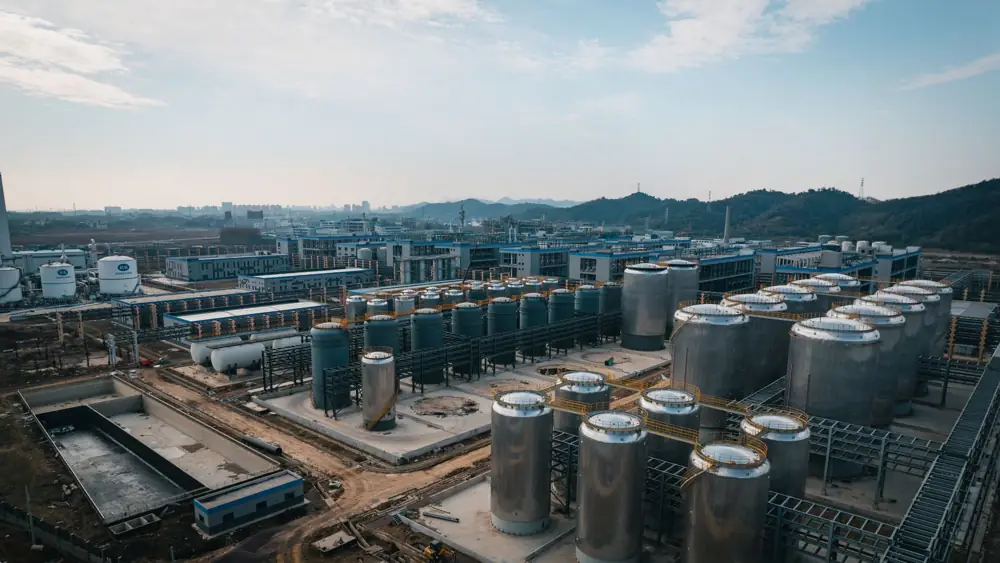
Hydrogen instrumentation is the collection of tube fittings, valves, regulators and tubing that carries, isolates, throttles and measures gaseous and liquid hydrogen inside fluid systems. Alloys and pressure classes aren't picked casually; they're selected to resist embrittlement, leakage and cryogenic temperature. Crestflo supplies that instrumentation in 316/316L austenitic stainless and high-nickel alloys. Customers span hydrogen refueling stations, electrolyzers, storage and compression skids, pipelines and fuel-cell systems, all across the United States. US delivery runs 6–8 weeks.
Crestflo works in hydrogen fluid systems at the instrumentation level: fittings, valves, regulators and tubing. It doesn't cover hydrogen production plant equipment, fuel-cell stacks, electrolyzer cells, storage vessels, or hydrogen as an investment. When this document says "ball valve," "needle valve," "check valve" or "manifold," it means instrumentation-grade components, not plumbing or automotive parts.
Hydrogen Instrumentation Is Also Specified As H₂, GH₂ & LH₂ Service Components
Buyers and specifiers describe this hardware many ways, and Crestflo supplies it under all of them. The molecule itself is written H₂ or dihydrogen. Gaseous hydrogen shows up as GH₂, CGH₂ or compressed hydrogen, while liquid hydrogen goes by LH₂, LCH₂ or cryogenic hydrogen. By production route, that same molecule gets called green hydrogen (electrolysis), blue hydrogen (with carbon capture), gray, pink/nuclear or turquoise hydrogen. These color labels describe the source, not the fitting. Component-level requests run the gamut: hydrogen tube fittings, hydrogen compression and double-ferrule fittings, hydrogen high-pressure and cone-and-thread fittings, hydrogen ball, needle, check/NRV, relief, bleed and double-block-and-bleed valves, hydrogen valve manifolds, hydrogen pressure regulators, hydrogen face-seal (VCR/VCO) and quick-connect fittings, and hydrogen instrumentation tubing. Pressure duties get called out as 350 bar (~5,000 psi) storage, 700 bar (~10,150 psi) dispensing and 875 bar test. Failure modes carry their own names too: hydrogen embrittlement (HE), hydrogen environment embrittlement (HEE), internal hydrogen embrittlement (IHE), hydrogen-assisted cracking (HAC) and hydrogen permeation.
Why Hydrogen Is Hard on Fittings, Valves & Tubing: Embrittlement, Pressure & Cryogenic Service
Hydrogen puts real strain on instrumentation, and that strain breaks down into four distinct reasons, each one calling for its own material or design fix. The figures below are standard, published hydrogen-engineering numbers. Instrumentation itself can be customized to whatever the requirement calls for.
| Service driver | What it does | Design response | How Crestflo answers it |
|---|---|---|---|
| Hydrogen embrittlement (HE/HEE/IHE) | Small hydrogen atoms diffuse into metal and reduce ductility; high-strength martensitic and precipitation-hardened steels are most susceptible | Select stable austenitic or nickel alloys per ASME B31.12 material rules | 316/316L austenite and high-nickel alloys as the default build metallurgy |
| High pressure | Storage ~350 bar (5,000 psi); dispensers ~700 bar (10,150 psi) | Rate fittings and valves well above working pressure | Cone-and-thread high-pressure fittings to 30,000 psi; compression fittings ASTM F1387-tested |
| Cryogenic temperature (LH₂) | Liquid hydrogen at ~ -423 °F (-253 °C / 20 K) can embrittle ferritic metals | Use austenitic stainless that keeps toughness at cryogenic temperature | 316/316L fittings, valves and tubing; seal material specified by temperature |
| Leak-tightness & permeation | Hydrogen's tiny molecule finds any leak path | Tube-fitting integrity plus leak testing (pneumatic/helium) | Double-ferrule tube fittings; pneumatic and helium leak testing available on request |
Purity brings a fifth driver into play for fuel-cell and analyzer duty. Ultra-high-purity hydrogen demands oxygen/UHP-cleaned surfaces.
Hydrogen-Compatible Materials: 316/316L, Inconel 625, Monel 400 & 904L
For most hydrogen systems, 316/316L is the workhorse alloy. Its stable austenitic structure and nickel content resist hydrogen embrittlement and keep toughness intact even at cryogenic temperature. Nickel and super-austenitic alloys take on severe or combined-corrosion duty. Compositions and mechanical properties sit on each material's page; this table stops at selection level, and grades come only as instrumentation forms (fittings, valves, tubing). Values follow the applicable standard, though they're customizable to requirement.
| Alloy | UNS | Why for hydrogen | Best use | Material page |
|---|---|---|---|---|
| 316 / 316L stainless | S31600 / S31603 | Austenitic; resists HE; tough at cryogenic temperature | Default for GH₂ and LH₂ instrumentation | 316/316L for hydrogen service |
| Inconel 625 | N06625 | High nickel; strength and corrosion resistance for severe duty | High-pressure and combined-corrosion H₂ service | Inconel 625 |
| Monel 400 | N04400 | Nickel-copper; strong HE resistance | Severe-duty and marine hydrogen service | Monel 400 |
| 904L super-austenitic | N08904 | High nickel/moly for chloride-plus-hydrogen environments | Where chlorides coexist with H₂ | 904L |
| Hastelloy C-276 | N10276 | High nickel-molybdenum-chromium; severe combined-corrosion resistance for hydrogen-plus-aggressive-media duty | Sour or acid chemistries alongside hydrogen | Hastelloy C-276 |
| High-strength / duplex (caution) | — | High-strength martensitic, PH and some duplex grades are more HE-susceptible at high strength | Select with care per ASME B31.12 | duplex 2205 |
When chlorides and sour gas turn up alongside hydrogen, Crestflo will supply alloys to NACE MR0175 / ISO 15156 on request. For a wider view, see the material selection by service guide. Need the base-grade comparison? The 304 vs 316 page covers it.
Hydrogen Pressure Classes 350 & 700 Bar: Matching Product to Duty
Hydrogen systems cover a wide range, from low-pressure sampling all the way up to 700-bar dispensing. The pressure figures listed below reflect standard system values. Crestflo product ratings, on the other hand, follow the applicable standard and can be customized.
| H₂ pressure class | Approx. psi / bar | Recommended Crestflo product | Product page |
|---|---|---|---|
| Low-pressure sampling / analyzer | to ~500 psi | Instrumentation tube fittings, needle & bleed valves | Tube fittings |
| Storage | ~5,000 psi / 350 bar | High-pressure fittings, ball & check valves | High-pressure fittings |
| Dispensing | ~10,150 psi / 700 bar | Cone-and-thread fittings, high-pressure regulators | Cone-and-thread fittings |
| Cryogenic LH₂ transfer | temperature-driven, ~ -423 °F | 316/316L fittings, valves & tubing; temperature-rated seals | Instrumentation tubing |
Hydrogen Fittings, Valves, Regulators & Tubing
Crestflo builds a complete instrumentation line for hydrogen service. Every piece uses hydrogen-appropriate alloy, and it comes in both imperial and metric sizes.
Crestflo's hydrogen tube and compression fittings use a double-ferrule, or twin-ferrule, design. Both single- and double-ferrule versions are available. Every one is tested per ASTM F1387, with end connections running up to 2" (50 mm) OD. For the full lineup, check the hydrogen tube & compression fittings and ferrules pages.
Face-seal and quick-connect fittings for high-purity hydrogen. Metal-gasket VCR face-seal fittings deliver the leak-tight, low-entrapment connection that ultra-high-purity and fuel-cell hydrogen applications demand. For lower-pressure sampling and analyzer loops, VCO O-ring face-seal fittings do the job instead. Quick-connects round things out, giving fast, repeatable hook-ups for panels and test stands. See VCR face-seal fittings, VCO O-ring face-seal fittings, and hydrogen quick connects from Crestflo.
High-pressure fittings for 350 and 700-bar hydrogen service. It's a cone-and-thread design in high-tensile stainless, rated to 30,000 psi for dispenser duty. See the cone-and-thread fittings, plus the 10,000 psi and 15,000 psi classes.
Hydrogen service valves cover instrumentation ball, needle, check/NRV, relief, bleed, double-block-and-bleed, and 2/3/5-valve manifolds, in sizes from 1/16" to 1". Each type is qualified to ASME B16.34 / API as applicable. For zero-leak hydrogen duty, bellows and diaphragm (packless) constructions do the job.
Hydrogen pressure regulators come in several configurations: single- and dual-stage pressure-reducing units, high-pressure models, cylinder and changeover types, and back-pressure regulators. Crestflo covers this range with its high-pressure regulator, gas cylinder regulator, and cylinder changeover regulator.
Hydrogen instrumentation tubing, 316/316L and alloy tubing, seamless or coiled, built for instrumentation service → instrumentation tubing, seamless tubing and coiled tubing.
Hydrogen Valve Selector: Isolation, Throttle, Non-Return & Overpressure
| Function | Component | Crestflo type | Product page |
|---|---|---|---|
| Isolation | Ball valve | Instrumentation ball / isolation valve | Ball valve |
| Throttle / gauge-root | Needle valve | Instrumentation needle valve | Needle valve |
| Non-return | Check / NRV | Check valve, non-return valve | Check valve · NRV |
| Overpressure | Relief valve | Instrumentation relief valve | Relief valve |
| Venting | Bleed valve | Bleed / vent valve | Bleed valve |
| Positive isolation | Double block & bleed | DBB per ASME B16.34 | Double block and bleed valve |
| Multi-instrument hook-up | Valve manifold | 2/3/5-valve manifold | 3-valve manifold |
Hydrogen Applications: Fueling Stations, Electrolyzers, LH₂ & Fuel Cells
Crestflo instrumentation covers the hydrogen value chain from production straight through to point of use. Hydrogen refueling stations (HRS) and 700-bar dispensers call for high-pressure fittings, isolation and check valves, and regulators. Green hydrogen PEM and alkaline electrolyzer skids, along with blue hydrogen paired with carbon capture (CCS), rely on tube fittings, manifolds and sampling valves. Liquid hydrogen (LH₂) cryogenic transfer is a different challenge: it draws on austenitic fittings, valves and tubing, plus temperature-matched seals. That's covered in the cryogenic/LNG selection guide and on the LNG & cryogenic industry page. Hydrogen storage and compression skids, pipelines and blending, power-to-gas (P2G), fuel-cell systems, hydrogen sampling and analyzer systems (see analytical sampling systems), and ammonia-to-hydrogen cracking all draw from the same instrumentation line.
Hydrogen Standards & Codes: ASME B31.12, ISO 19880, ASTM F1387 & Oxygen Cleaning
Hydrogen instrumentation is built to meet the fluid-system codes and qualification standards listed below. Crestflo confirms conformance to the standard approvals that apply to each product type, and certificates are available at quality.
| Standard / code | Scope for hydrogen | Crestflo relevance | Reference |
|---|---|---|---|
| ASME B31.12 | Hydrogen piping & pipeline design and material rules | Design reference for alloy selection and rating | ASME B31.3 (nearest piping code) |
| ISO 19880 / ISO 15916 | Hydrogen fueling stations; basic safety | Design reference for station instrumentation | — |
| ASTM F1387 | Mechanical performance qualification of compression fittings | Crestflo compression fittings tested per F1387 | ASTM F1387 |
| ASME B16.34 / API | Valve pressure-temperature ratings | Crestflo valves qualify to B16.34 / API as applicable | ASME B16.34 |
| SAE J2600 / J2601, CGA H-5, EIGA IGC Doc 121 | Fueling connectors, protocols and hydrogen safety practice | Reference for fueling-station scope | — |
| NACE MR0175 / ISO 15156 | Materials where H₂ and H₂S coexist | Sour-service materials on request | NACE MR0175 |
| ASTM G93 / CGA G-4.1 | Oxygen/UHP cleaning for high-purity H₂ | Oxygen/UHP cleaning available | ASTM G93 · CGA G-4.1 |
| EN 10204 3.1 / 3.2 | Material test certification | 3.1 standard, 3.2 on request | Traceability |
Hydrogen embrittlement gets checked against test methods like ASTM G142. If a given order needs a qualification program, spell that out on the RFQ, and Crestflo's engineering team will confirm which basis applies.
Hydrogen Instrumentation Testing, Traceability & QA
Crestflo holds ISO 9001, 14001, 45001, and PED certification. Every instrument goes through hydraulic proof, burst and impulse testing, pneumatic testing, flexure and rotary-flex fatigue, vibration, thermal cycling, pull-out and vacuum testing. That's rounded out by positive material identification (PMI) and 100% seat and shell leak testing on manifolds. On request, helium leak testing for hydrogen tightness is also available. Non-destructive testing is done in-house; destructive testing is carried out at ISO/IEC 17025-accredited labs. Third-party inspection can be arranged on request as well. Every part carries a heat/lot number, backed by EN 10204 3.1 material test certification as standard, with 3.2 available on request. For more detail, see material traceability and oxygen/UHP cleaning.
Why Crestflo for Hydrogen Instrumentation
Crestflo is the instrumentation division of an export house that's been recognized by the Government of India for four decades, with a proven delivery record across the Middle East. The company now builds instrumentation fittings, valves, regulators and tubing for hydrogen systems in the US market. We engineer confidence. For a hydrogen buyer, here's what that actually means:
- Fast lead time: ready stock for standard items, made-to-order for specials, 6–8 week delivery, versus 20+ weeks typical for the majors.
- Drop-in interchange: dimensional interchange with Swagelok®, Parker®, Hoke®, Hy-Lok® and Fitok® fittings, backed by ASTM F1387 performance qualification. Request your cross-reference from our engineering team rather than a generic parts table.
- Origin, stated honestly: Indian origin; US / European melt available on request, with full material traceability. Where domestic-melt or TAA is required, melt options are quoted on request, see US-origin compliance.
- Both imperial and metric sizes across all fittings and valves.
- Small MOQ and private label for OEMs → private-label program.
Datasheets and CAD models are available to customers on request. Equipment manufacturers can send a print and talk directly to an engineer. Distributors can request a line card by visiting become a distributor, Crestflo's page for that process.
Hydrogen Instrumentation FAQ
What type of valve is used for hydrogen service?
Isolation duty falls to ball valves. Needle valves handle throttling and gauge-root work, while check and NRV valves take care of non-return. Overpressure and venting go to relief and bleed valves, with double-block-and-bleed and manifold valves fitted on the transmitters. Every one of these is built in 316/316L or a high-nickel alloy for hydrogen service, and each qualifies to ASME B16.34 / API as applicable to each type.
Is 316/316L stainless steel good for hydrogen service?
Yes. 316/316L is the default alloy for gaseous and liquid hydrogen, and it earns that role. Its stable austenitic structure and nickel content resist hydrogen embrittlement, and the alloy doesn't lose its toughness at cryogenic temperatures either. Crestflo supplies it across all hydrogen fittings, valves and tubing.
Does hydrogen cause embrittlement in stainless steel?
Austenitic stainless steels, 304/304L and 316/316L, along with high-nickel alloys, resist hydrogen embrittlement well. High-strength martensitic grades, precipitation-hardened alloys, and some duplex grades don't hold up nearly as well. These need careful selection, guided by the material rules in ASME B31.12.
What pressure rating do hydrogen fittings need?
Storage systems typically run around 350 bar (~5,000 psi), while dispensers at fueling stations climb to roughly 700 bar (~10,150 psi). Crestflo's cone-and-thread high-pressure fittings carry a rating of 30,000 psi. Compression fittings are ASTM F1387-tested. That covers both duties. Ratings follow the applicable standard, and they're customizable to whatever a project needs.
What materials are compatible with hydrogen?
316/316L austenitic stainless does most of the heavy lifting. Inconel 625 and Monel 400 step in for severe or high-pressure duty. Where chlorides and hydrogen show up together, 904L and the super-austenitic grades are the better fit. High-strength, high-hardness steels get left out entirely, since they're more prone to embrittlement.
Can Crestflo supply instrumentation for liquid hydrogen (LH₂)?
316/316L stainless and alloy fittings, valves and tubing hold up fine in cryogenic hydrogen service at roughly -423 °F (-253 °C). Seal material depends on temperature, so confirm it on your RFQ. Check our cryogenic selection guidance for the full approach.
At what psi does hydrogen turn to liquid?
Liquefaction hinges on temperature, not some single pressure cutoff. At atmospheric pressure, hydrogen turns liquid around -423 °F (-253 °C, or 20 K). Its critical point sits near -400 °F and about 188 psi. Push past that threshold, and pressure alone won't liquefy it anymore.
What is the biggest instrumentation problem with hydrogen?
On the components side, two problems stand out as the toughest: leak-tightness and material embrittlement. Hydrogen's molecule is so small it'll find its way through almost any leak path, which makes the first one especially unforgiving. Both issues get managed the same way: correct austenitic or nickel alloys, ASTM F1387-qualified fittings, and helium leak testing.
Are Crestflo fittings interchangeable with Swagelok for hydrogen systems?
Crestflo compression fittings match dimensions exactly and carry performance qualification under ASTM F1387. Swagelok® is a trademark of Swagelok Company. Crestflo isn't affiliated with or endorsed by that company; these mentions exist purely to show dimensional interchange. Need a cross-reference for Swagelok® or Parker® parts? Just ask our engineering team.
Is Crestflo hydrogen instrumentation made in the USA?
Crestflo serves US customers but manufactures out of India. Need US or European melt instead? It's available on request, backed by full material traceability. Standard product ships in 6–8 weeks and is engineered as a drop-in replacement for US applications. TAA and domestic-melt options aren't glossed over either; we spell them out plainly on our US-origin compliance page.
What lead time applies to hydrogen orders?
Ready stock covers the standard items. Specials get made to order. Delivery runs 6 to 8 weeks, compared with 20-plus weeks typical for the majors. Small MOQs are available, and private-label options too.
Do hydrogen parts come with material traceability?
Yes. Every part carries a heat/lot number. Material test certification follows the EN 10204 3.1 standard, with 3.2 available on request. We can also provide PMI, pneumatic and helium leak testing, and third-party inspection.
Related Hydrogen & Instrumentation Pages
- Crestflo works across a handful of core industries: LNG & cryogenic · carbon capture (CCS) · oil & gas · power generation & nuclear · analytical sampling systems
- Hydrogen supply close to home: Pittsburgh, PA · Denver, CO
- Worth a look: material selection by service · seal material temperature selection · pressure-temperature derating
Building a hydrogen system, or keeping one running? Crestflo supplies 316/316L and high-nickel instrumentation, serving the US with 6–8 week lead times. Request a quote or request a sample. Reach US sales at sales@crestflousa.com, call +1 346 594 9005, or find us in Houston, TX.