
Instrumentation Tubing: Stainless Steel & High-Nickel Alloy, Fully Annealed for Compression Fittings
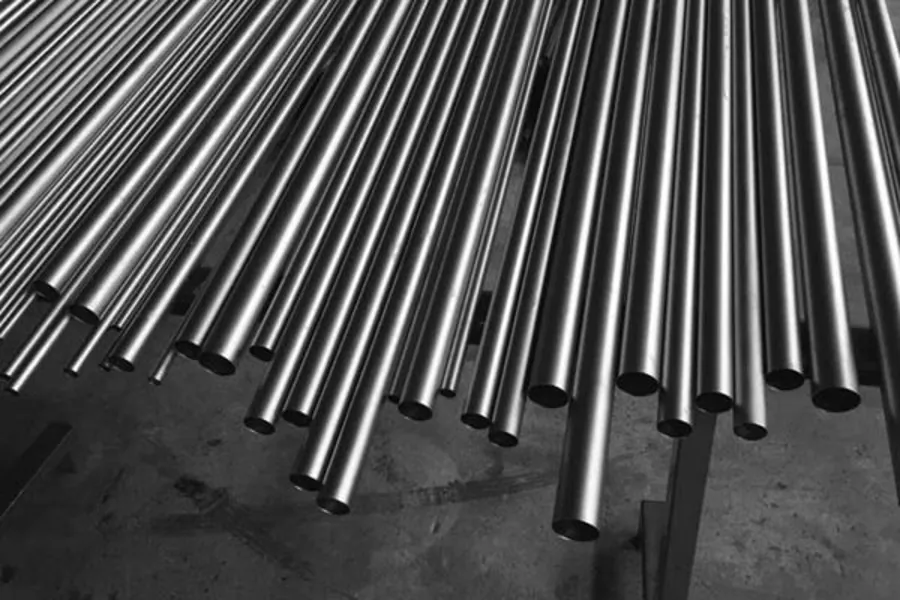
Instrumentation tubing is metal tubing with a small outside diameter, tight tolerances and a fully annealed temper, made to seat and seal inside compression tube fittings. That's what lets it carry pneumatic signals, hydraulic fluid, process gas and sample media between instruments. Crestflo makes it in stainless steel and high-nickel/CRA alloys. Every batch is heat-number traceable, and sizes come in both imperial and metric. Standard items ship from stock. Specials are made to order, with delivery running 6-8 weeks. Request a quote with your OD, wall, alloy and quantity, or request a sample.
What Is Instrumentation Tubing?
Instrumentation tubing is fluid-system tubing sized and controlled by outside diameter (OD) and wall thickness, not nominal pipe size. It's supplied soft enough that a fitting ferrule can grip and seal it without threading or welding the tube. This tubing routes impulse and sensing lines to gauges and transmitters, sample lines to analyzers, and instrument-air and hydraulic lines throughout a plant. The seal is mechanical, so the tube's OD tolerance, ovality and hardness matter just as much as the alloy does.
A quick note on scope: when we say instrumentation tubing, we mean fully-annealed stainless-steel and alloy fluid-system tubing, sized by OD for compression tube fittings. That's it. It doesn't cover electrical conduit, medical or needle tubing, or nominal-bore pipe.
Instrumentation Tubing Also Known As: Instrument Tube, Impulse-Line & Sensing-Line Tubing
Specifying engineers know this product by a lot of different names. Instrumentation tubing shows up as instrument tubing, instrument tube or instrumentation tube, and on drawings you'll see it called impulse-line tubing, sensing-line tubing, sample-line tubing, process tubing or fractional tubing. Stainless grades get their own labels: 316 instrumentation tubing, 316L instrument tubing, SS instrument tubing, stainless steel instrumentation tubing. By condition, engineers call it fully-annealed, fully-softened or dead-soft tubing. As for spec designations, ASTM A269 covers welded and seamless austenitic stainless tubing. ASTM A213 is the seamless standard. ASTM A789 applies to duplex. For metric stock, look to EN 10216 and EN ISO 1127.
Instrumentation Tubing Quick-Spec Summary
| Attribute | Value |
|---|---|
| Condition | Fully annealed / fully softened, hardness-controlled |
| OD range | 1/16″ to 1″ imperial · 3 mm to 25 mm metric (customizable to requirement) |
| Wall gauges | 0.028″, 0.035″, 0.049″, 0.065″, 0.083″ and metric equivalents |
| Construction | Seamless (cold-drawn) or welded-and-drawn |
| Materials | 316/316L, 304/304L, 904L, duplex, super-duplex, 254 SMO, AL-6XN, Alloy 20, Inconel, Monel, Hastelloy, Titanium Gr2 |
| Standards | ASTM A269 / A213 / A789; NACE MR0175 / ISO 15156 for sour service |
| Traceability | Heat/lot number on every part · EN 10204 MTC 3.1 (3.2 on request) |
| Origin | Indian origin; US / European melt available on request |
| Delivery | Ready stock for standard items · made-to-order for specials · 6–8 weeks |
Instrumentation Tubing Sizes: Imperial (1/16″–1″) & Metric (3–25 mm) OD With Wall Gauges
Instrumentation tubing comes in both imperial fractional and metric OD, so it matches either fitting standard. Imperial sizes span 1/16″ to 1″, with 1/4″, 3/8″ and 1/2″ doing most of the work in panel and tubing runs. Metric sizes run from 3 mm to 25 mm, and 6 mm, 8 mm, 10 mm and 12 mm are the ones you'll see most often. Wall thickness gets picked alongside the alloy to hit the working pressure.
The figures below follow the standard fractional-tube gauge series. For full OD by wall by pressure data, see the tubing size chart; for the reasoning behind sizing choices, see tube sizing and wall thickness. Values follow the applicable standard and can be customized to Crestflo's requirement.
| OD (imperial) | OD (metric) | Common wall thicknesses | Typical use |
|---|---|---|---|
| 1/16″, 1/8″ | 3 mm, 6 mm | 0.028″, 0.035″ | Low-flow sensing, analytical sample lines |
| 1/4″ | 6 mm | 0.028″, 0.035″, 0.049″ | General instrument, impulse & air lines |
| 3/8″, 1/2″ | 10 mm, 12 mm | 0.035″, 0.049″, 0.065″ | Higher-flow process & hydraulic lines |
| 5/8″, 3/4″, 1″ | 16 mm, 20 mm, 25 mm | 0.065″, 0.083″ | High-pressure and larger-bore runs |
Both metric and imperial systems are in stock at Crestflo. For matching hardware, check the guide on metric vs imperial tube fittings.
Tubing vs Pipe: Why OD, Wall & Ovality Decide the Fitting Seal
Tubing is specified by its true OD and wall, so a 1/2″ tube measures exactly 0.500″ across. Pipe works differently: its "nominal" size is only a bore approximation. Because a compression fitting is machined to that exact OD, tight OD tolerance and low ovality matter enormously; they're what let the ferrule track around the tube and form a leak-tight seal. That's why instrumentation tubing carries controlled diameter and roundness, and why tube that's undersized, oversized or out-of-round will leak. Working pressure for a given OD and wall comes from the alloy's allowable stress per ASME B31.3. You can estimate it with the tube pressure calculator.
Fully Annealed & Hardness-Controlled Instrument Tubing for Ferrule Sealing
Instrumentation tubing must be fully annealed, fully softened, so the fitting ferrule can bite into and swage the tube wall without cracking it. Tube that is too hard springs back or fractures at the ferrule and leaks. Crestflo supplies fully-annealed, hardness-controlled instrument tubing; for austenitic stainless grades ASTM A269 sets a maximum hardness of 90 HRB in the annealed condition, and softer targets are specified where premium fitting engagement calls for it. Hardened and non-hardened ferrules are matched to the tube and service on the mating compression tube fittings. Values per applicable standard; customizable to requirement.
Instrumentation Tubing Types: Seamless, Welded-&-Drawn, Coiled & Electropolished
Instrumentation tubing comes in two constructions and a handful of forms. Seamless (cold-drawn) tube has no weld seam, and it handles the highest pressures, see seamless tubing. Welded-and-drawn tube gets cold-worked after welding, which gives it a smooth, dimensionally precise wall at a lower cost. Details are at welded tubing.
By form, Crestflo supplies tube in straight lengths, in coiled tubing for long uninterrupted runs, and as electropolished tubing for high-purity and UHP service. Hydraulic and impulse runs are covered on hydraulic tubing. The full alloy range hubs at alloy tubing.
Instrumentation Tubing Materials: 316/316L Stainless to Duplex, 254 SMO & High-Nickel Alloys
Crestflo backs most instrument service with 316/316L stainless as the default. When media get more aggressive, the alloy ladder moves up to duplex, super-austenitic and high-nickel/CRA grades. The company supplies the full range in stainless, high-nickel and titanium, with no brass, copper or aluminum anywhere in the US instrumentation scope.
The compositions and UNS designations below reflect standard published values. Selection should be driven by media, chloride level, temperature and pressure; use material selection by service to work through the choice.
| Alloy | UNS | Key attribute | When to choose | Learn more |
|---|---|---|---|---|
| 316 / 316L | S31600 / S31603 | Molybdenum-bearing austenitic | Default for most instrument and process service | 316/316L |
| 304 / 304L | S30400 / S30403 | General austenitic | Non-chloride, budget-driven duty | 304/304L |
| 904L | N08904 | High-Mo super-austenitic | Sulfuric and phosphoric acids | 904L tubing |
| Duplex 2205 | S32205 | High strength, PREN ~35 | Chloride stress-corrosion resistance | Duplex 2205 tubing |
| Super Duplex 2507 | S32750 | PREN ~42, high strength | Offshore, seawater, high chloride | Super Duplex 2507 tubing |
| 254 SMO | S31254 | 6Mo super-austenitic | Aggressive chlorides and acids | 254 SMO tubing |
| AL-6XN | N08367 | 6Mo super-austenitic | Seawater and bleach service | AL-6XN |
| Alloy 20 | N08020 | Nickel-Cr-Mo-Cu | Hot sulfuric acid | Alloy 20 |
| Inconel 625 | N06625 | Ni-Cr-Mo | High temperature and corrosion | Inconel 625 tubing |
| Inconel 825 | N08825 | Ni-Fe-Cr-Mo-Cu | Reducing and oxidizing acids | Inconel 825 tubing |
| Monel 400 | N04400 | Ni-Cu | Seawater, HF, salt | Monel 400 tubing |
| Hastelloy C-276 | N10276 | Ni-Mo-Cr | Severe reducing/oxidizing media | Hastelloy C-276 tubing |
| Titanium Gr2 | R50400 | Light, seawater-immune | Seawater and chloride cooling | Titanium Gr2 |
Instrumentation Tubing Standards: ASTM A269, A213, A789 & NACE MR0175
Stainless instrument tubing is supplied to ASTM A269 as standard. Where seamless boiler or heat-exchanger-grade tube is called for, ASTM A213 applies instead, and duplex and super-duplex tube follows ASTM A789. Sour-service lines go out to NACE MR0175 / ISO 15156. Crestflo holds ISO 9001 / 14001 / 45001 and PED certification, with certificates kept at quality.
| Standard | Scope | Applies to |
|---|---|---|
| ASTM A269 | Welded & seamless austenitic SS tubing, general service | 304/316 instrument tubing |
| ASTM A213 | Seamless ferritic/austenitic alloy tube | Seamless instrument-grade tube |
| ASTM A789 | Welded & seamless duplex SS tubing | Duplex 2205, Super Duplex 2507 |
| NACE MR0175 / ISO 15156 | Sour-service materials | H2S / sour-gas lines |
| EN 10204 | Inspection documents | MTC 3.1 standard, 3.2 on request |
Pressure & Temperature Ratings for Stainless & Alloy Instrument Tubing
Instrumentation tubing doesn't have one universal pressure rating. Allowable working pressure depends on OD, wall thickness, and the alloy's allowable stress, all calculated per ASME B31.3. A heavier wall, or a stronger alloy such as super-duplex, raises that rating for a given OD. Crestflo's tube pressure calculator returns the figure for any combination you enter.
Temperature suitability depends on the alloy as well, running from cryogenic service with 316L up through sustained high-temperature duty with Inconel and Hastelloy grades. Each material page lists its own limits, so check there for specifics. Every value follows the applicable standard, and figures can be tailored to your requirement.
Cleaning & Surface Finish: Bright-Annealed, Electropolished & Oxygen-Clean Tubing
Standard tube ships bright- or mill-annealed. For high-purity and semiconductor service, electropolished tubing gives you a low-Ra internal surface, so specify your target Ra on the RFQ. Oxygen and UHP systems call for oxygen-cleaned tube, with hydrocarbons removed; details are covered under oxygen and UHP cleaning. Surface and cleanliness targets are set to the applicable standard, and Crestflo will customize them to your requirement.
Tubing + Compression Fittings as a Matched, F1387-Qualified System
An instrumentation fitting is the mechanical connector, usually a single- or double-ferrule compression fitting, that grips and seals the tube without threading it. Crestflo makes the mating compression tube fittings in single- and double-ferrule designs up to 2″ OD, tested to ASTM F1387. Buy tube and fitting from one manufacturer, and the OD tolerance, hardness and ferrule come dimensionally matched as a proven system. Most tube distributors simply can't offer that kind of control.
Instrumentation Tubing Applications: Impulse, Sensing, Sample & Instrument-Air Lines
Instrumentation tubing handles a lot of the quiet, essential work in a process plant. It runs impulse and sensing lines to gauges and transmitters, carries sample lines out to analyzers, and moves instrument-air and hydraulic lines wherever the facility needs them. You'll find it across a wide range of sectors: oil and gas, offshore and subsea, petrochemical and chemical, power generation, semiconductor and UHP, hydrogen, instrument air, hydraulics and analytical sampling systems.
Ordering & Lead Time: Ready Stock, Made-to-Order & 6–8 Week Delivery
You can order by OD, wall thickness, alloy, length or coil, cleaning level, and certificate. Standard items ship from ready stock; specials get made to order, and delivery runs 6-8 weeks (see lead time). Each part carries heat and lot-number marking, and it's EN 10204 MTC 3.1 standard, with 3.2 available on request. The tube itself is of Indian origin, though US or European melt can be arranged on request, and full material traceability comes standard. TAA and country-of-origin questions get answered on the US origin & compliance page. Want the ordering-code guide for your configuration? Request a quote from the Crestflo engineering team, reach out at sales@crestflousa.com, or call +1 346 594 9005 in Houston, TX. Distributors will want to check out the distributor program, while OEMs should look at the private-label program.
Why Buy Instrumentation Tubing From Crestflo
Crestflo is the instrumentation division of an export house that's been operating for four decades and holds Government-of-India recognition, with a long record of shipping into the Middle East. Engineering-grade manufacturing sits behind a brand built for the US market. For instrumentation tubing, here's what that means in practice. The alloy range covers the full ladder: 316/316L, super-duplex, 254 SMO, Inconel, Monel, Hastelloy and Titanium Gr2. Tube and F1387-qualified compression fittings ship as a matched system, in both imperial and metric OD. Every heat number is marked, with MTC 3.1 standard and 3.2 available on request. Certifications span ISO 9001, 14001, 45001 and PED. Small MOQs are handled without fuss, and private-label options are on the table. Delivery lands at 6 to 8 weeks, against the 20-plus weeks typical of the major suppliers. We Engineer Confidence. Buyers in Texas can also start from the Texas tubing supplier page.
Instrumentation Tubing FAQ
What is instrumentation tubing?
Instrumentation tubing is fully-annealed, tight-tolerance stainless or alloy tubing, sized by outside diameter. It carries pneumatic signals, hydraulic fluid, gas, or sample media between instruments. It seals into compression tube fittings without threading or welding the tube.
What are the different types of instrumentation tubing?
Construction splits into two types: cold-drawn tube and welded-and-drawn tube. By form, it's straight lengths, coiled tube, and electropolished/UHP tube. Alloy-wise, options run from 304 and 316 stainless through duplex, super-austenitic, and high-nickel/CRA grades.
What is the purpose of instrumentation tubing?
It carries process signals and fluids leak-tight, holding up under both pressure and temperature. Impulse and sensing lines run to gauges and transmitters. Sample lines feed the analyzers. Instrument-air and hydraulic lines snake throughout the plant.
What is an instrumentation fitting?
Crestflo's instrumentation fittings grip and seal tubing without threading it. Think single- or double-ferrule compression fittings, that's the basic mechanical setup. They're tested to ASTM F1387 and meet F1387 standards throughout. For more, see compression tube fittings.
Does instrumentation tubing need to be fully annealed?
Yes. The tube has to be soft enough for the ferrule to swage and seal it without cracking. That's why instrument tubing comes fully annealed and hardness-controlled. ASTM A269 sets a ceiling of 90 HRB for annealed austenitic hardness.
What sizes does instrumentation tubing come in?
Imperial OD spans 1/16″ to 1″, while metric runs from 3 mm to 25 mm. Common sizes include 1/4″, 3/8″, 1/2″, and 6/8/10/12 mm. Wall gauges cover 0.028″ to 0.083″. For the full range, check the tubing size chart.
What material should I choose for instrumentation tubing?
316 and 316L handle most service needs without much fuss. Chloride exposure or a need for higher strength? That's when duplex and super-duplex take over. For aggressive acids, turn to 254 SMO, AL-6XN, or Alloy 20. Extreme corrosion and temperature demand something tougher: Inconel, Monel, and Hastelloy fit the bill. Titanium Gr2 is the choice for seawater. Check the material selection guide, organized by service, for more detail.
What standards does Crestflo instrumentation tubing meet?
Stainless tube ships to ASTM A269, with A213 seamless as an alternative. Duplex goes out under A789. For sour service, we hold to NACE MR0175 and ISO 15156. One quality system covers it all: ISO 9001, 14001, 45001 certified.
Do you provide material certificates and traceability?
Each part carries a heat and lot number, and it ships with EN 10204 MTC 3.1 certification as standard. Request 3.2 and it's supplied; PMI's available as well. The quality department manages all certification.
Where is Crestflo instrumentation tubing made, and is it TAA-compliant?
Tube ships from Indian origin as standard, with full material traceability. Need US or European melt? It's available on request. Standard product is India-origin; when domestic-melt or TAA eligibility is required, US and European-melt options are offered. That's covered in detail on the US origin & compliance page.
What is the lead time and minimum order for instrumentation tubing?
Standard items ship from ready stock. Specials are made to order, and delivery typically runs 6-8 weeks. Small MOQs and private-label options are available too; you'll just need to send your OD, wall, alloy and quantity for a quote.
Related Tubing, Materials & Standards
For more on where this tubing sits in the product family, see the parent stainless steel & alloy tubing hub. Related forms include seamless tubing, welded tubing, coiled tubing, and electropolished tubing. You'll also find the tubing size chart, the mating compression tube fittings, and guidance on sour-service selection to NACE. The Crestflo Engineering Team reviewed this page.