
Welded Stainless Steel & Alloy Instrumentation Tubing
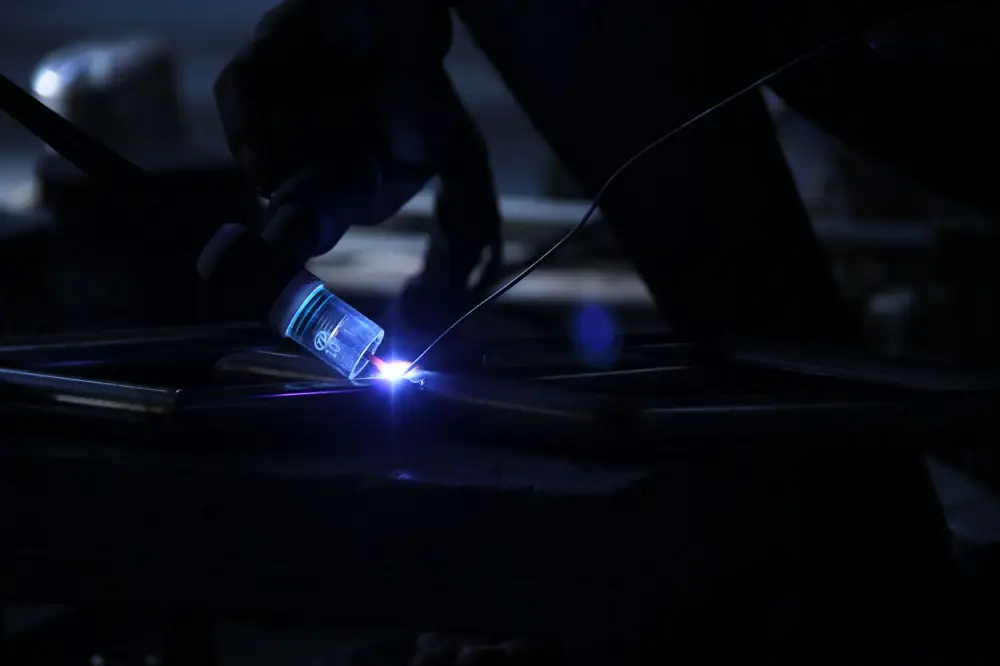
This instrumentation tube is welded and drawn, produced in stainless and nickel/CRA alloys, and it's fitting-ready to ASTM A269. Available in imperial and metric, heat-traceable throughout. We serve US customers, with delivery in 6-8 weeks.
What Is Welded Tubing?
Welded tubing starts as small-diameter tube for fluid systems. It's made by rolling flat strip into a cylinder and joining the edges with a continuous longitudinal fusion weld. For instrumentation service, the tube is then cold-drawn over a mandrel and bright-annealed, which leaves it soft, dimensionally accurate, and ready to fit. Crestflo supplies welded tube in stainless steel and nickel or corrosion-resistant alloys, in both imperial and metric sizes, built to ASTM A269 and ASTM A249. On this page, "welded tubing" refers specifically to small-bore stainless-steel and nickel-alloy tube used in instrumentation and fluid systems. It doesn't include structural or ornamental tube, mechanical drawn-over-mandrel (DOM) tube, or electric-resistance-welded pipe used for framing.
Welded Tube Designations: ERW, Welded-and-Drawn, TIG & Laser-Welded
Crestflo runs into this product under a dozen different names across the industry, though it's always the same thing: a longitudinally welded fluid-system tube. Buyers ask for welded tube, welded steel tube, welded stainless tube, welded stainless steel tubing, or stainless steel welded tubing. Some just say "welded steel tubing", but in that context it always refers to the stainless and nickel/CRA product, never carbon-steel line pipe. Then there are the process-led names. ERW tubing is one, short for electric resistance welded tubing. TIG-welded and laser-welded tube fall in here too, along with as-welded tube. When the weld gets followed by cold reduction and re-annealing, the terms shift to welded-and-drawn (W&D) or double-annealed tube. Finish drives its own vocabulary as well, giving you bright-annealed welded tube. Whatever term shows up on a print, Crestflo quotes the equivalent instrumentation grade, condition, and spec.
How Welded Instrumentation Tube Is Made: Weld, Draw & Bright-Anneal
Production kicks off with a precision-slit strip of the chosen alloy, roll-formed and joined edge-to-edge by a continuous longitudinal weld (typically high-frequency, TIG, or laser). For instrumentation work, the as-welded tube then gets cold-drawn over a plug or mandrel to refine the outside diameter, wall thickness, and concentricity, then bright-annealed under a protective atmosphere. That relieves weld and drawing stresses and brings back a soft, ductile grain structure. This welded-and-drawn route produces tube whose weld zone has been worked and re-annealed to properties close to the parent metal. Structural ERW or DOM tube is a different animal entirely, built for strength rather than sealing. Crestflo manufactures instrumentation tube; it doesn't resell mill product. That's why weld process, draw schedule, and anneal are all controlled to whatever tolerance the fitting demands.
Welded Tube Grades & Alloys: 304L, 316L, Duplex, Inconel, Hastelloy & Titanium
Welded instrumentation tube comes in the full stainless, duplex, nickel, and titanium range. Each grade links out to its metallurgy page and to a dedicated tube page with grade-specific detail. Compositions follow the applicable ASTM/UNS standard. In the US, the material scope centers on stainless and corrosion-resistant alloys; brass, copper, and aluminum aren't offered.
| Grade | UNS | Family | Tube page | Material page |
|---|---|---|---|---|
| 304 / 304L | S30400 / S30403 | Austenitic stainless | — | 304/304L |
| 316 / 316L | S31600 / S31603 | Austenitic stainless | — | 316/316L |
| 904L | N08904 | Super-austenitic | 904L tube | 904L |
| Duplex 2205 | S32205 | Duplex | Duplex 2205 tube | Duplex 2205 |
| Super Duplex 2507 | S32750 | Super duplex | SD 2507 tube | SD 2507 |
| 254 SMO | S31254 | 6-Mo super-austenitic | 254 SMO tube | 254 SMO |
| AL-6XN | N08367 | 6-Mo super-austenitic | — | AL-6XN |
| Alloy 20 | N08020 | Nickel-iron-chromium | — | Alloy 20 |
| Inconel 625 | N06625 | Nickel | Inconel 625 tube | Inconel 625 |
| Inconel/Incoloy 825 | N08825 | Nickel-iron | Inconel 825 tube | Inconel 825 |
| Monel 400 | N04400 | Nickel-copper | Monel 400 tube | Monel 400 |
| Hastelloy C276 | N10276 | Nickel-molybdenum-chromium | Hastelloy C276 tube | Hastelloy C276 |
| Titanium Gr2 | R50400 | Titanium | — | Titanium Gr2 |
Crestflo's alloy tubing hub also covers additional nickel and super-austenitic grades.
Welded Tube Sizes, OD & Wall: Imperial & Metric
Welded instrumentation tube comes in both imperial, fractional-inch, and metric small-bore sizes, so one spec can cover US and international drawings alike. Outside diameter, wall thickness, and tolerance follow the tables in ASTM A269 (and A249 where applicable) for whatever grade and condition you order; the values sit within the applicable standard but can be tailored to what you need. Check Crestflo's tubing size chart for the full OD, wall, and pressure-lookup tables. Wall thickness isn't picked on its own; it's chosen alongside pressure and fitting requirements.
Annealed Condition, Hardness & Compression-Fitting Compatibility
For a compression fitting to seal, the tube must be softer than the ferrule so the ferrule can bite and swage into the tube wall. Instrumentation welded tube is therefore supplied fully annealed / bright-annealed, which is why the welded-and-drawn route matters, the final anneal restores the ductility a leak-tight make-up depends on. Because Crestflo also manufactures the mating compression tube fittings, qualified to ASTM F1387, the tube and the fitting are specified as one sealing system rather than sourced blind from separate suppliers. Hardness is controlled to the annealed range of the governing standard for the grade.
Surface Finishes: Bright-Anneal, Passivation & Electropolish
Welded tube comes bright-annealed as standard, with passivation applied to strip free iron and rebuild the passive chromium-oxide layer. For high-purity and ultra-clean service, an electropolished (EP) internal finish is also available. Crestflo covers it in full on the electropolished tubing page, where surface-roughness targets are spelled out per the applicable SEMI/ASME BPE standard on the RFQ. Finishes get selected by service, and they're customizable to whatever the requirement calls for.
Welded Tubing Pressure Rating & Weld-Joint Efficiency (ASME B31.3)
The allowable working pressure of welded tube isn't one fixed number. It's calculated from the outside diameter, wall thickness, the alloy's allowable stress (S), a weld-joint quality factor (E or W), and the temperature coefficient (Y), all per ASME B31.3. The joint-quality factor reflects how the weld was made: as-welded tube gets a reduced factor, but welded-and-drawn (double-annealed) tube can qualify for a higher one under the code, since the weld has been worked and re-annealed. Crestflo hands back the code-calculated rating alongside your quoted size, grade, and condition. Values follow the applicable standard and can be tailored to your requirement.
Welded vs Seamless Instrumentation Tubing: Which to Specify
Welded tube and seamless tube differ in how the body gets formed, not in whether either one can handle instrumentation duty. For most instrument hook-up, impulse, and sensing lines, fully annealed welded-and-drawn tube in the right grade holds up just as well as seamless. Seamless earns its place only at the highest pressures, or when a project spec or code calls for a seamless product outright. The table below is the decision short-list. For the seamless product itself, see Crestflo's seamless instrumentation tubing.
| Attribute | Welded (welded-and-drawn) | Seamless |
|---|---|---|
| Formation | Strip roll-formed, longitudinally welded, cold-drawn, re-annealed | Pierced/drawn from a solid billet, no weld seam |
| Weld seam | One longitudinal weld, worked and re-annealed | None |
| Concentricity / wall uniformity | Excellent after drawing | Excellent |
| Surface finish | Bright-annealed; EP available | Bright-annealed; EP available |
| Relative cost | Typically lower | Typically higher |
| Pressure basis (ASME B31.3) | Joint-quality factor applies (higher for W&D) | Full joint factor |
| Typical instrumentation use | Hook-up, impulse, analyzer & sample lines | Highest-pressure or spec-mandated service |
A quick note on what falls outside this scope: drawn-over-mandrel (DOM) tube is a mechanical or structural product, and welded pipe is its own separate product class. Neither one qualifies as an instrumentation fluid-system tube. For high-pressure bite-type or DIN 2353 tube, look at hydraulic tubing. For a broader overview, instrumentation tubing is the place to start.
Standards Conformance: ASTM A269, A249 & A213
Most welded austenitic stainless instrumentation tube ships under two specifications: ASTM A269, which covers seamless and welded austenitic stainless tubing for general service, and ASTM A249, which covers welded austenitic tube for boiler, superheater, heat-exchanger, and condenser service. ASTM A213 comes up here for one reason: contrast. It's a seamless boiler/heat-exchanger specification, and it doesn't cover welded tube at all. Nickel-alloy welded tube follows whichever ASTM B-series specification applies to that particular alloy. Crestflo carries the standard approvals for this product type, and conformance is stated against the current edition of the governing standard.
Certifications, Traceability & Testing for Welded Tube
Every length carries a heat/lot number and ships with an EN 10204 material test certificate: MTC 3.1 as standard, 3.2 on request. Crestflo holds ISO 9001 / 14001 / 45001 certification, plus PED certification. Welded tube undergoes the non-destructive weld examination A269/A249 requires, either eddy-current or hydrostatic testing, along with flattening, flaring, and reverse-flattening tests, positive material identification (PMI), and in-house non-destructive testing. Destructive testing happens at ISO/IEC 17025-accredited laboratories, and third-party inspection is available on request. For sour service, welded tube comes in NACE MR0175 / ISO 15156-compliant alloys. Specify the service, and we'll quote the qualifying grade. Full traceability detail is on the traceability page.
Welded Instrumentation Tubing Products & Request a Quote
Welded tube gets quoted by grade, OD, wall, condition, finish, spec, and certificate level to build the RFQ line. Ready stock covers the standard items. Specials don't ship off the shelf; they're made to order, 6-8 weeks out. Standard product is Indian in origin, though US and European melt is available on request, with full material traceability. Datasheets and CAD go out to customers on request as well. To move a specification forward: request a quote, request a sample, or open a distributor or OEM / private-label inquiry. Crestflo's US sales team is reachable at sales@crestflousa.com or +1 346 594 9005, out of Houston, TX.
Why Crestflo for Welded Stainless & Alloy Tubing
Crestflo is the instrumentation division of an export house that's been in business for four decades, recognized by the Government of India, with a delivery track record across the Middle East and now serving the US market. On welded tube, the advantages stack up fast. Lead time runs 6-8 weeks, against the 20-plus weeks you'd wait on from the majors. Sizing comes in both imperial and metric. The alloy range runs stainless through exotic, spanning 316L to Hastelloy C276. Welded-and-drawn tube is engineered to seat in Crestflo's own F1387-qualified compression fittings. Minimum order quantities stay small, and private-label options are available. Every length ships with heat-number traceability and an MTC. We Engineer Confidence.
Welded Tubing FAQ
What is welded tubing?
Welded tubing starts as strip, welded along a continuous longitudinal seam. Then, for instrumentation work, it's cold-drawn and bright-annealed to a fitting-ready condition. Crestflo offers it in stainless and nickel/CRA alloys, built to ASTM A269 and A249.
What is the difference between seamless and welded tube?
Seamless tube starts as a solid billet, pierced and drawn with no weld seam anywhere in it. Welded tube has one longitudinal weld, and it's usually welded-and-drawn, so that seam gets worked and re-annealed afterward. Annealed welded tube holds up just as well for most instrumentation service. Seamless gets the nod only at the highest pressures, or when a code or spec demands it.
How does DOM tubing differ from welded instrumentation tube?
Drawn-over-mandrel (DOM) tubing is a mechanical, structural welded tube built for strength, not for sealing a fluid system. Crestflo's welded tube is different: it's annealed, cleaned, and sized so a compression ferrule can bite down and seal properly. It's an instrumentation product, not a structural one.
What two metals cannot be welded together?
Some dissimilar-metal pairs simply can't be fusion-welded together reliably, because their metallurgy doesn't get along. Aluminum to stainless steel, or aluminum to copper, will form brittle intermetallic phases at the joint instead of a sound weld. That problem never comes up with Crestflo welded tube. Each length is a single alloy, whether stainless, nickel/CRA, or titanium, welded to itself along one longitudinal seam. The weld and the parent metal share the same composition, so the joint re-anneals to near-parent properties.
Is welded tube as good as seamless for instrumentation?
For most instrument hook-up and impulse lines, yes. Fully annealed welded-and-drawn tube in the right grade seals reliably in a compression fitting; grade, wall thickness, and annealed condition matter more for performance than whether the tube has a seam. Seamless gets reserved for the highest pressures, or for cases where a spec calls for it outright.
Which standard covers welded instrumentation tube?
The specs used here are mainly two: ASTM A269, which covers seamless and welded austenitic stainless tube for general service, and ASTM A249, governing welded austenitic tube for boilers, heat exchangers, and general service. Nickel-alloy welded tube plays by different rules. It follows whichever ASTM B-series specification applies to that particular alloy.
What is the pressure rating of welded tube?
Crestflo calculates this per ASME B31.3, drawing on outside diameter, wall thickness, the alloy's allowable stress, a weld-joint quality factor, and the temperature coefficient. Welded-and-drawn (double-annealed) tube earns a higher joint factor than as-welded tube does. The platform hands back the code-calculated rating alongside your quoted size and grade. Values follow the applicable standard and can be tailored to your requirement.
What grades and alloys can I get welded tube in?
We stock 304/304L and 316/316L, along with 904L, Duplex 2205, and Super Duplex 2507. Add 254 SMO, AL-6XN, and Alloy 20 to that list, plus Inconel 625 and 825, Monel 400, Hastelloy C276, and Titanium Gr2. There's more beyond these too, and everything comes in both imperial and metric sizes.
Is the tube traceable and certified?
Yes. Each length carries a heat-number mark and comes with an EN 10204 MTC 3.1, or a 3.2 if you need it. Crestflo holds ISO 9001, 14001, and 45001 certification, plus PED. Testing covers eddy-current or hydrostatic NDT, PMI, and destructive testing under ISO/IEC 17025.
Where is it made, and is US or European melt available?
Standard welded tube is of Indian origin. US or European melt is available on request, and it comes with full material traceability. Ready stock covers the standard items; specials get made to order, and delivery runs 6-8 weeks. For US sales, reach out to Crestflo at sales@crestflousa.com or +1 346 594 9005 in Houston, TX.
Related Tubing, Materials & Standards
- All instrumentation tubing, the tubing hub
- Seamless instrumentation tubing, the seamless counterpart
- Welded tube size & wall chart
- Electropolished / high-purity tube
- Nickel-alloy tubing
- ASTM A269 standard · ASTM A213, its seamless counterpart · EN 10204 MTC
- Compression tube fittings, the mating F1387-qualified system