
Orbital Weld Fittings: High-Purity Automatic Tube Weld Fittings in Stainless & High-Nickel Alloys
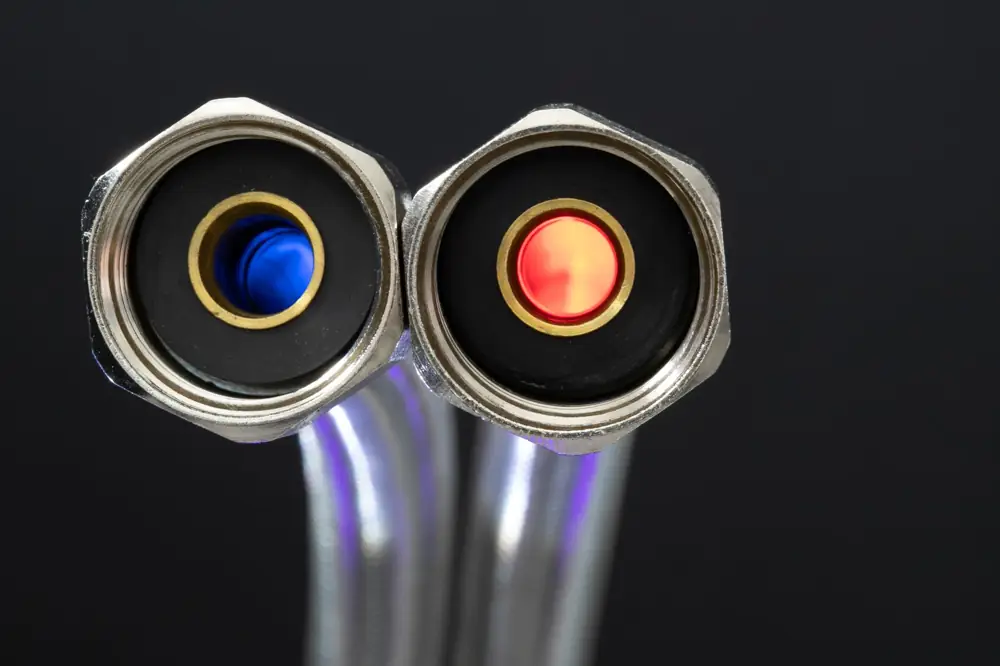
An orbital weld fitting is a high-purity, weld-end tube fitting. Its ends come machined as tube stubs, sized so an automatic orbital welding machine can join them to matching tube. The result is a full-penetration, crevice-free internal weld. No ferrule. No thread. No elastomeric seal.
Crestflo produces the complete high-purity weld-end line: elbows, tees, unions, crosses, reducers, caps and tube stubs. Materials range from 316/316L stainless and duplex through Inconel, Hastelloy, Monel and titanium. Interiors are electropolished for ultra-high-purity service, and every part carries a heat number plus an EN 10204 material test certificate. Standard items ship right from stock. Specials are built to order, with delivery running 6 to 8 weeks. That's the scope throughout: high-purity instrumentation weld-end fittings joined by automatic orbital welding.
Also Known As: Orbital Welding, Automatic Weld & Tube-Stub Fittings
Specifiers use several names for these parts: orbital welding fittings, automatic weld fittings, automatic tube weld fittings, auto-weld fittings, weld-end tube fittings, tube weld fittings, and tube-stub or stub-end fittings. In high-purity procurement, the same parts show up as high-purity weld fittings, ultra-high-purity (UHP) fittings, hygienic or sanitary weld fittings, electropolished (EP) fittings, and ASME BPE fittings. The geometry family stays identical no matter how the purchase order phrases it, whether "orbital weld fittings," "orbital-weld fittings," or "weld fittings, orbital." A drawing might list an orbital weld elbow, an automatic weld tee, or a tube stub. All of them point to the same thing: a tube-OD fitting built to be joined to instrumentation tube by an automatic orbital weld head, not by a mechanical or threaded connection.
What "Orbital Weld Fittings" Means Here: High-Purity Instrumentation, Not Pipe
Orbital weld fittings and pipe fittings get lumped together under loose language, so it's worth being precise about scope here. On this page, the term covers high-purity, small-bore, tube-OD stainless and alloy fittings, sized and finished specifically for automatic orbital welding in semiconductor, pharmaceutical, biotech and food-process lines. It doesn't mean pipe-schedule butt-weld pipe fittings. It doesn't mean socket-weld fittings. And it excludes manual-TIG pipe fittings too. Crestflo's US range sticks to instrumentation, built from stainless and high-alloy grades. Brass and carbon steel don't appear as headline weld-end materials.
Why Orbital Welding vs Manual TIG, Butt-Weld & Compression Joints
Orbital welding is a mechanized version of gas tungsten arc welding (GTAW/TIG). The arc rotates around the tube under program control, rather than a welder guiding the torch by hand, and that's what makes each joint highly repeatable and full-penetration. This repeatability is why the joint is the default choice for ultra-high-purity gas, sterile process, and other services where a clean, crevice-free internal weld matters more than being able to service it in the field. The weld is only as consistent as the parts feeding it, though. A fitting's matched outside diameter, inside diameter and wall, along with squared, clean weld-end preparation, are what actually make an automatic weld dependable. A permanent orbital weld gives up the make-and-break serviceability you get from a mechanical joint. Where a re-makeable metal seal is what's needed instead, a VCR face-seal fitting is Crestflo's high-purity alternative.
Orbital Weld vs Butt-Weld vs Socket-Weld vs Compression
| Joint | Method | Permanent? | Internal cleanliness | Best for |
|---|---|---|---|---|
| Orbital weld | Mechanized GTAW, tube stub ends | Yes | Highest, repeatable, crevice-free bore | UHP semiconductor, pharma, biotech, food |
| Butt weld | Manual or automatic GTAW | Yes | High | General welded instrument lines |
| Socket weld | Fillet weld into a socket | Yes | High, with a socket crevice | Fit-up-tolerant welded lines |
| Compression (double-ferrule) | Mechanical ferrule seal | No (serviceable) | Good | Make-and-break field service |
Butt-weld and socket-weld pages cover general weld-end geometry (butt-weld, socket-weld). For make-and-break alternatives, Crestflo's tube fittings hub is the place to look.
Orbital Weld Fitting Types: Elbows, Tees, Unions, Crosses, Reducers, Caps & Stub Ends
Crestflo makes the full high-purity weld-end geometry set, built to customer spec and to print. Each form gets dimensioned for the orbital weld head, with short- or long-tangent legs specified so the head clears properly.
| Form | Description | Configurations |
|---|---|---|
| Orbital weld elbow | Directional change, both ends weld-prepped | 90° / 45° |
| Orbital weld tee | Three-way branch | equal / reducing |
| Orbital weld cross | Four-way branch | equal / reducing |
| Orbital weld union / coupling | In-line tube-to-tube joint | straight |
| Orbital weld reducer | Joins two tube sizes | concentric / eccentric |
| Orbital weld cap | Closes a tube run | end cap |
| Tube stub / stub end | Short weld-prepped tube tail | short / long tangent |
Weld-End Preparation & Dimensional Control for Repeatable Orbital Welds
A repeatable orbital weld starts with the fitting geometry. Ends arrive squared, deburred and dimensioned as tube stubs, with matched OD, ID and wall so the mating parts share the same heat balance and the arc achieves full penetration consistently. Short- or long-tangent legs are specified so the weld head clears the fitting body. Controlled, low-residual heat chemistry (sulfur-controlled, for example) consistent with ASME BPE practice keeps the weld pool behaving predictably. Exact tangent lengths and OD × wall follow the standard tube tables and applicable ASME BPE dimensional requirements, and can be customized to requirement: state the tube schedule and weld-head model on the RFQ.
Orbital Weld Fitting Sizes: Imperial (1/8″–1″) & Metric (6–25 mm)
Orbital weld fittings come in imperial and metric tube sizes, sized to match the OD and wall of the high-purity line they're joining. Standard instrumentation sizes span 1/8″, 1/4″, 3/8″, 1/2″, 5/8″, 3/4″ and 1″ (3-25 mm) OD; larger sizes up to 2″ (50 mm) OD are available on request. OD and wall combinations follow the standard tube tables, and they can be customized to whatever the application calls for.
| Tube OD (imperial) | Tube OD (metric) | Size page |
|---|---|---|
| 1/8″ | 3 mm | 1/8 inch |
| 1/4″ | 6 mm | 1/4 inch · 6 mm |
| 3/8″ | 8 / 10 mm | 3/8 inch · 8 mm · 10 mm |
| 1/2″ | 12 mm | 1/2 inch · 12 mm |
| 5/8″ | 16 mm | 5/8 inch |
| 3/4″ | 20 mm | 3/4 inch |
| 1″ | 25 mm | 1 inch |
See the full tube fitting size chart and metric range.
Orbital Weld Fitting Materials: 316/316L, 904L, Duplex, Inconel, Hastelloy & Titanium
High-purity weld-end fittings span the full instrumentation alloy range, and exotic-alloy orbital weld fittings, rarely stocked by the volume majors, are a core part of what's on offer. 316/316L is the volume high-purity grade. 304/304L, 904L, and the super-austenitic, duplex, nickel and titanium families all run the same weld-end geometry. Sour-service alloys are supplied to NACE MR0175 / ISO 15156 where specified. If your line calls for a high-nickel or duplex orbital weld fitting, only the metallurgy changes; the geometry doesn't.
| Family | Grades | Grade page |
|---|---|---|
| Austenitic stainless | 304/304L, 316/316L | 316/316L, 304/304L |
| Super-austenitic | 904L, 254 SMO, AL-6XN, Alloy 20 | 904L, 254 SMO, AL-6XN, Alloy 20 |
| Duplex / super duplex | 2205, 2507 | Duplex 2205, Super Duplex 2507 |
| Nickel & nickel-iron alloys | Inconel 625/825, Incoloy 800/800H, Hastelloy C-276, Monel 400, Nickel 200/201 | Inconel 625, Inconel 825, Incoloy 800, Hastelloy C-276, Monel 400, Nickel 200/201 |
| Titanium | Grade 2 | Titanium Gr2 |
Compositions and mechanical properties follow the applicable ASTM/UNS specification, and they can be customized to what the job requires. Feedstock gets matched to the tube per ASTM A269 / A213. Check the full materials index for details; Crestflo doesn't offer brass or carbon steel.
High-Purity Surface Finish: Electropolished, Passivated & Oxygen-Clean Interiors
Orbital weld fittings ship mechanically polished, passivated, electropolished (EP), or oxygen/UHP cleaned, depending on what semiconductor and analytical service calls for. For ultra-high-purity work, the EP interior finish gets specified as a target Ra against the applicable SEMI or ASME BPE surface-finish class. State your target Ra and cleanliness on the RFQ, and Crestflo builds the part to that spec. Oxygen and UHP cleaning happens in-house; see oxygen/UHP cleaning and electropolished tubing. These fittings carry no ferrule. So ferrule-hardening options simply don't apply to them.
| Finish | Method | Typical target | Application |
|---|---|---|---|
| Mechanical polish | Ground / polished interior | Per specified Ra class | General welded lines |
| Electropolish (EP) | Electrochemical | Low-Ra target per SEMI / ASME BPE SF class | UHP semiconductor, sterile process |
| Passivation | Chemical passivation | Per ASTM A967 | Corrosion resistance, all grades |
| Oxygen / UHP clean | Precision cleaning | Per ASTM G93 / CGA G-4.1 | Oxygen and UHP gas service |
Ra targets and cleanliness levels follow the applicable standard, and they can be tailored to what's required.
Standards & Compliance for High-Purity Orbital Weld Fittings
Published standards govern orbital weld fittings and the tube they join. Crestflo builds to whichever standard applies, tailoring the work to what's required. Conformance to ASME BPE dimensional and surface-finish requirements is available on request, as are 3-A sanitary requirements.
| Standard | What it governs | Reference |
|---|---|---|
| ASME BPE | Bioprocessing weld-end, dimensional & surface-finish (SF) requirements | ASME BPE |
| 3-A Sanitary | Hygienic-process equipment requirements | 3-A Sanitary |
| ASTM A269 / A213 | Seamless & welded stainless instrumentation tubing | A269 · A213 |
| ASTM G93 / CGA G-4.1 | Oxygen cleaning for cleanliness-critical service | ASTM G93 · CGA G-4.1 |
| NACE MR0175 / ISO 15156 | Sour-service metallurgy | NACE MR0175 |
| EN 10204 3.1 / 3.2 | Material test certificate traceability | EN 10204 MTC |
Crestflo holds ISO 9001 / 14001 / 45001 certification, along with PED. ASTM F1387, a performance test method for compression tube fittings, supports the wider quality system. It's referenced for QA credibility, not as a rating for a weld-end fitting.
Testing, PMI & Heat-Number Traceability
Every part gets a heat/lot-number mark and ships with an EN 10204 3.1 material test certificate as standard; 3.2 is available on request. Positive material identification (PMI) and in-house non-destructive testing are both performed. Weld ends get a visual check and, where specified, a borescope inspection. Destructive testing happens at ISO/IEC 17025-accredited laboratories, and third-party inspection can be arranged on request. You'll find full documentation on Crestflo's traceability page and testing & inspection page.
The rating of an orbital-welded joint comes from the tube it joins, OD times wall thickness, under whatever piping code applies, such as ASME B31.3. It isn't governed by some separate pressure rating on the fitting body. Size the tube to the service pressure, and the weld simply follows the line it's connected to.
Applications: Semiconductor, Pharmaceutical, Biotech & Food-Process Lines
Orbital weld fittings belong wherever a joint needs to stay permanent, crevice-free, and high-purity: semiconductor UHP gas and chemical-delivery systems, pharmaceutical and biotech sterile process, food and beverage and dairy hygienic transfer, and analytical sampling systems. Not every high-purity line calls for the same alloy or finish. That's covered in the high-purity / semiconductor selection guide. Pair them with Crestflo welded tubing and electropolished tubing.
Ordering, Cross-Reference & Datasheets
To get a quote, spell out the form, alloy, tube OD, wall thickness and interior finish/cleanliness (plus target Ra for UHP work). The Crestflo ordering-code guide and any Swagelok®, Parker® or Schwer® orbital weld-end cross-reference get prepared by the engineering team on request. Send your part list and ask for your own cross-reference rather than relying on a published interchange table. Crestflo parts are independently manufactured dimensional equivalents, referenced by these names only to identify the interchange. Crestflo isn't affiliated with or endorsed by any of these companies. Datasheets and CAD models are available to customers on request. Start at request a quote, request a sample, or view the cross-reference program.
A note on trademarks. Swagelok® belongs to Swagelok Company, Parker® to Parker Hannifin Corporation, and Schwer® to Schwer Fittings GmbH. Each mark remains the property of its own owner. We're using them here strictly on a nominative basis, solely to identify interchange compatibility, with no claim of affiliation implied.
Why Crestflo for Orbital Weld Fittings
Crestflo is the instrumentation arm of an export house with four decades behind it, recognized by the Government of India, with a solid track record delivering into the Middle East; it now serves the US market too, manufacturing high-purity weld-end and compression instrumentation fittings. Here's what's on offer: an orbital weld-end range in exotic alloys, running from electropolished 316 and 316L up through Hastelloy, Inconel, Monel, duplex and titanium. Sizes come in both imperial and metric. Standard items ship from ready stock; specials are made to order, with delivery in 6-8 weeks. MOQs are small, and private-label work is available. Every part carries heat-number marking and comes with an MTC. Sourcing is straightforward too: material is Indian in origin, though US or European melt can be arranged on request, with traceability running the full length of the material's history. The parts are engineered as drop-in replacements for the major brands, and even after US duties, they hold their own on price. We Engineer Confidence.
US inquiries go to sales@crestflousa.com or +1 346 594 9005; Crestflo's team sits in Houston, TX. For more, see lead time, private label and US-origin compliance.
Frequently Asked Questions
What is an orbital weld fitting?
An orbital weld fitting is a high-purity, weld-end tube fitting. Its ends come dimensioned as tube stubs, so an automatic orbital welding machine can join it to matching tube with a full-penetration, crevice-free internal weld. No ferrule, no thread. The family includes elbows, tees, crosses, unions, reducers, caps and stub ends.
What is an orbital weld?
An orbital weld is a full-penetration girth weld, made by a rotating GTAW/TIG arc that travels automatically around a tube's circumference under program control. The process runs on its own once set, guided by preset parameters rather than a welder's hand. It produces an internal weld that's repeatable and free of crevices, which is exactly why high-purity and sanitary systems call for it.
How hard is orbital welding these fittings?
Orbital welding runs on automation, so once you've programmed the weld parameters, the joint comes out highly repeatable, far more consistent than anything done by hand. Reliability comes down to the fitting, though. Matched OD, ID and wall thickness, plus clean, squared weld ends, are what let the automatic arc achieve consistent penetration.
What is the difference between TIG and orbital welding?
Orbital welding automates the GTAW, or TIG, process. No welder holds the torch by hand. Instead, the arc rotates around the tube under a program that sets current, travel speed and gas flow, and the result is a full-penetration weld you can repeat every time. Manual TIG can't match that. It depends on the operator's hand and eye, which makes it a shakier choice for high-purity joints.
What equipment is needed for orbital welding?
An orbital weld head sized to match the tube's outside diameter, along with a power supply and a programmer. The fitting has to be dimensioned for that particular head, correct tangent length, matched wall thickness, so when you request a quote, specify both the weld-head model and the tube schedule.
Orbital weld vs butt-weld vs compression, which do I use?
Use orbital weld fittings when you need a permanent, high-purity or hygienic joint that calls for a clean, repeatable internal weld. Butt-weld or socket-weld fittings suit general welded instrument lines. When a re-makeable mechanical seal is what the job calls for, go with VCR or compression fittings. See the butt-weld, socket-weld and VCR face-seal pages from Crestflo.
What materials are available for orbital weld fittings?
304 and 304L, 316 and 316L, and 904L make up the core stainless range. Duplex 2205 and Super Duplex 2507 round out the duplex grades, and 254 SMO and AL-6XN cover the high-chloride end of things. Alloy 20 is on the list as well. For nickel alloys, the Inconel 600 family spans 601, 625, 718 and 825, while the Incoloy 800 series includes 800H and 825. Monel 400 and K500 are both available. Hastelloy C-276 anchors that lineup, with Hastelloy C-22, B-2, B-3 and X alongside it. Nickel 200 and 201 round out the pure nickel offering, and Titanium Grade 2 completes the range. Brass and carbon steel aren't part of the lineup.
What surface finish and Ra can you provide?
Electropolished and passivated interiors built for UHP service, specified to a target Ra against the applicable SEMI or ASME BPE surface-finish class. Tell us your required Ra and cleanliness level on the RFQ, and we manufacture the part to that spec. Values follow the applicable standard and can be adjusted to suit your needs.
Do the fittings meet ASME BPE or 3-A?
Every unit meets ASME BPE dimensional and surface-finish requirements. 3-A sanitary compliance is available on request, and manufacturing follows the applicable standard throughout. Specifications can be adjusted to fit the customer's needs. Crestflo holds ISO 9001, 14001 and 45001 certification, plus PED.
Do you provide material test certificates and traceability?
Yes. We mark every part with its heat and lot number and supply an EN 10204 3.1 MTC as standard, with 3.2 available on request. PMI and in-house NDT are both performed. You'll find the details on the traceability page.
What sizes do you make, imperial and metric?
Both apply. Sizes typically run from 1/8″ up to 1″ tube OD (6-25 mm), and larger sizes are available up to 2″ (50 mm) OD on request. The exact size gets matched to the connected tube's OD and wall thickness. Values come from the standard tube tables, but they're customizable to whatever the job calls for.
Where are they made and are they TAA-compliant?
Crestflo's standard product comes from India, with full material traceability. US or European melt is available on request, for jobs that need domestic-melt or TAA compliance. Origin gets handled honestly on the US-origin compliance page.
What is the lead time and pressure rating?
Standard items ship from stock. Specials are made to order, with a 6-8 week delivery window and a small MOQ. An orbital-welded joint gets its rating from the connected tube (OD × wall) under the applicable piping code, such as ASME B31.3, not from a separate fitting rating. Size the tube to the service pressure.