
Instrumentation Fitting & Valve Materials: Stainless, Duplex, Nickel & CRA Alloy Capability
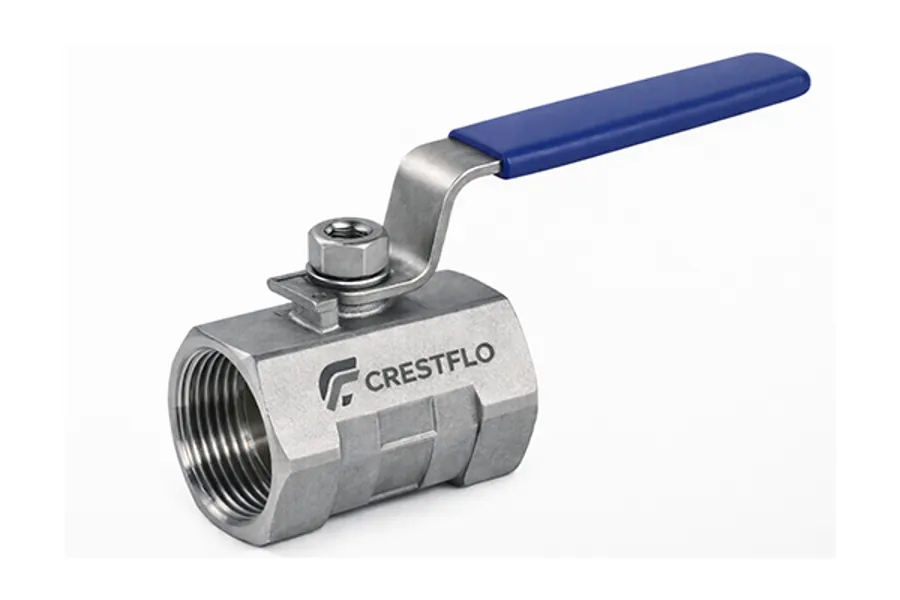
Instrumentation fitting materials are the corrosion-resistant alloys, austenitic stainless, super-austenitic, duplex, high-nickel and titanium, from which fittings, valves and tubing for measurement and control lines are machined. Crestflo machines instrumentation components across 24 of these grades, from the 316/316L workhorse to super duplex, 254 SMO, Inconel, Monel and Hastelloy, so the right metallurgy can be matched to the service rather than the service compromised to the metal. As a US-serving instrumentation manufacturer, Crestflo supplies these alloys engineered for drop-in replacement, with ready stock for standard items, made-to-order for specials, and 6–8 week delivery.
The materials on this page are for instrumentation fluid-system fittings, valves and tubing, not structural, plumbing, exhaust or electrical alloys. A compression fitting here means an instrumentation stainless or alloy fitting, not a copper plumbing fitting.
Also known as: materials of construction, CRA, exotic and high-nickel alloys
The category is specified under many names. Engineers and buyers request the same portfolio as materials of construction (MOC), corrosion-resistant alloys (CRA), exotic alloys, high-performance or high-nickel alloys, super-austenitic and super-alloys, tube fitting material grades, or simply "alloy capability." Each grade also carries formal designations, a UNS number, a Werkstoff (W.-Nr.) number, and often a trade name, so 316L is UNS S31600/S31603 or 1.4401/1.4404, super duplex 2507 is UNS S32750 (Zeron 100 as S32760), and Hastelloy C-276 is UNS N10276. The families table below lists these designations alongside each alloy so a part can be ordered by whichever call-out a drawing uses.
The alloy families we machine: stainless, super-austenitic, duplex, nickel and titanium
Crestflo groups its instrumentation alloy capability into five families. Each grade name links to its dedicated page for full composition, mechanical properties and instrumentation product forms. Nominal PREN (Pitting Resistance Equivalent Number, PREN = %Cr + 3.3×%Mo + 16×%N) is shown for iron-chromium-nickel stainless, duplex and super-austenitic grades; nickel-based alloys are selected by media-specific resistance rather than PREN and are marked "n/a (Ni-based)." Values are nominal, per applicable standard references, and customizable to requirement, exact per-heat composition is confirmed on each grade page and on the material test certificate.
| Alloy | UNS / Werkstoff | Family | Nominal PREN | Chloride / pitting resistance | Best-fit service | Grade page |
|---|---|---|---|---|---|---|
| 304 / 304L | S30400 / S30403 · 1.4301/1.4307 | Austenitic stainless | ~18–20 | Baseline | Clean, non-chloride, general instrument air and service | 304/304L |
| 316 / 316L | S31600 / S31603 · 1.4401/1.4404 | Austenitic stainless | ~24–26 | Good (industry default) | General instrumentation workhorse; mild chloride | 316/316L |
| 904L | N08904 · 1.4539 | Super-austenitic | ~34–36 | High | Sulfuric acid, higher chloride than 316 | 904L |
| Duplex 2205 | S32205/S31803 · 1.4462 | Duplex | ~34–35 | High, with high strength | Chloride plus stress; weight-saving strength | Duplex 2205 |
| Super Duplex 2507 (Zeron 100) | S32750/S32760 · 1.4410/1.4501 | Super-duplex | ~40–43 | Very high | Seawater, offshore and subsea chloride | Super Duplex 2507 |
| 254 SMO (6Mo) | S31254 · 1.4547 | Super-austenitic 6Mo | ~42–44 | Very high | Seawater, bleaching, high-chloride | 254 SMO |
| AL-6XN (6Mo) | N08367 | Super-austenitic 6Mo | ~45–47 | Very high | Seawater, brackish water, flue-gas | AL-6XN |
| Alloy 20 (Carpenter 20) | N08020 · 2.4660 | Ni-Fe-Cr | ~28–30 | High in sulfuric | Sulfuric acid, chemical process | Alloy 20 |
| Inconel 600 | N06600 | Ni-Cr | n/a (Ni-based) | Selected by media | High-temperature, dry chlorine, caustic | Inconel 600 |
| Inconel 601 | N06601 | Ni-Cr | n/a (Ni-based) | Selected by media | High-temperature oxidation resistance | Inconel 601 |
| Inconel 625 | N06625 | Ni-Cr-Mo | n/a (Ni-based) | Very high | Seawater, sour service, high-temperature strength | Inconel 625 |
| Inconel 718 | N07718 | Ni-Cr-Mo (age-hardening) | n/a (Ni-based) | Very high, high strength | High-strength sour or high-pressure duty | Inconel 718 |
| Inconel 825 (Incoloy 825) | N08825 | Ni-Fe-Cr-Mo-Cu | n/a (Ni-based) | Very high | Sulfuric and phosphoric acid, sour service | Inconel 825 |
| Incoloy 800 | N08800 | Ni-Fe-Cr | n/a (Ni-based) | Selected by media | High-temperature, carburizing | Incoloy 800 |
| Incoloy 800H | N08810 | Ni-Fe-Cr | n/a (Ni-based) | Selected by media | Elevated-temperature creep service | Incoloy 800H |
| Monel 400 | N04400 | Ni-Cu | n/a (Ni-based) | High in reducing acids and HF | Hydrofluoric acid, seawater, brine | Monel 400 |
| Monel K500 | N05500 | Ni-Cu (age-hardening) | n/a (Ni-based) | High, high strength | HF and seawater with strength needs | Monel K500 |
| Hastelloy C-276 | N10276 | Ni-Cr-Mo | n/a (Ni-based) | Extreme | Wet chlorine, oxidizing and reducing acids | Hastelloy C-276 |
| Hastelloy C-22 | N06022 | Ni-Cr-Mo | n/a (Ni-based) | Extreme | Broad oxidizing and reducing versatility | Hastelloy C-22 |
| Hastelloy B-2 | N10665 | Ni-Mo | n/a (Ni-based) | High in reducing acids | Hydrochloric acid (no oxidizers) | Hastelloy B-2 |
| Hastelloy B-3 | N10675 | Ni-Mo | n/a (Ni-based) | High in reducing acids | HCl with improved thermal stability | Hastelloy B-3 |
| Hastelloy X | N06002 | Ni-Cr-Fe-Mo | n/a (Ni-based) | High-temperature | High-temperature oxidation and strength | Hastelloy X |
| Nickel 200 / 201 | N02200 / N02201 | Commercially pure nickel | n/a (Ni-based) | High in caustic | Hot caustic soda, chlorine chemistry | Nickel 200/201 |
| Titanium Grade 2 | R50400 | Commercially pure titanium | n/a (Ti) | Extreme in oxidizing chloride | Seawater, wet chlorine, brine | Titanium Gr 2 |
Stainless steel instrumentation fittings: 304/304L and 316/316L
The austenitic stainless grades cover the majority of instrumentation service. 316/316L is the instrumentation default, a molybdenum-bearing grade with good general and mild-chloride corrosion resistance, and the standard starting point for 316L tube fittings and valves. 304/304L suits clean, non-chloride instrument air and general service where the extra molybdenum of 316 is not required.
Super-austenitic and 6Mo: 904L, 254 SMO, AL-6XN and Alloy 20
When chloride or acid exposure exceeds 316's limits, the super-austenitic grades step up. 904L adds resistance to sulfuric acid and higher chloride. The 6Mo grades 254 SMO and AL-6XN carry PREN in the low-to-mid 40s for seawater and high-chloride duty, while Alloy 20 targets sulfuric acid and chemical-process streams.
Duplex and super duplex fittings: 2205 and 2507
Duplex grades combine chloride resistance with roughly double the yield strength of austenitic stainless. Duplex 2205 handles chloride plus mechanical stress; Super Duplex 2507 (Zeron 100) reaches PREN 40+ for seawater, offshore and subsea service.
High-nickel and exotic alloy fittings: Inconel, Incoloy, Monel, Hastelloy and Nickel 200/201
For the most aggressive media, the nickel alloys are specified by chemical compatibility rather than PREN. The range spans Inconel 600/601/625/718 and 825, Incoloy 800/800H, Monel 400 and K500 for hydrofluoric acid and seawater, the Hastelloy C-276/C-22/B-2/B-3/X series for wet chlorine and mixed acids, and Nickel 200/201 for hot caustic and chlorine chemistry.
Titanium Grade 2 instrumentation fittings
Titanium Grade 2 offers extreme resistance in oxidizing chloride environments such as seawater, wet chlorine and brine, where its passive oxide film outperforms most stainless and many nickel alloys.
How to choose an alloy for your service: media, temperature, chloride and sour exposure
Alloy selection is driven by the service condition, not the price list. The table maps the dominant driver to a recommended family; each row links to a detailed selection guide. For sour (H2S) service, Crestflo qualifies parts to NACE MR0175 / ISO 15156.
| Service driver | Recommended family | Selection guide |
|---|---|---|
| General instrument air / mild service | 304/304L, 316/316L | Material selection by service |
| Sour service (H2S), NACE MR0175 | 316L (within limits), duplex/super-duplex, Inconel 625/825, Hastelloy | Sour-service selection (NACE) |
| Seawater / offshore chloride | Super Duplex 2507, 254 SMO, AL-6XN, Inconel 625, Titanium Gr 2 | Offshore chloride selection |
| Cryogenic / LNG | Austenitic stainless (304L/316L) | Cryogenic and LNG selection |
| High-purity / semiconductor / oxygen service | 316L electropolished, high-purity finishes | High-purity and semiconductor selection |
| Sulfuric / phosphoric acid | 904L, Alloy 20, Inconel 825 | Corrosion-by-media alloy matrix |
| Hydrofluoric acid / caustic | Monel 400/K500, Nickel 200/201 | Corrosion-by-media alloy matrix |
Not sure which grade fits? Send your service conditions, media, temperature and chloride or H2S exposure, and the Crestflo Engineering Team will return a spec review with an alloy recommendation. For direct head-to-head decisions, compare 316 vs 316L, 904L vs 316, duplex vs super duplex, Hastelloy vs Inconel or titanium vs stainless steel.
PREN and pitting resistance for stainless and duplex alloys
PREN, the Pitting Resistance Equivalent Number, ranks a stainless or duplex alloy's resistance to chloride pitting using its chromium, molybdenum and nitrogen content: PREN = %Cr + 3.3×%Mo + 16×%N. A higher PREN generally means better resistance to localised chloride attack, which is why 316 (~24–26) is a general-service grade while super duplex 2507 (~40+) and the 6Mo alloys (~42–47) are specified for seawater. PREN is defined for iron-chromium-nickel stainless, duplex and super-austenitic grades; nickel-based alloys are chosen by media-specific resistance instead. Values above are nominal, per applicable standard references and customizable to requirement; the full cited breakdown is in the PREN comparison table.
Every alloy in fittings, valves and tubing forms
Each grade in the portfolio is available as instrumentation fittings, valves and tubing, Crestflo offers instrumentation forms only, not bar, sheet, plate or mill product. Tube and compression fittings run to 2" (50 mm) OD in both imperial and metric with single and double ferrules; the instrumentation valve range covers 1/16" to 1" with threaded or tube-fitting ends; instrumentation tubing and pressure regulators round out the fluid-system set. Grade-and-product combinations such as Hastelloy C-276 tube fittings, Inconel 625 valves and super duplex 2507 tubing each have dedicated pages, and the tube fitting size chart covers dimensions across sizes.
Standards and material specifications for instrumentation alloys
These alloys are supplied against recognized ASTM and ASME product-form specifications, with sour-service qualification to NACE MR0175 / ISO 15156 where required. Values are per the current edition of each standard; customizable to requirement.
| Product form | ASTM / ASME specification | Standard page |
|---|---|---|
| Seamless / welded tube | ASTM A269, ASTM A213 | ASTM A269, ASTM A213 |
| Pipe | ASTM A312 | ASTM A312 |
| Bar and forging stock | ASTM A479, ASTM A276 | ASTM A479, ASTM A276 |
| Forgings | ASTM A182 | ASTM A182 |
| Duplex tube and pipe | ASTM A789, ASTM A790 | ASTM A789, ASTM A790 |
| Sour service | NACE MR0175 / ISO 15156 | NACE MR0175, ISO 15156 |
Certifications, testing and heat-number traceability
Crestflo is ISO 9001 / 14001 / 45001 & PED certified, and compression tube fittings are qualified to ASTM F1387; instrumentation valves qualify to ASME B16.34 and the applicable API standards. Every part carries a heat/lot number, supplied with an EN 10204 3.1 material test certificate as standard and 3.2 on request. Positive material identification (PMI) confirms alloy grade, and the in-house regime covers hydraulic proof, burst and impulse, pneumatic, fatigue, vibration, thermal-cycling, pull-out and vacuum testing, with destructive testing at ISO/IEC 17025-accredited laboratories and third-party inspection on request. Origin is Indian, with US or European melt available on request and full material traceability throughout, see traceability, quality, US-origin compliance, oxygen and UHP cleaning and testing and inspection. Datasheets and CAD models are available to customers on request.
Why specify Crestflo for corrosion-resistant instrumentation alloys
Crestflo is the instrumentation division of a four-decade-old, Government-of-India-recognized export house with an established Middle-East delivery track record, heritage that backs a new manufacturing brand built specifically for instrumentation. The full CRA range sits with one supplier: 24 alloys from 316L to Hastelloy, in fittings, valves and tubing, both imperial and metric. Fittings are drop-in interchangeable with the major brands, backed by ASTM F1387 performance qualification. Lead time is 6–8 weeks against the 20+ weeks typical of the majors, with ready stock for standard items, made-to-order for specials, small MOQ and private-label options, and a heat-number MTC on every part. We Engineer Confidence.
Request an alloy-matched quote
Send your service conditions and quantities for an alloy-matched response. End users and EPC contractors can request a quote or a sample; OEMs can discuss private-label programs; equipment manufacturers can send a print for made-to-order work; and distributors can request the line card. Need to match an existing brand? Request your Swagelok or Parker cross-reference from our engineering team.
Frequently asked questions about instrumentation fitting materials
What materials are instrumentation fittings made from?
Crestflo machines instrumentation fittings from austenitic stainless (304/304L, 316/316L), super-austenitic and 6Mo grades (904L, 254 SMO, AL-6XN, Alloy 20), duplex and super-duplex (2205, 2507), nickel alloys (Inconel, Incoloy, Monel, Hastelloy, Nickel 200/201) and titanium Grade 2. Brass, copper and aluminum are not part of the US instrumentation scope.
What are instrument fittings?
Instrument fittings are precision fluid-system connectors, compression and tube fittings, flare, weld and face-seal fittings, used on measurement and control lines. They are instrumentation components, not plumbing, structural or electrical parts, and are supplied in stainless, high-nickel and titanium alloys.
What are the main types of fittings?
By function, tube fittings include unions, connectors, elbows, tees, crosses, reducers, adapters and caps or plugs, covered on the tube fittings hub. The alloys those fittings are machined from, rather than their shapes, are the subject here.
Which alloy should I use for sour (H2S) service?
Sour service calls for NACE MR0175 / ISO 15156-compliant grades, commonly 316L within its limits, duplex or super-duplex, Inconel 625 or 825, and Hastelloy for the most severe cases. Crestflo qualifies parts to NACE MR0175; see the sour-service selection guide.
What is the best alloy for seawater or offshore chloride?
Super Duplex 2507, 254 SMO, AL-6XN, Inconel 625 and Titanium Grade 2 all offer high chloride and pitting resistance for seawater and offshore duty. The offshore chloride selection guide walks through the trade-offs.
What is PREN?
PREN is the Pitting Resistance Equivalent Number, calculated as %Cr + 3.3×%Mo + 16×%N. A higher PREN indicates better resistance to chloride pitting in stainless and duplex alloys. The full cited comparison is in the PREN comparison table.
Do you provide material test certificates?
Yes. Every part carries a heat and lot number and is supplied with an EN 10204 3.1 material test certificate as standard, with 3.2 available on request. See traceability for details.
What size range is available in these alloys?
Compression tube fittings are available to 2" (50 mm) OD and instrumentation valves from 1/16" to 1", in both imperial and metric sizes across the alloy range.
Are these fittings made in the USA?
Crestflo is a US-serving manufacturer of Indian origin, engineered for drop-in replacement and delivered in 6–8 weeks, with US or European melt available on request and full material traceability. TAA and DFARS requirements are handled honestly on the US-origin compliance page.
Can I get exotic alloys in small quantities?
Yes. Small minimum order quantities and private-label options are available across the alloy range, including the nickel and titanium grades.
How do these interchange with Swagelok, Parker or Hoke fittings?
Crestflo fittings are dimensionally interchangeable with the major brands, backed by ASTM F1387 performance qualification. Request your brand-specific cross-reference from the engineering team.
Which standards govern the tube and bar these alloys are supplied to?
Tubing is supplied to ASTM A269 and A213, bar to A479 and A276, forgings to A182, pipe to A312, and duplex to A789 and A790. See the standards hub for each specification.
Related materials, standards and selection resources
Explore individual grade pages such as 316/316L, Super Duplex 2507 and Hastelloy C-276; selection resources including material selection by service and the corrosion-by-media alloy matrix; and the industries these alloys serve, from offshore and subsea to LNG and cryogenic, semiconductor, petrochemical and chemical and oil and gas.