
Steam Tracing Instrumentation: Tubing, Valves, Manifolds & Fittings for Freeze Protection
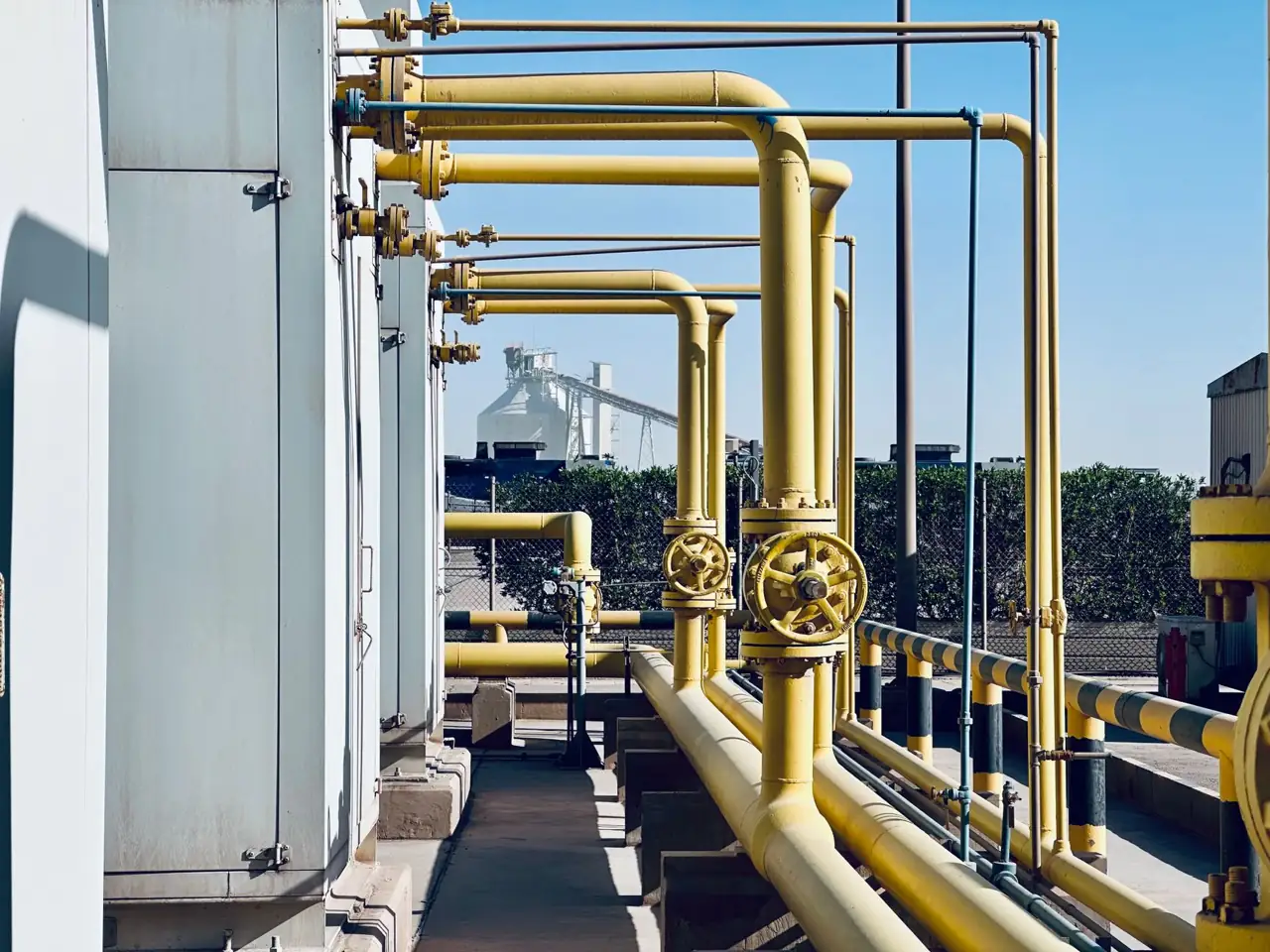
Steam tracing is a thermal-maintenance method: a steam-heated tracer tube runs alongside, or bundled with, an instrument impulse line, an analyzer or sample line, a tubing bundle, or a process pipe. Tucked under insulation, it keeps the line above its freeze, dew, or pour point.
Crestflo supplies the corrosion-resistant instrumentation components that build and isolate a steam-traced line: stainless and high-nickel tracer tubing, tracer supply and isolation valves, 2/3/5-valve manifolds, condensate pots, syphons, and compression fittings. Each part is engineered as a US drop-in replacement, with ready stock for standard items, made-to-order builds for specials, and delivery running 6-8 weeks. The company's scope is the instrumentation hardware of a steam-tracing system, not steam traps, boilers, or the tracing design itself. And on this page, "manifold" means an instrument valve manifold, not a steam-distribution header.
Also Known As: Steam Heat Tracing, Steam Trace & Tracer Line Terminology
A steam-traced line is specified across the industry under several names, and buyers arrive at the same hardware from different vocabularies. Engineers and EPC specifications commonly call it steam heat tracing, steam trace, or simply tracing; the heated tube itself is the steam tracer, tracer tube, tracer line, or tracing tube, and a finished line is described as steam traced or steam-traced tubing. Related phrasings include heat-traced tubing (steam variant), instrument steam tracing, impulse-line heating, and winterization tracing. A jacketed tube, where the process tube runs inside a larger steam-filled jacket, is a closely related heat-transfer arrangement to conductive external tracing. These designations all point to the same goal: holding an instrument or process line at temperature to prevent freezing, condensation, crystallization, hydrate formation, or a rise in viscosity. There is no such thing as a single "steam tracing machine", the occasional search under that phrase resolves to exactly the tracer tubing, valves, and fittings hardware detailed on this page.
How Steam Tracing Works: Tracer Tube, Steam Trap & Condensate Flow
Picture a steam-tracing setup: a thin tracer tube carrying saturated steam runs alongside the process or impulse line, either touching it directly or bundled together under one layer of insulation. Heat moves from the tracer across that contact area and into the process line. The steam gives up its latent heat, condenses, and the condensate drains off to a steam trap. That trap discharges the condensate and any non-condensables, but it holds live steam back in the tracer. The payoff: the line stays above its critical temperature, so the medium keeps flowing and the instrument gives accurate readings even in cold or ambient-sensitive conditions.
Steam tables fix saturated steam temperature to its pressure, so engineers pick a low- or medium-pressure supply to hit the target line temperature without cooking the media. Sometimes a single external tracer just can't carry the duty. That's where a jacketed-tube arrangement comes in, boosting heat transfer beyond what one tracer line can manage. Crestflo makes the tracer tubing, supply and isolation valves, manifolds, condensate pots, syphons, and fittings that form the loop. Steam traps, boilers, and the heat-load calculation for tracing aren't part of that scope; those come from other suppliers.
When several lines run together, the process and tracer tubes usually come as a pre-insulated tubing bundle: one or more process tubes plus a steam tracer, wrapped in insulation, covered with a protective outer jacket, then pulled into place as one assembly. Crestflo supplies the stainless and alloy tracer tube and process tubing that go inside these pre-insulated steam-tracing bundles. Specialist bundle fabricators handle the assembly work itself, along with the insulation and jacketing. Tube alloys, sizes, and bundle configurations are quoted on request.
Steam Tracing Components Crestflo Supplies
Every function in a steam-traced instrument installation lines up with a Crestflo instrumentation product. The table below shows which component family covers each need.
| Steam-tracing need | Crestflo component | Spec / alloy notes |
|---|---|---|
| Tracer tube / instrument tube | Coiled tubing, instrumentation tubing | SS + high-nickel / CRA; imperial + metric OD; heat-number marked |
| Tracer supply / isolation valve | Needle valve, bleed valve | 1/16"-1"; threaded or tube-fitting ends; packless bellows option |
| Instrument isolation at the transmitter | 2-valve, 3-valve, 5-valve manifolds, DBB | 100% seat & shell leak test; up to 10,000 psi; NACE |
| Steam-gauge / drip-leg protection | Condensate pots, syphons | CS & SS; Sch 40/80/160; socket-weld & screwed |
| Tube-to-tube / tube-to-port connections | Compression tube fittings, nut & ferrule sets | ASTM F1387; single & double ferrule; up to 2" OD |
| Gauge pulsation / vibration | Snubbers, tube clamps | SS & brass snubbers to 6,000 psi; clamps per spec |
Tracer & Instrument Tubing: 316/316L, Monel, Inconel & Duplex Tracer Tube
A steam-traced line really comes down to two things: the tracer tube and the instrument tube it shields. Crestflo makes both, offering stainless and alloy tubing in seamless, welded, and coiled forms built to ASTM A269 / A213, in imperial fractional and metric OD. Every length's stamped with a heat/lot number. 316/316L stainless is the default choice, prized for its corrosion resistance and weldability. Where corrosion under insulation, chlorides, or sour service call the shots, Crestflo also supplies Monel 400, Inconel 625/825, Alloy 20, Duplex 2205, and Super Duplex 2507 tracer and instrument tubing.
Tracer tube most often comes in 3/8" and 1/2" OD. Sizes in 1/4" and metric equivalents (6-12 mm) ship when a project calls for them. Tube working-pressure ratings follow the published tables for grade, wall, and temperature, and they can be tailored to the requirement. Copper tracer tube is common across the industry, but it sits outside Crestflo's US stainless-and-alloy scope. The recommended default here: 316/316L. See the tubing size chart and the 316/316L material data for grade selection.
Tracer Supply & Isolation Valves + 2/3/5-Valve Manifolds
A steam-traced installation needs isolation on both the steam side and the instrument side. Crestflo's needle valves and bleed valves work as tracer supply and isolation valves, sized from 1/16" to 1", with threaded or tube-fitting ends. There's also a packless bellows option for tight-shutoff steam duty.
At the transmitter, 2-valve, 3-valve, and 5-valve manifolds, along with double-block-and-bleed valves, block, equalize, and vent the impulse line for isolation and calibration. Every manifold gets a 100% seat and shell leak test and carries a rating up to 10,000 psi; both stainless and high-nickel alloy versions are available. The DBB is built to ASME B16.34.
These are instrument valve manifolds. They aren't steam-distribution headers.
Condensate & Gauge Protection: Condensate Pots, Seal Pots & Syphons
Condensate pots, also known as seal pots or drip pots, protect steam gauges and gauge lines from live steam and pulsation. So do pigtail and coil syphons, which hold a water seal ahead of the gauge. You'll find condensate pots in carbon steel and stainless, in Sch 40/80/160, with socket-weld or screwed ends. Syphons come in SS and CS. When pulsation threatens a gauge or transmitter, snubbers rated to 6,000 psi dampen the impulse. Tube clamps support the tracer and process runs as well.
Fittings & Connections: F1387 Compression Fittings, Ferrules & Thread Ends
Tracer and instrument tube runs come together with compression tube fittings performance-tested to ASTM F1387, available in single- and double-ferrule designs up to 2" (50 mm) OD. Hardened or non-hardened ferrules are supplied to requirement. End connections span NPT, BSPT/BSPP, ISO parallel, and metric or imperial tube ends, which lets the tracer line tie into existing panel, transmitter, and process-tap hardware. Because they're dimensional drop-in replacements backed by F1387, the fittings interchange with common instrumentation brands. Request a cross-reference from the engineering team to match an existing spec.
Recommended Alloys for Steam-Traced Service by Corrosion Driver
Steam-traced lines run under insulation, often in weathering, chloride, or sour environments. That's why alloy selection tracks the corrosion mechanism at play, not the steam itself. Compositions and mechanical properties follow the published standard for each grade. Values fall within the applicable standard, and they can be tailored to whatever the job requires.
| Corrosion driver | Recommended alloy(s) | Material data |
|---|---|---|
| General / weathering | 316/316L, 304/304L | 316/316L, 304/304L |
| Corrosion under insulation (CUI) / chlorides | Duplex 2205, Super Duplex 2507, Inconel 625 | Duplex 2205, Super Duplex 2507, Inconel 625 |
| Sour service / H2S (per NACE MR0175) | Inconel 625, Monel 400, Super Duplex 2507 | Inconel 625, Monel 400 |
| Aggressive acids / general CRA | Alloy 20, Inconel 625 | Alloy 20 |
Crestflo's material pages cover each grade in broad strokes, then narrow to what's actually offered: tubing, fittings, and valves. Bar, sheet, plate, and mill product aren't part of the lineup.
Steam Tracing vs. Electric Heat Tracing: How to Choose
Steam tracing and electric heat tracing both get you the same result: freeze protection. Which one you pick comes down to the plant's utilities, the heat load, and how much control you need. The comparison below is a qualitative, factual summary. Either way, Crestflo supplies the SS and alloy instrument tubing, valves, manifolds, and fittings for the steam side.
| Dimension | Steam tracing | Electric heat tracing |
|---|---|---|
| Heat load | High; well-suited to large duties and freeze protection | Lower to moderate per circuit |
| Temperature control | Set by steam pressure/temperature; coarser | Fine, thermostatically controlled |
| Utilities required | Existing steam supply and condensate return | Electrical distribution and controls |
| Hazardous-area fit | No electrical ignition source in the tracer | Requires area-classified cable and controls |
| Routing / maintenance | Traps and condensate handling to maintain | Simpler routing; cable can fail and needs monitoring |
| Best fit | Plants with steam, high heat load, many lines | Remote lines, precise temperature, no steam available |
Plants that already produce steam usually default to steam tracing for it, especially when the heat load is high or when a classified area has a large number of lines that need protection. For a look at cost and delivery trade-offs among different alloys, check the alloy lead-time and cost benchmark.
Standards, Traceability & Installation Notes
Steam-traced instrument tubing gets manufactured to ASTM A269 / A213; the piping context for process and tracing lines falls under ASME B31.1 and B31.3. Compression fittings carry performance qualification to ASTM F1387. Instrument valves and manifolds, meanwhile, meet ASME B16.34 and the relevant API valve standards. Sour-service alloys satisfy NACE MR0175 / ISO 15156 where the spec calls for it. Every component ships with a heat/lot number and an EN 10204 material test certificate - MTC 3.1 as standard, 3.2 on request - through full material traceability. Crestflo holds ISO 9001 / 14001 / 45001 and PED certification; certificates sit in the quality library, and they're available to customers on request.
Good practice on a steam-traced line calls for sloping the tracer so condensate drains properly, isolating at the manifold for instrument service, and choosing the alloy to suit the insulation and process environment. The plant or EPC handles the tracing heat-load design and calculation. Crestflo supplies the qualified components, not the tracing design itself.
Why Crestflo for Steam-Tracing Instrumentation
Crestflo is the instrumentation arm of an export house that's been recognized by the Government of India for four decades, with a solid delivery record across the Middle East. Now it's turning its attention to the US market, offering a single alloy-capable component set built for steam-traced lines. Standard items ship from stock already on hand. Specials get made to order. Either way, delivery takes 6-8 weeks, compared to the 20-plus weeks you'd typically wait on from the major suppliers.
The product itself is of Indian origin, though US or European melt is available on request, and every batch comes with full material traceability. Small minimum order quantities and private-label programs round out the offering, and customers can request datasheets and CAD files whenever they need them.
Sourcing tracer tubing, valves, manifolds, condensate pots, or fittings for a steam-tracing scope? Request a quote or reach out to the engineering team at sales@crestflousa.com or +1 346 594 9005 (Houston, TX). Crestflo serves petrochemical, midstream oil and gas, LNG and cryogenic, and analytical sampling installations across the US. We Engineer Confidence.
Steam Tracing FAQ
What does "steam traced" mean?
Steam traced means an instrument or process line has a steam-heated tracer tube run alongside it, or bundled with it, under the insulation. That keeps the line warm and stops freezing, condensation, or crystallization from setting in.
What is steam tracing in piping and how does it work?
A small tracer tube carrying saturated steam runs alongside the process tube. Heat conducts across the contact area, the steam gives up its latent heat and condenses, and the condensate drains to a steam trap. That keeps the line above its pour or dew point.
What is the purpose of a steam trap in a tracing system?
A steam trap does two jobs at once: it lets condensate and non-condensables escape while holding live steam back in the tracer. That's what keeps the tracer packed with heat-carrying steam. Crestflo provides the tubing, valves, manifolds, condensate pots, and fittings that make up a tracing loop. It doesn't make steam traps, though.
What is the purpose of a heat trace?
Heat tracing, whether it's steam or electric, holds a line at temperature so it doesn't freeze up, sweat with condensation, or thicken as viscosity climbs. It also keeps instrument readings accurate in cold or ambient-sensitive service.
What tubing material is best for steam tracing?
316/316L stainless remains the default choice for corrosion resistance and weldability. When conditions call for something tougher, say corrosion under insulation, chloride exposure, or sour service, Crestflo turns to Monel 400, Inconel 625/825, Alloy 20, Duplex 2205, and Super Duplex 2507 for tracer and instrument tubing. Copper's common across the industry, but it falls outside Crestflo's US stainless-and-alloy scope.
What tubing sizes does Crestflo offer for tracer lines?
Instrumentation and coiled tubing come in imperial fractional sizes, 1/4, 3/8, and 1/2, and in metric OD when required. Working-pressure ratings track the published tables for grade and wall, and they're customizable. For the full picture, check the tubing size chart.
Does Crestflo supply pre-insulated steam-tracing tube bundles?
Crestflo supplies the stainless and alloy tracer tube and process tubing used in pre-insulated steam-tracing tube bundles. Specialist bundle fabricators handle the bundle assembly, insulation, and outer jacketing themselves. Tube alloys, sizes, and bundle configurations are quoted on request.
Which valves and manifolds are used in steam tracing?
Needle and bleed valves handle tracer supply and isolation duties. Isolation of the transmitter itself falls to 2/3/5-valve manifolds and double-block-and-bleed valves. Both come in stainless and high-nickel alloys, with your choice of imperial or metric ends, and they meet ASME B16.34 along with the relevant API standards.
Steam tracing vs. electric heat tracing, which should I use?
Steam tracing works best where a plant already has steam on hand, carries high heat loads, or sits in a hazardous area. Electric tracing, by contrast, gives tighter temperature control and simpler routing. Either way, Crestflo supplies the stainless and alloy instrument tubing, valves, manifolds, and fittings needed on the steam side.
Are the components NACE-compliant and traceable?
Yes. Where specified, our alloys meet NACE MR0175 / ISO 15156. Every part ships with full heat and lot-number traceability plus an EN 10204 material test certificate: MTC 3.1 as standard, and we'll provide 3.2 on request.
How fast can Crestflo supply steam-tracing components in the US?
Standard items ship straight from stock, and specials get made to order, with delivery running 6 to 8 weeks. Compare that to the 20-plus weeks you'd typically wait on with the majors. We serve the US as a drop-in supplier, with small MOQs and private-label options on the table. Ready to get started? Request a quote.
Related Pages
- Coiled tubing and instrumentation tubing
- Needle valves, 3-valve manifolds, and DBB valves
- Condensate pots and syphons
- Compression tube fittings, plus 316/316L material data
- Material traceability, US-origin compliance, and how Crestflo figures lead times
- Industry hub: all industries served