
Offshore Instrumentation Fittings, Valves & Tubing for Topside & Splash-Zone Service
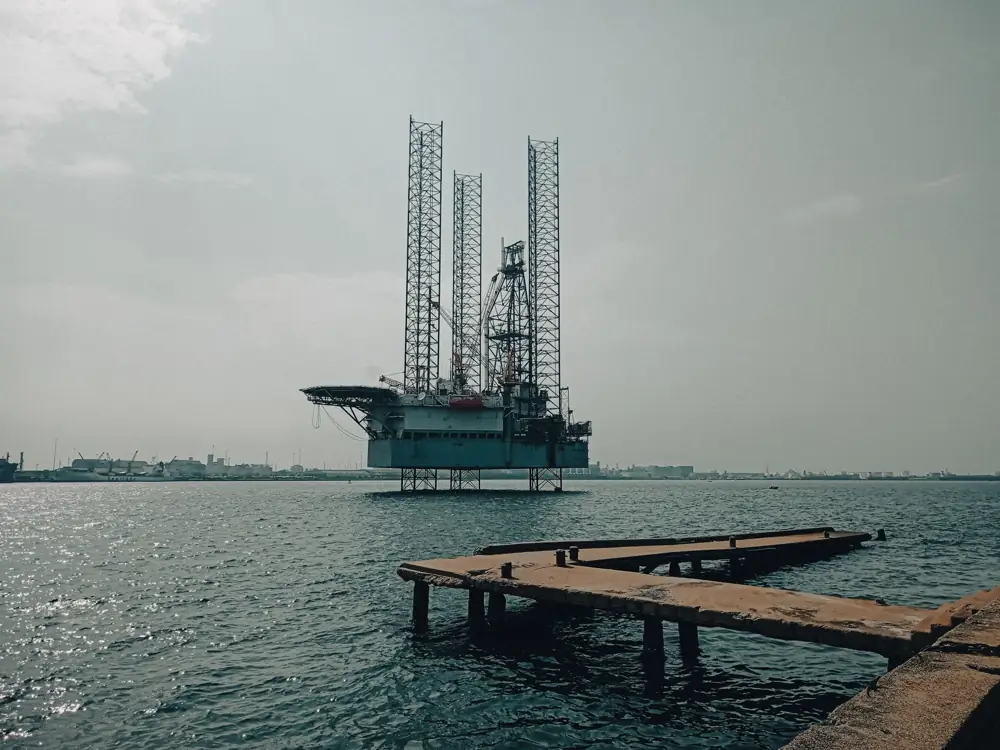
Offshore instrumentation fittings, valves and tubing cover the small-bore fluid-system parts, compression tube fittings, ferrules, instrument and hydraulic tubing, instrumentation valves, valve manifolds, double-block-and-bleed and monoflange assemblies. These get specified in corrosion-resistant alloys because they have to survive chloride exposure, sour gas and salt fog on offshore oil-and-gas topsides and in splash zones. Crestflo supplies the whole set, from 316/316L up through 904L, duplex, 6Mo/254 SMO, super duplex and the nickel alloys. Every piece is NACE MR0175-compliant, traceable by heat number, and sized as a drop-in match for the platform's existing brand.
These components are offshore-grade, small-bore instrumentation gear built for topside and splash-zone service: instrumentation valves, manifolds, compression fittings, ferrules and tubing. They're not plumbing parts, marine-hull fittings, or fully-submerged subsea seabed hardware.
Also Known As: Offshore Tube Fittings, Topside Instrumentation Valves & Platform Process Tubing
Across offshore specifications, hook-up drawings and material datasheets, this component family is called by many names. Buyers and specifying engineers refer to offshore tube fittings, offshore compression fittings, offshore double-ferrule and twin-ferrule fittings, offshore instrumentation valves, offshore valves and fittings, topside instrumentation fittings, offshore platform instrumentation, offshore process tubing, offshore instrument tubing and offshore hydraulic tubing. At the valve level the same scope covers offshore needle valves, ball valves, check valves (NRVs), 2/3/5-valve manifolds, double block and bleed (DBB), monoflange valves, gauge-root valves and bleed valves. On the alloy side the offshore vocabulary includes 6Mo and 254 SMO (UNS S31254), AL-6XN (UNS N08367), super duplex 2507 (UNS S32750) and Zeron 100 (UNS S32760), duplex 2205 (UNS S31803/S32205), Inconel 625 (UNS N06625), Incoloy 825 (UNS N08825) and Monel 400/K-500. All of these fall within the scope of this page.
The Offshore Environment: Chloride Pitting, Sour H₂S & Splash-Zone Corrosion Your Fittings Face
Offshore topside instrumentation sits in one of the harshest atmospheric environments you'll find in industrial service. Chlorides drive most of the damage: warm, salt-laden marine air and wind-driven spray bring on pitting and crevice corrosion, and the splash zone piles on cyclic wetting and drying that concentrates chlorides on and under fittings. When the wellstream carries hydrogen sulfide, sour service adds sulfide stress cracking (SSC), governed by NACE MR0175 / ISO 15156. Standard 300-series stainless isn't safe either; it's vulnerable to chloride stress-corrosion cracking (CSCC) at higher temperatures. Insulated tubing runs bring their own problem too, corrosion under insulation (CUI). Throw in galvanic risk at dissimilar-metal joints, plus the elevated pressures running through hydraulic control, process and sampling lines, and material selection stops being a minor detail. It becomes the decisive question.
Topside and splash-zone service covers the atmospheric parts of a fixed platform, jacket, jack-up, semi-submersible or FPSO/FSO topside, plus whatever gets wetted now and then. Fully submerged seabed hardware is a different world. Umbilicals and ROV interfaces live there too, running on their own pressure and material logic, and that's covered on the subsea instrumentation page.
Recommended Offshore Alloys: 316L, 904L, Duplex 2205, 6Mo/254 SMO, Super Duplex 2507 & Nickel Alloys
Alloy selection for offshore work runs along a pitting-resistance ladder. The Pitting Resistance Equivalent Number (PREN ≈ %Cr + 3.3×%Mo + 16×%N) serves as the standard first screen. Simply put, a higher PREN means the alloy can handle more chloride before pitting starts. 316/316L works fine for limited exposure, but it's not built for the splash zone. Once conditions turn warm, chloride-heavy or sour, the specification climbs to 6Mo/254 SMO, super duplex 2507 or nickel alloys. Below is a ladder of typical published PREN bands for the wrought alloys Crestflo supplies in instrumentation fittings, valves and tubing. These figures reflect standard alloy composition data and are shown as indicative bands.
| Alloy / common name | UNS | Typical PREN band | Best-fit offshore role | NACE MR0175 | Material page |
|---|---|---|---|---|---|
| 316 / 316L stainless | S31600 / S31603 | ~24–26 | Limited-exposure baseline; sheltered/short-life lines | Yes, within limits | 316/316L |
| 904L super-austenitic | N08904 | ~34–36 | Improved chloride resistance over 316L | Yes | 904L |
| Duplex 2205 | S31803 / S32205 | ~34–38 | High-strength duplex for moderate chloride duty | Yes | Duplex 2205 |
| 6Mo / 254 SMO | S31254 (W.-Nr. 1.4547) | ~43 | Topside workhorse; excellent pitting resistance & toughness | Yes | 254 SMO / 6Mo |
| AL-6XN | N08367 | ~44–47 | 6Mo-class super-austenitic; aggressive chloride service | Yes | AL-6XN |
| Super Duplex 2507 / Zeron 100 | S32750 / S32760 | ~40–43 | High-strength, high-PREN topside & splash-zone workhorse | Yes | Super Duplex 2507 |
| Inconel 625 | N06625 | Nickel alloy (PREN not primary metric) | Severe chloride + sour + elevated temperature | Yes | Inconel 625 |
| Monel 400 / K-500 | N04400 / N05500 | Nickel-copper alloy | Seawater, high-velocity and specific sour duties | Yes | Monel 400 · Monel K-500 |
For the full quantified selection methodology, covering chloride and temperature thresholds and how splash-zone exposure shifts the recommendation, see the offshore chloride selection guide. Check the head-to-head 254 SMO vs super duplex vs AL-6XN comparison too. Figures follow the applicable standard, and they're customizable to your project's needs.
Offshore Instrumentation Products: Tube Fittings, Valves, Manifolds, DBB & Monoflange
Crestflo ties every offshore instrumentation form to the job it does on the platform. Compression tube fittings, plus instrument, hydraulic and process tubing, carry transmitter impulse lines, hydraulic power-unit (HPU) control lines, pneumatic supply, and analytical and sampling loops. Instrumentation valves (needle, ball, and check/NRV) isolate and regulate those lines. Two-, three- and five-valve manifolds handle compact transmitter hook-ups. Double block and bleed (DBB) and monoflange valves, meanwhile, cut weight, leak paths and connection count where primary isolation can't afford much room on a crowded platform. Gauge-root and bleed valves round out the gauge and instrument hook-ups. End connections cover a lot of ground: tube-fitting (compression), NPT (ASME B1.20.1), BSPT/BSPP, ISO-parallel, SAE-ORB, 37° JIC flare (ISO 8434-2), DIN 2353 bite-type, and socket-, butt- and orbital-weld ends.
| Product | Offshore use | Size / pressure scope | Governing standard | Product page |
|---|---|---|---|---|
| Compression tube fittings | Impulse, hydraulic, pneumatic & sampling lines | End connections to 2" (50 mm) OD; single & double ferrule | ASTM F1387; NACE MR0175 | Tube fittings |
| Instrument & hydraulic tubing | Topside process, HPU control & sampling runs | SS & alloy; OD/wall to spec | ASTM A269/A213; A789/A790 (duplex) | Tubing |
| Needle / ball / check valves | Isolation, regulation & non-return | 1/16"–1"; imperial & metric | ASME B16.34; API 598/6D | Instrumentation valves |
| 2/3/5-valve manifolds | Transmitter hook-up | Up to 10,000 psi; 100% seat & shell leak-tested | ASME B16.34 | 3-valve manifold · 5-valve |
| Double block & bleed (DBB) | Primary isolation, leak-path reduction | Up to 3,000 psi | ASME B16.34 | DBB valve |
| Monoflange valve | Compact primary isolation | To spec | ASME B16.34 | Monoflange valve |
| Gauge-root & bleed valves | Gauge & instrument hook-up | 1/16"–1" | ASME B16.34 | Gauge-root · Bleed |
| High-pressure cone-and-thread | HPU & high-pressure hydraulic control | Up to 30,000 psi | Standard cone-and-thread practice | High-pressure |
Ratings shown reflect the applicable product-line maxima; exact certified ratings for a given size, alloy and end connection get confirmed per order and can be customized to requirement. Compression fittings are qualified per ASTM F1387. Valves are a different matter: they qualify to ASME B16.34 and the applicable API test standards (API 598/6D), not F1387. Datasheets and CAD are available to customers on request.
Offshore Standards & Compliance: NACE MR0175/ISO 15156, NORSOK, ASME B16.34 & ASTM F1387
Offshore instrumentation has to meet a stack of standards: material, sour-service and qualification requirements all come into play. Crestflo confirms it's in line with the standard approvals relevant to each product type.
| Standard | What it governs offshore | Crestflo conformance | Standard page |
|---|---|---|---|
| NACE MR0175 / ISO 15156 | Materials for sour (H₂S) service; SSC resistance | Fittings & valves supplied NACE MR0175-compliant | NACE MR0175 · ISO 15156 |
| NORSOK M-630 / M-650 | Offshore material data sheets & manufacturer qualification | Material selection referenced to NORSOK MDS; scope confirmed per order | M-630 · M-650 |
| ASME B16.34 | Valve pressure-temperature ratings | Instrumentation valves & DBB designed to B16.34 | ASME B16.34 |
| ASTM F1387 | Compression tube-fitting mechanical performance | Compression tube fittings tested per F1387 | ASTM F1387 |
| ASTM A789 / A790 | Duplex & super-duplex tube and pipe | Duplex/super-duplex tubing to A789/A790 | A789 · A790 |
| API 598 / 6D | Valve inspection & test | Valves tested to applicable API standard | API 6D · API 598 |
| ISO 15848 | Fugitive-emission valve testing | Available to requirement | ISO 15848 |
| EN 10204 3.1 / 3.2 | Material test certification | 3.1 MTC standard; 3.2 on request | EN 10204 MTC |
Quality, Testing & Traceability for Offshore Instrumentation Orders
Offshore buyers want a paper trail, not just a part. Every Crestflo component gets a heat/lot number stamped on it and ships with an EN 10204 3.1 material test certificate as standard; 3.2 is available on request. Positive material identification (PMI) confirms the alloy, and manifolds go through 100% seat and shell leak testing. The test regime doesn't stop there, it covers hydraulic proof, burst and impulse, pneumatic, flexure fatigue, rotary flex, vibration, thermal cycling, pull-out and vacuum testing. Non-destructive testing happens in-house. Destructive testing goes out to ISO/IEC 17025-accredited laboratories, and third-party inspection can be arranged on request. Crestflo holds ISO 9001 / 14001 / 45001 and PED certification. For the full regime, see testing & inspection capabilities.
Why Crestflo for Offshore Instrumentation
Crestflo is the instrumentation arm of an export house that's been in business for four decades and carries Government-of-India recognition, with a long record of deliveries across the Middle East. That heritage sits behind a brand built specifically for instrumentation work. Offshore programs get the full range of topside alloys from one source: 316/316L, 904L, duplex, 6Mo/254 SMO, super duplex, and nickel alloys.
Components are dimensionally drop-in for whatever incumbent brand the platform already runs, and the compression fittings carry ASTM F1387 performance qualification. Lead time runs 6-8 weeks. Compare that to the 20-plus weeks typical of the major suppliers, and the difference becomes decisive when a turnaround or shutdown is on the clock.
Standard items ship from ready stock. Specials are made to order, with delivery still holding at 6-8 weeks. Material origin is Indian by default, though US or European melt is available on request, and every shipment carries full material traceability. Standard product is India-origin; the US/European-melt option comes into play wherever domestic-melt or TAA sourcing is required.
Distributors and OEMs can work with small MOQs, and private-label programs are available too. We Engineer Confidence.
Need to swap an existing platform brand's fittings for something else? Ask our engineering team for a Swagelok®, Parker®, or Hy-Lok® cross-reference. Those names are trademarks of their respective owners, and Crestflo isn't affiliated with any of them; the interchange is dimensional, qualified per ASTM F1387. See US origin & compliance, lead time, and the cross-reference program.
Offshore Instrumentation FAQ
What instrumentation fittings and valves are used offshore?
Offshore topsides rely on compression tube fittings, instrument and hydraulic tubing, and instrumentation valves such as needle, ball, and check/NRV types. You'll also find 2/3/5-valve manifolds, double block and bleed and monoflange valves, gauge-root and bleed valves, plus regulators and accessories. All of it gets specified in corrosion-resistant alloys, sized to hold up in the marine environment.
Which alloy is best for offshore instrumentation?
It depends on where the equipment sits. 316/316L works fine for limited exposure, but warm, chloride-rich splash zones and sour service usually call for something tougher: 6Mo/254 SMO, super duplex 2507, or nickel alloys like Inconel 625 and Monel. Our offshore chloride selection guide lays out the quantified method behind these choices.
Is 316 stainless steel suitable for offshore use?
316/316L holds up in many environments, but it's not bulletproof: warm, salt-laden splash zones can bring on chloride pitting, crevice corrosion and chloride stress-corrosion cracking. For durable offshore service, engineers commonly specify higher-PREN alloys like 6Mo and super duplex instead. Check your project's chloride and temperature limits against the selection guide before finalizing a choice.
Do offshore fittings need to be NACE compliant?
For sour service involving H₂S, fittings and valves must meet NACE MR0175 / ISO 15156 for resistance to sulfide stress cracking. Crestflo supplies fittings and valves that comply with NACE MR0175; see the NACE MR0175 standard page for more detail.
Can Crestflo supply to NORSOK requirements?
Crestflo ties material selection back to the applicable NORSOK MDS and confirms scope on a per-order basis. NORSOK M-630 and M-650 set the rules for offshore material data sheets and manufacturer qualification, and the standard definitions themselves live on the NORSOK M-630 and M-650 pages.
6Mo vs super duplex 2507 for offshore, which one?
Both count as high-PREN workhorses topside. The 6Mo/254 SMO grade brings excellent resistance to chloride pitting along with real toughness. Super duplex 2507, working across that same broad chloride range, adds more mechanical strength. For a direct comparison, see the 254 SMO vs super duplex vs AL-6XN guide.
What is the difference between offshore and subsea instrumentation fittings?
What we cover here under offshore is topside and splash-zone gear: atmospheric exposure, service that gets wet on and off. Subsea is a different animal. It deals with hardware sitting fully submerged on the seabed, and the pressure and material demands follow their own logic. For that, see the subsea instrumentation page.
Are Crestflo offshore fittings a drop-in replacement for Swagelok, Parker or Hy-Lok?
Yes. Crestflo compression fittings match dimensionally and carry performance qualification under ASTM F1387. Swagelok®, Parker® and Hy-Lok® remain trademarks of their respective owners, and Crestflo isn't affiliated with any of them. Request your cross-reference through the cross-reference program.
What material traceability comes with offshore orders?
Every part comes with a heat/lot number and an EN 10204 3.1 material test certificate as standard. A 3.2 certificate is available on request. PMI comes standard as well, and third-party inspection can be arranged.
What is the lead time for offshore instrumentation components?
Six to eight weeks is the norm here, compared with the 20-plus weeks major brands typically take. Standard items ship from ready stock. Specials get made to order; details are on the lead time page.
Where are Crestflo offshore fittings made?
Material sourcing runs Indian by default, though US and European melt are available on request, and full traceability comes standard. The India-origin product is the baseline; the US/European-melt options exist for cases needing domestic melt or TAA compliance. Full details sit on the US origin & compliance page.
Can you private-label or supply small quantities for a platform project?
Yes, small-MOQ and private-label programs are on offer for distributors and OEMs. See private label.
Related Industries & Applications
Offshore is one piece of a broader set of marine and hydrocarbon applications Crestflo serves. For submerged seabed service, there's subsea instrumentation. marine & shipbuilding covers hull and vessel systems, while oil & gas spans upstream through downstream duty. Cold service falls under LNG & cryogenic, and process-plant instrumentation is handled in petrochemical & chemical. Head back to all industries served for the full list.