
Incoloy 800 (Alloy 800 / UNS N08800): Instrumentation Fittings, Valves & Tubing
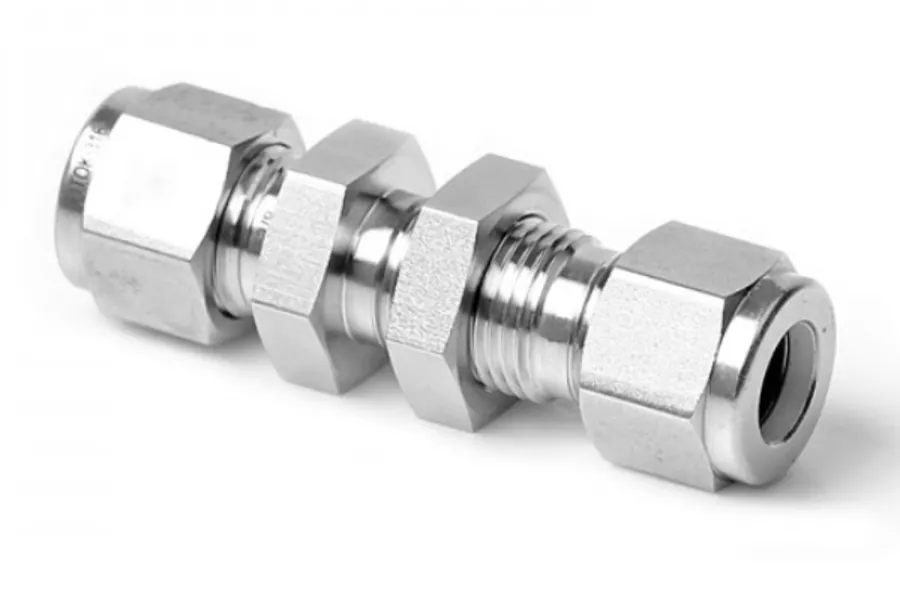
Incoloy 800 (Alloy 800, UNS N08800) is a nickel-iron-chromium austenitic superalloy, built from roughly 30–35% nickel, 19–23% chromium, with the balance iron. It's engineered for strength and stability in high-temperature, oxidizing, and carburizing service, and it still holds up well against aqueous corrosion. Crestflo doesn't supply Alloy 800 as mill bar or plate. Instead, it arrives as finished fluid-system instrumentation: compression tube fittings, instrumentation valves, and tubing, all made to order with full material traceability and a 6-8 week delivery window. Here, Incoloy 800 refers specifically to the UNS N08800 superalloy used for instrumentation components. It doesn't mean heating-element resistance wire or pipe-mill product. "Inconel 800" is a common misnomer for this alloy.
Also Known As: Alloy 800, UNS N08800, W.Nr. 1.4876 & Nicrofer 3220
Alloy 800 travels under a handful of names, and any specification you get your hands on could use one of them. It's cataloged as UNS N08800, Werkstoff (W.Nr.) 1.4876, DIN designation X10NiCrAlTi32-20, and British spec BS NA15. Trade names include Incoloy alloy 800 and Nicrofer 3220. The higher-carbon, creep-resistant members of the family have their own numbers: Incoloy 800H is UNS N08810 / W.Nr. 1.4958, and Incoloy 800HT/800AT is UNS N08811 / W.Nr. 1.4959.
"Inconel 800" isn't a correct designation. Inconel grades are nickel-base alloys, while Incoloy 800 is iron-nickel-chromium with a substantial iron content. So Incoloy 800 equivalents and equivalent grades run as follows: Nicrofer 3220, Alloy 800, W.Nr. 1.4876, DIN X10NiCrAlTi32-20, and BS NA15. Each of these, across its own standards system, points back to the same UNS N08800 material, cross-indexed below.
Incoloy 800 Designation Cross-Index
| System | Designation |
|---|---|
| UNS | N08800 |
| Werkstoff / W.Nr. | 1.4876 (800H = 1.4958, 800HT = 1.4959) |
| DIN name | X10NiCrAlTi32-20 |
| British Standard | NA15 |
| Trade names | Incoloy 800, Incoloy alloy 800, Alloy 800, Nicrofer 3220 |
Incoloy 800 Chemical Composition (Ni-Fe-Cr, wt %)
Incoloy 800 runs nominally 30–35% nickel and 19–23% chromium, with iron making up the balance at a minimum of roughly 39.5%. Aluminum and titanium are also controlled; they're what gives the alloy its high-temperature oxide layer. The ranges above track the published UNS N08800 specification. Figures follow the applicable standard and get checked against the mill certificate when an order is placed.
| Element | Min % | Max % |
|---|---|---|
| Nickel (Ni) | 30.0 | 35.0 |
| Chromium (Cr) | 19.0 | 23.0 |
| Iron (Fe) | 39.5 | balance |
| Carbon (C) | — | 0.10 |
| Aluminum (Al) | 0.15 | 0.60 |
| Titanium (Ti) | 0.15 | 0.60 |
| Manganese (Mn) | — | 1.5 |
| Silicon (Si) | — | 1.0 |
| Copper (Cu) | — | 0.75 |
| Sulfur (S) | — | 0.015 |
Incoloy 800 Mechanical & Physical Properties
In the annealed condition at room temperature, Incoloy 800 delivers a typical tensile strength around 520–600 MPa (75 ksi minimum typical). Its 0.2% yield strength sits near 205–240 MPa (30 ksi minimum typical), and elongation runs at least ~30%. That combination gives it real strength without sacrificing formability. Density comes in around 7.94 g/cm³, and the material is essentially non-magnetic; both traits trace back to its austenitic Ni-Fe-Cr structure. These figures are published nominal ranges, not guarantees, so check them against the mill certificate at the time of order and adjust to the requirement at hand.
| Mechanical property (annealed, RT) | SI | US |
|---|---|---|
| Tensile strength | ≈ 520–600 MPa | 75 ksi min typical |
| Yield strength (0.2% offset) | ≈ 205–240 MPa | 30 ksi min typical |
| Elongation | ≈ 30% min | 30% min |
| Hardness | — | ≤ ~92 HRB (annealed) |
| Modulus of elasticity | ≈ 196–197 GPa | 28.5 ×10⁶ psi |
| Physical property | Value |
|---|---|
| Density | ≈ 7.94 g/cm³ (0.287 lb/in³) |
| Melting point / range | ≈ 1357–1385 °C (2475–2525 °F) |
| Magnetic response | Essentially non-magnetic at room temperature (low permeability) |
| Alloy family | Nickel-iron-chromium austenitic superalloy |
Incoloy 800 Temperature Range & High-Temperature Behavior
Incoloy 800 sees widespread use up to roughly 815 °C (1500 °F). At that range, its chromium-and-aluminum oxide layer gives it excellent resistance to high-temperature oxidation, carburization, and nitriding. That combination makes standard Alloy 800 a strong choice for oxidizing and carburizing atmospheres in heat-exchange, process-heating, and analytical service.
But when the governing requirement shifts from oxidation resistance to sustained creep and stress-rupture strength at elevated temperature, a different grade is called for: the higher-carbon, controlled-grain-size variant known as Incoloy 800H (UNS N08810), built specifically for creep strength. Incoloy 800HT (N08811) goes a step further, adding combined Al+Ti control for the most demanding long-term high-temperature exposure. Standard Alloy 800, meanwhile, stays the general high-temperature and oxidation-resistant member of the family.
Incoloy 800 Corrosion Resistance by Environment
Incoloy 800 holds up well at high temperatures, resisting both oxidation and carburization, and it handles aqueous corrosion decently too. Its nickel content is high, and that's what gives it an edge over standard 300-series austenitic stainless steels when it comes to chloride-ion stress-corrosion cracking. PREN doesn't apply here, though. That index was built for chromium-molybdenum-nitrogen stainless and duplex grades, not for this Ni-Fe-Cr alloy. So when engineers pick Alloy 800 for pitting resistance, they're weighing environment and temperature, not chasing a PREN number.
| Environment | Behavior | Note |
|---|---|---|
| High-temperature oxidation | Excellent | Protective Cr/Al oxide layer |
| Carburizing atmospheres | Good resistance | Stable to ~815 °C service |
| Nitriding atmospheres | Good resistance | High-nickel matrix |
| Chloride SCC (aqueous) | Good resistance | Superior to 304/316 stainless |
| General aqueous corrosion | Good | Broad neutral/mild service |
| Sour / acid-gas (NACE) | Condition-specific | For classic sour/reducing-acid duty, Alloy 825 or Hastelloy C-276 is more commonly recommended |
Confirm sour-service selection against the NACE MR0175 sour-service requirements, the standard behind Crestflo's guidance here. Need resistance to reducing acids built on molybdenum and copper? That's where Alloy 825 for acid & sour service comes in.
Incoloy 800 vs 800H vs 825: How to Choose
Which alloy fits within the family depends on the service condition that governs the application. Standard Alloy 800 handles high-temperature oxidation and carburization. 800H/800HT comes into play when creep and stress-rupture strength drive the design. Alloy 825 is the pick when resistance to reducing acids or sour service takes priority.
Beyond the 800 family, the comparison shifts to matrix and objective. Incoloy 800 vs Inconel 600 and vs Inconel 625 isn't really a contest between similar materials; it's a question of what job needs doing. Inconel 600 is the nickel-base option for high-temperature and chloride environments. Inconel 625 high-strength alloy, by contrast, delivers high mechanical strength and stands up to severe aqueous corrosion. Alloy 800 remains the iron-bearing option, built around oxidation and carburization resistance. The table lays out these differentiators clearly enough. One rule holds throughout: the longer and hotter the exposure, the more the choice tilts toward 800H/HT.
| Grade | UNS | Key differentiator | Best-fit service |
|---|---|---|---|
| Incoloy 800 | N08800 | General Ni-Fe-Cr, oxidation/carburization resistance | High-temperature oxidizing/carburizing atmospheres |
| Incoloy 800H | N08810 | Controlled C (0.05–0.10%) + grain size | Sustained creep/rupture strength at high temperature |
| Incoloy 800HT | N08811 | Added combined Al+Ti control | Most demanding long-term high-temperature exposure |
| Alloy 825 | N08825 | Adds molybdenum + copper | Reducing acids, sour/acid-gas service |
Compare these grades side by side: Incoloy 800H creep-strength grade, Alloy 825 for acid & sour service, and Inconel 600 high-temperature alloy. They're covered in depth on Crestflo's site.
Incoloy 800 ASTM Specifications & Material Certification
A set of ASTM product-form specifications governs Incoloy 800 mill forms. Every Crestflo instrumentation part ships with EN 10204 material certification as well. Below are the common ASTM specs; each value follows its applicable standard.
| Product form | ASTM specification |
|---|---|
| Rod & bar | B408 |
| Seamless pipe & tube | B407 |
| Plate, sheet & strip | B409 |
| Heat-exchanger tube | B163 |
| Welded pipe & tube | B514 / B515 |
| Forgings | B564 |
Every part carries a heat/lot number and ships with EN 10204 3.1/3.2 material certification. MTC 3.1 comes standard, with 3.2 available on request. Positive material identification (PMI) is also on offer, confirming alloy authenticity.
Crestflo Incoloy 800 Product Forms: Tube Fittings, Valves & Tubing
Crestflo builds Incoloy 800 (UNS N08800) as fluid-system instrumentation components. It doesn't produce mill bar, sheet, plate, or pipe fittings from this alloy. Within Alloy 800, the forms in scope are instrumentation tube fittings, instrumentation valves, and instrumentation and alloy tubing. These come as straight lengths or coiled tubing, in both imperial and metric sizes. Ferrules can be hardened or non-hardened, and finishes span material finish, electropolish, passivation, silver anti-galling plating, and custom options.
| Form | Alloy 800 availability | Size range | Applicable qualification |
|---|---|---|---|
| Compression tube fittings | Single & double ferrule | Up to 2" (50 mm) OD | ASTM F1387 (compression-fitting performance) |
| Instrumentation valves | Needle, ball, check, manifold, and more | 1/16"–1" | ASME B16.34 / API (valve qualification) |
| Instrumentation & alloy tubing | Seamless / welded | Per tube schedule | ASTM B407 / B163 (product-form spec) |
Take a look at the available forms: Incoloy 800 compression tube fittings, Incoloy 800 instrumentation valves, Incoloy 800 instrumentation tubing, and nickel-alloy instrumentation tubing. Fittings meet ASTM F1387 interchange qualification; valves are qualified to ASME B16.34 and the applicable API standards. Need a part-for-part interchange in Alloy 800? Request your Swagelok® / Parker® cross-reference from our engineering team; we don't keep a published interchange part-number table on hand. Pressure and temperature ratings belong to the finished fitting or valve, not to the alloy by itself. They're stated per the applicable standard, and they can be adjusted to what the job requires.
Incoloy 800 fabricates like a work-hardening austenitic alloy. Machinability sits close to 300-series stainless, provided the shop uses rigid tooling, positive feeds, and plenty of coolant to keep work-hardening at bay. Weldability, though, is good: conventional GTAW/GMAW with matching Incoloy 82/A filler gets the job done cleanly. That's precisely why Crestflo keeps every stage of fabrication in-house instead of shipping the alloy out for field forming.
Incoloy 800 Applications & Industries
Incoloy 800 turns up wherever fluid systems face elevated temperature combined with oxidizing or carburizing exposure. High-temperature process heating. Heat exchangers. Refining and petrochemical units. Power generation. Hydrogen service. Steam and analytical sampling systems, too. In each of these, its resistance to oxidation and carburization is what keeps instrumentation lines steady through thermal cycles. See how it's put to use in petrochemical & refining service, power generation and nuclear, and hydrogen.
Why Crestflo for Incoloy 800 Instrumentation
Crestflo is the instrumentation division of an export house that's four decades old and recognized by the Government of India, with a proven track record of delivery across the Middle East. That heritage shapes how we source, manufacture, and certify high-nickel alloys. Take Incoloy 800. Our compression tube fittings meet ASTM F1387, so they drop straight in as dimensional replacements for the major brands. Instrumentation valves are built to ASME B16.34 and the relevant API standards. We offer small minimum order quantities, and private-label options are available too. Manufacturing carries ISO 9001, 14001, and 45001 certification, plus PED. Every part gets marked with its heat and lot number under EN 10204 MTC 3.1, with 3.2 available on request, and PMI can be arranged. That's direct assurance against alloy substitution, which buyers rightly treat as the biggest risk with high-nickel grades. We Engineer Confidence.
Sourcing, Lead Time & Incoloy 800 Quotes
Crestflo isn't just another supplier or stockist reselling mill product. It's a US-serving Incoloy 800 manufacturer, supplier, and stockist that fabricates in-house. The company works to an RFQ model, so there's no live pricing posted anywhere. Standard items ship from ready stock; specials are made to order, and delivery runs 6-8 weeks.
A finished fitting's value comes from fabrication and certification, not the weight of raw alloy. That's why cost is quoted per part based on your specification, rather than as a bar-stock price per kg or per lb.
Standard product comes from India. US or European melt is available on request, complete with full material traceability, for jobs where domestic-melt or TAA requirements apply. Datasheets and CAD drawings go out to customers who ask for them.
To price your Alloy 800 components, request an Incoloy 800 quote with your sizes and end connections, or check our 6-8 week lead time page. Reach US sales at sales@crestflousa.com or +1 346 594 9005, out of Houston, TX.
Incoloy 800 FAQ
What is Incoloy 800?
Incoloy 800, UNS N08800, is a nickel-iron-chromium austenitic superalloy. Composition-wise, it runs roughly 30–35% nickel and 19–23% chromium, with iron making up the rest. Well suited to high-temperature, corrosion-resistant service. It's especially useful where oxidation and carburization resistance matter. Crestflo supplies it as instrumentation fittings, valves, and tubing.
What is the chemical composition of Incoloy 800?
Incoloy 800 typically runs 30–35% nickel and 19–23% chromium, with iron making up the balance at a minimum of roughly 39.5%. Carbon stays tightly controlled at 0.10% max, while aluminum and titanium each fall in the 0.15–0.60% range. Manganese, silicon, copper, and sulfur are present too, but kept low. Always check the exact figures against the mill certificate when you place the order.
What is the difference between Incoloy and Inconel?
Inconel alloys are nickel-base; nickel makes up the majority of the composition. Incoloy alloys work differently. They're iron-nickel-chromium, with iron present in substantial amounts. Incoloy 800 fits that pattern: it's an Fe-Ni-Cr alloy. Call it "Inconel 800" and you'd be using a common misnomer for Incoloy 800.
What is the difference between Incoloy 800 and 800H?
Incoloy 800H (UNS N08810) carries higher, tightly controlled carbon content, 0.05–0.10%, along with a controlled grain size. Together these give it superior creep and stress-rupture strength for service that holds up under sustained high temperatures. 800HT (N08811) goes a step further, adding combined Al+Ti control. Standard 800, by contrast, gets picked for general resistance to oxidation and carburization.
Is Incoloy 825 better than Incoloy 800?
Neither option wins across the board, each suits a different service. Alloy 825 brings molybdenum and copper into the mix, which gives it an edge against reducing acids and sour-gas environments. Incoloy 800, on the other hand, gets chosen for its resistance to high-temperature oxidation and carburization. The right call comes down to whatever condition actually governs the application.
What is the maximum service temperature of Incoloy 800?
Incoloy 800 holds up well up to roughly 815 °C (1500 °F), where it still offers solid oxidation resistance. Push past that into sustained, creep-governed service, though, and you'll want to specify the 800H or 800HT grade instead.
Is Incoloy 800 suitable for NACE MR0175 sour service?
There's no one-size-fits-all answer here. It depends on conditions. For classic sour and acid-gas service, Crestflo typically points to Alloy 825 or Hastelloy C-276. Still, confirm suitability for your specific environment against NACE MR0175 / ISO 15156.
Which ASTM specifications cover Incoloy 800?
The specs you'll see most often by product form: ASTM B408 for rod and bar, B407 for seamless pipe and tube, B409 for plate, sheet, and strip, B163 for heat-exchanger tube, and B514 or B515 for welded pipe and tube. Crestflo ships every part with an EN 10204 MTC 3.1, and 3.2 is available on request.
What Incoloy 800 products does Crestflo supply?
Crestflo supplies Incoloy 800 across a defined set of product forms. Compression tube fittings for instrumentation use come in single and double ferrule styles, up to 2" OD, and carry ASTM F1387-qualified status. Valves for instrumentation applications span 1/16" to 1" and meet ASME B16.34/API. Tubing, both instrumentation and alloy grades, is available in imperial and metric sizes alike. Bar, sheet, plate, and pipe-fitting mill forms don't fall under that scope.
What is the lead time and MOQ for Incoloy 800 parts?
Crestflo keeps standard items in stock and builds specials to order. Delivery runs 6-8 weeks, and minimum order quantities stay small. Private-label options are available too. Send an RFQ with your sizes, and you'll get a firm schedule.
Where is Crestflo's Incoloy 800 made?
Standard product comes out of India, built for drop-in supply into the US market. US or European melt is available on request, and full material traceability is provided wherever domestic-melt or TAA rules apply. Crestflo serves US customers and keeps a sales contact based in Houston, TX.
What is the UNS number and Werkstoff number for Incoloy 800?
Incoloy 800 goes by UNS N08800, known as W.Nr. 1.4876 in the Werkstoff system. There's a pair of related high-temperature grades too. 800H carries the designation W.Nr. 1.4958 and UNS N08810. 800HT, meanwhile, is tagged W.Nr. 1.4959 and UNS N08811.
Related Materials & Standards
- Instrumentation fitting materials
- Incoloy 800H creep-strength grade
- Alloy 825 for acid & sour service
- Inconel 600 high-temperature alloy
- Inconel 625 high-strength alloy
- NACE MR0175 sour-service requirements
- EN 10204 3.1/3.2 material certification
The Crestflo Engineering Team reviewed this material. Incoloy® is a registered trademark held by Special Metals Corporation. Crestflo has no affiliation with that company; the name appears here solely to identify the material grade. Composition and property ranges shown are nominal figures drawn from applicable standards, not guarantees. Always check the mill certificate at the time of order.