
Hastelloy B-2 (UNS N10665): Instrumentation Fittings, Valves & Tubing
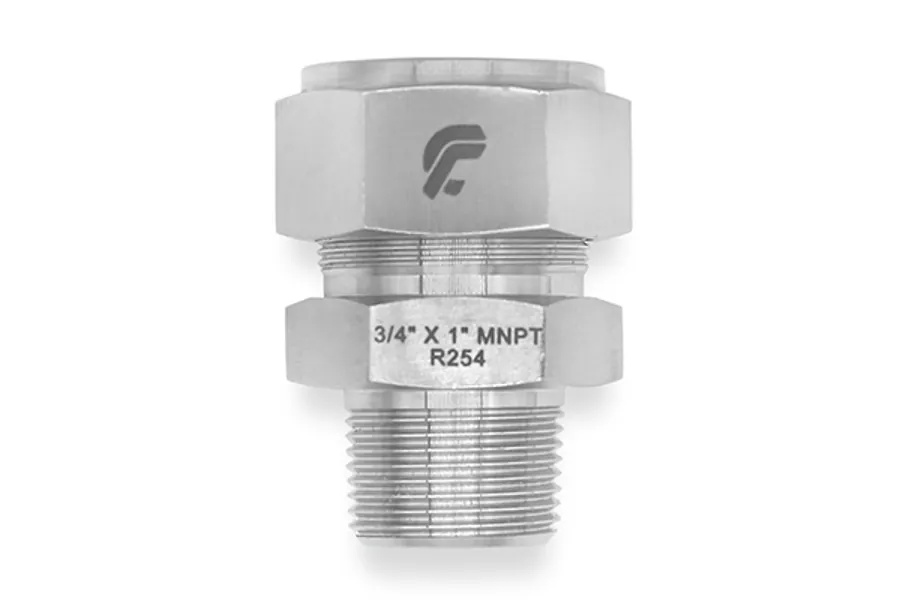
Hastelloy B-2 is a nickel-molybdenum (Ni-Mo) corrosion-resistant alloy, designated UNS N10665 and W.Nr. 2.4617. It's prized for its resistance to hydrochloric acid and other reducing acids, at every concentration, right up to their boiling points. Crestflo supplies this grade as instrumentation tube and compression fittings, instrumentation valves, and instrumentation tubing. Every piece is heat/lot-number traceable and built as a drop-in replacement for the major brands, with US-serving delivery in 6-8 weeks.
The composition, mechanical and corrosion values below reflect standard published data for the alloy, per the applicable ASTM specification, and can be customized to requirement.
> Scope: Here, Hastelloy B-2 refers to the instrumentation-grade Ni-Mo corrosion-resistant alloy used in fluid-system tube fittings, compression ferrules and instrumentation valves. It isn't a valve type, a coating, or a welding consumable, and it doesn't cover electrical or wire ferrules, nor plumbing fittings. Crestflo supplies this alloy only in instrumentation fitting, valve and tubing forms; mill bar, sheet, plate and pipe aren't part of the offering.
Request a Hastelloy B-2 Quote · Request a Sample · sales@crestflousa.com · +1 346 594 9005 (Houston, TX)
Hastelloy® is a registered trademark of Haynes International, Inc. Crestflo supplies equivalent Alloy B-2 / UNS N10665 material, built to the applicable ASTM specifications, but it isn't affiliated with, endorsed by or sponsored by Haynes International.
Hastelloy B-2 Also Known As: UNS N10665, Alloy B-2, W.Nr. 2.4617 & Nimofer® 6928
Drawings, datasheets and purchase orders often list the same alloy under several trade names and standard designations. A print might call it "Alloy B-2," "N10665 alloy," "NiMo28," or "B-2 Hastelloy." All four point to one nickel-molybdenum grade built for reducing acids.
| Designation type | Value |
|---|---|
| Trade / common names | Hastelloy B-2, Hastelloy B2, Alloy B-2, Alloy B2, B-2, B2 |
| UNS number | UNS N10665 (N10665) |
| Werkstoff (W.Nr.) | 2.4617 (DIN / Werkstoff 2.4617) |
| Other trade name | Nimofer® 6928 (VDM Metals) |
| Alloy family | Nickel-molybdenum (Ni-Mo), solid-solution corrosion-resistant alloy; also "NiMo28" |
| Spaced / reversed forms | Hastelloy B 2, Alloy B 2, B2 Hastelloy, B-2 alloy, N10665 alloy |
UNS N10665, the US designation, and W.Nr. 2.4617, its European counterpart, describe one and the same alloy. So a part specified under either label is still Hastelloy B-2. VDM Metals holds the trademark Nimofer® 6928 for the equivalent grade.
Hastelloy B-2 Chemical Composition (Ni-Mo, UNS N10665, per ASTM)
B-2's performance in reducing acids comes down to one thing: a very high molybdenum content sitting in a nickel matrix. Chromium and iron are kept low. Carbon stays at the low-carbon ceiling, which sharpens resistance to intergranular attack both in welds and in the areas right next to them.
| Element | wt % (per ASTM B335 / B333) |
|---|---|
| Nickel (Ni) | Balance (~69) |
| Molybdenum (Mo) | 26.0–30.0 |
| Iron (Fe) | 2.0 max |
| Chromium (Cr) | 1.0 max |
| Cobalt (Co) | 1.0 max |
| Manganese (Mn) | 1.0 max |
| Silicon (Si) | 0.10 max |
| Carbon (C) | 0.02 max (low-carbon) |
| Phosphorus (P) | 0.04 max |
| Sulfur (S) | 0.03 max |
Ranges follow the applicable ASTM product-form specification. Crestflo verifies the actual heat chemistry on the EN 10204 material test certificate that comes with every order. This composition also goes by UNS N10665, W.Nr. 2.4617, and Nimofer® 6928.
Hastelloy B-2 Mechanical & Physical Properties
In the solution-annealed condition, B-2 pairs high strength with the ductility and toughness needed for forming fittings and valves. The figures below are standard published minimums and nominal physical data for the alloy.
Mechanical properties (solution-annealed, room temperature)
| Property | Value |
|---|---|
| Tensile strength | ≥ 110 ksi (760 MPa) |
| Yield strength (0.2% offset) | ≥ 51 ksi (350 MPa) |
| Elongation | ≥ 40% |
| Hardness | ~ up to 100 HRB |
Physical properties
| Property | Value |
|---|---|
| Density | 9.22 g/cm³ (0.333 lb/in³) |
| Melting range | 1330–1380 °C (2426–2516 °F) |
| Magnetic response | Essentially non-magnetic in the annealed condition |
| Structure | Face-centered cubic (austenitic nickel matrix) |
The mechanical minimums track ASTM B335 / B333 for the solution-annealed condition. Actual certified properties for any given heat, though, show up on the material test certificate.
Hastelloy B-2 PREN: Why Pitting-Resistance Equivalent Does Not Apply
The pitting resistance equivalent number (PREN = Cr + 3.3 × Mo + 16 × N) ranks chromium-bearing stainless and nickel alloys by their resistance to chloride pitting. Hastelloy B-2 carries ≤ 1% chromium and no nitrogen. That means PREN is not the governing metric for this grade. It was built for reducing-acid service, not chloride-pitting resistance, and it isn't the alloy to specify against seawater or oxidising chloride attack. When chloride-pitting resistance drives the design, a chromium-bearing alloy such as Hastelloy C-276 or Hastelloy C-22 is the right pick. For a cross-alloy view, see the PREN comparison table.
Hastelloy B-2 Corrosion Resistance by Media (Hydrochloric & Reducing Acids)
B-2 stands out as one of the more resistant commercial alloys when it comes to hydrochloric acid and other non-oxidising, or reducing, acids. That said, it's not built for oxidising service, and that's by design. The table below lays out typical service suitability, drawn from standard alloy corrosion literature.
| Media / service | Suitability | Note |
|---|---|---|
| Hydrochloric acid (HCl), all concentrations | Excellent | Resists to boiling temperatures, the defining application |
| Wet hydrogen chloride gas | Excellent | Reducing chloride environment |
| Sulfuric acid (H₂SO₄), non-oxidising | Good | Reducing conditions; confirm concentration/temperature |
| Phosphoric acid (H₃PO₄) | Good | Non-oxidising phosphoric streams |
| Acetic & formic acids | Good | Organic reducing-acid service |
| Oxidising acids (nitric, HNO₃) | Not recommended | Rapid attack, use a Cr-bearing C-series alloy |
| Ferric / cupric salts (FeCl₃ / CuCl₂) | Not recommended | Oxidising ions degrade B-2 rapidly |
| Wet chlorine, dissolved oxygen | Not recommended | Oxidising media outside the grade's design case |
| Seawater / chloride pitting | Not the design case | No chromium, see C-276 / C-22 instead |
B-2's single most important selection rule comes down to this: it thrives in reducing environments but corrodes quickly once conditions turn oxidising. That includes ferric and cupric ions, nitric acid, wet chlorine, and dissolved oxygen. For guidance on a specific process, consult the corrosion-by-media × alloy matrix.
Hastelloy B-2 vs B-3, C-276 & the Hastelloy Family (Grades Compared)
The Hastelloy family covers two distinct chemistries. The B-series (Ni-Mo, e.g. B, B-2, B-3) relies on molybdenum and suits reducing acids. The C-series (Ni-Cr-Mo, e.g. C-22, C-276, X), on the other hand, adds chromium, which makes it the better fit for oxidising conditions and mixed or chloride environments. If you're dealing with pure reducing HCl service, go with B-2. When oxidising resistance or protection against chloride pitting matters, pick a C-series alloy instead. Each alloy listed below links through to its own material page.
| Alloy | UNS | Key element | Best for | Key limitation |
|---|---|---|---|---|
| Hastelloy B-2 (this page) | N10665 | Mo 26–30%, ~1% Cr | Hydrochloric & reducing acids | Poor in oxidising media; susceptible to weld-HAZ (knife-line) attack |
| Hastelloy B-3 | N10675 | Mo ~28.5% | HCl service with better thermal stability | Improved but still reducing-acid focused |
| Hastelloy C-276 | N10276 | Mo + Cr + W | Reducing and oxidising media, chlorides, sour service | Higher cost than a stainless upgrade |
| Hastelloy C-22 | N06022 | Higher Cr | Strongly oxidising / mixed acids | Optimized for oxidising, not pure HCl |
| Hastelloy X | N06002 | Ni-Cr-Fe-Mo | High-temperature strength & oxidation | Not a wet-acid corrosion grade |
Between B-2 and B-3, the practical split comes down to thermal stability and weldability. B-3 stands up to the intergranular, or knife-line, attack that can hit the weld heat-affected zone in B-2; B-2, meanwhile, remains the well-understood, cheaper option wherever those weld conditions are kept under control. Chromium marks the real difference between Hastelloy B and C: the B-series leans on molybdenum for reducing acids, while the C-series brings in chromium for oxidising conditions and chloride service. For nickel-alloy families beyond Hastelloy, the Hastelloy vs Inconel guide covers that ground.
Hastelloy B-2 for Sour Service (NACE MR0175 / ISO 15156)
Hastelloy B-2 is built for hydrochloric acid and other reducing acids. It's not the answer for H₂S sour gas service; that job belongs to chromium-bearing nickel alloys like Hastelloy C-276. Whether a specific part actually qualifies under NACE MR0175 / ISO 15156 depends on the application, and it hinges on the hardness and material-condition limits spelled out in the standard. Confirm what your service requires on the RFQ. For the right alloy where H₂S is present, check the NACE MR0175 and ISO 15156 standard pages, along with the sour-service selection guide.
Hastelloy B-2 Weldability, Machining & Heat Treatment (Knife-Line Attack)
B-2 ships in the solution-annealed condition. That step dissolves molybdenum-rich phases and brings back corrosion resistance. The main fabrication risk is intergranular attack in the weld heat-affected zone, sometimes called knife-line attack. Low-carbon chemistry, at or below 0.02%, keeps this in check. Post-weld solution annealing restores full resistance where service conditions are severe. Like other high-molybdenum nickel alloys, B-2 work-hardens, so it's machined at reduced speeds with rigid tooling and positive feeds. Crestflo forms and finishes B-2 instrumentation parts with this in mind, preserving the annealed corrosion resistance, and checks condition against the material certificate.
Hastelloy B-2 Temperature & Pressure Suitability
B-2 holds up structurally at elevated temperature as an alloy, but wet-corrosion service depends on the application. Always confirm it against the actual media and concentration you're working with. The pressure rating of a finished part comes down to product form and wall thickness, not the grade itself. That's why working-pressure ratings are stated per the applicable standard on the individual tube-fitting, valve and tubing product pages, and they can be customized to requirement.
Hastelloy B-2 Product-Form Standards (ASTM B335, B333, B622, B366 & ASME SB-)
A family of ASTM specifications, organized by product form, covers the alloy. Each carries a matching ASME SB- designation, and together they define the grade. Crestflo doesn't supply the mill forms themselves; it supplies the instrumentation forms (fittings, valves, tubing) built from certified material to these specifications.
| Product form | ASTM | ASME equivalent |
|---|---|---|
| Rod & bar | B335 | SB-335 |
| Plate, sheet & strip | B333 | SB-333 |
| Seamless pipe & tube | B622 | SB-622 |
| Welded pipe | B619 | SB-619 |
| Welded tube | B626 | SB-626 |
| Forgings | B564 | SB-564 |
| Wrought fittings | B366 | SB-366 |
Values and grades follow the applicable ASTM/ASME specification, with W.Nr. 2.4617 covering the European route. Every order ships with material certificates.
Hastelloy B-2 Applications: Hydrochloric Acid, Chemical Processing & Pharma
B-2 gets specified whenever reducing acids overwhelm stainless steel, and even chromium-bearing nickel alloys don't offer the most economical answer:
- Hydrochloric acid production, handling, storage and transfer at all concentrations.
- Chemical processing streams in non-oxidising sulfuric, phosphoric, acetic and formic acids.
- Pharmaceutical and agrochemical reactors and acid-service sampling systems.
- Catalyst and organic-acid plants where reducing conditions prevail.
Crestflo builds the exact fittings that show up as wetted material in these plants: instrument hook-ups, impulse lines, sampling systems, analyzer connections. B-2 is the material you typically find doing that job. The company serves petrochemical & chemical, pharmaceutical & biotech and oil & gas processing operations across the US.
Hastelloy B-2 Product Forms from Crestflo: Fittings, Valves & Tubing
Crestflo carries UNS N10665 across three instrumentation product forms. The grade shows up in compression and ferrule fittings, in needle, ball and manifold valves, and in seamless instrumentation tubing. Pipe, plate, bar and fasteners don't make the catalog cut here; they're feedstock, or simply outside this scope.
- Hastelloy B-2 tube & compression fittings: these come in single and double ferrule (twin-ferrule) styles, hardened or non-hardened, in both imperial and metric sizes, with end connections running up to 2 in. (50 mm) OD. You'll also see them called B-2 compression fittings, B2 ferrule fittings, or UNS N10665 fittings. Every compression tube fitting is performance-qualified per ASTM F1387.
- Hastelloy B-2 instrumentation valves: needle, ball, check, and 2/3/5-way manifold valves, all in B-2, ranging from 1/16 in. To 1 in. The pressure-boundary design follows ASME B16.34, with API seat-leak and test practice built in.
- Seamless Hastelloy B-2 instrumentation tubing: seamless B-2 / N10665 tubing, available in imperial and metric OD and wall thickness combinations.
Every Crestflo B-2 part gets stamped with a heat/lot number and ships with an EN 10204 material test certificate. Requirements drive the configuration: sizes, ferrule type and thread standard are all set to spec. End connections span NPT (per ASME B1.20.1), tube-fitting, threaded, ISO 8434-2 flare and DIN 2353.
Hastelloy B-2 Supplier & Manufacturer: Why Crestflo
Crestflo supplies and manufactures Hastelloy B-2 in the US, and we build it into finished instrumentation. We sell the alloy only as engineered fittings, valves and tubing, quoted and bought through an RFQ process rather than pulled off a live-priced cart. We Engineer Confidence. For a reducing-acid alloy like B-2, that means PMI-verified chemistry, honest sourcing and real interchange between Hastelloy B-2 and Hastelloy B, all spelled out in extractable specs instead of buried in a PDF.
Drop-in interchange for Swagelok®, Parker®, Hoke® and Hy-Lok®. The dimensions match, and compression fitting ends carry ASTM F1387 performance qualification behind them. These are interchange/equivalent parts, not "compatible" or "intermix" substitutes. Need a cross-reference? Request your Swagelok®/Parker® cross-reference from our engineering team via the cross-reference page.
Lead time runs 6-8 weeks, compared with 20+ weeks typical for the majors. Check the lead-time capability page for details.
Full traceability comes standard: a heat/lot number on every part, EN 10204 MTC 3.1 by default (3.2 available on request), and PMI to confirm the material really is N10665. We back all of it with in-house testing.
Single and double ferrules, hardened or non-hardened, in imperial and metric, across all fittings. Small MOQ is available, along with private-label options.
ISO 9001 / 14001 / 45001 and PED certified. Machining happens in-house too, covering CNC / VMC / EDM work.
The heritage behind the brand. Crestflo is the instrumentation division of a four-decade-old export house recognized by the Government of India, with a proven track record delivering into the Middle East. New in manufacturing, but the export pedigree runs deep. Read more about Crestflo.
Stock & delivery: Standard items ship from ready stock. Specials are made to order, with delivery running 6-8 weeks. Origin: Material comes from India. US and European melt is available on request, and every order carries full material traceability (origin & compliance).
Buyers: End users, EPC firms, and panel fabricators can Request a Quote or grab a Sample. Equipment manufacturers and OEMs, just Talk to an engineer / send a print. Thinking about carrying the line? Become a distributor.
Hastelloy B-2 FAQs
What are the main components of Hastelloy B-2?
Hastelloy B-2 runs nickel balance at roughly 69%, with 26–30% molybdenum making up the second-largest share. Iron stays under 2%. Chromium and cobalt each cap at 1%, and carbon's held very low, at 0.02% or less. That heavy molybdenum load is what gives the alloy its resistance to hydrochloric acid and other reducing acids. For the full ASTM ranges, check the composition table above.
What is UNS N10665 and what is the equivalent of Hastelloy B-2?
UNS N10665 is the US designation. In Europe, under the Werkstoff/DIN system, it's known as W.Nr. 2.4617. VDM Metals sells the same material under the name Nimofer® 6928. All three refer to the identical nickel-molybdenum alloy, sometimes labeled NiMo28.
What is the main difference between Hastelloy B and Hastelloy C?
The B-series alloys (Ni-Mo, B-2 for example) lean on molybdenum, and they handle reducing acids like hydrochloric acid particularly well. Chromium comes into play with the C-series (Ni-Cr-Mo, covering C-276 and C-22), suited to oxidising and mixed/chloride environments. For pure reducing HCl service, go with B-2. Where oxidising conditions or chloride resistance matter, pick a C-series alloy instead.
What are the different grades of Hastelloy?
Common grades include B, B-2 and B-3 (Ni-Mo), C-22, C-276 and C-2000 (Ni-Cr-Mo), plus G-30, N, W and X. Crestflo supplies material data and instrumentation forms for B-2, B-3, C-22, C-276 and X.
Is Hastelloy the same as Inconel?
No, that's not the case. Hastelloy alloys run largely nickel-molybdenum or nickel-chromium-molybdenum, made by Haynes International. Inconel alloys, by contrast, are nickel-chromium and come from Special Metals. For the selection differences, check our Hastelloy vs Inconel guide.
What is the difference between Hastelloy B-2 and B-3?
Hastelloy B-3 improves on thermal stability and offers stronger resistance to knife-line and heat-affected-zone intergranular attack. It doesn't give up Hastelloy B-2's hydrochloric-acid resistance to get there. A genuine upgrade. Still, Hastelloy B-2 remains the cheaper choice when weld conditions are kept under control. Learn more about Hastelloy B-3.
Where should Hastelloy B-2 NOT be used?
Nitric acid, ferric or cupric salts, wet chlorine, oxygen-rich media, in any of these oxidising environments the alloy corrodes fast, and it's chloride pitting that does the real damage, since it carries essentially no chromium. Skip it. Go with a C-series alloy instead, C-276 or C-22.
Is Hastelloy B-2 suitable for NACE MR0175 sour service?
B-2 is built for hydrochloric acid and other reducing acids, not H₂S sour gas. Qualification under NACE MR0175 / ISO 15156 depends on the application, and it's governed by the standard's limits on hardness and material condition. Check the requirement on the RFQ, and take a look at the NACE MR0175 page. For H₂S service, a chromium-bearing alloy like C-276 is usually the right pick.
Does Crestflo supply Hastelloy B-2 tube fittings and valves?
Yes, in Hastelloy B-2 we cover compression and tube fittings, single or double ferrule, up to 2" / 50 mm OD, plus instrumentation valves from 1/16" to 1". Both imperial and metric sizes are available. Fitting ends are performance-qualified per ASTM F1387, so whether you need Hastelloy B or the specific Hastelloy B-2 grade, the qualification standard holds.
What certifications and traceability come with Crestflo B-2 parts?
EN 10204 3.1 certificates come standard, with 3.2 available on request. Every part carries a heat or lot number, so traceability runs the whole way through, and PMI confirms the alloy, while testing follows Crestflo's in-house QA regime. Crestflo holds ISO 9001, 14001, 45001 and PED certification.
What is the price and lead time for Hastelloy B-2 fittings?
Pricing runs by quotation only, there's no online cart. Standard items ship from ready stock; specials are made to order, with delivery running 6-8 weeks. Standard product comes from Indian origin. US or European melt is available on request, and full traceability comes with it. To get a configured part number and price, submit an RFQ with size, form, material and rating.
Related Alloys & Resources
- Hastelloy B-3, the thermally stable successor to B-2 for hydrochloric-acid service.
- Hastelloy C-276 and Hastelloy C-22: chromium-bearing alloys built for oxidising conditions, mixed-acid environments and chloride service.
- Hastelloy X, nickel alloy for high-temperature strength and oxidation resistance.
- Hastelloy vs Inconel and the corrosion-alloy matrix guides help with material decisions.
- The materials hub covers the full range, alongside the tube-fittings hub and the instrumentation valves hub.
Request a Hastelloy B-2 Quote
Send along your form, fittings, valves or tubing, plus size, end connections and line conditions. The Crestflo Engineering Team will get back to you with a configured part number, ratings and price.
Request a Quote · Request a Sample · Browse the materials hub sales@crestflousa.com · +1 346 594 9005 · Houston, TX
Datasheets and CAD files are available to customers on request. The Crestflo Engineering Team reviewed this document before release. Hastelloy® is a registered trademark of Haynes International, Inc. Nimofer® is a trademark of VDM Metals. Swagelok® and Parker® are trademarks of their respective owners.