
Hastelloy C-22 (Alloy 22 / UNS N06022): Instrumentation Fittings, Valves & Tubing
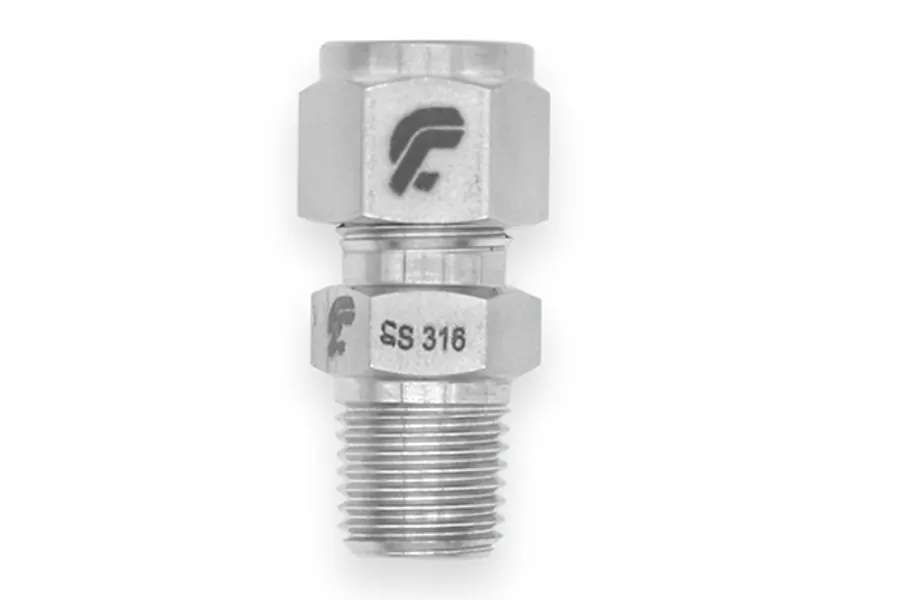
Hastelloy C-22 is a nickel-chromium-molybdenum-tungsten (Ni-Cr-Mo-W) corrosion-resistant alloy, designated UNS N06022 and W.Nr. 2.4602. It stands up well to both oxidising and reducing media, and it resists pitting, crevice corrosion and chloride stress-corrosion cracking. Crestflo supplies this grade as instrumentation tube and compression fittings, instrumentation valves, and instrumentation tubing. Every piece carries heat/lot-number traceability. Each is engineered as a drop-in replacement for the majors, and delivery runs US-serving in 6-8 weeks.
The composition, mechanical, PREN and corrosion values below are standard published data for the alloy, per the applicable ASTM specification, and they can be customized to requirement.
> Scope: Here, Hastelloy C-22 refers to the wrought, instrumentation-grade Ni-Cr-Mo-W alloy (UNS N06022) used in fluid-system tube fittings, compression ferrules and instrumentation valves. It doesn't cover weld filler, castings, sheet stock, electrical or wire ferrules, or plumbing fittings. Crestflo supplies this alloy in instrumentation forms: fittings, valves, tubing, and related regulators or accessories on request. Mill bar, sheet, plate and pipe aren't part of that offering.
Request a Hastelloy C-22 Quote · Request a Sample · sales@crestflousa.com · +1 346 594 9005 (Houston, TX)
Hastelloy® and C-22® are registered trademarks of Haynes International, Inc.
Hastelloy C-22 Also Known As: Alloy 22, UNS N06022 & W.Nr. 2.4602
Drawings, datasheets and purchase orders often specify the same alloy under several trade names and standard designations. Sometimes it appears hyphen-free, as "Hastelloy C 22." Other times it's described loosely as a nickel-base super alloy, or superalloy. Same metal, different labels. Whether a print calls out "Alloy 22," "N06022 alloy" or "NiCr21Mo14W," each one points back to this single Ni-Cr-Mo-W corrosion-resistant grade.
| Designation type | Value |
|---|---|
| Trade / common names | Hastelloy C-22, Hastelloy C22, Alloy 22, Alloy C-22, Alloy C22, C-22, C22 |
| UNS number | UNS N06022 (N06022) |
| Werkstoff (W.Nr.) | 2.4602 (Werkstoff 2.4602) |
| EN designation | NiCr21Mo14W |
| Alloy family | Nickel-base, Ni-Cr-Mo-W corrosion-resistant alloy (CRA) |
| Interchange grade names | VDM® Alloy 22 / Nicrofer® 5621 hMoW (equivalent Ni-Cr-Mo-W grades) |
| Spaced / reversed forms | Hastelloy C 22, Alloy C 22, C22 Hastelloy, N06022 alloy, nickel alloy C22 |
| Descriptive | Ni-Cr-Mo-W nickel alloy, C-22 super alloy (superalloy), corrosion-resistant alloy (CRA) |
UNS N06022, the US designation, and W.Nr. 2.4602, its European counterpart, describe the same alloy. A part specified under either name is the identical Hastelloy C-22. VDM® and Nicrofer® belong to their respective trademark holders; they appear here only to identify equivalent Ni-Cr-Mo-W grades.
Hastelloy C-22 Chemical Composition (Ni-Cr-Mo-W, per ASTM)
C-22 owes its corrosion performance to a nickel matrix built around high chromium, roughly 22%, paired with about 13% molybdenum and 3% tungsten. Carbon and silicon are kept low too, which protects corrosion resistance in welds and the areas right next to them. That chromium content is what sets C-22 apart from C-276, and it's the main reason the alloy holds up so well against oxidising media.
| Element | wt % (per ASTM B575 / B622) |
|---|---|
| Nickel (Ni) | Balance (~56) |
| Chromium (Cr) | 20.0–22.5 |
| Molybdenum (Mo) | 12.5–14.5 |
| Iron (Fe) | 2.0–6.0 |
| Tungsten (W) | 2.5–3.5 |
| Cobalt (Co) | 2.5 max |
| Manganese (Mn) | 0.50 max |
| Vanadium (V) | 0.35 max |
| Carbon (C) | 0.015 max |
| Silicon (Si) | 0.08 max |
| Phosphorus (P) | 0.02 max |
| Sulfur (S) | 0.02 max |
This nominal analysis lines up with the published Hastelloy C-22 data sheet (or spec sheet) chemistry. Ranges follow whatever ASTM product-form specification applies. And Crestflo backs it up: the actual heat chemistry gets confirmed on the EN 10204 material test certificate that's included with every order.
Hastelloy C-22 Mechanical & Physical Properties
In the solution-annealed condition, C-22 pairs high strength with the ductility and toughness that fitting and valve forming demand, and it doesn't lose that toughness even starting from cryogenic temperatures upward. The values below are standard published minimums and nominal physical data for the alloy.
Mechanical properties (solution-annealed, room temperature)
| Property | Value |
|---|---|
| Tensile strength | ≥ 100 ksi (690 MPa) |
| Yield strength (0.2% offset) | ≥ 45 ksi (310 MPa) |
| Elongation | ≥ 45% |
| Hardness | ≤ ~90 HRB (typical, annealed) |
Physical properties
| Property | Value |
|---|---|
| Density | 8.69 g/cm³ (0.314 lb/in³) |
| Melting range | 1357–1399 °C (2475–2550 °F) |
| Structure | Face-centered cubic (austenitic nickel matrix) |
| Elastic modulus | 206 GPa (29.9 Msi) |
| Coefficient of thermal expansion (25–100 °C) | 12.4 µm/m·°C (6.9 µin/in·°F) |
Mechanical minimums come from ASTM B574 / B575 / B622, for the solution-annealed condition. Elastic modulus and coefficient of thermal expansion are nominal published values per the applicable standard. They're adjustable to requirement. Final certified properties for a given heat, though, show up on the material test certificate.
Hastelloy C-22 PREN (Pitting Resistance Equivalent Number)
Work from nominal composition and C-22's pitting resistance equivalent number comes out to roughly 65, using PREN = Cr + 3.3 × Mo (22 + 3.3 × 13). Add the tungsten term (Cr + 3.3 × (Mo + 0.5 × W)) and that climbs to about 70, well past what you'd see in 6-molybdenum austenitics or super-duplex stainless steels. Higher chromium content gives C-22 the edge over C-276 in PREN. Still, PREN is only a calculated ranking index. What actually governs C-22's corrosion behavior in the real world is its full Ni-Cr-Mo-W chemistry, not the PREN number alone. For a look across alloys, check the PREN comparison table.
Hastelloy C-22 Corrosion Resistance by Media
Few alloys hold up against both oxidising and reducing media the way C-22 does. It also resists pitting, crevice corrosion and chloride stress-corrosion cracking, the very failure modes that limit stainless steel. Its high chromium content gives it a real edge in strongly oxidising and mixed-acid service. The table below sets out typical service suitability, drawn from standard alloy corrosion literature.
| Media / service | Suitability | Note |
|---|---|---|
| Wet chlorine (Cl₂), hypochlorite | Excellent | A defining application for the grade |
| Ferric & cupric chloride (FeCl₃ / CuCl₂) | Excellent | Strong resistance to pitting/crevice attack |
| Nitric acid (HNO₃), oxidising acids | Excellent | High chromium favors oxidising duty |
| Nitric + hydrofluoric (HNO₃ + HF) mixtures | Excellent | Pickling and mixed-acid streams |
| Hydrochloric acid (HCl), contaminated | Good | C-276 is stronger in hot, strong reducing HCl |
| Sulfuric acid (H₂SO₄), contaminated | Good | Including hot and contaminated conditions |
| Seawater / brackish water | Excellent | Resists chloride pitting and crevice corrosion |
| Flue-gas desulfurization (FGD) | Excellent | Scrubber and absorber environments |
| Chloride stress-corrosion cracking | Highly resistant | Key advantage over austenitic stainless |
If you're picking a material to resist a particular attack mechanism, check the corrosion-by-media × alloy matrix.
Hastelloy C-22 for Sour Service (NACE MR0175 / ISO 15156)
UNS N06022, in the solution-annealed condition, is accepted as a nickel-base corrosion-resistant alloy for sour (H₂S-containing) service under NACE MR0175 / ISO 15156-3. Don't skip the hardness and material-condition limits in the standard; confirm them against your specific application. Crestflo supplies NACE MR0175 / ISO 15156-compliant Hastelloy C-22 fittings and valve material options. See the NACE MR0175 and ISO 15156 standard pages, along with the sour-service selection guide.
Hastelloy C-22 Temperature & Pressure Suitability
As an alloy, C-22 holds up from cryogenic temperatures up to roughly 1000 °F (538 °C) in sustained corrosion service, keeping its toughness and strength throughout. The pressure rating of a finished part works differently, though: it comes down to the product form and wall thickness, not the grade itself. That's why working-pressure figures are listed on each individual tube-fitting, valve and tubing page, set against the applicable standard and adjustable to what the job requires.
Hastelloy C-22 Weldability, Machinability & Fabrication
C-22 is a single-phase Ni-Cr-Mo-W alloy, and welders can join it readily with GTAW or GMAW using a matching filler (AWS ERNiCrMo-10 / W86022). Post-weld heat treatment isn't normally needed for corrosion service. That's because its low carbon and silicon limits keep the weld and heat-affected zone from sensitisation.
Machinability falls in line with other solid-solution nickel alloys. The grade work-hardens, so machinists rely on sharp tooling, positive feeds, rigid setups and speeds slower than what stainless allows. Crestflo forms and machines the alloy in-house. Welding and fabrication follow the standard recommendations for the grade.
Hastelloy C-22 Product-Form Standards (ASTM B622, B574, B366 & ASME SB-)
A family of ASTM specifications, one for each product form, covers this alloy, and every one carries a matching ASME SB- designation. Those specifications define the grade. Crestflo supplies the instrumentation forms (fittings, valves, tubing) built from certified material to these specifications.
| Product form | ASTM | ASME equivalent |
|---|---|---|
| Seamless pipe & tube | B622 | SB-622 |
| Welded pipe | B619 | SB-619 |
| Welded tube | B626 | SB-626 |
| Rod & bar | B574 | SB-574 |
| Plate, sheet & strip | B575 | SB-575 |
| Forgings | B564 | SB-564 |
| Wrought fittings | B366 (WPHC22) | SB-366 |
Values and grades follow the applicable ASTM or ASME specification, and material certificates come with every order.
When to Choose Hastelloy C-22 vs C-276, Inconel 625 & 316L
C-22 earns its place when conditions turn strongly oxidising, mixed-acid, or chloride-heavy and prone to upsets. In those cases, it brings chromium that C-276 simply doesn't have. Below, it's set against the alloys buyers most often weigh against it. Each one links out to its own material page or a dedicated comparison.
| Alloy | Key strength | Choose when | More detail |
|---|---|---|---|
| Hastelloy C-22 (N06022) | Higher chromium (~22%); resists oxidising + mixed-acid and hot oxidising chlorides | Nitric/HF mixtures, wet chlorine, FGD and upset-prone oxidising chloride service | This page |
| Hastelloy C-276 (N10276) | Higher molybdenum (~16%); strong in hot reducing acids | Hot, strong reducing HCl / H₂SO₄ is the governing condition | Hastelloy C-276 |
| Inconel 625 (N06625) | High-temperature strength with good corrosion resistance | Elevated-temperature strength is the governing requirement | Inconel 625 · Hastelloy vs Inconel |
| 316 / 316L (S31600 / S31603) | Cost-effective general instrument service | Standard, mildly corrosive service, no chloride/acid upgrade needed | 316 / 316L |
C-22 vs C-276 in one line: Chromium sets C-22 apart, roughly 22% against 16%, and that difference sharpens its resistance to oxidising media and pitting. Molybdenum tells the other side of the story: C-276 runs about 16% against 13%, and that's what backs C-276 in reducing acids such as hot HCl and H₂SO₄. Match the alloy to your service chemistry. For the head-to-head decision, read the Hastelloy vs Inconel guide.
Hastelloy C-22 Product Forms from Crestflo: Fittings, Valves & Tubing
Crestflo offers UNS N06022 across three instrumentation product forms. C-22 is made to order in these forms, so buyers spec the grade on the RFQ against the matching generic product family below, and the Crestflo Engineering Team sends back a configured part.
- Hastelloy C-22 tube & compression fittings, these ship as single and double ferrule sets (nut and ferrule, twin-ferrule), hardened or non-hardened, in imperial and metric sizes, with end connections up to 2 in. (50 mm) OD. In the field they're often called C-22 compression fittings, C22 ferrule fittings, Hastelloy C fittings, or UNS N06022 fittings. Compression tube fittings carry performance qualification under ASTM F1387.
- Hastelloy C-22 instrumentation valves, needle, ball, check, and 2/3/5-way manifold valves in C-22, spanning 1/16" to 1". Pressure-boundary design follows ASME B16.34, paired with API seat leak-and-test practice.
- Hastelloy C-22 instrumentation tubing, drawn without a seam, in C-22 / N06022, and stocked in imperial and metric OD/wall combinations.
- Hastelloy C-22 regulators & accessories, on request, C-22 also goes into instrumentation pressure regulators and accessories: thermowells, snubbers, filters, and spare nut-and-ferrule sets. All of it comes from the same certified N06022 material, with full traceability behind it.
Every Crestflo C-22 part comes stamped with a heat/lot number and ships with an EN 10204 material test certificate. Size, ferrule type and thread standard aren't fixed; they're configured to requirement.
Typical Hastelloy C-22 Applications & Industries
C-22 resists both oxidising and reducing attack, which is why engineers reach for it as the default choice in the toughest instrument-line chemistries. Flue-gas desulfurization and scrubbers. Sour, chloride-laden oil & gas production. Offshore and subsea service. Petrochemical & chemical processing that involves nitric/HF pickling, wet chlorine, bleaching, and strong oxidisers all call for it. When 316, 6-moly, or even C-276 start to struggle during oxidising chloride upsets, this is the alloy that gets specified instead.
Why Crestflo for Hastelloy C-22
We Engineer Confidence, and with an exotic alloy like Hastelloy C-22, that means PMI-verified chemistry, honest sourcing and genuine interchange, all in extractable specs instead of a PDF buried somewhere. Crestflo isn't just a mill stockist reselling bar and sheet. We're a US-serving Hastelloy C-22 supplier and manufacturer, and we turn the alloy into a finished, certified instrumentation part.
- Drop-in interchange for Swagelok®, Parker®, Hoke® and Hy-Lok® fittings: true dimensional interchange, with compression fitting ends backed by ASTM F1387 performance qualification. These are interchange/equivalent parts, not vague "compatible/intermix" claims. Our engineering team can pull a Swagelok®/Parker® cross-reference together on request, available through the Swagelok cross-reference page.
- Lead times run 6-8 weeks, against 20+ weeks typical for the majors. Full details sit on the lead-time capability page.
- Traceability is full, not partial. Every part carries a heat/lot number. EN 10204 MTC 3.1 is standard, with 3.2 available on request, and PMI confirms the material really is N06022. In-house testing backs all of it up.
- Material options meet NACE MR0175 / ISO 15156, across single and double ferrules, hardened or non-hardened, in imperial and metric, on every fitting.
- The company holds ISO 9001 / 14001 / 45001 and PED certification. Machining happens in-house (CNC / VMC / EDM machining), and small MOQs sit alongside private-label options.
- The heritage behind the brand: Crestflo is the instrumentation division of an export house that's four decades old, recognized by the Government of India, with a proven record of delivering across the Middle East. New manufacturing, built on deep export pedigree. Read more about Crestflo.
Stock & delivery: Standard items ship from ready stock. Specials are made to order, with a 6-8 week lead time. Origin: Material is Indian origin, though US or European melt can be arranged on request, with full traceability documented (origin & compliance).
Buyers: Request a Quote or a Sample if you're an end user, EPC, or panel fabricator. Equipment manufacturers and OEMs can talk to an engineer or send over a print. Interested in reselling? Become a distributor. We serve oil & gas and petrochemical & chemical processing operations across the US.
Hastelloy C-22 FAQs
What is Hastelloy C-22?
Hastelloy C-22 is a nickel-chromium-molybdenum-tungsten (Ni-Cr-Mo-W) alloy built for corrosion resistance, designated UNS N06022 / W.Nr. 2.4602, with roughly 22% chromium, 13% molybdenum and 3% tungsten. Both oxidising and reducing media give it little trouble, and it stands up just as well to pitting, crevice corrosion and chloride stress-corrosion cracking. Few alloys manage that combination. It's why the material shows up in instrumentation fittings, valves and tubing across severe chemical, sour-gas and FGD service.
Is Hastelloy a stainless steel?
No. Hastelloy C-22 is a nickel-based alloy; nickel serves as the balance element, not iron, so it isn't an iron-based stainless steel. It carries far higher levels of nickel, chromium and molybdenum, and that's precisely why it outperforms stainless grades such as 316 in aggressive chloride and acid service.
What are the key differences between Hastelloy C-22 and C-276?
C-22 contains more chromium, roughly 22% against 16%, which gives it an edge against oxidising media and pitting. C-276 carries more molybdenum instead, about 16% versus 13%, and that's what lets it hold up in hot reducing acids like hydrochloric and sulfuric. Go with C-22 for oxidising or mixed-acid chloride duty. Reducing-acid service, especially the demanding kind, calls for C-276. Check the comparison table above, and see the Hastelloy C-276 page for more detail.
What is the UNS number for Hastelloy C-22?
UNS N06022 carries a European counterpart too: W.Nr. 2.4602, listed under the EN name NiCr21Mo14W. Different labels, same material, a Ni-Cr-Mo-W alloy that most people simply call Alloy 22.
What is the chemical composition of Alloy 22?
The alloy is nominally balanced on nickel, with roughly 22% chromium, 13% molybdenum, 3% tungsten, and 2–6% iron worked in. Carbon tops out at 0.015%, silicon at 0.08%. For the full ASTM ranges, check the composition table above.
What is the PREN of Hastelloy C-22?
Based on nominal composition, PREN works out to roughly 65 using Cr + 3.3 × Mo (22 + 3.3 × 13). Add the tungsten term and it climbs to around 70, comfortably ahead of C-276 and well past 6-moly and super-duplex stainless. Still, this is only a calculated ranking value. C-22's actual corrosion behavior depends on its full chemistry, not on PREN alone.
Is Hastelloy C-22 suitable for sour (NACE) service?
N06022 in the solution-annealed condition is an accepted nickel-base corrosion-resistant alloy for sour service under NACE MR0175 / ISO 15156-3. Check the standard, though, for the exact hardness and material-condition limits that apply to your application. Crestflo supplies NACE-compliant C-22 fittings and valve material options.
Which corrosion environments is C-22 used for?
This grade holds up against wet chlorine and hypochlorite, ferric and cupric chlorides, nitric acid and other oxidising acids, nitric-plus-hydrofluoric pickling mixtures, and contaminated hydrochloric and sulfuric acids. Seawater and flue-gas desulfurization too. The high chromium content is what does the work here. It's what gives the alloy such strength in oxidising and mixed-acid chloride service.
Is Hastelloy C-22 weldable?
Yes. C-22 is a single-phase alloy, and it welds readily with GTAW and GMAW using matching filler (AWS ERNiCrMo-10 / W86022). Post-weld heat treatment isn't normally needed for corrosion service. The material work-hardens, though, so machining calls for sharp tooling, rigid setups, and speeds slower than you'd use on stainless.
Which ASTM/ASME specs cover C-22 product forms?
Seamless pipe and tube fall under ASTM B622, welded tube under B626, welded pipe under B619, rod and bar under B574, plate, sheet and strip under B575, forgings under B564, and wrought fittings under B366 (WPHC22). Each of these carries a matching ASME SB- designation.
What sizes and forms does Crestflo offer in C-22?
Compression and tube fittings go up to 2" (50 mm) OD, available in single or double ferrule, hardened or non-hardened. Instrumentation valves span 1/16" to 1", and there's seamless instrumentation tubing too, in both imperial and metric. All of it customizable to requirement.
Can Crestflo C-22 fittings replace Swagelok or Parker parts?
Yes. Crestflo C-22 fittings are a dimensional interchange, equivalent to the major brands, and their compression fitting ends carry ASTM F1387 performance qualification. Swagelok® and Parker® remain trademarks of their respective owners. Crestflo parts are interchange/equivalent, not "compatible/intermix." Ask for a cross-reference on any brand you need.
What is the price and lead time for Hastelloy C-22 fittings?
We price everything by quotation; there's no online cart to check out from. Standard items ship from ready stock. Specials are made to order, with delivery running six to eight weeks. Standard product comes from India. Need US or European melt instead? It's available on request, with full traceability. To get a configured part number and price, submit an RFQ specifying size, form, material and rating.
Related Alloys & Resources
- Hastelloy C-276, higher-molybdenum sister alloy for hot reducing-acid service.
- Inconel 625: a nickel alloy built to hold its strength at high temperatures, with corrosion resistance that holds up well too.
- 316 / 316L stainless, the standard-service baseline before an alloy upgrade.
- Hastelloy B-2 · Hastelloy B-3 · Hastelloy X, related Hastelloy grades.
- Hastelloy vs Inconel and the corrosion-alloy matrix decision guides.
- Browse the full range from the instrumentation valves hub and the materials hub.
Request a Hastelloy C-22 Quote
Send along your form, whether that's fittings, valves or tubing, plus size, end connections and line conditions. The Crestflo Engineering Team will send back a configured part number, ratings and price.
Request a Quote · Request a Sample · Browse the materials hub sales@crestflousa.com · +1 346 594 9005 · Houston, TX
Datasheets and CAD files go out to customers on request, and the Crestflo Engineering Team reviews them beforehand. Hastelloy® and C-22® are registered trademarks of Haynes International, Inc. Swagelok® and Parker® are trademarks, each belonging to its own respective owner.