
Inconel 601 (UNS N06601): Instrumentation Fittings, Valves & Tubing in Alloy 601
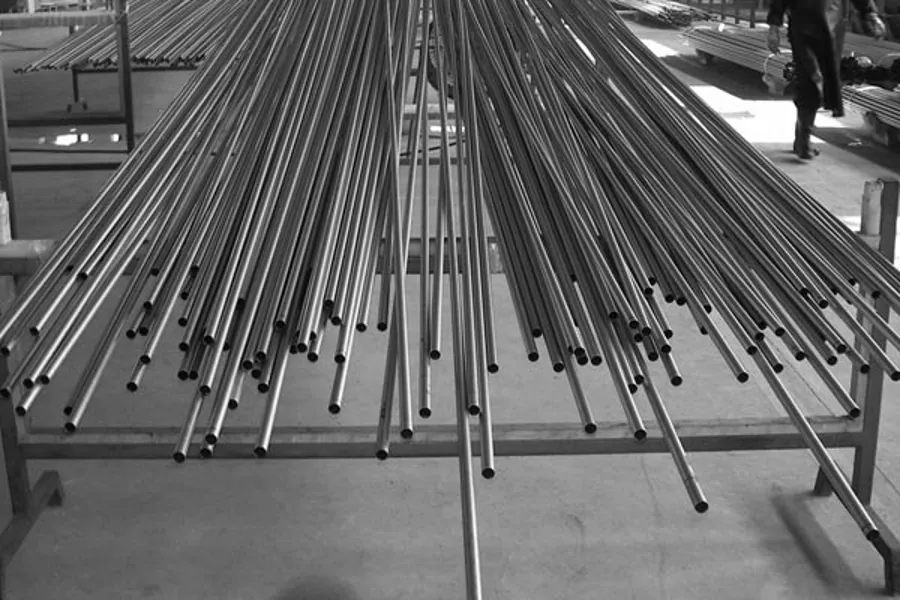
Inconel 601 (Alloy 601, UNS N06601) is a nickel-chromium-iron alloy built for high-temperature work. A small aluminum addition forms a tough, adherent oxide scale on the surface, and that's what pushes oxidation resistance up to about 2,200 °F (1,205 °C) while holding off spalling through repeated thermal cycling. Crestflo, a manufacturer serving the US market, supplies this grade as instrumentation compression tube fittings, valves, and tubing. Chemistry comes certified, heat numbers are traceable, and delivery runs 6-8 weeks.
Inconel 601 here refers to the UNS N06601 high-temperature alloy used in instrumentation components, not a plumbing or structural product. It is selected primarily for high-temperature oxidation resistance, not for wet or sour corrosion; for those services, see Inconel 625, Inconel 825, or Hastelloy C-276.
Inconel 601 Equivalent Grades & Designations: Alloy 601, UNS N06601, Werkstoff 2.4851 & NiCr23Fe
Alloy 601 shows up under a handful of designations across US, European, and aerospace systems, and buyers often just use trade names instead. On drawings and purchase specs you'll see it written as Inconel® 601, Alloy 601, Nickel Alloy 601, NiCrFe alloy 601, or plainly "601 alloy." Word order gets flipped or spaced out too, so "601 Inconel," "inconel alloy 601," "alloy 601 inconel," and "alloy 601 nickel" all turn up. The equivalent grades and designations below aren't different materials; they're interchangeable names for one. A European drawing might call out Werkstoff 2.4851 / NiCr23Fe, while a mill certificate reads Nicrofer 6023. Either way, both point to the same UNS N06601 material. So no matter which system a 601 equivalent gets specified in, it denotes the same grade.
| System | Designation |
|---|---|
| UNS | N06601 |
| Werkstoff / EN (Germany) | 2.4851 (NiCr23Fe) |
| AMS (bar / wire) | AMS 5715 |
| AMS (sheet / strip / plate) | AMS 5870 |
| Trade names | Nicrofer 6023 / Nicrofer 6023 H (VDM Metals); Pyromet 601 (Carpenter) |
| Common names | Inconel 601, Alloy 601, Nickel Alloy 601, 601 alloy |
Inconel® is a registered trademark held by Special Metals Corporation. Crestflo isn't affiliated with Special Metals, nor does it carry their endorsement. The designations "Alloy 601" and "UNS N06601" simply denote the material grade.
Inconel 601 Chemical Composition (Nickel, Chromium, Aluminum & Iron)
Inconel 601's chemical makeup pairs high nickel and chromium content with a controlled aluminum addition. That aluminum is the key difference from Inconel 600, and it's what gives 601 its stronger resistance to oxidation at high temperatures. Under heat, the chromium and aluminum join to form a tightly bonded oxide layer on the surface, one that won't crack or flake as the metal cycles through heating and cooling.
| Element | Min (wt%) | Max (wt%) | Role |
|---|---|---|---|
| Nickel (Ni) | 58.0 | 63.0 | Austenitic matrix; high-temperature stability |
| Chromium (Cr) | 21.0 | 25.0 | Oxidation and carburization resistance |
| Iron (Fe) | — | Balance (~14) | Base / cost-effective matrix |
| Aluminum (Al) | 1.0 | 1.7 | Adherent oxide scale; anti-spalling |
| Carbon (C) | — | 0.10 | — |
| Manganese (Mn) | — | 1.00 | — |
| Copper (Cu) | — | 1.00 | — |
| Sulfur (S) | — | 0.015 | — |
| Silicon (Si) | — | 0.50 | — |
Composition values are nominal and follow the applicable ASTM/AMS specification for UNS N06601. Actual chemistry isn't identical from heat to heat, so the certified per-heat analysis appears on the material test certificate.
Inconel 601 Mechanical & Physical Properties (Density, Tensile, Yield)
In its annealed, room-temperature state, Inconel 601 pairs moderate strength with high ductility. Its physical properties, density, thermal expansion, conductivity, all fall in line with what you'd expect from a nickel-chromium-iron alloy built for high temperatures. The figures below reflect standard published values for the grade. Certified figures for a specific lot travel with the MTC.
Mechanical properties (annealed, room temperature, typical)
| Property | Value (US) | Value (SI) |
|---|---|---|
| Tensile strength | 80-115 ksi | 550-795 MPa |
| Yield strength (0.2% offset) | 30-60 ksi | 205-415 MPa |
| Elongation | 30-70% | 30-70% |
| Hardness | ~65-90 HRB | ~65-90 HRB |
Physical properties
| Property | Value |
|---|---|
| Density | 0.293 lb/in³ (8.11 g/cm³) |
| Melting range | 2374-2494 °F (1301-1368 °C) |
| Modulus of elasticity (RT) | 30 x 10⁶ psi (~207 GPa) |
| Mean thermal expansion (68-212 °F) | ~13.75 µm/m·°C |
| Thermal conductivity (RT) | ~11.2 W/m·K |
| Electrical resistivity (RT) | ~1.19 µΩ·m |
| Magnetic permeability (RT) | ~1.006 (essentially non-magnetic) |
Values per applicable standard; customizable to requirement.
Inconel 601 Temperature Range, Oxidation & Heat Resistance
Inconel 601 can run continuously at roughly 2,200 °F (1,205 °C) in oxidizing conditions, and that ceiling is the main reason engineers reach for it in the first place. Its aluminum-bearing oxide scale clings to the surface through cycle after cycle of heating and cooling. That's why 601 shrugs off the scaling and spalling that wear down so many other heat-resistant alloys under thermal cycling. It also holds up reasonably well against carburization across a wide range of process environments.
| Metric | Value |
|---|---|
| Max continuous service (oxidation) | ~2,200 °F (1,205 °C) |
| Scaling / spalling resistance (thermal cycling) | Excellent |
| Carburization resistance | Good |
| Primary limitation | Reducing, sulfur-bearing (sulfidizing) atmospheres |
The honest limitation: Inconel 601 is not recommended for strongly reducing, sulfur-bearing high-temperature environments, where sulfidation can attack the alloy. Like all nickel superalloys it also carries a higher cost than stainless steel. On fabrication, 601 has good weldability, it is readily welded by conventional GTAW/GMAW processes with a matching nickel-alloy filler and is formed by standard hot- and cold-working methods; welding, forming, and machining follow normal nickel-alloy fabrication practice, though the alloy work-hardens and is harder to machine than stainless steel. Where even higher temperature strength or carburization resistance is needed, alloy 602CA (UNS N06025) raises chromium and carbon beyond 601.
Inconel 601 Corrosion Resistance by Environment
Engineers pick Inconel 601 for its resistance to high-temperature oxidation, not for standing up to aqueous or sour corrosion. Get that distinction wrong and the mismatch can prove costly. The table doesn't oversell the alloy. Where 601 falls short, it points toward a better nickel alloy instead.
| Environment | 601 suitability | Note / better alloy |
|---|---|---|
| High-temperature oxidizing air | Excellent | Core application |
| Carburizing atmospheres | Good | — |
| Reducing sulfur-bearing (high-temp) | Poor, avoid | Reconsider alloy selection |
| Wet chloride / pitting | Fair | See Inconel 625 / 254 SMO |
| Sour service (H₂S) | Confirm per NACE | See Inconel 625 / 825 / Hastelloy C-276 |
Inconel 601 Product Forms Crestflo Supplies (Fittings, Valves, Tubing)
Crestflo makes Inconel 601 in finished instrumentation forms, not mill products. The grade comes as compression tube fittings, instrumentation valves, and instrumentation tubing, and each one is built to order with heat-number traceability and an EN 10204 material test certificate. Standard items stay in ready stock; specials are made to order. Delivery runs 6-8 weeks.
| Form | Details | Product page |
|---|---|---|
| Compression tube fittings | Single and double ferrule, end connections to 2" (50 mm) OD; tested to ASTM F1387 | Tube fittings |
| Instrumentation valves | 1/16"-1"; needle, ball, check, manifold and more; qualified to ASME B16.34 / API | Instrumentation valves |
| Instrumentation tubing | Seamless and welded alloy instrument tubing | Tubing |
UNS N06601 stock starts from a set of mill-form specifications: round bar and rod fall under ASTM B166, seamless pipe and tube under B167, plate, sheet, and strip under B168, welded pipe under B517, fittings under B366, and forgings under B564, with ASME SB-166/167/168 covering the same forms plus AMS 5715 and 5870. These specifications define the raw stock from which the instrumentation parts are made. Crestflo supplies instrumentation forms only. It doesn't sell round bar, sheet, plate, or pipe as mill products. Datasheets, spec sheets, and CAD models are available to customers on request.
When to Choose Inconel 601 vs 600, 602, 625 & Incoloy 800H
Pick Inconel 601 when oxidation at high temperature and resistance to thermal cycling matter more than wet corrosion or raw mechanical strength. Below, a short matrix stacks 601 up against the sibling nickel grades buyers most often compare it with.
| Alloy | Primary strength | Choose when |
|---|---|---|
| Inconel 601 (N06601) | Oxidation resistance to ~2,200 °F; anti-spalling | High-temp oxidizing / thermal-cycling service |
| Inconel 600 | General high-temperature Ni-Cr-Fe | No aluminum scale needed; chloride-SCC resistance |
| Alloy 602CA (N06025) | Higher-temperature strength + carburization | Service hotter than 601's range |
| Inconel 625 | High strength + wet/aqueous corrosion | Corrosive fluids, sour service, strength |
| Incoloy 800H | Creep-rupture strength; carburization | Long-term high-temp load-bearing |
The difference between Inconel 601 and 600 comes down to aluminum. Both are nickel-chromium-iron alloys, but 601's aluminum forms a more adherent oxide. That's what gives it markedly better resistance to oxidation and spalling. Inconel 601 versus 625 is a different question altogether. 625 is a higher-strength alloy built for wet and sour corrosion; 601 is a heat-resistant, oxidation alloy instead. For a wider look across the family, see Hastelloy vs Inconel and Inconel vs Monel.
Inconel 601 Applications & Industries
Engineers turn to Inconel 601 wherever components need to survive sustained high-temperature oxidizing conditions. Furnace hardware is a common home for it: muffles, retorts, radiant tubes. It's also found in heat-treatment fixtures and baskets, petrochemical process equipment, and catalyst-regeneration systems, plus aerospace and automotive exhaust parts and gas-turbine hardware. Thermocouples and spark plugs use it too. For instrumentation work, 601 handles high-temperature sampling systems, flare and exhaust monitoring, and hot process tap points.
Crestflo's services line up with the industries it serves: petrochemical and chemical processing, power generation and nuclear, steam tracing, and aerospace and defense.
Inconel 601 Standards, Certifications & Traceability
Crestflo builds its Inconel 601 instrumentation components under a quality system certified to ISO 9001 / 14001 / 45001 and PED, with the standard approvals that apply to each product type. Compression tube fittings are tested to ASTM F1387. Instrumentation valves, meanwhile, qualify to ASME B16.34 and whichever API standards apply. Each part carries its heat or lot number and ships with an EN 10204 MTC 3.1 as standard; a 3.2 is available on request. PMI verifies the material, backed by in-house NDT, destructive testing at ISO/IEC 17025-accredited laboratories, and third-party inspection when requested.
Inconel 601 is built for high-temperature oxidation resistance. Not a go-to pick for sour service. NACE MR0175 / ISO 15156 applicability needs confirming for the specific service; check the NACE MR0175 standard page, or ASTM F1387 for the fitting interchange basis. Standard product ships from India, though US or European melt is available on request, with full material traceability included. Origin questions, along with TAA and DFARS considerations, get covered on the US origin and compliance page.
Why Crestflo for Inconel 601 Instrumentation Components
Crestflo is the instrumentation division of a Government-of-India-recognized export house with four decades behind it and a long track record delivering into the Middle East. Materials sourcing and manufacturing sit at the core of that heritage, and out of it comes a focused instrumentation line built for the US market. Crestflo isn't a pass-through stockist, distributor, or trading vendor. It's a US-serving Inconel 601 supplier and manufacturer, controlling the metal from certified heat all the way to finished part. What does that mean for Inconel 601 buyers? ASTM F1387-qualified drop-in interchange on fittings, delivery in 6-8 weeks against the 20-plus weeks typical of the majors, small minimum order quantities, and private-label programs. Every part ships with heat-number traceability and an MTC. And the origin position isn't hidden. It's stated openly.
Request a quote to price Inconel 601 fittings, valves, or tubing for your application; ask about the private-label program or lead time; or request your Swagelok®, Parker®, or Hoke® cross-reference from our engineering team. Send a print for custom 601 parts.
Our Houston, TX team handles US sales. Reach out anytime at sales@crestflousa.com or call +1 346 594 9005. Need pricing on Inconel 601? Request a quote from Crestflo.
Frequently Asked Questions About Inconel 601
What is Inconel 601?
Inconel 601 (Alloy 601, UNS N06601) is a nickel-chromium-iron high-temperature alloy. An aluminum addition forms a tenacious oxide scale, and that's what gives it oxidation resistance up to about 2,200 °F (1,205 °C). The alloy belongs to the nickel-base high-temperature family. Engineers pick it mainly for its heat and oxidation resistance.
What is the chemical composition of Inconel 601?
By nominal composition, Inconel 601 runs 58-63% nickel and 21-25% chromium, with iron making up the balance at roughly 14% and aluminum at 1.0-1.7%. Carbon sits at or below 0.10%, manganese and copper each cap out at 1.0%, sulfur tops out at 0.015%, and silicon at 0.50% (wt%). These figures are only nominal, though. Actual chemistry varies heat to heat, and it's certified and reported on the material test certificate.
What is the maximum service temperature of Inconel 601?
Inconel 601 holds up in continuous oxidizing service to roughly 1,205 °C (2,200 °F). That's largely down to its aluminum-bearing oxide scale, which resists scaling and spalling even through repeated thermal cycling.
What are the UNS number and Werkstoff for Inconel 601?
Inconel 601 carries the designation UNS N06601, along with Werkstoff 2.4851 (EN NiCr23Fe). It's sold under other names too, including Nicrofer 6023 and Pyromet 601.
What is the difference between Inconel 601 and 600?
Both alloys share a nickel-chromium-iron base, but Inconel 601 adds aluminum, which forms a more adherent oxide scale. That difference gives it noticeably better resistance to high-temperature oxidation and spalling than Inconel 600. For a closer comparison, see the Inconel 600 page from Crestflo.
What is the difference between Inconel 601 and 625?
Inconel 601 resists oxidation and holds up in high-temperature service. Inconel 625 (UNS N06625), by contrast, brings more strength and stands up to corrosion in wet, aqueous, and sour-service environments. Choose 601 for high heat and oxidation resistance; choose 625 when you're facing corrosive fluids and need extra strength. For more detail, see the Inconel 625 page.
What is the difference between Inconel 601 and 602 (602CA)?
Alloy 602CA (UNS N06025) pushes chromium and carbon content higher than Inconel 601, which buys it more strength at elevated temperature and stronger resistance to carburization. Just below that range, Alloy 601 remains the standard oxidation-resistant grade.
What are the disadvantages or limitations of Inconel 601?
Inconel 601 isn't the right choice for strongly reducing, sulfur-bearing atmospheres at high temperature, and it's not the first pick for wet-chloride or sour service either. Like other nickel superalloys, it costs more than stainless steel and gives machinists a harder time.
Is Inconel 601 NACE MR0175 compliant?
Inconel 601 isn't a primary pick for sour service. It's a high-temperature oxidation alloy, so confirm NACE MR0175 / ISO 15156 applicability for the specific service before relying on it. When sour or wet corrosion enters the picture, Inconel 625, Inconel 825, and Hastelloy C-276 are the usual choices. See the NACE MR0175 standard page for details.
In what forms does Crestflo supply Inconel 601?
Crestflo supplies Inconel 601 in instrumentation compression tube fittings, both single and double ferrule, up to 2" OD. Valves come in sizes from 1/16" to 1", and alloy instrumentation tubing rounds out the line. Everything's made to order, with heat-number traceability built in, and an EN 10204 MTC 3.1 or 3.2 is available on request. Bar, sheet, plate, and pipe as mill products aren't part of the offering; Crestflo sticks to instrumentation forms only.
What is the lead time for Inconel 601 parts?
Crestflo keeps standard items in stock and ready to ship, while special orders get made to order. As a manufacturer serving the US market, they deliver in 6 to 8 weeks, compared with the 20-plus weeks typical of the major players. Small minimum order quantities and private label work are both on the table. Details are on the lead time page.
Where is Crestflo's Inconel 601 made, and is it TAA-compliant?
Standard Inconel 601 product comes from India, though US or European melt is available on request, and full material traceability comes with it. TAA and DFARS considerations, including domestic-melt options where required, are covered on the US origin and compliance page.