
ASTM A312: Seamless, Welded & Heavily Cold-Worked Austenitic Stainless Steel Pipe (Spec Guide)
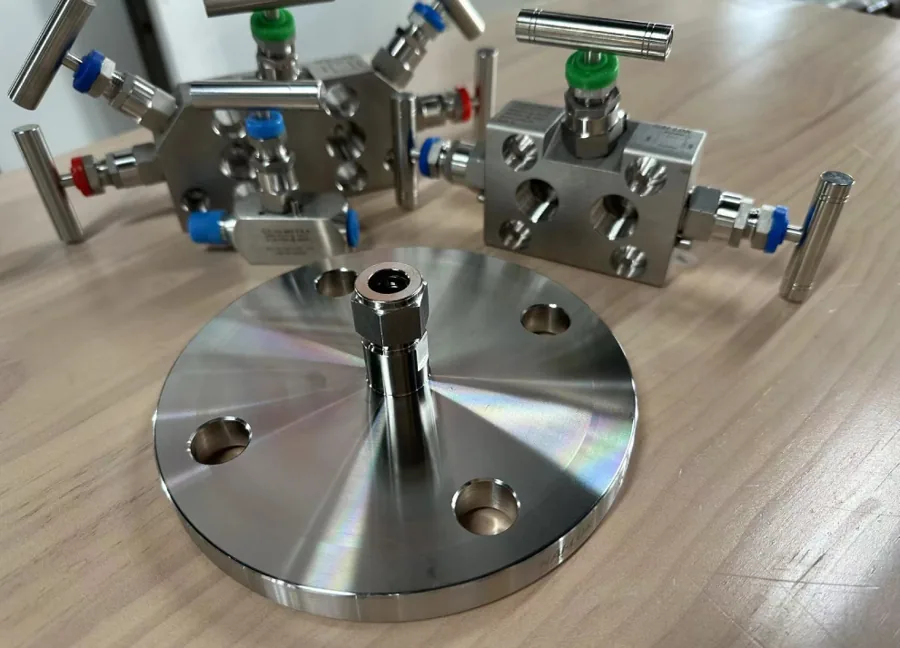
ASTM A312/A312M is the Standard Specification for Seamless, Welded, and Heavily Cold Worked Austenitic Stainless Steel Pipes. It covers austenitic stainless steel pipe, sized by NPS and schedule, for high-temperature and general corrosive service, and it comes as seamless, straight-seam welded (autogenous, no filler), or heavily cold-worked welded pipe. Two things worth clearing up here. First, A312 is a pipe specification, not a tubing specification; if you're after tubing for compression fittings, look at ASTM A269 and ASTM A213, which are sized by actual OD and wall. Second, "312" is just a specification number, not a stainless alloy, the alloy comes from the grade it lists, things like TP304, TP316 or TP321.
Also Known As: ASTM A312/A312M, SA-312 and A-312
This spec goes by a few other names too: ASTM A312/A312M, A312, A-312, and in its ASME Boiler & Pressure Vessel Code form, SA-312 / SA312 (ASME BPVC Section II, Part A). That version is technically equivalent and gets used for ASME code fabrication. Buyers tend to search for it as "A312 pipe," "A312 stainless steel pipe," "A312 seamless pipe," or "A312 welded pipe." Grade-qualified searches show up too, things like "A312 TP304," "A312 TP316," and "A312 TP316L specification." As for the grades themselves, they carry TP-prefixed designations: TP304, TP316, TP321, TP347. Each one has a matching UNS number: S30400, S31600, S32100, S34700.
What ASTM A312 Covers: Scope, Service and Product Form
A312 covers austenitic stainless steel pipe used in high-temperature and general corrosive service across refineries, chemical and petrochemical plants, power generation, pulp and paper, marine, and process industries. The standard spans three manufacturing routes: seamless, straight-seam welded (made without filler metal), and heavily cold-worked welded. It sets out the chemistry, mechanical minimums, heat treatment, permissible dimensions, tolerances, testing, and marking that each pipe has to meet.
Its boundaries matter as much as its scope. A312 is austenitic-only; duplex and super-duplex pipe fall under ASTM A790 and ASTM A789. Tubing, sized by OD and wall for instrumentation and heat-exchanger service, belongs to ASTM A269 and ASTM A213. Forged fittings and flanges fall under ASTM A182, while bar stock for machined bodies is covered by ASTM A276 and A479. A312 itself sets no pressure rating. Allowable stress comes from whatever piping code applies, such as ASME B31.3, a distinction Crestflo's engineers walk customers through routinely.
ASTM A312 Grades: TP304, TP316, TP321, TP347 & 254 SMO
A312 covers a wide range of austenitic grades: standard, low-carbon (L), and high-carbon (H) versions, along with stabilized and higher-alloy austenitics. You'll find the alloy metallurgy for each grade on the linked material pages.
| Grade | UNS | Type | Material detail |
|---|---|---|---|
| TP304 / TP304L / TP304H | S30400 / S30403 / S30409 | Standard / low-carbon / high-carbon | 304/304L stainless properties |
| TP316 / TP316L / TP316H | S31600 / S31603 / S31609 | Standard / low-carbon / high-carbon | 316/316L stainless properties |
| TP316Ti | S31635 | Titanium-stabilized | 316/316L stainless properties |
| TP304N / TP304LN · TP316N / TP316LN | S30451 / S30453 · S31651 / S31653 | Nitrogen-strengthened | — |
| TP317 / TP317L | S31700 / S31703 | Higher-molybdenum | — |
| TP321 / TP321H | S32100 / S32109 | Titanium-stabilized | — |
| TP347 / TP347H / TP348 | S34700 / S34709 / S34800 | Niobium-stabilized | — |
| TP309S/H · TP310S/H | S30908/S30909 · S31008/S31009 | Heat-resistant | — |
| S31254 (254 SMO) | S31254 | High-alloy super-austenitic | 254 SMO super-austenitic grade |
The grade list is broad, with values set per applicable standard and open to customization as needed. TP304H, TP316H, TP321H and TP347H are the high-carbon variants, specified for creep strength in elevated-temperature service. The L grades, by contrast, restrict carbon to improve intergranular-corrosion resistance after welding. As for the nitrogen-strengthened variants, TP304N, TP304LN, TP316N and TP316LN, they add controlled nitrogen for higher yield strength without paying a carbon penalty.
ASTM A312 Chemical Composition Limits by Grade
The chemistry limits below are the published austenitic values for the common A312 grades, given in weight percent (maximum, unless a range is shown). Check them against the controlled copy before certifying. Values follow the applicable standard and can be adjusted to requirement.
| Grade | C | Mn | P | S | Si | Cr | Ni | Mo | Other |
|---|---|---|---|---|---|---|---|---|---|
| TP304 | ≤0.08 | ≤2.00 | ≤0.045 | ≤0.030 | ≤1.00 | 18.0–20.0 | 8.0–11.0 | — | N ≤0.10 |
| TP304L | ≤0.035 | ≤2.00 | ≤0.045 | ≤0.030 | ≤1.00 | 18.0–20.0 | 8.0–13.0 | — | N ≤0.10 |
| TP316 | ≤0.08 | ≤2.00 | ≤0.045 | ≤0.030 | ≤1.00 | 16.0–18.0 | 11.0–14.0 | 2.00–3.00 | — |
| TP316L | ≤0.035 | ≤2.00 | ≤0.045 | ≤0.030 | ≤1.00 | 16.0–18.0 | 10.0–15.0 | 2.00–3.00 | — |
| TP321 | ≤0.08 | ≤2.00 | ≤0.045 | ≤0.030 | ≤1.00 | 17.0–19.0 | 9.0–12.0 | — | Ti 5×(C+N)–0.70 |
| TP347 | ≤0.08 | ≤2.00 | ≤0.045 | ≤0.030 | ≤1.00 | 17.0–19.0 | 9.0–13.0 | — | Nb 10×C–1.00 |
ASTM A312 Mechanical Properties: Tensile, Yield & Elongation
Standard grades exceed the low-carbon L grades in both yield and tensile strength minimums, all measured in the solution-annealed condition.
| Grade | Tensile min (ksi / MPa) | Yield min (ksi / MPa) | Elongation min (%) |
|---|---|---|---|
| TP304, TP316, TP321, TP347 | 75 / 515 | 30 / 205 | 35 |
| TP304L, TP316L | 70 / 485 | 25 / 170 | 35 |
| TP316Ti | 75 / 515 | 30 / 205 | 35 |
Values per the applicable standard. Hardness and elevated-temperature properties for H grades come from the controlled copy, and they can be adjusted to fit the requirement.
ASTM A312 Manufacture: Seamless vs Welded vs Heavily Cold Worked
A312 recognizes three product-manufacturing routes, each carrying its own inspection requirements:
- Seamless, extruded or pierced and drawn, with no weld seam. Used where the highest integrity or thick-wall service is called for.
- Welded, formed and joined by an autogenous (no-filler) fusion weld along a straight seam, then solution annealed. The weld gets the same testing as the base metal.
- Heavily cold worked (HCW), welded pipe that's given substantial cold work after welding, which reworks the weld and base metal into a more uniform structure.
The stencil shows which route was used, S, W, or HCW, so the reviewer can check that the pipe matches the purchase order.
ASTM A312 Sizes, Schedules & Dimensional Tolerances
ASME B36.19M sets the schedule tables for A312 pipe alongside B36.10M, and coverage runs from NPS 1/8 through NPS 30, with larger sizes available by agreement. Wall thicknesses come straight from those tables. Tolerances for outside diameter, wall thickness, and length are spelled out in the specification's dimensional tables.
| Attribute | Basis |
|---|---|
| Product form | Pipe (NPS + schedule), not tube (OD × wall) |
| Size range | NPS 1/8 to NPS 30 (larger by agreement) |
| Wall thickness / schedules | Per ASME B36.19M and B36.10M |
| Tolerances | OD, wall and length per the A312 tables |
| Allowable pressure / stress | Set by the piping code, ASME B31.3, not A312 |
Values run per applicable standard, but they're customizable to what the job needs. Allowable working pressure depends on the design code, the grade allowable stress, and the wall thickness. A312 supplies the material and dimensions; the piping code supplies the stress basis.
ASTM A312 Testing & Inspection: Hydrostatic, NDE and Supplementary
Every heat and lot is tested against a defined regime. The mandatory and supplementary tests are summarized below.
| Test | Status | Reference / note |
|---|---|---|
| Tension test | Mandatory | Verifies tensile, yield and elongation minimums |
| Hydrostatic test OR nondestructive electric (NDE) test | Mandatory (one required) | NDE by eddy-current or ultrasonic examination |
| Flattening / flaring test | Mandatory as applicable | Flattening for welded; flaring/flattening for seamless |
| Intergranular corrosion | Supplementary | Practice per ASTM A262, by purchase agreement |
| Grain size, PMI, additional NDE | Supplementary | By purchase-order agreement |
Crestflo stands behind the matching-grade instrumentation components it supplies with its own testing regime: in-house hydrostatic proof testing and positive material identification (PMI), in-house NDT, destructive testing at ISO/IEC 17025-accredited laboratories, and third-party inspection on request.
SA-312 vs ASTM A312: Marking, Traceability and Code Adoption
SA-312 is the ASME BPVC Section II, Part A adoption of ASTM A312. The requirements match up technically, and SA-312 is the designation you'll see when the pipe is headed for ASME code fabrication. In both cases the pipe carries a stencil mark with the specification number, grade, size, heat or lot number, manufacturer, and the S / W / HCW route identifier. That mark is what gives you full traceability back to the mill test report.
Crestflo issues EN 10204 3.1 material test certificates as standard practice, with 3.2 available on request. Every part the company manufactures gets the heat or lot number marked on it. For more on this, see EN 10204 MTC and traceability.
ASTM A312 vs A269 vs A213 vs A358 vs A790
Buyers most often mix up A312 pipe with A269/A213 tubing, or they assume it covers duplex too. This table sorts that out.
| Standard | Product form | Alloy family | Manufacture | Typical use | Sizing basis |
|---|---|---|---|---|---|
| ASTM A312 | Pipe | Austenitic stainless | Seamless / welded / HCW | Process piping, corrosive & high-temp service | NPS + schedule |
| ASTM A269 | Tube | Austenitic stainless | Seamless / welded | General-service & instrumentation tubing | OD × wall |
| ASTM A213 | Tube | Ferritic/austenitic stainless | Seamless | Boiler, superheater & heat-exchanger tube | OD × wall |
| ASTM A358 | Pipe | Austenitic stainless | Electric-fusion-welded (EFW) | Large-diameter high-temp pipe | NPS + schedule |
| ASTM A790 | Pipe | Duplex / super-duplex | Seamless / welded | Chloride & high-strength service | NPS + schedule |
For duplex and super-duplex pipe, see ASTM A790. Now, to settle the "304 vs 312" question once and for all: these aren't comparable categories. 304 is an alloy grade. 312, on the other hand, is a specification that lists alloys, TP304 among them. Comparing the two is like comparing a material to the document that describes it.
ASTM A312 Latest Edition & Where to Get the PDF
ASTM A312/A312M gets revised on a regular schedule by ASTM Committee A01, and the newer editions carry designations like A312/A312M-21 and beyond. The controlled specification is copyrighted and sold by ASTM International, so buy the current copy from the official ASTM.org store, don't rely on an uncontrolled or free PDF floating around online. This page just summarizes the requirements for reference. It doesn't host the standard document itself.
Related Standards Referenced Alongside ASTM A312
| Standard | What it governs |
|---|---|
| ASTM A269 | General-service stainless tubing (OD × wall) |
| ASTM A213 | Seamless boiler and heat-exchanger tube |
| ASTM A790 / A789 | Duplex and super-duplex pipe and tube |
| ASTM A182 | Forged fittings and flanges |
| ASTM A276 / A479 | Stainless bar for machined bodies |
| ASME B31.3 | Process piping code, allowable stress and design |
| EN 10204 | Material test certificates (3.1 / 3.2) |
A312 pipe also mates with fittings under ASTM A403; for EFW pipe, that's ASTM A358. Both are product-form specifications, and neither falls within the scope of this page.
Why Crestflo for A312-Grade Instrumentation Components
A312 governs the process pipe a system is built from; Crestflo manufactures the instrumentation tubing, fittings and valves that tie into that pipe, in the same austenitic grades A312 lists, including 304/304L, 316/316L and 254 SMO. Instrumentation tubing conforms to ASTM A269 / A213, not A312, so this is the honest boundary: we supply the small-bore stainless components inside and around A312 piping, not the mill pipe itself.
Crestflo is the instrumentation arm of an export house that's been around for four decades and carries Government-of-India recognition, with a delivery record across the Middle East. For a buyer specifying A312-grade stainless, here's what that background actually means:
- Matching grades, 316/316L, 304/304L and 254 SMO instrumentation tubing, fittings and valves.
- Compression tube fittings are performance-qualified to ASTM F1387 for dimensional drop-in interchange. Instrumentation valves, meanwhile, qualify to ASME B16.34 and whichever API standards apply.
- Traceability, EN 10204 3.1 MTC as standard, 3.2 on request, with the heat or lot number marked on every part.
- Certification, ISO 9001 / 14001 / 45001 and PED certified.
- Availability, ready stock for standard items, made-to-order for specials, 6–8 week delivery.
- Origin, Indian origin; US / European melt available on request, with full material traceability.
Ready to specify? Request a quote and send your grade and spec. Browse instrumentation tubing and seamless tubing, or take a look at the full stainless and alloy tubing range. Need a competitor cross-reference? Ask Crestflo's engineering team for your part-number cross-reference.
ASTM A312 FAQ
What does ASTM A312 mean?
ASTM A312/A312M covers seamless, welded, and heavily cold-worked austenitic stainless steel pipe for high-temperature and general corrosive service. It spells out the grades, chemistry, minimum mechanical properties, dimensions, testing methods, and marking requirements that pipe must satisfy to qualify.
Is "312" a type of stainless steel?
No. 312 is a specification number, not an alloy. The alloy is whatever grade the spec lists, say TP304, TP316 or TP321. So when someone says "304 vs 312," they're really comparing an alloy grade to a specification. It's a mix-up that comes up a lot.
What is A312 TP316L material?
TP316L is the low-carbon version of 316 austenitic stainless (carbon capped at 0.035%), supplied as A312 pipe. Cutting the carbon content boosts resistance to intergranular corrosion after welding, and that's precisely why engineers call for it on welded corrosive-service piping.
What's the difference between ASTM A312 and A269?
ASTM A312 covers stainless pipe, sized by NPS and schedule. ASTM A269, by contrast, covers stainless tubing, sized by actual OD and wall thickness, for general service including instrumentation tubing. Feeding compression fittings? Then you almost certainly need A269 tubing, not A312 pipe, so check the spec before you order.
What grades does A312 cover?
Common grades include TP304/304L/304H, TP304N/304LN, TP316/316L/316H, TP316N/316LN, TP316Ti, TP317/317L, TP321/321H, TP347/347H/348 and the TP309/TP310 heat-resistant series, plus higher-alloy austenitics such as S31254 (254 SMO).
What tests does ASTM A312 require?
A tension test is required, along with either a hydrostatic test or a nondestructive electric test (eddy-current or ultrasonic), plus flattening or flaring tests where applicable. Intergranular-corrosion testing per ASTM A262, grain size, and PMI count as supplementary tests, and those get supplied only by purchase agreement.
Is SA-312 the same as A312?
SA-312 is what you get when the ASME Boiler & Pressure Vessel Code (Section II, Part A) adopts ASTM A312. Technically, the two are equivalent. SA-312 is simply the designation used when fabrication falls under ASME code.
What sizes does A312 cover?
A312 pipe covers sizes from NPS 1/8 up to NPS 30, and larger sizes are available by agreement, with wall thicknesses set per the schedule tables in ASME B36.19M and B36.10M.
Does A312 set the pressure rating of a pipe?
No. A312 sets the requirements for material, dimensions and testing. Allowable pressure and stress come from the piping code you're applying, ASME B31.3, for instance, worked out against the grade's allowable stress and the wall thickness. Crestflo applies this distinction when reviewing project specs.
What is the latest edition of ASTM A312?
The specification gets revised periodically by ASTM Committee A01, and recent editions carry designations such as A312/A312M-21 and later. Always verify and buy the current controlled copy from ASTM.org.
Can I get the ASTM A312 PDF for free?
ASTM International holds the copyright on this specification and sells it directly. Get your copy from ASTM.org. What follows here is a summary of the requirements for reference only; the standard itself isn't hosted on this page.