
Cryogenic & LNG Service: Instrumentation Material & Component Selection Guide
Cryogenic and LNG material selection means picking the alloy, valve type, seat, seal, tubing and fitting that will keep a fluid-system component leak-tight and ductile at very low temperatures. For LNG, that's roughly -162 °C (-260 °F). Liquid nitrogen and liquid helium run far colder still. For instrumentation service, the short answer is this: specify austenitic stainless steel (304L or 316L) or a high-nickel alloy, pair it with a cold-rated seat such as PCTFE, reinforced PTFE or PEEK, and use an extended-bonnet valve. Carbon, ferritic and martensitic steels don't belong here; they lose toughness and crack when cold. On this page, the terms "cryogenic valve," "ball valve," "needle valve" and "ferrule" refer to instrumentation and fluid-system components built for low-temperature process and analytical work. They don't cover HVAC equipment, plumbing fixtures, or bulk pipeline line valves.
Cryogenic & LNG Material Selection: Also Known As
Industry specifies this selection topic under several different names, though the terms don't really differ in engineering practice. Buyers and specifiers call it cryogenic material selection, LNG material selection, cryogenic valve material selection, low-temperature material selection, material selection for cryogenic service, or cryogenic instrumentation selection. Several fluids drive the requirement: LNG (liquefied natural gas / methane), liquid nitrogen (LN₂), liquid oxygen (LO₂ / LOX), liquid argon (LAr), liquid hydrogen (LH₂), liquid helium (LHe) and ethylene. Together, engineers group these under low-temperature, sub-zero or cryogenic media. A cryogenic specification typically names 304/304L (UNS S30400/S30403), 316/316L (UNS S31600/S31603), 904L (UNS N08904), Monel 400 (UNS N04400) and Inconel 625 (UNS N06625) as the alloys of choice.
What "Cryogenic" Means and How Cold LNG Actually Is
Cryogenic service is generally defined as any temperature at or below -150 °C (-238 °F). Some references set the threshold lower, at -100 °C. LNG falls inside that band; at atmospheric pressure it sits at roughly -162 °C. Component behavior always tracks the coldest fluid a system will ever see, so that's where selection starts: pinning down the minimum design temperature across the cryogenic temperature range in the table below.
| Fluid | Symbol | Boiling point °C | Boiling point °F | Typical service |
|---|---|---|---|---|
| Ethylene | C₂H₄ | -104 | -155 | Petrochemical, refrigerant |
| Ethane | C₂H₆ | -89 | -128 | Gas processing |
| LNG (methane) | CH₄ | -162 | -260 | Liquefaction, regas, marine |
| Liquid oxygen | LO₂ / LOX | -183 | -297 | Air separation, aerospace |
| Liquid argon | LAr | -186 | -303 | Air separation, welding gas |
| Liquid nitrogen | LN₂ | -196 | -320 | Freezing, blanketing, ASU |
| Liquid hydrogen | LH₂ | -253 | -423 | Hydrogen economy, aerospace |
| Liquid helium | LHe | -269 | -452 | Superconducting, MRI, research |
Boiling points listed in references are standard values, measured at atmospheric pressure. Check your actual operating pressure. Upset conditions matter too, since both shift the effective service temperature away from that published figure.
Why Austenitic Stainless Steel Survives the Cold and Carbon Steel Does Not
Cryogenic service fails through loss of ductility, not corrosion. Brittle fracture is the real threat. The reason comes down to crystal structure. Austenitic stainless steels, the 300 series, have a face-centered-cubic lattice, and that lattice has no ductile-to-brittle transition temperature. Impact toughness holds up all the way down toward absolute zero. That's why 304/304L and 316/316L remain the standard cryogenic stainless steel grades, and why they're the default choice for cryogenic and LNG instrumentation.
Carbon steels and ferritic or martensitic stainless steels have a body-centered-cubic (BCC) lattice, and that comes with a ductile-to-brittle transition. Drop below that transition temperature and they fracture suddenly, with little warning. That's why they're excluded from cryogenic instrumentation. It's also the core reason low-temperature material selection differs from ambient selection: you're choosing for toughness at temperature, not just corrosion resistance.
Within the austenitic family, fabricators favor the low-carbon "L" grades, 304L and 316L, for welded cryogenic systems. Less carbon doesn't leave much room for carbide precipitation, or sensitization, in the weld heat-affected zone. The payoff: toughness and corrosion resistance hold up right at the joints. See 304 vs 316 compared for a head-to-head look at the two most common grades, and check 316/316L for full composition and mechanical data.
Which Alloys to Select for Cryogenic and LNG Service
Route from service condition to alloy using the matrix below. Every austenitic and nickel alloy on the list holds up toughness-wise at cryogenic temperature. What separates them isn't cold ductility at all, it's corrosion resistance, cost and strength.
| Alloy (UNS) | Structure | Cryogenic suitability | Best for | Grade page |
|---|---|---|---|---|
| 316 / 316L (S31600/03) | Austenitic | Excellent to LHe temperatures | Default LNG / LN₂ / LO₂ instrumentation | 316/316L |
| 304 / 304L (S30400/03) | Austenitic | Excellent | Cost-effective clean cold gas | 304/304L |
| 904L (N08904) | Austenitic | Excellent | Cold plus chloride exposure | 904L |
| Monel 400 (N04400) | Ni-Cu | Excellent | LOX and high-toughness cold service | Monel 400 |
| Inconel 625 (N06625) | Ni-Cr | Excellent | Cold plus high strength | Inconel 625 |
| Titanium Gr2 (R50400) | α-Ti | Conditional | Verify for LOX / impact-sensitive use | Titanium Gr2 |
| Carbon / ferritic / martensitic | BCC | Avoid | Brittle below the DBTT | — |
316/316L is the default pick for cryogenic work. 304/304L costs less and does fine for clean, non-corrosive cold gas. When the job pairs low temperature with corrosion resistance or strength demands, 904L, Monel 400 or Inconel 625 come into play. Titanium Gr2 holds up well at cryogenic temperatures, but certain α-titanium alloys aren't cleared for liquid-oxygen or impact-sensitive service, so titanium should only go where it's been qualified for the specific fluid and impact conditions involved. Crestflo's US catalog draws on this same austenitic 300-series and high-nickel family, which means the alloys suited to cryogenic service are exactly the alloys its instrumentation forms are made from.
Proving Low-Temperature Toughness: Charpy Impact Testing
Selecting an FCC alloy is necessary, but it isn't enough on its own. Cryogenic valve standards and low-temperature piping codes require that toughness be demonstrated. The standard method is the Charpy V-notch impact test, run at the minimum service temperature, with acceptance criteria (minimum absorbed energy and lateral expansion) set by the governing standard for the component and temperature. Every Crestflo part carries a heat number with an EN 10204 3.1 material test certificate (3.2 on request), giving full traceability back to the certified material. Supplemental low-temperature Charpy impact testing at a specified test temperature is available on request too. Values follow the applicable standard and can be tailored to what you need: specify your required impact-test temperature and acceptance criteria on the RFQ.
Designing for Thermal Contraction in Cold Service
Metals shrink as they cool, and a joint has to hold through that movement. Austenitic stainless steel contracts by roughly 0.3% between room temperature and -196 °C. Not a small figure, over that range. It's why tubing runs, supports and fitting make-up all have to account for the change, plus the repeated thermal cycling a cryogenic system puts them through. A properly gauged two-ferrule compression joint keeps its grip and its seal through that contraction. Crestflo compression tube fittings are performance-qualified to ASTM F1387, the standard that checks a fitting's mechanical performance under pressure, vibration and thermal cycling.
Cryogenic Valve Selection: Ball, Needle and Bellows Valves
Valve type follows function. Cryogenic valves in instrumentation service split into three families, and each one used in cryogenic and LNG systems handles a different job:
| Valve type | Function in cryogenic service | Crestflo product |
|---|---|---|
| Ball valve | Fast quarter-turn isolation, full-bore, low pressure drop | Cryogenic ball valve |
| Needle valve | Fine throttling, sampling and flow control | Cryogenic needle valve |
| Bellows (packless) valve | Zero stem leakage for LNG, LOX and hazardous gas | Packless bellows valve |
Instrumentation valves come in sizes from 1/16" up to 1", with threaded or tube-fitting ends, built in austenitic stainless steel and high-nickel alloys. Cryogenic and LNG valves meet the standards that apply to their type: ASME B16.34, plus the relevant API standards for pressure-temperature rating and shell integrity. They can also be qualified against a cryogenic type-test regime, per the standards listed below. Crestflo holds the standard approvals for these product types.
Extended-Bonnet and Cold-Service Valve Design
A cryogenic valve needs more than a body tough enough to survive the cold. The extended bonnet is what sets it apart: lengthen the bonnet and stem, and the packing and gland move away from the cold fluid. That puts the seals above the frost line, keeps them warm enough to stay resilient, and keeps the valve operable without icing. Cryogenic valve design also calls for an anti-blowout stem, a vapor space that holds the stem seal above the liquid level, and, where LNG or gas duty demands it, a fire-safe construction option. These aren't unusual requirements; they're principles common to cryogenic valve standards. Crestflo instrumentation valves, though, are configured to order, so the bonnet length, end connections and seat material get matched to your minimum design temperature. Specify them on the RFQ.
Seat, Seal and Gasket Materials for Cryogenic Temperature
Elastomers like NBR and FKM turn brittle long before you hit cryogenic temperatures, so they're off the table for cold seats or seals. The engineering plastics and fluoropolymers listed below hold a seal at far lower temperatures, which is why they're the standard pick for cryogenic seats and packing.
| Material | Approx. minimum service temp | Use | Note |
|---|---|---|---|
| PCTFE (Kel-F) | to ~ -240 °C | Valve seats | Preferred cold seat |
| Reinforced PTFE | to ~ -200 °C | Seats and seals | Common general-purpose cold seat |
| PEEK | to ~ -100 °C | High-stress seats | For higher pressure or torque |
| PTFE / graphite | Cryogenic | Stem packing | Standard cold packing |
| Elastomers (NBR / FKM) | Not for cryogenic | — | Embrittle, avoid |
Minimum-temperature figures are typical published values for each polymer family, and they shift with grade, fill and stress. Check the seal supplier's data for the exact compound before you rely on them. Want the full seat and seal temperature matrix? See the seal & seat temperature-limit guide.
Cryogenic Tube Fittings and Compression Fittings
Cryogenic fittings, whether called cryogenic tube fittings, cryogenic compression fittings, or cryogenic instrumentation fittings, are two-ferrule compression fittings made from austenitic stainless steel or a high-nickel alloy. They're performance-qualified to ASTM F1387 for pressure, vibration and thermal-cycling performance. Crestflo compression tube fittings cover end connections up to 2 inches (50 mm) OD, in both imperial and metric sizes, with single or double ferrules and hardened or non-hardened ferrules available to requirement. Because they're F1387-qualified, they interchange dimensionally with the major fitting brands. That same two-ferrule design also works for LNG, liquid nitrogen fittings, and other cold gas connections. When a leak-critical LNG or gas connection calls for a metal-to-metal seal rather than a compression gland, VCR face-seal fittings do the job instead. Explore two-ferrule tube fittings, single-ferrule fittings and VCR face-seal fittings.
Cryogenic Instrumentation Tubing
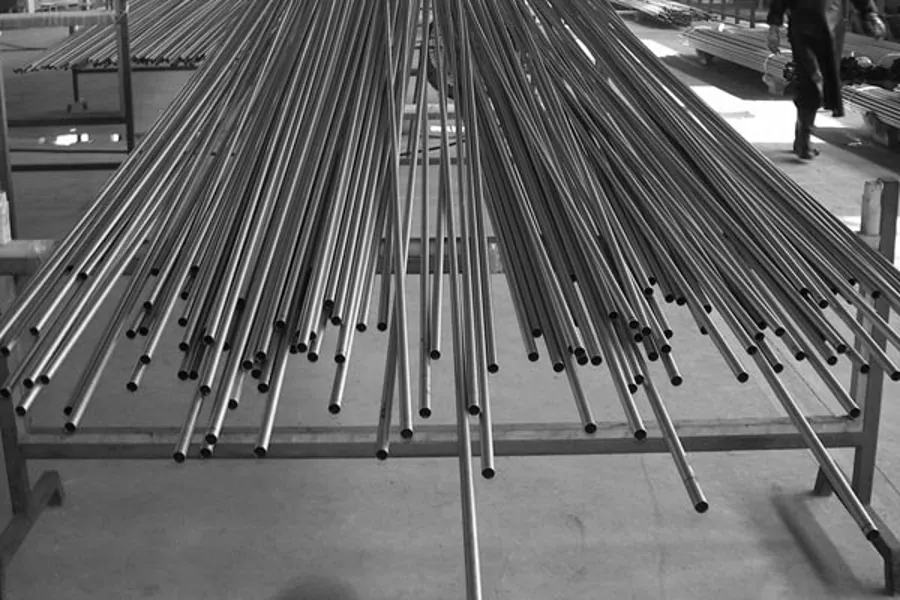
Cryogenic instrumentation tubing is seamless austenitic stainless or alloy tube, supplied fully annealed for maximum ductility. That's what lets it bend and take a ferrule without cracking in cold service. Standard specifications call for ASTM A269 in general instrumentation tubing and ASTM A213 for seamless tube. OD and wall thickness are chosen for the working pressure and thermal contraction of the line: values follow the applicable standard, though they can be customized to the requirement. See seamless cryogenic tubing, instrumentation tubing and the tube sizing & wall-thickness guide.
Standards and Type-Testing for Cryogenic Components
Cryogenic component specs almost always point to two things: a rating standard and a low-temperature type-test.
- BS 6364, cryogenic testing of valves, including low-temperature seat and shell leak testing.
- MSS SP-134, valves for cryogenic service, testing and qualification.
- ISO 28921-1 / EN 1626, isolating valves for low-temperature service.
- ASME B16.34, pressure-temperature ratings and shell integrity for valves.
- ASME B31.3, process piping, including its low-temperature and cryogenic provisions.
Crestflo builds its instrumentation valves to the ratings that apply - ASME B16.34 and the relevant API standards. It can also supply components tested against a specified cryogenic type-test: BS 6364, MSS SP-134, or ISO 28921. Just note which one you need on the RFQ. For further reference, see ASME B31.3 process piping, ASTM A269, and ASTM A213.
LNG- and Liquid-Oxygen-Specific Notes
LNG liquefaction and regas systems, along with air-separation units producing LN₂, LO₂ and LAr, drive most cryogenic instrumentation demand. Liquid-oxygen service adds something else on top of material selection: a cleanliness requirement. Components must be degreased and oxygen-cleaned so no hydrocarbon film remains behind to react with the LOX. For the oxygen-cleaning and high-purity handling detail, see oxygen-service cleaning and the high-purity & semiconductor selection guide. Hydrogen embrittlement isn't a concern for austenitic stainless at these temperatures. Liquid-hydrogen (LH₂) systems, though, still call for a material and cleanliness review across the full duty. For the broader routing from service to alloy, check the material selection by service hub, and for how cold temperature affects ratings, see pressure-temperature effects. Crestflo treats both as part of the same design question, not two separate checks.
Cryogenic Selection Checklist
Work the decision in order:
- Fix the minimum design temperature from the coldest fluid and any upset condition.
- Select an austenitic or nickel alloy for corrosion and cost, defaulting to 316/316L.
- Verify toughness with Charpy impact testing at the service temperature.
- Choose the valve type, ball, needle or bellows, with an extended bonnet for cold service.
- Specify a cold-rated seat: PCTFE, reinforced PTFE or PEEK.
- Size tubing and fittings for working pressure and thermal contraction.
- Call out the material test certificate (EN 10204 3.1 or 3.2) and any cryogenic type-test.
- Send the specification or line list to the engineering team for an RFQ.
Why Source Cryogenic Components from Crestflo
Crestflo manufactures instrumentation fittings, valves and tubing for the US market, and it operates as the instrumentation division of a four-decade-old export house recognized by the Government of India, with a long track record of delivery in demanding markets. Cryogenic and LNG service is where this shows most: the catalog runs on austenitic 300-series and high-nickel alloys, compression fittings performance-qualified to ASTM F1387 for drop-in dimensional interchange with the major brands, and valves built to ASME B16.34 and the applicable API standards. Every part carries a heat number and an EN 10204 3.1 material test certificate, with 3.2 available on request. The company holds ISO 9001 / 14001 / 45001 certification, plus PED. Material comes from India, though US or European melt can be supplied on request, and traceability runs the full length of the chain. Standard items ship from stock. Specials are made to order, with 6-8 week delivery, small minimum order quantities, and private-label options available. We Engineer Confidence.
Datasheets and CAD are available to customers on request. To move a cryogenic specification forward, request a quote, send your cryogenic spec or line list, ask for a sample, or talk to an engineer about a design-in. For a competitor interchange, request your Swagelok or Parker cross-reference from the engineering team.
Frequently Asked Questions
What is the best material for cryogenic applications?
Austenitic stainless steel: 316, 316L, 304 or 304L. Its face-centered-cubic crystal structure never goes through a ductile-to-brittle transition, so it holds onto its toughness all the way down to liquid-helium temperatures. Carbon steel can't say the same. Neither can ferritic or martensitic steel, both of which turn brittle in the cold. Where the application demands extra corrosion resistance or higher strength, high-nickel alloys such as Monel 400 and Inconel 625 come into play.
Which materials can be used in cryogenic service?
304/304L, 316/316L and 904L austenitic stainless still lead the list, alongside nickel alloys like Monel 400 and Inconel 625. Titanium Gr2 also works, though it needs qualification against the specific fluid and impact conditions involved. Carbon steel gets ruled out, and so do ferritic or martensitic stainless grades, because both lose ductility once they drop below their transition temperature.
What is the valve material specification for cryogenic service?
Bodies and trim come in austenitic stainless or nickel alloy, with Charpy impact verification carried out at the service temperature. Seats for cold service use PCTFE, PTFE or PEEK, and the design features an extended bonnet. The valve meets ASME B16.34 and the applicable API standards and is commonly type-tested to BS 6364, MSS SP-134 or ISO 28921 to confirm cryogenic seat and shell leak performance.
What temperature is cryogenic, and how cold is LNG?
Cryogenic conditions generally start at or below -150 °C (-238 °F). LNG sits around -162 °C (-260 °F) at atmospheric pressure. Liquid nitrogen comes in colder still, at -196 °C. Liquid oxygen is -183 °C, and liquid helium drops all the way to -269 °C.
Why does carbon steel fail at cryogenic temperatures?
Carbon steel has a body-centered-cubic crystal structure, and it comes with a ductile-to-brittle transition temperature. Drop below that temperature and the steel snaps suddenly, with barely any warning, rather than bending or deforming first. That's why engineers don't use it for cryogenic instrumentation.
Do you need special valves for cryogenic service?
Yes. Extended-bonnet ball, needle or bellows valves hold the packing and gland above the frost line, so the seals stay warm and keep working, and they pair with cold-rated PCTFE or PTFE seats. Crestflo instrumentation valves are configured to your minimum design temperature and end connections. Specify these on the RFQ.
What seat and seal materials work at cryogenic temperature?
PTFE and PCTFE (Kel-F), reinforced where needed, handle valve seats. PEEK steps in when stress runs higher. Stem packing calls for PTFE or graphite. Standard elastomers turn brittle under these conditions, so skip them entirely. For the complete matrix and limits by grade, check the seal and seat temperature-limit guide.
Are Crestflo cryogenic components tested and traceable?
Each part carries its own heat number, backed by an EN 10204 3.1 material test certificate (3.2 is available on request). Testing covers thermal cycling, hydraulic proof, burst and impulse, and pneumatic testing. Every manifold also gets a 100% seat and shell leak check. Low-temperature Charpy impact testing can be added on request as well.
Is 304 or 316 better for cryogenic service?
Both grades hold up well in cryogenic service. 316/316L brings molybdenum into the mix, which gives it an edge in corrosion resistance, a real advantage for marine LNG work or anywhere chlorides are a concern. 304/304L, on the other hand, is the cheaper option and does the job fine for clean cold gas applications. For the full breakdown of trade-offs, check the 304 vs 316 comparison.
Can I get cryogenic components as drop-in replacements for Swagelok or Parker?
Crestflo compression tube fittings are performance-qualified to ASTM F1387 for dimensional interchange with the major fitting brands, covering both austenitic and nickel alloys. Ask the engineering team for your Swagelok or Parker cross-reference.
What is BS 6364?
BS 6364 sets the standard for cryogenic valve testing. It covers low-temperature seat and shell leak checks, confirming that a valve stays tight at service temperature. Crestflo can supply valves against a specified cryogenic type-test, whether that's BS 6364, MSS SP-134 or ISO 28921. Just state the requirement on the RFQ.
What is the lead time for cryogenic instrumentation from Crestflo?
Standard items ship from stock. Specials get made to order, with delivery running 6-8 weeks, well ahead of the 20-plus weeks typical of the major suppliers. Minimum order quantities stay small, and private-label options are on the table too.