
Sour Service Material Selection for Instrumentation Fittings & Valves (NACE MR0175 / ISO 15156)
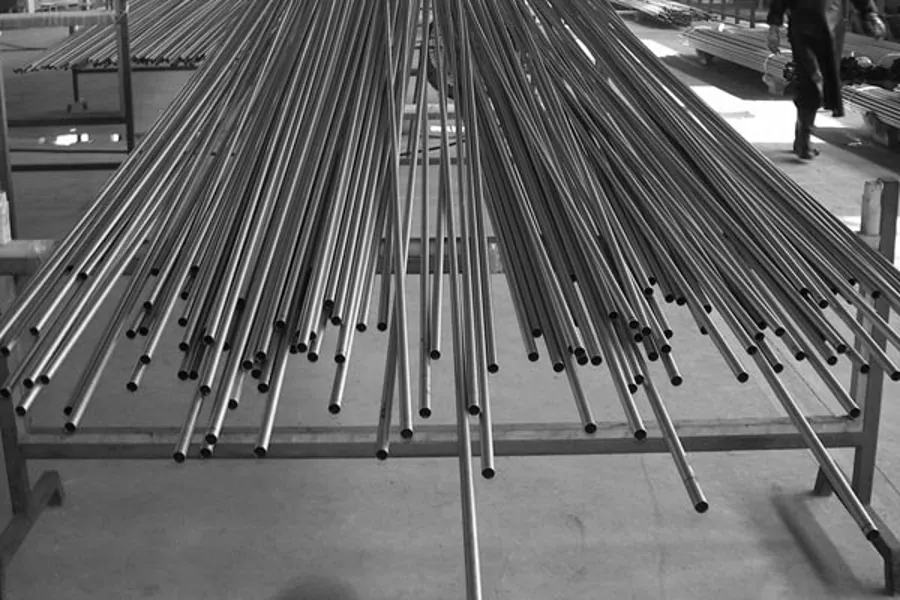
Sour service material selection means picking a metallic alloy and material condition, for fittings, valves, manifolds and tubing, that won't crack in wet hydrogen-sulfide (H2S) environments, qualified under NACE MR0175 / ISO 15156. Here's the short version: pin down the H2S partial pressure, pH, chloride level and temperature for your service, classify how severe it is, then choose the cheapest alloy that clears the bar. That ladder runs from solution-annealed 316/316L at the mild end, up through Duplex 2205, Super Duplex 2507 and 6Mo, and on to high-nickel CRAs like Incoloy 825, Inconel 625 and Hastelloy C-276. Whatever you pick has to arrive in the controlled hardness condition the standard calls for, with documented traceability. On this page, "sour service" refers to wet H2S hydrocarbon and process service under NACE MR0175 / ISO 15156. All the materials discussed are metallic instrumentation alloys, not sour-water plumbing and not food or other "sour" contexts.
Sour Service Material Selection: Also Known As
Across the industry, this same selection problem carries several interchangeable names. Engineers and EPC specifiers call it NACE material selection, sour service material selection, NACE MR0175 material selection, material selection for sour service, H2S service material selection, wet H2S service selection, CRA selection for sour service, and SSC-resistant material selection. The governing document itself shows up under different titles: NACE MR0175, ISO 15156, ANSI/NACE MR0175/ISO 15156, or MR0175/ISO 15156. They're identical in text, since the standards were harmonised. A sour-service specification typically names these alloys: 316/316L (UNS S31600/S31603), 904L (UNS N08904), Duplex 2205 (UNS S31803/S32205), Super Duplex 2507 (UNS S32750), 254 SMO (UNS S31254), AL-6XN (UNS N08367), Alloy 20 (UNS N08020), Incoloy 825 (UNS N08825), Inconel 625 (UNS N06625), Inconel 718 (UNS N07718), Monel 400 (UNS N04400), Monel K500 (UNS N05500), Hastelloy C-276 (UNS N10276), and Hastelloy C-22 (UNS N06022).
What "Sour Service" Means and When NACE MR0175 Applies
Service turns "sour" when a liquid water phase shows up and the H2S partial pressure in the gas hits 0.05 psia (0.3 kPa absolute) or higher. Below that line, or when there's no free water present, the fluid counts as sweet, and NACE MR0175 / ISO 15156 has no bearing on material selection. Two things trigger the whole discipline: a wet phase, and the H2S partial pressure, which is just total pressure multiplied by the mole fraction of H2S. A low-H2S gas at high pressure can be sour. So can a high-H2S gas at low pressure. That's the reason the calculation, not the raw ppm figure, decides the requirement. Wet-H2S upstream production of this kind gets called sour gas service, and picking alloys for it is what people mean by sour gas material selection. A "NACE material" is nothing more than a metallic alloy qualified to the standard for that sour gas duty. For the standard itself as an entity, see NACE MR0175 and ISO 15156.
NACE MR0175 / ISO 15156 in One Screen
NACE MR0175 / ISO 15156 sets the rules for qualifying materials in wet H2S service. It spells out which metallic materials, in what condition and hardness, are fit for use within a given environmental envelope. Published jointly as ANSI/NACE MR0175/ISO 15156 and maintained by AMPP (formerly NACE), the standard comes in three parts: Part 1 lays out general selection principles, Part 2 covers carbon and low-alloy steels, and Part 3 addresses corrosion-resistant alloys (CRAs) and other alloys. The current edition is the 2020 revision: ISO 15156-1:2020, ISO 15156-2:2020 and ISO 15156-3:2020. Approval isn't a blanket yes for an alloy. Each material gets qualified only within the H2S partial pressure, pH, chloride and temperature limits tabulated in ISO 15156-3 Annex A, so the same alloy can pass in one well and fail in another.
The Cracking Modes You Design Against: SSC, HIC, SOHIC & SZC
Engineers select for sour service to head off a whole family of hydrogen- and sulfide-driven environmental cracking mechanisms. NACE MR0175 / ISO 15156 covers the modes listed below, and hydrogen sulfide corrosion cracking serves as the umbrella term for the group. Sulfide Stress Cracking (SSC) comes first and is the most notorious of the bunch. Some specifications call it sulfide stress corrosion cracking (SSCC) instead; either name points to the same hydrogen-driven mechanism.
| Mechanism | Abbrev | What happens | Materials most at risk |
|---|---|---|---|
| Sulfide Stress Cracking | SSC | Atomic hydrogen released by the H2S reaction enters the metal and cracks it under tensile stress; worst near ambient temperature | Hard or high-strength steels and high-hardness zones |
| Hydrogen-Induced Cracking | HIC | Hydrogen collects at inclusions and forms internal blisters and cracks with no applied stress needed | Segregated or "dirty" carbon and low-alloy steel |
| Stepwise Cracking | SWC | Adjacent HIC cracks link on stepped planes into a through-wall array | Carbon and low-alloy steel plate and pipe |
| Stress-Oriented HIC | SOHIC | HIC stacks perpendicular to tensile stress, driven by applied and residual stress | Welds and heat-affected zones of carbon steel |
| Soft-Zone Cracking | SZC | Low-hardness "soft" zones strain locally and crack | Weldments with a soft heat-affected zone |
| Chloride SCC / sulfide interaction | SCC | Chloride plus H2S plus temperature cracks a CRA taken outside its Annex A envelope | Austenitic and CRA materials at high chloride and temperature |
For chloride issues in offshore and seawater environments, check out Crestflo's piece on offshore chloride material selection.
Rating Your Environment: H2S Partial Pressure, pH, Chloride & Temperature
The severity of a sour environment, and thus the alloy it calls for, isn't set by H2S alone but by a handful of variables together. For carbon and low-alloy steels the standard plots H2S partial pressure against in-situ pH to define SSC severity regions 0 through 3 (Region 0 isn't sour). CRAs, on the other hand, get qualified against the combined envelope in ISO 15156-3 Annex A. The exact acceptance cells, specific psia, pH, chloride and temperature limits for each alloy, have to be read from that Annex. This guide only states the qualitative direction of risk; it never substitutes an invented numeric limit.
| Variable | Why it matters | Direction of increasing risk |
|---|---|---|
| H2S partial pressure (pH2S) | Sets the sour classification and the rate of hydrogen charging | Higher pH2S |
| In-situ pH | Lower pH accelerates hydrogen uptake and SSC | Lower pH |
| Chloride concentration | Drives pitting and chloride SCC of stainless and CRA materials | Higher chloride |
| Temperature | SSC is worst near ambient; chloride SCC worsens as it gets hotter | Depends on mechanism |
| Elemental (free) sulfur | Sharply raises CRA cracking severity and narrows acceptance | Presence of free sulfur |
| Applied + residual stress | Tensile stress is required for SSC and SOHIC | Higher stress and unrelieved welds |
The 22 HRC Hardness Rule and Its Alloy Exceptions
Hardness is the single biggest factor in sulfide stress cracking. A harder microstructure simply cracks more easily under hydrogen. NACE sets the baseline at a maximum of 22 HRC for carbon and low-alloy steels, and the same cap applies to solution-annealed austenitic stainless steels like 316 and 316L. Duplex, super duplex and nickel corrosion-resistant alloys get more room: their hardness caps run higher and vary by alloy and condition. ISO 15156 doesn't pin these to one number. Instead, ISO 15156-3 Annex A spells out the limit for each material individually.
| Material class | Baseline hardness rule | Note |
|---|---|---|
| Carbon & low-alloy steel | ≤ 22 HRC, controlled microstructure and heat treatment | ISO 15156-2 |
| Solution-annealed austenitic SS (316/316L) | ≤ 22 HRC, within the Annex A environmental limits | ISO 15156-3 |
| Duplex & super duplex | Alloy-specific cap per Annex A (above 22 HRC) | Exact cell per ISO 15156-3 Annex A |
| Nickel CRAs (625, 825, C-276, K500) | Alloy- and condition-specific caps per Annex A | Cold-worked and age-hardened limits set individually |
Meeting the hardness limit comes down to material condition. That's why sour-service parts get ordered in the specified annealed or controlled-hardness condition. Verification happens through positive material identification (PMI), and the results are documented on the material test certificate.
The Sour-Service Alloy Ladder: 316L to Hastelloy C-276
Selection boils down to a ladder of rising resistance to corrosion and cracking. Start with the cheapest alloy that clears your environment's Annex A envelope, then climb only as H2S, chloride, temperature and free sulfur demand. Suitability below marks the qualitative acceptance ceiling under NACE MR0175 / ISO 15156-3; the exact per-environment limits live in ISO 15156-3 Annex A.
| Alloy (UNS) | Family | Sour-service ceiling | Notes | Grade page |
|---|---|---|---|---|
| 316 / 316L (S31600/S31603) | Austenitic | Entry | Solution-annealed, ≤ 22 HRC; limited chloride and temperature | 316/316L |
| 904L (N08904) | Super-austenitic | Entry–moderate | More chloride headroom than 316L | 904L |
| Alloy 20 (N08020) | Ni-Fe-Cr | Moderate | Acid and chloride resistance | Alloy 20 |
| Duplex 2205 (S31803/S32205) | Duplex | Moderate | Strength plus chloride resistance for mid-band sour | Duplex 2205 |
| Super Duplex 2507 (S32750) | Super duplex | High | High chloride and moderate temperature sour | Super Duplex 2507 |
| 254 SMO (S31254) | 6Mo super-austenitic | High | High-chloride sour with good pitting resistance | 254 SMO |
| AL-6XN (N08367) | 6Mo super-austenitic | High | Seawater and high-chloride sour | AL-6XN |
| Incoloy 825 (N08825) | Ni-Fe-Cr | High | Broad sour, chloride and acid resistance | Incoloy 825 |
| Monel 400 (N04400) | Ni-Cu | Moderate | H2S resistant; not for oxidising or high-chloride pitting | Monel 400 |
| Monel K500 (N05500) | Ni-Cu, age-hardened | Moderate–high | Higher strength; hardness must be controlled to the standard | Monel K500 |
| Inconel 718 (N07718) | Ni-Cr, precipitation-hardened | Severe | High strength for demanding sour components | Inconel 718 |
| Inconel 625 (N06625) | Ni-Cr-Mo | Severe | Top-tier sour, chloride and temperature resistance | Inconel 625 |
| Hastelloy C-22 (N06022) | Ni-Cr-Mo | Severe | Most aggressive sour plus mixed-acid service | Hastelloy C-22 |
| Hastelloy C-276 (N10276) | Ni-Cr-Mo | Severe | Most aggressive sour with free sulfur and chloride | Hastelloy C-276 |
For the full picture on corrosion by media, check the corrosion-alloy matrix. If you're after pitting-resistance rankings instead, the PREN comparison table has them.
Environment-to-Alloy Decision Matrix for Sour Service
The matrix below maps a typical service bucket to a recommended alloy family, plus an escalation path. Treat it as a screening aid only. Check the final choice against the exact ISO 15156-3 Annex A envelope for your H2S, pH, chloride and temperature values, per ISO 15156.
| Service bucket | Key drivers | Recommended alloy family | Escalate to |
|---|---|---|---|
| Mildly sour, low chloride, near-ambient | Low pH2S, low Cl, low temp | 316/316L (annealed, ≤ 22 HRC) | Duplex 2205 as chloride or temperature rise |
| Moderately sour with chloride | Moderate pH2S and Cl | Duplex 2205 or 904L | Super Duplex 2507 or 6Mo (254 SMO / AL-6XN) |
| High pH2S, high chloride, elevated temperature | Severe combined loading | Super Duplex 2507, 254 SMO, AL-6XN, Incoloy 825 | Inconel 625 or Hastelloy C-276 |
| Free elemental sulfur or the most severe deep sour | Free sulfur and extreme envelope | Nickel CRAs: Inconel 625, Hastelloy C-276 / C-22 | Confirm against ISO 15156-3 Annex A |
How to Select Sour-Service Materials in Six Steps
Work the decision in order so nothing is assumed:
- Determine the H2S partial pressure and the in-situ pH of the wet phase from the process conditions.
- Classify severity, for steels, place the service in an SSC region; for CRAs, note the combined envelope.
- Screen the aggravating variables: chloride concentration, temperature and any elemental sulfur.
- Pick the lowest alloy on the ladder whose ISO 15156-3 Annex A envelope covers those conditions.
- Set the material condition, hardness limit and ferrule choice (hardened or non-hardened) to the standard.
- Spell out what needs documenting: NACE MR0175 / ISO 15156 compliance, an EN 10204 3.1 material test certificate, and PMI. Then send the line list out for an RFQ.
For the wider picture on routing from any service to an alloy, check Crestflo's material selection by service hub and the guide to specifying instrumentation fittings and valves.
NACE MR0175 vs MR0103: Which Sour-Service Standard Applies?
Sour service falls under two related standards, each covering a different sector. NACE MR0175 / ISO 15156 governs upstream oil and gas production. Refinery and downstream process equipment, meanwhile, falls under NACE MR0103 / ISO 17945. Many refinery material specifications cite MR0103, so confirm which document your project references before making a selection.
| Aspect | MR0175 / ISO 15156 | MR0103 / ISO 17945 |
|---|---|---|
| Sector | Upstream oil & gas production | Refinery / downstream process |
| Scope of environments | Field-specific H2S, pH, chloride, temperature envelopes | Refinery wet-H2S process service |
| Structure | Three parts (general, steels, CRAs) | Single downstream sour-service document |
See NACE MR0103 for the refinery standard as an entity.
NACE-Compliant Fittings, Valves & Manifolds from Crestflo
Crestflo builds the instrumentation forms sour service demands, NACE compliant, across the full alloy range above. Compression tube fittings, single and double ferrule, up to 2" (50 mm) OD, with hardened or non-hardened ferrules, and 37° flare fittings come NACE compliant for sour-service tube connections. Instrumentation valves (needle, ball, check, plug and metering), plus 2-, 3- and 5-valve manifolds and double block-and-bleed (DBB) valves, are available in 316/316L, 6Mo, duplex, super duplex and the nickel CRAs; manifolds get a 100% seat and shell leak test. Sour-service instrumentation tubing rounds out the line. They're instrumentation components, so sour-service valves qualify to the valve standards that apply to their type, ASME B16.34 and the relevant API standards for pressure-temperature rating and shell integrity, while the compression fittings are performance-qualified to ASTM F1387.
Explore tube fittings, instrumentation valves, the 3-valve manifold, and the double block-and-bleed valve. Want proof on the NACE-alloy side? Look at Super Duplex 2507 tube fittings, Incoloy 825 tube fittings, Inconel 625 instrumentation valves, and Hastelloy C-276 tube fittings.
Certification & Traceability for Sour-Service Orders
Sour-service procurement is as much about paperwork as metallurgy. Every Crestflo part carries a heat number and an EN 10204 3.1 material test certificate (3.2 on request); PMI confirms the alloy.
| Deliverable | Standard | Provided by Crestflo |
|---|---|---|
| Sour-service compliance statement | NACE MR0175 / ISO 15156 | On NACE-compliant items |
| Material test certificate | EN 10204 3.1 (3.2 on request) | Standard on every part |
| Heat / lot traceability | EN 10204 | Heat number on every part |
| Positive material identification | PMI | Standard |
| Hardness / mechanical verification | To the applicable NACE limit | Documented on the MTC; supplemental testing on request |
| Destructive / mechanical testing | ISO/IEC 17025 | Outsourced to accredited labs |
| Offshore qualification | NORSOK M-630 / M-650 | Where specified |
| Third-party inspection | — | On request |
For the documentation detail, check Crestflo's page on EN 10204 material test certificates (MTC) and the traceability page.
Why Source Sour-Service Instrumentation from Crestflo
Crestflo serves the US market as a manufacturer of instrumentation fittings, valves and tubing, and operates as the instrumentation division of a four-decade-old, Government-of-India-recognized export house with a long delivery track record in demanding markets. For sour service, that means a catalog built on exactly the 316/316L, duplex, super duplex, 6Mo and high-nickel alloys the standard demands. Everything is manufactured NACE compliant. Compression fittings are performance-qualified to ASTM F1387 for drop-in dimensional interchange with the major brands, and valves are manufactured to ASME B16.34 and the applicable API standards.
Every part carries heat-number marking and an EN 10204 3.1 material test certificate, with 3.2 available on request, and PMI verifies each one. The company holds ISO 9001 / 14001 / 45001 and PED certification. Material is of Indian origin, though US or European melt is available on request, and full material traceability comes standard. Standard items ship from ready stock; specials are made to order, with 6-8 week delivery, small minimum order quantities, and private-label options on the table. We Engineer Confidence.
Datasheets and CAD files are available to customers on request. If you're moving a sour-service specification forward, request a NACE-compliant quote: send over your line list, ask for a sample, or get an engineer on the phone. Need a competitor interchange? Request your Swagelok® or Parker® cross-reference from the engineering team. Swagelok® is a trademark of Swagelok Company, and Parker® is a trademark of Parker Hannifin Corporation. Crestflo is an independent manufacturer of interchangeable equivalents; it isn't affiliated with, authorized by, or endorsed by either brand.
Frequently Asked Questions
What are the NACE MR0175 requirements?
NACE MR0175 / ISO 15156 qualifies metallic materials for wet H2S service. It works by controlling hardness and microstructure, and by fixing the environmental limits each material can handle: H2S partial pressure, in-situ pH, chloride, and temperature. Stay inside those limits and you'll avoid sulfide stress cracking, hydrogen-induced cracking, and stress-oriented HIC.
What is the difference between NACE MR0103 and MR0175?
NACE MR0175 / ISO 15156 covers upstream oil and gas production. NACE MR0103 / ISO 17945, by contrast, applies to refinery and downstream process equipment. A lot of refinery specifications cite MR0103, so before you select materials, confirm which document your project actually references.
What is the latest edition of NACE MR0175?
AMPP, formerly known as NACE, now maintains the standard. Its current published edition is the 2020 revision, released as ISO 15156-1:2020, ISO 15156-2:2020 and ISO 15156-3:2020, and it's published jointly under the designation ANSI/NACE MR0175/ISO 15156.
What is a "NACE material"?
"NACE material" is really just shorthand: a metallic material qualified to NACE MR0175 / ISO 15156 for sour service. It has to be supplied in the right condition and hardness for its environment, and it needs documentation to back that up. There's no single grade that qualifies. Any alloy accepted within the standard's limits counts.
When does service become "sour"?
A service turns sour once two things happen together: a free water phase shows up, and the H2S partial pressure hits or exceeds 0.05 psia (0.3 kPa absolute). Neither condition alone is enough. Drop below that pressure, or take away the free water, and the standard simply doesn't apply to material selection.
Is 316/316L acceptable for sour service?
Yes, within limits. 316/316L works when it's solution-annealed at 22 HRC or below and stays inside the H2S, chloride and temperature envelope set out in ISO 15156-3 Annex A. Push the service hotter or richer in chloride, though, and the selection has to move up to duplex, 6Mo or a nickel CRA.
What is the 22 HRC hardness rule?
NACE MR0175 and ISO 15156 set 22 HRC as the baseline maximum hardness for carbon and low-alloy steels, and for solution-annealed austenitic stainless steel. Harder microstructures crack more easily under hydrogen charging, and that's the reason for the limit. Duplex and nickel alloys are treated differently: their caps run higher and are set alloy by alloy, individually, in Annex A.
Which alloys handle the most severe sour, chloride and high-temperature service?
High-nickel corrosion-resistant alloys, Inconel 625, Incoloy 825 and Hastelloy C-276 or C-22, sit at the top of the ladder for the toughest combined sour, chloride and temperature service, including cases involving free elemental sulfur. Super Duplex 2507 and the 6Mo grades, 254 SMO and AL-6XN, handle the demanding mid-band.
Are Crestflo fittings and valves NACE compliant?
Yes. Crestflo builds compression fittings, flare fittings, instrumentation valves and manifolds, all NACE compliant across the full sour-service alloy ladder. Each piece ships in the controlled-hardness condition, backed by PMI and heat-number traceability. You'll also get an EN 10204 3.1 material test certificate, with 3.2 available on request.
What documentation do you provide for sour-service orders?
NACE-compliant items ship with a NACE MR0175 / ISO 15156 compliance statement and an EN 10204 3.1 or 3.2 material test certificate. Each order also comes with a PMI report, and hardness gets recorded right on the MTC. Third-party inspection is available on request. Where offshore projects call for it, NORSOK M-630 / M-650 qualification can be arranged too.
Can you supply exotic sour-service alloys quickly?
The full sour-service ladder is on offer, everything from duplex and super duplex through 6Mo to Inconel and Hastelloy. Standard items come out of ready stock; specials are made to order, with delivery in six to eight weeks. That beats the twenty-plus weeks typical of the majors. Minimum order quantities stay small, and private-label options are available too.
Can you cross the correct alloy to my existing Swagelok® or Parker® parts?
Yes. Crestflo compression tube fittings carry performance qualification to ASTM F1387, giving you dimensional drop-in interchange with the major fitting brands, and they're supplied in whatever NACE-compliant alloy you specify. Ask the engineering team for your Swagelok® or Parker® cross-reference. Swagelok® is a trademark of Swagelok Company, and Parker® is a trademark of Parker Hannifin Corporation. Crestflo operates independently and isn't affiliated with, authorized by, or endorsed by either brand.