
Socket-Weld Tube Fittings & End Connections
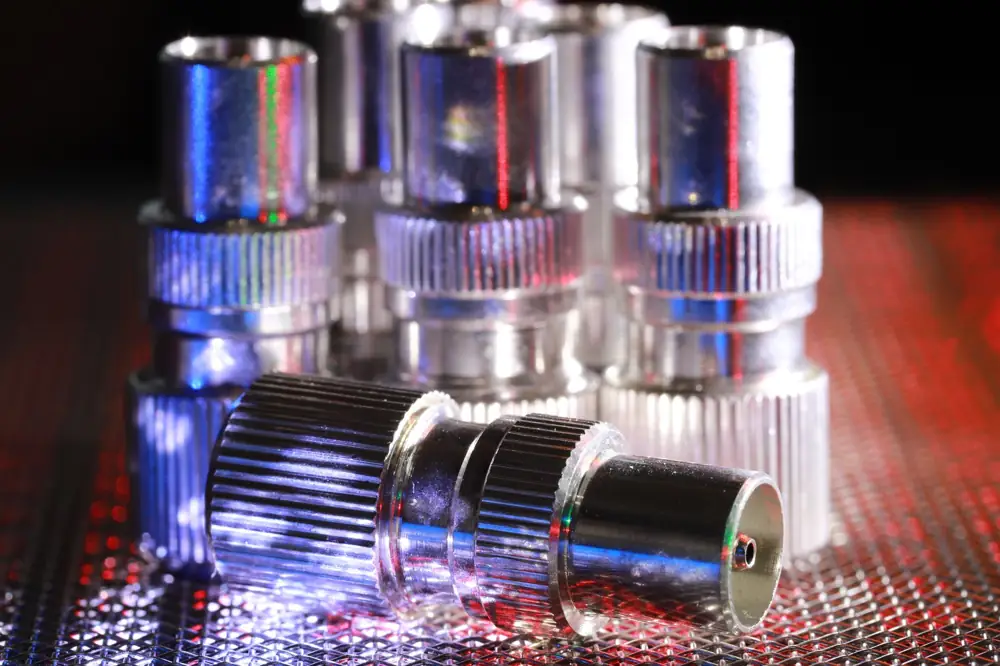
A socket-weld tube fitting is an instrumentation end connection whose machined socket bore receives the tube end and is joined by a circumferential fillet weld, forming a permanent, leak-tight connection for stainless and alloy instrument tubing. Crestflo manufactures socket-weld ends across stainless, duplex and high-nickel alloys, with heat-number traceability and a US-serving lead time, ready stock for standard items, made-to-order for specials, 6–8 week delivery. Request a quote for your size, alloy and configuration.
Here, "socket-weld" means an instrumentation weld-socket end connection for stainless and alloy instrument tubing, not commodity forged pipe socket-weld fittings (the pallet-quantity ASME B16.11 Class 3000/6000 couplings, elbows and tees), and not butt-weld or orbital-weld ends, which have their own pages. It is unrelated to electrical or wire socket connectors.
What Is a Socket-Weld Tube Fitting (Weld-Socket End Connection)?
A socket-weld tube fitting terminates in a counter-bored socket sized to accept an instrument tube or pipe. The tube is inserted to the socket shoulder, backed off a small bottoming gap, then joined with a circumferential fillet weld, producing a permanent connection rather than the re-makeable mechanical seal of a compression fitting. Because the joint is welded, it carries no independent mechanical-grip limit: system rating is governed by the tube wall, the weld and the alloy.
The connection is specified under several spellings and abbreviations, all describing the same weld-socket end.
The socket-weld end is also written as socket weld, socket-weld, socketweld (one word) and SW, and referred to as a weld socket, socket weld connection, socket welding fitting or instrument tube socket weld end. In instrumentation, the socket receives tube rather than schedule pipe, so it is often called a socket-weld tube union, weld-socket connector or weld gland. All are the same welded end connection described here.
How the Socket-Weld Joint Works: Socket Bore, Engagement & Weld Gap
The tube or pipe end is inserted into the fitting's socket bore until it seats against the internal shoulder, then withdrawn approximately 1/16″ (1.6 mm) to leave a bottoming clearance before welding, the socket-weld gap that accommodates thermal expansion of the weld and prevents cracking, per ASME B31.3 process-piping practice. Engagement depth (how far the tube enters the socket) and socket bore geometry follow ASME B16.11 forged-fitting practice. A single circumferential fillet weld then completes the joint.
Instrument tubing can be socket-welded within its wall, size and alloy weldability limits; heavier-walled tube and weldable alloys fit-up and weld more predictably than very thin wall. Socket dimensions (bore diameter, socket depth and wall) follow the ASME B16.11 framework and are customizable to requirement, request the socket-weld dimension guide for a specific size and class from the Crestflo engineering team.
When to Use Socket-Weld Ends vs. Compression Fittings
Choose a socket-weld end where the joint should be permanent and where high vibration, fatigue, elevated pressure or elevated temperature make a re-makeable mechanical seal undesirable, or where a no-leak-path welded connection is specified. Choose a double-ferrule compression fitting instead when the connection must be disassembled and re-made in service, or where field welding is impractical. Many systems mix both: welded ends on permanent runs, compression ends at instruments and takedown points, bridged by a weld-to-compression adapter.
Socket-Weld vs. Butt-Weld, Orbital-Weld & Threaded Ends
The end connection determines fit-up, bore smoothness and the governing weld standard. Use this comparison to select the right weld end for the service, then follow the links to the sibling pages.
| End type | Re-makeable? | Best for | Governing standard | Learn more |
|---|---|---|---|---|
| Socket-weld (SW) | No | Permanent joints, easy fit-up, vibration/fatigue service | ASME B16.11 / B31.3 | This page |
| Butt-weld | No | Smoother bore, high-fatigue and cleaner-flow service | ASME B31.3 weld-end prep | Butt-weld tube fittings |
| Orbital-weld | No | High-purity, automated GTAW, repeatable clean welds | ASME BPE practice | Orbital-weld fittings |
| Weld connector (weld × tube-fitting) | Tube end only | Weld one side, compression the other | Combined | Weld connector fittings |
| Compression (double-ferrule) | Yes | Re-makeable, no-weld instrument connections | ASTM F1387 | Single/double ferrule |
| Threaded (NPT/BSP) | Yes | Screwed takedown connections | ASME B1.20.1 | NPT tube fittings |
Socket-weld inserts the tube into a socket and fillet-welds it (easier fit-up, a small internal step at the socket shoulder); butt-weld aligns tube ends for a full-penetration weld (smoother bore, preferred for high-purity and high-fatigue service).
Socket-Weld Configurations: Unions, Connectors, Adapters, Glands & Weld-to-Compression Adapters
Crestflo supplies the socket-weld end as one or both ends of an instrumentation fitting body. Standard configurations include the weld-socket union, connector, adapter, reducer and weld gland, plus the weld-to-compression adapter that terminates one side in a socket weld and the other in a double-ferrule compression end, and weld caps and plugs. A socket-weld reducer joins two tube sizes across the welded ends, and body geometries beyond straight runs are made to order to the applicable ASME B16.11 configuration; confirm the required body shape on your RFQ. Commodity forged pipe socket-weld couplings, full coupling, half-coupling, elbows, tees and crosses sold by the pallet are outside the instrumentation scope of this site and are noted here only for disambiguation. For related bodies, see the union tube fitting, male connector and female connector pages.
Socket-Weld Materials: 316/316L Stainless, Duplex, Inconel, Hastelloy, Monel & Titanium
Socket-weld ends are machined from stainless, duplex/super-austenitic and high-nickel corrosion-resistant alloys, matched to the tubing alloy for weldability and confirmed by PMI on the base material. No brass or copper: this is a welded instrumentation scope. Each material page educates on the grade and links its instrumentation forms.
| Family | Grades | Material page |
|---|---|---|
| Stainless | 304/304L, 316/316L, 904L | 316/316L · 304/304L · 904L |
| Duplex / super-austenitic | Duplex 2205, Super Duplex 2507, 254 SMO, AL-6XN, Alloy 20 | Duplex 2205 · Super Duplex 2507 · 254 SMO |
| Nickel | Inconel 600/601/625/718/825, Incoloy 800/800H/825, Monel 400/K500, Hastelloy C-276/C-22/B-2/B-3/X, Nickel 200/201 | Inconel 625 · Hastelloy C-276 · Monel 400 |
| Titanium | Titanium Gr2 | Titanium Gr2 |
Alloy compositions and mechanicals are per the applicable ASTM specification; customizable to requirement. Base tube supply is available as instrumentation tubing and welded tubing.
Socket-Weld Standards & Pressure Classes: ASME B16.11, B31.3, ASTM A269/A213
Socket-weld fitting dimensions and pressure classes reference ASME B16.11; the welded joint and bottoming gap follow ASME B31.3 process-piping practice; instrument tube material follows ASTM A269 / A213. Where a socket-weld body is combined with an NPT thread end, the thread conforms to ASME B1.20.1. Values are per the applicable standard; customizable to requirement.
| Standard | Scope | Applies to | Reference |
|---|---|---|---|
| ASME B16.11 | Forged socket-welding fitting dimensions, pressure classes 3000 / 6000 / 9000 | Socket bore, depth, wall, class | ASME B16.11 |
| ASME B31.3 | Process-piping weld joint, ~1/16″ socket-weld gap | Welded joint, assembly gap | ASME B31.3 |
| ASTM A269 | Seamless/welded austenitic instrument tubing | Tube material | ASTM A269 |
| ASTM A213 | Seamless ferritic/austenitic tube | Tube material | ASTM A213 |
| ASME B1.20.1 | NPT pipe threads | Combined thread ends | ASME B1.20.1 |
The ASME B16.11 pressure classes (3000, 6000 and 9000 lb) describe the forged-fitting rating basis; for high-pressure socket-weld fittings the heavier-wall Class 9000 body and a matching heavier tube schedule carry high-pressure socket-weld service. The working pressure of a completed socket-weld tubing joint is set by the tube schedule/wall, the weld and the alloy, not by a mechanical grip. ASTM F1387 qualifies mechanically attached (compression) fittings; on a compression × socket-weld adapter it covers the compression end only, never the welded joint, see ASTM F1387.
Ordering, Dimensions & Specs
Specify a socket-weld end by configuration (union, connector, adapter, reducer, gland, cap/plug), tube OD (imperial fractional or metric), socket-weld class (3000/6000/9000 per ASME B16.11), alloy and finish/cleaning. Socket bore, depth and wall follow the ASME B16.11 framework and are supplied to the applicable standard, customizable to requirement. Because the part-number series and full dimensional matrix are proprietary, request the socket-weld catalog, the ordering-code and dimension guide, from our engineering team with your quote request; datasheets and CAD are available to customers on request. Both imperial and metric sizing are supported across the fitting line.
Quality, Testing & Traceability
Every part carries a heat/lot number for full material traceability, backed by EN 10204 3.1 material test certificates as standard (3.2 on request) and PMI confirmation of the base alloy. Crestflo is ISO 9001 / 14001 / 45001 & PED certified, applies in-house NDT for weld and dimensional inspection, and outsources destructive testing to ISO/IEC 17025-accredited laboratories; third-party inspection is available on request. See material traceability, testing & inspection and oxygen/UHP cleaning.
| Item | Detail |
|---|---|
| Certifications | ISO 9001, ISO 14001, ISO 45001, PED |
| Traceability | Heat/lot number on every part; EN 10204 3.1 MTC standard, 3.2 on request |
| Material verification | PMI on base alloy |
| Weld & dimensional inspection | In-house NDT |
| Destructive testing | ISO/IEC 17025-accredited labs; third-party inspection on request |
| Origin / melt | Indian origin; US / European melt available on request, with full material traceability |
Why Crestflo for Socket-Weld Tube Fittings
Crestflo is the instrumentation division of a four-decade-old, Government-of-India-recognized export house with a Middle-East delivery track record, now serving the US market. Socket-weld ends are produced with in-house CNC and VMC machining across the full stainless, duplex and high-nickel alloy range, including exotic alloys most commodity socket-weld suppliers cannot offer, with heat-number traceability and 3.1 MTC on every part. Lead time is 6–8 weeks with small MOQs, against the 20-plus weeks typical of the majors, and private-label and made-to-print programs are available. Standard product is Indian origin, with US / European melt available on request where domestic-melt or TAA-eligible material is required, handled honestly on the US origin & compliance page. We Engineer Confidence. Reviewed by the Crestflo Engineering Team.
Request a Quote for Socket-Weld Tube Fittings
Send your size, alloy, class and configuration for a socket-weld quote: sales@crestflousa.com · +1 346 594 9005 (Houston, TX). Request a quote, request a sample, ask for your part-number cross-reference, or explore the distributor and private-label routes. Socket-weld end options are also available across instrumentation valves and thermowells; return to the tube fittings hub for other connection types.
Socket-Weld Tube Fittings FAQ
Can you socket-weld tubing?
Yes. Instrument tubing is inserted into the fitting's socket bore and joined with a circumferential fillet weld, producing a permanent, leak-tight connection. Suitability depends on the tube wall, size and alloy weldability; heavier wall and weldable alloys fit-up most predictably.
When should I use socket-weld fittings instead of compression fittings?
Choose socket-weld ends for permanent, high-integrity or high-vibration and fatigue service, and where a re-makeable joint is not required. Choose double-ferrule compression fittings when the connection must be disassembled and re-made, or where field welding is impractical.
What types of socket-weld fittings does Crestflo offer?
Weld-socket unions, connectors, adapters and glands, weld-to-compression adapters, and weld caps and plugs, in stainless and alloy. Specific body geometries beyond straight runs are made to order to the applicable ASME B16.11 configuration.
What standard governs socket-weld fittings?
Socket-weld fitting dimensions and pressure classes (3000, 6000 and 9000 lb) reference ASME B16.11, while the welded joint and the bottoming gap follow ASME B31.3 process-piping practice. Instrument tube material follows ASTM A269 or A213.
What is the socket-weld gap?
A bottoming clearance of approximately 1/16″ (1.6 mm) is left between the tube end and the socket shoulder before welding, to accommodate thermal expansion of the weld, per ASME B31.3 practice.
Which alloys are available for socket-weld ends?
304/304L, 316/316L, 904L, Duplex 2205, Super Duplex 2507, 254 SMO, AL-6XN, Alloy 20, Inconel 600/601/625/718/825, Incoloy 800/800H/825, Monel 400/K500, Hastelloy C-276/C-22/B-2/B-3/X, Nickel 200/201 and Titanium Gr2. No brass or copper.
Does ASTM F1387 apply to socket-weld ends?
ASTM F1387 qualifies mechanically attached (compression) fittings. On a compression × socket-weld adapter it applies to the compression end only, not to the welded socket joint itself.
Do socket-weld parts include material traceability?
Yes. A heat/lot number is marked on every part, with EN 10204 3.1 material test certificates as standard (3.2 on request), backed by PMI and in-house NDT.
Where are Crestflo socket-weld fittings made?
Crestflo is US-serving; standard product is of Indian origin, with US / European melt available on request and full material traceability. Origin and TAA eligibility are addressed on the US origin & compliance page.
What is the lead time and minimum order for socket-weld fittings?
Typically 6–8 weeks with small minimum order quantities, ready stock for standard items, made-to-order for specials, against 20-plus weeks common from the majors. Private-label and made-to-print options are available.
What is the difference between socket-weld and butt-weld ends?
Socket-weld inserts the tube into a socket and fillet-welds it, giving easier fit-up with a small internal step at the shoulder. Butt-weld aligns the tube ends for a full-penetration weld, giving a smoother bore preferred for high-purity and high-fatigue service.
Can Crestflo supply socket-weld ends on valves and thermowells?
Socket-weld end options are used across instrumentation components, including instrumentation valves and thermowells. Confirm the required end option per item on your RFQ.
Related Pages
- Tube fittings, instrumentation connection-type hub
- Butt-weld tube fittings and orbital-weld fittings
- Weld connector fittings and single/double ferrule fittings
- ASME B16.11 and ASME B31.3 standards
- Lead time · private label · contact