
Instrumentation Fittings, Valves & Tubing for Oil & Gas Downstream Refining
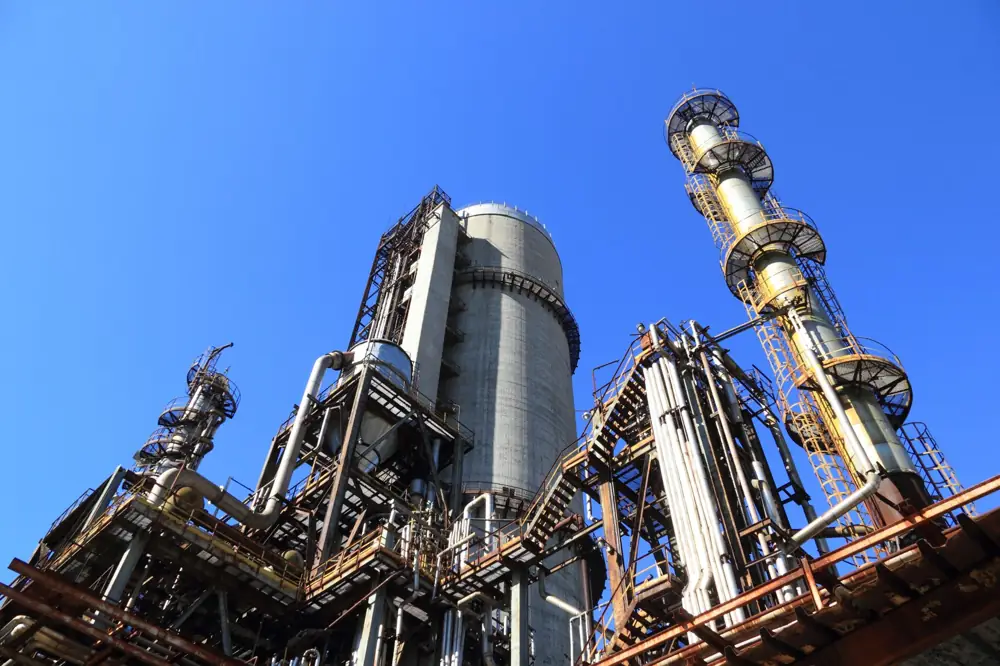
Oil and gas downstream refining is the process side of the petroleum barrel: the stage where crude oil turns into fuels, lubricants and petrochemical feedstocks. Refining sits downstream of upstream production (drilling and extraction) and midstream transport (pipelines and storage). Every distillation column, cracker, hydrotreater and treating unit in a refinery depends on impulse, sample and process lines. Each one needs the correct-alloy, code-traceable instrumentation fittings, valves, manifolds and tubing behind every transmitter, gauge and analyzer.
Crestflo builds instrumentation fittings and valves for US customers, machined from stainless steel and high-nickel corrosion-resistant alloys and engineered to drop straight in for existing parts. Lead time runs 6–8 weeks. This page matches your refinery service conditions to the correct alloy, the right product form and the standard that governs it, then sends your spec straight through to a quote.
On this page, valves, manifolds, compression fittings and ferrules refer to instrumentation-grade fluid-system components built for refinery process, sample and impulse lines. They're not plumbing parts, exhaust hardware, PEX or electrical fittings.
Downstream Refining, Also Known As Petroleum Refining, Oil Refinery & R&M
Buyers and specifiers use several names for this sector. Downstream refining also goes by petroleum refining, oil refinery process instrumentation, the downstream sector, refining & marketing (R&M), hydrocarbon processing, and fuels refining. It's separate from the upstream (production) and midstream (transport) segments of oil and gas; for those, see the oil & gas upstream / Permian and oil & gas midstream pages, or the parent oil & gas hub. Adjacent process industries include petrochemical & chemical and hydrogen.
You'll be instrumenting five basic refining processes. Separation covers crude and vacuum distillation. Conversion includes fluid catalytic cracking, hydrocracking and coking. Treating takes in hydrotreating, amine treating and sulfur recovery. Then there's reforming and isomerization, and finally blending. Each one comes with its own service severity, its own corrosion driver, and its own alloy requirement.
Refinery Corrosion Drivers & Which Alloy to Specify
Refinery instrumentation fails at the alloy, not the fitting. Pick the wrong metallurgy for a sour, high-temperature or chloride-laden stream, and that's the gap between a component that lasts a full turnaround cycle and one that cracks in service. The table below lines up the major refinery corrosion mechanisms with the corrosion-resistant alloys Crestflo machines into instrumentation forms, along with the related standard. Selection is still service-specific, though. Confirm severity with your metallurgist, and check the sour-service selection guide and the corrosion-by-media × alloy matrix.
| Corrosion driver | Where it occurs | Crestflo alloy options | Related standard |
|---|---|---|---|
| Sour service / H2S, wet-H2S cracking | Sour streams across most units | 316/316L at controlled hardness, Incoloy 825, Inconel 625, Hastelloy C-276 | NACE MR0103, MR0175 / ISO 15156 |
| Chloride pitting & SCC / cooling water | Overhead condensers, coolers | 904L, 254 SMO, AL-6XN, duplex 2205, super-duplex 2507 | Service-specific; select on PREN, see corrosion-alloy matrix |
| Naphthenic acid (high-TAN crude) | CDU / VDU hot sections | 316/316L and higher-molybdenum grades | NACE guidance |
| Ammonium bisulfide (NH4HS) | Hydroprocessing REAC / effluent | Inconel 625, Incoloy 825 | NACE guidance |
| HF acid | HF alkylation | Monel 400 | Service-specific |
| Sulfuric acid | Sulfuric alkylation | Alloy 20 | Service-specific |
| Sulfidation, HTHA, PASCC | High-temperature units | Base-material and design consideration; alloy selection per service | NACE / API guidance |
High-temperature hydrogen attack (HTHA, per the Nelson curves), naphthenic acid severity (TAN threshold), and polythionic acid stress-corrosion cracking (PASCC) all come down to base-material and design decisions. They aren't component ratings. Crestflo simply supplies the instrumentation form in whatever alloy your process engineer specifies. Alloy composition and PREN comparisons are laid out on the PREN comparison table and on each linked material page.
Refinery Units We Supply: CDU, FCC, Hydrocracker, Alkylation, SRU
The instrumentation requirement shifts from one unit to the next. The matrix below lays out the common refinery configuration, running from the crude distillation unit through to sulfur recovery, and lists the typical media, the key metallurgical concern, the recommended alloy family, and the Crestflo product families suited to each.
| Refinery unit | Typical media | Key concern | Alloy family | Products |
|---|---|---|---|---|
| CDU / VDU (crude / atmospheric & vacuum distillation) | Crude, hot residue | Naphthenic acid, sulfidation | 316L, higher-Mo | Fittings, needle valves, thermowells |
| FCC (fluid catalytic cracking) | Hydrocarbon vapor, catalyst | Erosion, sulfidation | 316L, duplex | Fittings, manifolds, gauge-root valves |
| Hydrocracker / hydrotreater | H2, H2S, NH4HS | Sour, REAC corrosion | 316L, 825, 625, C-276 | Fittings, manifolds, DBB |
| Catalytic reformer / isomerization | Naphtha, H2, chloride traces | Chloride SCC | 316L, 6Mo | Fittings, valves, tubing |
| Delayed coker | Heavy residue, steam | Erosion, thermal cycling | 316L, duplex | Fittings, thermowells, syphons |
| HF alkylation | Hydrofluoric acid | HF corrosion | Monel 400 | Fittings, valves, monoflanges |
| Sulfuric alkylation | Sulfuric acid | Acid corrosion | Alloy 20 | Fittings, valves, manifolds |
| Amine treating (MDEA) | Amine solutions | Amine SCC | 316L | Fittings, valves, condensate pots |
| Sour water stripper (SWS) | Sour water, NH4HS | Sour, ammonia | 316L, 825 | Fittings, valves, sampling systems |
| SRU / Claus & tail-gas | Elemental sulfur, acid gas | Sulfidation, weak acid | 316L, higher alloy | Fittings, valves, thermowells |
| Hydrogen plant (SMR) | H2, steam, CO2 | Hydrogen service | 316L | Fittings, valves, tubing |
| Blending & tank farm | Finished products | General service | 304/304L, 316L | Fittings, valves, tubing |
The alloy call-outs above reflect standard, well-established metallurgical practice, and the values aren't fixed. They can be adjusted to whatever your requirements call for. Crestflo machines the instrumentation form in the grade your unit specification calls for.
Products for Refinery Instrumentation: Fittings, Valves, Manifolds & Tubing
Crestflo carries the complete instrumentation lineup a refinery hook-up calls for, in stainless and high-nickel alloys, imperial and metric, with heat-number traceability on every part. Each family links through to its detailed page.
Tube & compression fittings: Crestflo makes these in single and double ferrule versions, hardened or non-hardened, all tested to ASTM F1387. Sizes top out at 2″ (50 mm) OD, and working pressure reaches up to 15,000 PSI. Take a look at tube fittings and single-ferrule options.
- High-pressure cone-and-thread fittings: made from high-tensile stainless, rated for working pressure up to 30,000 PSI. See the cone-and-thread fittings and the high-pressure range.
- Instrument valves: needle, ball, check, bleed and gauge-root valves. Sizes range from 1/16″ to 1″, with threaded or tube-fitting ends. Every valve is qualified to ASME B16.34 and the applicable API valve standards.
- Instrument manifolds & isolation: 3-valve and 5-valve manifolds for DP transmitters, along with monoflange valves and double block & bleed units. Manifolds go up to 10,000 psi. DBB units are rated up to 3,000 psi per ASME B16.34, and each one gets 100% seat and shell leak testing.
- Instrument tubing: seamless and alloy instrumentation tubing, matched in grade.
- Accessories: thermowells, condensate pots, syphons, snubbers, grab-sampling systems and sampling cylinders.
Ratings shown above follow the applicable standard and can be tailored to your requirements. We provide datasheets and CAD models to customers on request.
Product Family Quick Reference
| Family | Types | Size range | Max pressure | Ends / threads |
|---|---|---|---|---|
| Tube & compression fittings | Single / double ferrule | Up to 2″ (50 mm) OD | 15,000 PSI | NPT, socket-weld, butt-weld, tube, flare |
| High-pressure fittings | Cone-and-thread | Per design | 30,000 PSI | Cone-and-thread |
| Instrument valves | Needle, ball, check, bleed, gauge-root | 1/16″ to 1″ | Per ASME B16.34 | NPT, tube-fitting |
| Manifolds | 2 / 3 / 5-valve | To transmitter port | 10,000 psi | Flanged, threaded |
| Double block & bleed | DBB, monoflange | To line size | 3,000 psi (B16.34) | Flanged, screwed |
Standards, Certifications & Traceability for Refining Service
Refinery quality departments buy on traceability and code conformance. Crestflo manufactures to the standards that apply to each product type and documents every heat.
- Sour service: Crestflo can supply compression fittings and valves to NACE MR0175 / ISO 15156, and, for refining work specifically, to NACE MR0103. Requirements can be tailored to the job at hand.
- Valve standards: Valves qualify to ASME B16.34 and the relevant API valve standards, including API 598 for inspection and test, plus API 607 for fire-test.
- Fitting standards: Compression tube fittings are performance-qualified to ASTM F1387. Threaded ends follow ASME B1.20.1 (NPT).
- Piping & material: Process instrument piping follows ASME B31.3, and tube meets ASTM A269.
- Traceability: Every part carries a heat/lot number, backed by EN 10204 3.1 material test certificates, with 3.2 available on request. Full details are on the traceability page.
Crestflo is ISO 9001 / 14001 / 45001 & PED certified; certificates are held on the quality page. Testing covers hydraulic proof, burst and impulse, pneumatic, flexure and rotary-flex fatigue, vibration, thermal cycling, pull-out and vacuum; positive material identification (PMI); 100% seat and shell leak testing on manifolds; in-house NDT; destructive testing at ISO/IEC 17025-accredited laboratories; and third-party inspection on request.
Why Crestflo for Refinery Instrumentation
Crestflo supplies refinery instrumentation to customers across the US. It's the instrumentation division of an export house that's been in business for four decades and carries Government of India recognition, with a solid record of delivery across the Middle East. That mix of engineering discipline and export logistics now backs a dedicated US instrumentation line.
- Drop-in interchange. These compression fittings meet ASTM F1387 for dimensional interchange with the majors, so they drop straight into existing tube systems during a turnaround, no rework needed. Ask our engineering team for a Swagelok® alternative cross-reference or a full cross-reference. Interchange and equivalent only, note well. Crestflo isn't affiliated with those brands.
- Full CRA range. We stock 316/316L through 904L, 6Mo, duplex and super-duplex. Add Monel 400 for HF alkylation, Alloy 20 for sulfuric alkylation, and Inconel/Incoloy 625/825 plus Hastelloy C-276 for the tougher sour and chloride jobs.
- Lead time. Standard items ship from ready stock. Specials are made to order, typically 6-8 weeks out. Set that against the 20+ weeks common with the majors, and it becomes a real option for turnaround and MRO planning.
- Origin & compliance. Material is Indian origin by default. US or European melt is available on request, with full material traceability behind it either way. See US-origin compliance for details.
- Small MOQ and private label available.
Refineries in the US Gulf Coast, Midcontinent and Rockies clusters have another way to reach us: through the Houston, Tulsa and Denver oil & gas pages.
Crestflo Engineers Confidence. To get moving, request a refinery RFQ at request-a-quote, ask for a sample here, request a sample, or just reach out to our team directly: sales@crestflousa.com · +1 346 594 9005 (Houston, TX).
Refinery Instrumentation FAQ
Is refining upstream or downstream?
Refining sits downstream in the oil business, it's the stage where crude oil gets turned into finished products like fuels, lubricants and feedstocks, coming after upstream production and midstream transport. It's exactly in refinery process lines, impulse lines and sample lines that you find instrumentation fittings, valves and manifolds at work.
What are the basic refining processes I'd be instrumenting?
Separation covers crude and vacuum distillation. Conversion runs through fluid catalytic cracking, hydrocracking, and coking. Treating brings in hydrotreating, amine treating, and sulfur recovery. Then there's reforming and isomerization, and finally blending. Each step carries its own service severity and its own alloy requirement. That's precisely why metallurgy has to be assessed unit by unit.
Which alloy do you recommend for sour (H2S) refinery service?
316L and 316, held at controlled low hardness, satisfy NACE MR0103 and MR0175 / ISO 15156 across many sour streams. Push into sour-plus-chloride service, though, and you'll need to step up to Incoloy 825, Inconel 625, or Hastelloy C-276. What works best always comes down to the specific service. No exceptions. See our Crestflo sour-service selection guide for the details.
Are your fittings and valves NACE-compliant for refineries?
We can supply compression fittings and valves to NACE MR0175 / ISO 15156, and to NACE MR0103 when the job calls for refining-grade requirements. Traceability runs down to the heat number. Every order comes with EN 10204 3.1 material test certificates; 3.2 is available on request.
What do you supply for HF versus sulfuric alkylation?
HF alkylation typically calls for Monel 400; sulfuric alkylation needs Alloy 20 instead. Crestflo machines instrumentation fittings and valves in both. Which base material actually suits HF versus sulfuric service is a design call, so check with your metallurgist before you settle on one.
Can you drop in as an alternative to Swagelok, Parker or Hoke during a turnaround?
Yes. Our compression fittings meet ASTM F1387 for dimensional interchange, so they fit directly into existing tube systems. Ask our engineering team for your part-number cross-reference. One note: this is interchange and equivalent only. Crestflo isn't affiliated with those other brands.
What is your lead time for refinery instrumentation?
Standard items ship from ready stock, while specials are made to order. Delivery runs 6 to 8 weeks, well under the 20-plus weeks typical of the major suppliers. That gap counts for a lot when it comes to turnaround and MRO planning. Small MOQs are available. So is private label.
What pressure and size ranges do you cover?
Compression fittings go up to 2″ (50 mm) OD and handle 15,000 PSI. Cone-and-thread fittings reach 30,000 PSI. Valves run from 1/16″ to 1″. Manifolds top out at 10,000 psi, and double block & bleed assemblies are rated to 3,000 psi per ASME B16.34. All values follow the applicable standard, and they can be adjusted to fit your requirements.
How do you handle cooling-water and chloride corrosion on overheads and coolers?
Overhead condensers and coolers are prone to chloride-driven pitting and stress-corrosion cracking. To meet that challenge, Crestflo supplies instrumentation forms in 6Mo alloys (254 SMO, AL-6XN), 904L, and duplex/super-duplex grades (2205/2507).
Are these US-made and TAA-compliant?
Standard product comes from India, with full material traceability. US or European melt is available on request where domestic-melt or TAA compliance is required. Check our US-origin compliance page to see how Crestflo handles origin and documentation honestly.
Which certifications do you hold?
Crestflo holds ISO 9001, 14001, 45001 and PED certification, and its compression fittings are performance-qualified to ASTM F1387. You'll find the certificates on the quality page.
Related Materials, Standards & Resources
- Materials: 316/316L, Monel 400, Alloy 20, Inconel 625, and Hastelloy C-276.
- Standards: NACE MR0103, NACE MR0175, ASME B16.34, and ASME B31.3.
- Worth a look: the sour-service selection guide, material selection by service, and the corrosion-alloy matrix.
- On the industry side, see the oil & gas hub, midstream, and petrochemical & chemical pages.