
Pressure Snubbers: Gauge, Switch & Transducer Surge Protection in 316 Stainless Steel
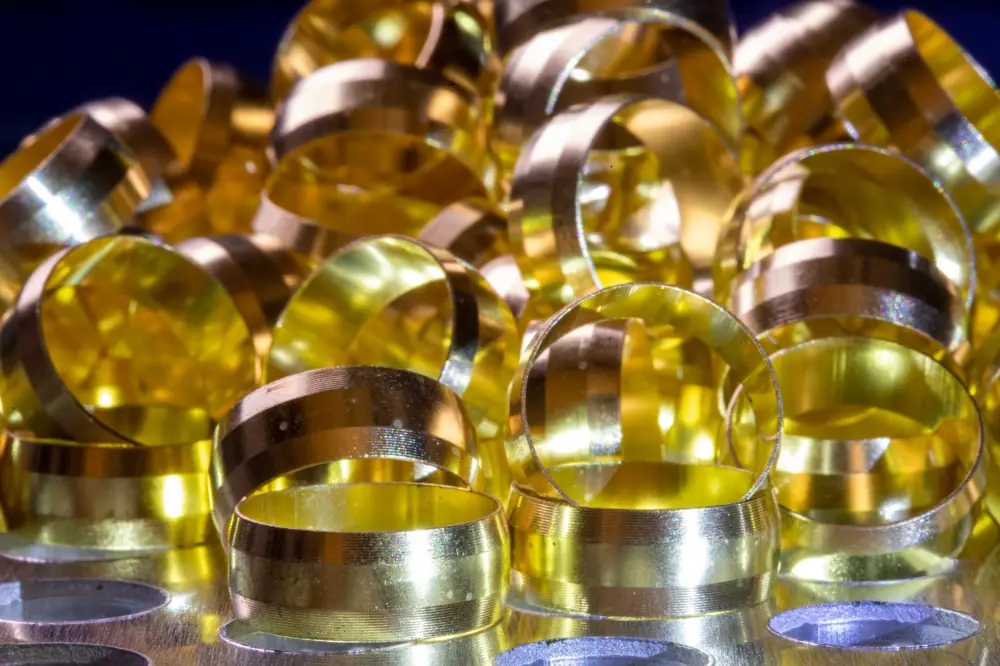
Crestflo makes instrumentation pressure snubbers out of 316/316L stainless steel and brass, rated to 6,000 psi. A pressure snubber is a small inline device that sits ahead of a gauge, switch, or transducer and restricts flow, so pressure changes reach the instrument more slowly. That damping action absorbs surges, spikes, water hammer, and pulsation, protecting the sensing element from fatigue and outright failure. These units are built as drop-in protection for pressure-sensing instruments. Standard items ship from ready stock; specials are made to order, with delivery running 6 to 8 weeks.
On this page, "snubber" refers specifically to a pressure snubber, an inline fluid-system device that protects pressure instruments. It doesn't mean a snubber circuit (electronics/RC), a pipe or vibration snubber (mechanical pipe support), or an automotive shock-absorber snubber.
Also Known As: Gauge Snubber, Snubber Valve, Pulsation Snubber & Instrument Snubber
A pressure snubber is specified across the industry under several names. Buyers and engineers call it a gauge snubber, pressure gauge snubber, snubber valve, instrument snubber, pulsation snubber, pressure surge snubber, or gauge dampener (sometimes spelled gauge dampner). It is also identified by its damping element, a porous-metal (sintered) snubber, piston snubber, adjustable needle-type snubber, or fixed-orifice snubber, and by the instrument it guards, such as a transducer snubber, pressure sensor snubber, or pressure switch snubber. All describe the same class of inline instrument-protection device covered here.
How a Pressure Snubber Works: Flow Restriction & Pulsation Damping
A pressure snubber works by forcing the process fluid through a deliberately restricted path, a sintered porous element, a fixed orifice, or a moving piston or needle passage, so pressure reaches the instrument gradually rather than as a shock. That restriction soaks up the energy of rapid pressure transients: pump and compressor pulsation, valve-slam water hammer, momentary spikes. All of it gets smoothed out before it ever reaches the Bourdon tube or sensor diaphragm. What you get is a steadier pointer, a reading you can trust, and an instrument that simply lasts longer.
A snubber and a bulk pulsation dampener aren't the same thing. The dampener, whether it's a bladder or a surge bottle, conditions flow across the entire line. A pressure snubber does something narrower: it's a compact instrument-protection restrictor, sized for a single gauge, switch, or transducer port.
Pressure Snubber Types: Porous-Metal (Sintered), Piston, Adjustable & Fixed-Orifice
Pressure snubbers come in four main types, each one built for a particular media and pulsation profile. Specify the element type your service calls for. Or ask Crestflo's engineering team to help match one to your application.
| Snubber type | Damping mechanism | Best-suited media | Notes |
|---|---|---|---|
| Porous-metal (sintered disc) | Fluid passes through a sintered stainless element with fine tortuous porosity | Clean gases and low-viscosity liquids | No moving parts; porosity grade matched to media viscosity |
| Piston (floating-piston) | A close-fit piston moves in a bore, metering flow and resisting rapid reversals | Liquids, hydraulic oil, viscous or particle-bearing media | Self-cleaning action resists clogging |
| Adjustable (needle-type) | A needle sets a variable restriction the user tunes in the field | Variable or unknown pulsation | Damping rate is field-adjustable |
| Fixed-orifice (capillary) | A single calibrated orifice sets a fixed flow restriction | Steady, well-characterised service | Simplest, lowest-cost restriction |
Pressure Snubber Specifications: 316 Stainless Steel, Brass & 6,000 psi Rating
Crestflo pressure snubbers come standard with 316/316L stainless steel bodies, chosen for corrosion resistance and broad service compatibility. Brass is available too, a cheaper option suited to non-corrosive, general-purpose gauge duty. When media turns aggressive or sour, higher alloys step in: Monel 400 and Hastelloy C-276 are both offered made-to-order. Full details sit at snubber body materials & alloys. The values below follow applicable industry standards, and they're customizable to requirement.
| Attribute | Value |
|---|---|
| Pressure rating | Up to 6,000 psi |
| Body material | 316/316L stainless steel (lead); brass (economy option); higher alloys made-to-order |
| Element type | Porous-metal (sintered), piston, adjustable needle, or fixed-orifice |
| End connections | Male × Female (MNPT × FNPT) inline; installs between process and instrument |
| Thread standard | NPT per ASME B1.20.1; BSP/BSPP/metric on request |
| Typical size range | 1/8"–3/4" NPT, commonly 1/4" and 1/2" (per applicable standard; customizable) |
| Service temperature | Set by body material and process; specify your operating temperature on the RFQ |
| Traceability | EN 10204 3.1 material test certificate standard; 3.2 on request; heat/lot number on every part |
| Testing | In-house hydraulic proof and burst, pneumatic, PMI; third-party inspection on request |
Snubber Connections & Sizes: 1/4" and 1/2" NPT Threads (ASME B1.20.1)
Instrument pressure snubbers ship as a male by female inline snubber fitting: a male process end on one side, a female instrument end on the other, so the unit threads directly between the tapping and the gauge. NPT threads per ASME B1.20.1 are standard, though BSP, BSPP, and metric threads are available on request. Demand for instrument sizes runs mostly to 1/4" and 1/2" NPT, with 3/8" NPT and the rest of the 1/8" to 3/4" range available as well. That's set by the applicable standard, and sizes can be customized to whatever a project requires.
Crestflo gives each snubber series its own ordering-code and porosity-grade scheme. Ask our engineering team for the ordering-code and cross-reference guide through the request a quote form, and we'll confirm the exact model, size, and element grade for your service. Datasheets and CAD files are available to customers on request.
Selecting a Snubber by Process Media & Element Porosity
Picking the right snubber comes down to matching the restriction element to the process media. Get that wrong and you'll either kill the damping or slow the instrument's response too much. Finer porosity, or a smaller orifice, suits low-viscosity gases. Viscous liquids and particle-laden service need something coarser, or a piston element, since a fine sintered disc clogs.
| Process media | Viscosity | Recommended element | Rationale |
|---|---|---|---|
| Air, inert & clean gas | Low | Fine porous / small fixed orifice | Gases need a tight restriction to damp fast spikes |
| Water, light hydrocarbons | Medium | Medium porous or piston | Balances damping against reading response |
| Hydraulic oil, viscous liquids | High | Piston or coarse porous | Resists clogging; passes viscous fluid |
| Slurry, dirty or variable service | Variable | Piston or adjustable needle | Self-cleaning or field-tunable restriction |
For corrosive service, match the body alloy to the media, not just the element. Options range from 316/316L stainless and 304/304L stainless up to higher-grade alloys like Monel 400 and Hastelloy C-276.
Installation & Orientation of a Pressure Gauge Snubber
Install a pressure snubber directly upstream of the instrument, thread the male process end into the tapping or root valve and mount the gauge, switch, or transducer on the female end. Apply a compatible thread sealant to the NPT threads and tighten to a firm, leak-free engagement without over-torquing the instrument socket. Piston-type snubbers should be oriented per their design so the piston meters correctly; porous and fixed-orifice snubbers are position-tolerant. Where the tapping also needs isolation for gauge replacement, pair the snubber with an instrument needle valve or gauge root valve.
Snubber vs Gauge Saver vs Needle Valve: Which Gauge Protector Do You Need?
All three of these devices are each a pressure gauge protector, but each one solves a different problem. A snubber calms continuous pulsation and surge. Set a gauge saver correctly, and it shuts the gauge off the moment pressure crosses that threshold. That's the manual option: a needle valve throttles or isolates by hand. Plenty of systems combine more than one of these at once.
| Device | Primary function | Protects against | When to use |
|---|---|---|---|
| Pressure snubber | Continuously damps flow through a restriction | Pulsation, spikes, water hammer | Vibrating pointer, pump/compressor pulsation |
| Gauge saver | Auto shut-off at a preset over-pressure | Sudden over-range that would rupture the gauge | Systems with occasional pressure excursions |
| Needle valve | Manual throttle and isolation | — | Manual damping and gauge isolation for service |
A snubber and an over-pressure gauge saver aren't interchangeable, though they work as a pair: the snubber takes care of routine pulsation, and the gauge saver steps in for the rare over-range event. Both fall under the broader gauge accessories lineup.
Applications & Industries: Hydraulic, Pump, Compressor & Steam Gauge Protection
Pressure snubbers earn their place wherever a gauge, switch, or transducer faces pulsating or spiking pressure. Used as snubbers for pressure gauges, switches, and transducers, they turn up on hydraulic system gauges, pump and compressor discharge, boiler and steam service, instrument-air headers, and water and wastewater lines. On hydraulic snubber duty, a piston element pushes back against the rapid reversals on pump discharge and keeps the pointer steady. Simple mechanism, real protection. Pressure transducers and switches get the same treatment as analog gauges, protected on the same principle. Typical demand comes from hydraulic systems, oil and gas production and processing, instrument air systems, steam tracing and boiler service, and power generation plants. If a steam gauge also needs thermal isolation, it's worth pairing a snubber with a steam siphon or pigtail.
Standards, Certifications & Material Traceability
Crestflo builds its pressure snubbers to the standards that apply to instrument accessories. NPT threads follow ASME B1.20.1, and the stainless bar stock used for snubber bodies meets standard ASTM specifications. For sour service, alloy bodies are available to NACE MR0175 / ISO 15156 requirements. The company holds ISO 9001, ISO 14001, ISO 45001, and PED certification.
Every snubber carries a heat or lot number. As standard, Crestflo supplies an EN 10204 3.1 material test certificate (MTC), with 3.2 certificates available on request. Snubbers are of Indian origin, though US and European melt can be sourced on request, and full material traceability comes with it. Details are on the US origin and compliance page. In-house testing covers hydraulic proof and burst, pneumatic testing, and PMI. Need third-party inspection? That's available on request too.
Snubbers Built & Delivered by Crestflo
Crestflo makes instrumentation pressure snubbers in 316/316L stainless steel and brass, rated to 6,000 psi. They come in porous, piston, adjustable, and fixed-orifice element types, with NPT ends standard and BSP or metric available on request. Standard items ship from ready stock. Specials are made to order and take 6–8 weeks to deliver. Small order quantities are available, and so are private-label snubbers.
To specify your snubber, three options are available: the request a quote form, the request a sample form, or the become a distributor page for those interested in carrying the product line. Crestflo's US sales desk can also be reached directly at sales@crestflousa.com or +1 346 594 9005, based in Houston, TX.
Why Crestflo for Pressure Snubbers
Crestflo serves the US market as a pressure snubber supplier and manufacturer. It's the instrumentation division of an export house recognized by the Government of India, with four decades behind it and a proven record of delivery to the Middle East. That's manufacturing heritage backing a focused instrumentation brand. Lead time on snubbers runs 6 to 8 weeks, against 20-plus weeks common from the majors. Minimum order quantities stay small. Private-label capability is available. Testing happens in-house, with PMI included, and every part carries heat-number traceability and 3.1 material test certificates.
Origin is stated plainly: Indian origin as standard, US or European melt on request, full traceability throughout. We Engineer Confidence.
Frequently Asked Questions
What is a pressure snubber?
A pressure snubber is a small inline device that sits ahead of a pressure gauge, switch, or transducer. It restricts flow, and that damps surges, spikes, water hammer, and pulsation. The payoff: a steadier reading and an instrument that lasts longer.
What is the purpose of a snubber?
It stops sudden pressure spikes from reaching the instrument. Without it, the Bourdon tube or sensor would fatigue and eventually rupture, and the pointer would keep jumping around instead of settling. With it in place, you get a steady reading you can actually trust.
When should I use a snubber on a pressure gauge?
Pulsation or spikes on the gauge call for a snubber. That covers pump or compressor discharge, hydraulic systems, boilers and steam service, and any line where rapid valve action sets the pointer vibrating.
How does a pressure snubber work?
It forces the process fluid down a restricted path, through a sintered porous element, a fixed orifice, or a piston or needle passage, so pressure reaches the instrument gradually instead of hitting it as a shock.
What is the difference between a snubber and a gauge saver?
A snubber works around the clock, damping pulsation and surge as fluid pushes through a restriction. A gauge saver takes a simpler approach: it cuts off automatically once pressure climbs past a set threshold. Plenty of systems run both together. Check out our Crestflo gauge savers for details.
Snubber vs needle valve, which do I need?
A needle valve throttles or shuts things off, and you turn it by hand. A snubber works differently: it damps automatically, and it never stops. Some engineers reach for a needle valve when they want adjustable damping, but Crestflo builds its snubbers specifically for that job, not as a workaround.
What materials and pressure rating are available?
Standard bodies come in stainless steel and brass, rated up to 6,000 psi. 316/316L stainless leads the pack, with brass sitting in as the economy pick. Higher-grade alloys like Monel and Hastelloy handle corrosive media, but they're made to order rather than kept on hand.
What connections and sizes do Crestflo snubbers use?
Standard threads are NPT per ASME B1.20.1, male by female. Most common sizes are 1/4" and 1/2", with a typical range of 1/8" to 3/4". BSP, BSPP, and metric threads are available too, on request.
How do I choose the right porosity?
Pick the element for the media's viscosity: finer porosity or a smaller orifice for gases, coarser porosity or a piston element for viscous liquids and slurries. That balance keeps damping in check without dragging down the instrument's response time.
Do you provide material certificates?
An EN 10204 3.1 material test certificate comes standard. A 3.2 is available on request. Every snubber also carries a heat or lot number, so full traceability is built in.
Are these snubbers made in the USA?
Crestflo makes snubbers engineered for a direct fit into US applications, serving customers across the country. The snubbers themselves come from India, though US or European melt is available if you request it. Standard items ship from ready stock, with delivery running 6–8 weeks. TAA and DFARS options are laid out plainly on our US origin and compliance page.
Can I get private-label or small-batch snubbers?
Yes, small minimum order quantities and private-label snubbers are available. Request a quote to start.
Related Instrumentation Accessories & Standards
Explore the full instrumentation accessories range, including over-pressure gauge savers, steam siphons and pigtails, and gauge accessories. For isolation, see instrument needle valves. Reference the NPT thread standard (ASME B1.20.1), NACE MR0175 sour service, and EN 10204 material certificates, or route material selection through the materials hub.