
Stainless Steel & Alloy Hydraulic Tubing
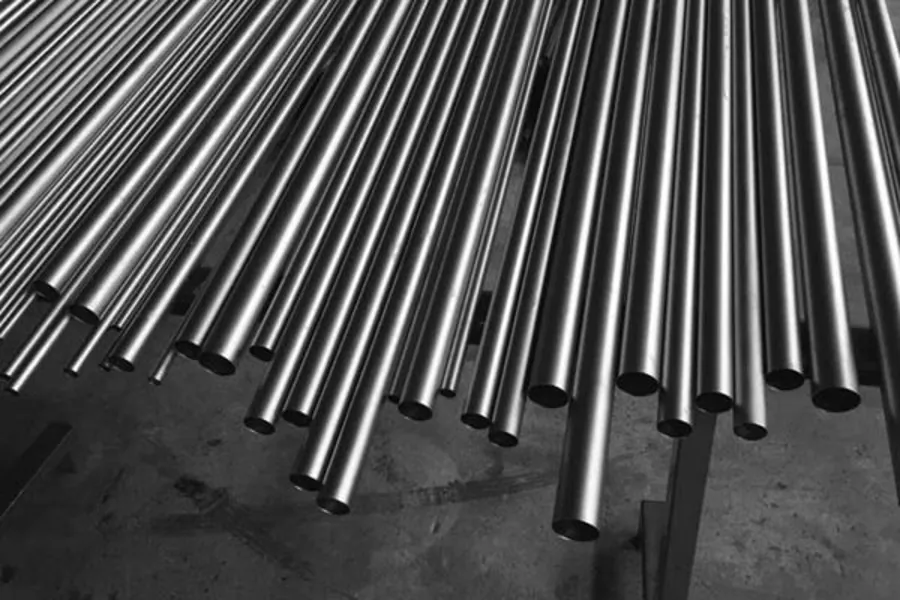
Hydraulic tubing, as we use the term, is rigid, fully-annealed stainless-steel or corrosion-resistant-alloy tube. It carries pressurized fluid through high-pressure fluid-power and hydraulic control lines and seals into instrumentation compression fittings by ferrule bite. Here, that means rigid instrument-grade tube only, not rubber or thermoplastic hydraulic hose, and not carbon-steel DOM hydraulic-cylinder tubing. Crestflo supplies it in stainless through exotic nickel and CRA alloys, sized to seal in the same compression fittings we manufacture. It's heat-number traceable and ships to the US market on a 6-8 week delivery.
Buyers and specifiers label this line item in a dozen different ways. Some call it hydraulic tube, others hydraulic steel tubing or hydraulic metal tubing. You'll also see stainless steel hydraulic tubing, hydraulic instrument tubing, hydraulic control line tubing, seamless or welded hydraulic tubing, high-pressure hydraulic tubing, cold-drawn seamless hydraulic tube, and annealed stainless hydraulic tube. That holds true whether the size is given in imperial fractional or metric OD. Three standards govern the product: ASTM A269 covers austenitic stainless tube, ASTM A213 covers seamless ferritic/austenitic alloy tube, and ASTM A789 covers duplex tube. All three ship with EN 10204 material traceability.
Hydraulic Tubing Materials: 316L, 304L, 904L, Duplex & Nickel Alloys
Crestflo picks the right alloy for the fluid, the chloride and sour-service exposure, and the line temperature, not for pressure alone. 316/316L is the default choice for general hydraulic and instrument service. Step up to 904L, duplex, super duplex, or a nickel alloy when chlorides, seawater, sour gas, or high temperature attack standard austenitic grades like 316. Each grade below links to its material page, which covers the grade in depth and shows it in Crestflo instrumentation forms.
| Alloy | UNS | Family | Typical hydraulic-line reason |
|---|---|---|---|
| 304 / 304L | S30400 / S30403 | Austenitic SS | Economical general fluid-power service, mild environments |
| 316 / 316L | S31600 / S31603 | Austenitic SS | Default corrosion resistance for instrument and control lines |
| 904L | N08904 | Super-austenitic | Higher chloride and dilute sulfuric resistance |
| Duplex 2205 | S32205 | Duplex | Higher strength plus chloride stress-corrosion resistance |
| Super Duplex 2507 | S32750 | Super duplex | Seawater, subsea and aggressive chloride service |
| Inconel 625 / 825, Hastelloy, Monel | Various | Nickel / CRA | Sour, high-temperature and severe corrosive media |
Titanium Gr2 and the rest of the exotic-alloy range sit on our alloy tubing page at Crestflo. Each grade's composition and mechanical properties follow the applicable ASTM specification, and we'll customize to whatever the job calls for.
Seamless vs Welded Hydraulic Tubing: Cold-Drawn & Bright-Annealed Construction
Both seamless and welded constructions are available, and each ships fully annealed so fittings go together without a fight. Cold-drawn seamless tube remains the standard pick for higher-pressure hydraulic lines. Welded-and-drawn tube, made from strip and drawn to final size, is the cheaper route wherever the spec allows it. Bright annealing under a controlled atmosphere gives a clean, oxide-free surface that suits instrument service well.
| Attribute | Seamless (cold-drawn) | Welded (welded-and-drawn) |
|---|---|---|
| Manufacture | Pierced and cold-drawn to size | Strip formed, welded, then drawn |
| Typical use | Higher-pressure hydraulic lines | Cost-sensitive lines within spec |
| Standard | ASTM A269 / A213 | ASTM A269 |
| Condition | Fully annealed | Fully annealed |
| Surface | Bright-annealed or as-drawn | Bright-annealed or as-drawn |
Crestflo customers who need construction only, without the tubing itself pre-selected, can browse seamless tubing or welded tubing directly. High-purity applications call for a different path: electropolished tubing.
Why Fully-Annealed Hydraulic Tubing Seals in Compression Fittings
Instrument-grade hydraulic tube ships fully annealed, or soft-annealed, so the ferrule can bite into the tube wall and swage it into a leak-tight, gas-tight seal. Too hard, and the tube pushes back against the ferrule; it can leak. Soften it correctly, though, and the seal holds up every time. ASTM A269 sets a hardness ceiling of 90 HRB, but experienced fitters have long aimed lower, roughly 80 HRB or softer, for 316 tube paired with compression fittings; the exact figure depends on the applicable standard and can be adjusted to the job. That gap between a hard tube and a properly softened one is what separates a joint that holds from one that weeps. It's why Crestflo keeps tight control over hardness on the tube it supplies alongside its fittings.
Hydraulic Tubing Sizes & Wall Thickness: Imperial (1/4″–2″) & Metric (6–50 mm)
Hydraulic tubing comes stocked in imperial fractional and metric OD sizes, made to match compression fittings up to 2 inch (50 mm) OD. You don't choose wall thickness on its own. It's selected alongside the working pressure, the alloy, and the fitting the tube must seat in. The sizes below are representative examples only. You'll find the full OD, wall, and matching-fitting matrix on the size chart.
| Size system | Representative ODs | Notes |
|---|---|---|
| Imperial fractional | 1/8″, 1/4″, 3/8″, 1/2″, 3/4″, 1″ up to 2″ | Wall stated as decimal inch |
| Metric | 6, 8, 10, 12, 25 up to 50 mm | Wall stated in mm |
OD and wall combinations follow standard published tube dimensions and are customizable to requirement. See the hydraulic tubing size & pressure chart for the full matrix.
High-Pressure Hydraulic Tubing Ratings: How Working Pressure Is Calculated
Allowable working pressure comes from the tube's geometry and its alloy together, not from the grade alone. You derive it from the outside diameter, the wall thickness, the material's allowable stress, and a safety factor, following ASME B31.3 and the classic Barlow relationship P = 2 · S · t / D, where S is the allowable stress for the alloy at temperature, t is the wall, and D is the outside diameter. Allowable-stress values come straight from the code for each grade. Derating applies as temperature climbs. The correct rating depends on the exact OD × wall × alloy you specify, so published values follow the applicable standard and can be tailored to what you need. Rated-pressure figures per size are tabulated on the size & pressure chart, courtesy of Crestflo.
Matching Hydraulic Tubing to Compression Tube Fittings
A hydraulic line is only as good as its tube-and-fitting joint. That's why tube and fitting need to be qualified as a pair. Crestflo single- and double-ferrule compression tube fittings are tested to ASTM F1387, the performance standard for compression tube fittings, and the tube we supply is annealed to exactly the hardness those ferrules need to seat properly. Buy both from one manufacturer, and you skip the guesswork of matching a random tube to a random fitting. For bite-type connections, DIN 2353 hydraulic fittings sit within the tube fittings range. The nut-and-ferrule components that terminate the tube, meanwhile, are sold separately.
Hydraulic Tubing Standards & Traceability: ASTM A269, A213, A789 & EN 10204 MTC
Crestflo builds hydraulic tubing to the standard that fits each construction and alloy. Every length carries a heat-number mark, so it can be traced back in full.
| Standard | Scope | Applies to |
|---|---|---|
| ASTM A269 | Seamless & welded austenitic SS tube, general service | 304/304L, 316/316L tube |
| ASTM A213 | Seamless ferritic/austenitic alloy tube | Cross-listed alloy tube |
| ASTM A789 | Seamless & welded duplex SS tube | Duplex 2205, Super Duplex 2507 |
| NACE MR0175 / ISO 15156 | Sour-service materials | Tube for H2S service, on request |
| EN 10204 MTC | Material test certificate | 3.1 standard, 3.2 on request |
Traceability comes from heat- and lot-number marking stamped right on the tube, and every batch ships with an EN 10204 3.1 material test certificate as standard. Need 3.2 instead? Just ask. Crestflo holds ISO 9001, 14001, 45001 and PED certification. Datasheets and CAD files are available to customers on request.
Hydraulic Tubing Applications: Hydraulic Power Units, Control Lines & Subsea
Rigid stainless and alloy hydraulic tubing handles the high-integrity lines where hose won't cut it. It plumbs hydraulic power units and control lines, offshore and subsea umbilicals, and chemical, oil-and-gas, and power installations that call for a permanent, low-maintenance, high-pressure joint. Alloy selection follows the service conditions: austenitic stainless for general lines, duplex and super duplex where chloride and seawater exposure come into play, nickel alloys for sour and high-temperature media. Crestflo's oil and gas, offshore, and subsea pages cover the sector detail: oil and gas, offshore, and subsea.
Hydraulic Tubing Supplier: Why Buy from Crestflo
Crestflo is a US-serving hydraulic tubing manufacturer and supplier, the instrumentation arm of an export house that's been recognized by the Government of India for four decades, with a long track record of delivery across the Middle East. Where most hydraulic tubing suppliers resell only 304 and 316 SS tube, and a typical hydraulic tube supplier sits a step removed from whoever makes the mating fitting, Crestflo does it differently: tube and fitting come from a single source, engineered together as a system. That means fully-annealed tube in stainless, exotic nickel alloys, and CRA grades, all sized to seal properly in Crestflo compression fittings tested to ASTM F1387.
Standard items ship from ready stock. Specials are made to order, with delivery running 6 to 8 weeks. Minimum order quantities stay small, and private-label programs are available for those who want them. The tube itself is of Indian origin, though US or European melt can be arranged on request, and full material traceability comes standard. When you're ready to convert a spec into a quote, just provide the alloy, OD by wall, length, temper, end and finish, and the MTC level you need. Request a quote at request a quote, or reach the US sales desk directly at sales@crestflousa.com or +1 346 594 9005 in Houston, TX. For more detail, see lead time, private label, testing & inspection, and why Crestflo.
Hydraulic Tubing FAQ
What is hydraulic tubing?
Hydraulic tubing is rigid metal tube, either stainless steel or a corrosion-resistant alloy, and it carries pressurized fluid through hydraulic and control lines. It seals into instrumentation compression fittings through ferrule bite. The tube ships fully annealed, which lets the ferrule swage and seal it reliably.
What is the difference between hydraulic tube and hydraulic hose?
Tube is rigid, built with reusable metal compression fittings for permanent, high-integrity runs. Hose is flexible, meant for lines that need to move or flex. Crestflo supplies the rigid stainless and alloy tube only. Rubber and thermoplastic hose aren't part of what they offer.
What is the difference between hydraulic tube and hydraulic pipe?
Hydraulic tube and pipe get specified in different ways. Tube is called out by its exact outside diameter and wall thickness, the dimensions that let a ferrule bite down and seal it, and that determine the radius it can bend to. Pipe works differently: it's specified by nominal pipe size (NPS) and a schedule, and it's threaded or welded rather than sealed with a compression ferrule. Crestflo supplies rigid instrument-grade hydraulic tube sized by OD and wall, not NPS pipe.
Which material should I use for hydraulic tubing?
316/316L still covers most general hydraulic and instrument lines where corrosion resistance matters. For chloride exposure, seawater, sour service, or high temperatures, step up: 904L, duplex 2205, super duplex 2507, or a nickel alloy. Each material page lays out the grade and the instrumentation forms it comes in.
Does hydraulic tubing need to be annealed?
Instrument-grade hydraulic tube ships fully annealed, and that matters: it's what lets ferrules bite and seal reliably. ASTM A269 caps hardness at 90 HRB. Instrument practice, though, aims lower still, roughly 80 HRB or softer for 316 tube, per the applicable standard.
Should I choose seamless or welded hydraulic tubing?
Both options are on the table. Seamless cold-drawn tube tends to be the choice for higher-pressure lines, and welded-and-drawn tube offers a cost-effective alternative wherever the specification permits it. Either way, both come fully annealed, which makes for reliable fitting make-up.
What sizes and wall thicknesses are available?
Both imperial fractional and metric OD sizes are on offer, matched to compression fittings up to 2 inch (50 mm) OD. Wall thickness isn't picked on its own; it's chosen alongside the pressure rating and the alloy. Check the size and pressure chart for the complete OD and wall matrix.
What pressure can hydraulic tubing hold?
Tube grade alone doesn't set the working pressure. Outside diameter, wall thickness, the alloy's allowable stress, and the safety factor all play a part, calculated per ASME B31.3 and the Barlow relationship. You'll find the rated-pressure values for each size listed on the size and pressure chart.
Which fittings does hydraulic tubing use?
Crestflo makes single- and double-ferrule compression tube fittings, tested to ASTM F1387. Source the tube and fitting from one qualified supplier and you'll eliminate the risk of pairing a mismatched tube and ferrule. DIN 2353 bite-type make-up is supported as well.
Is sour-service (NACE) hydraulic tubing available?
Yes. On request, we supply alloys and tube to NACE MR0175 / ISO 15156 for sour hydrocarbon service, with full material traceability included.
What traceability is provided with hydraulic tubing?
Every length carries heat and lot number markings, and each one comes standard with an EN 10204 3.1 material test certificate. Need 3.2 certification instead? That's available on request.
Where is Crestflo hydraulic tubing made and how fast is delivery?
The material's Indian in origin. US or European melt can be arranged on request, and full material traceability comes with it. Standard items sit in ready stock, available to ship now. Specials are made to order. For the US market, figure on six to eight weeks for delivery.
Can Crestflo private-label or supply distributor stock?
Yes, absolutely. We offer small minimum order quantities, private-label programs, and distributor line-card arrangements. Reach out to the US sales desk to talk through what you need.
Related Tubing, Materials & Standards
Browse the full stainless steel & alloy tubing hub on Crestflo's site. Or head to a related page: instrumentation tubing, seamless tubing, welded tubing, coiled tubing, alloy tubing, the tubing size chart, the compression tube fittings that seal this tube, and the ASTM A269 standard.