
Adapter Tube Fittings: Stainless Steel & High-Alloy, Thread & End Conversion
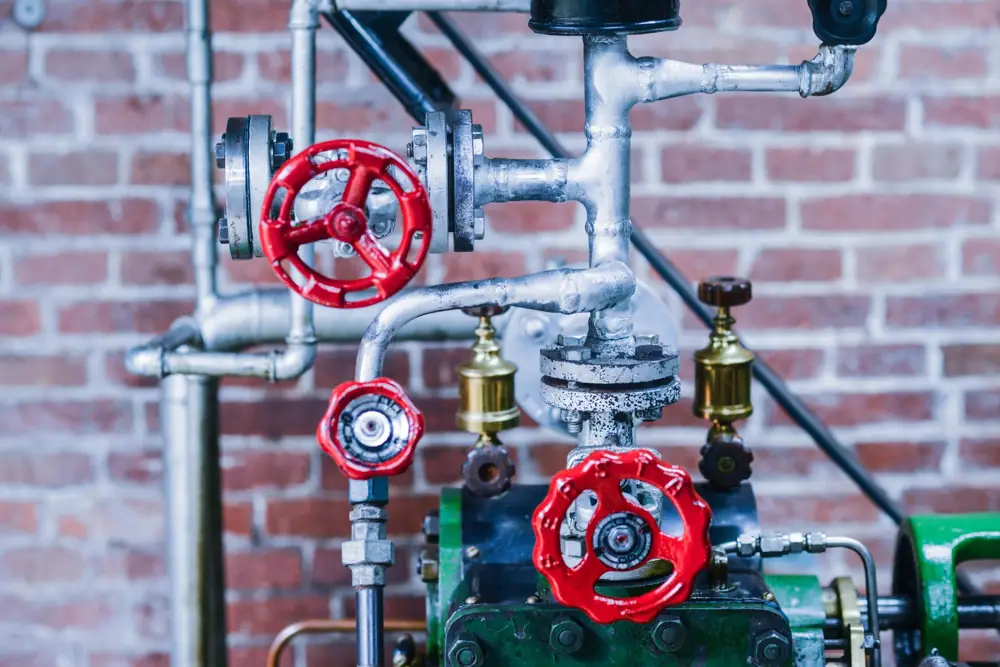
An adapter tube fitting is a two-ended compression fitting used in instrumentation work. Its job: convert a tube-fitting end into a different end connection or thread standard. Most commonly, that means going from a tube outside diameter to a male or female pipe thread such as NPT, BSPP, ISO parallel, JIC 37° or SAE-ORB. One end grips the tube with a ferrule set, forming a leak-tight metal seal. The other carries the target thread, flare, face-seal or port. When the two sides of a joint don't match the same standard, this is the fitting a system reaches for.
On this page, "adapter" refers specifically to an instrumentation compression tube-fitting adapter made of stainless steel or high alloy, built for fluid and gas systems. It doesn't mean an automotive AN hose adapter. It doesn't cover plumbing or copper tube adapters either, and it has nothing to do with electrical or USB adapters.
Crestflo runs the instrumentation arm of an export house that's been operating for four decades and carries Government-of-India recognition. The adapters it builds serve the US market, drop right into existing setups, and ship in 6-8 weeks. We Engineer Confidence.
Adapter Tube Fitting: Also Known As
Buyers and specifiers know this part by a dozen different names, and the same fitting gets quoted under any of them: tube fitting adapter, tube adapter, tube adapter fitting, compression tube adapter, adapter compression fitting, instrumentation adapter fitting, thread adapter fitting, and tubing adapter. The connection it makes drives the label too. You'll see it written as a tube-to-pipe adapter, a pipe-to-tube adapter fitting, a male adapter, a female adapter, a reducing adapter, a positionable (adjustable) adapter, a bulkhead adapter or a port adapter. On a hydraulic instrumentation line it's a hydraulic tube adapter, and to be clear, that's the instrumentation compression form, not an automotive AN hose adapter.
When a job calls for a two-ferrule brand pattern, Crestflo adapters are supplied as a dimensional interchange for it.
Adapter Tube Fitting Types & Configurations: Male, Female, Reducing & Positionable
Every configuration below counts as an adapter. Its purpose is to convert between connection standards, not simply extend the same size. Values follow standard instrumentation practice, and the build itself can be customized to whatever the job requires.
| Configuration | End A | End B | Typical use |
|---|---|---|---|
| Male adapter | Tube-fitting end | Male pipe/straight thread | Tube run into a female-threaded port or gauge |
| Female adapter | Tube-fitting end | Female pipe/straight thread | Tube run onto a male-threaded nipple or valve |
| Reducing adapter | Tube-fitting end | Tube-fitting end (different OD) | Step tube OD without a thread change, see the reducer |
| Positionable / adjustable adapter | Tube-fitting end | Orientable straight-thread stud | Align a fitting to a fixed port before lock-down |
| Tube-to-flare adapter | Tube-fitting end | 37° JIC or 45° SAE flare | Transition to a JIC-37 flare system |
| Tube-to-face-seal adapter | Tube-fitting end | VCR / VCO face seal | Transition to a face-seal fitting line |
| Bulkhead adapter | Tube-fitting end | Panel-mount thread | Pass a converted line through a panel, see the bulkhead union |
Catalogs split these families into narrow slices, so this page sticks to one job: connection-standard conversion. It links out to its neighbors instead of repeating their content. Need a straight same-standard join? Check the male connector or the female connector. Adapting a tube into a gauge port is a different job, handled on the port connector page. For the complete lineup, browse all tube fittings.
Thread & End Options: NPT, NPTF, BSPT, BSPP, ISO Parallel, JIC 37° & SAE-ORB
Specify each end on its own terms. Thread dimensions follow their published standards, NPT, for instance, per ASME B1.20.1. Values track whatever standard applies, and you can customize them as needed.
| Thread / end | Standard | Owner page |
|---|---|---|
| NPT | ASME B1.20.1 | NPT tube fittings |
| NPTF (dryseal) | ASME B1.20.3 | NPTF tube fittings |
| BSPT | ISO 7 | BSPT tube fittings |
| BSPP | ISO 228 | BSPP tube fittings |
| ISO parallel | ISO 1179 | ISO-parallel tube fittings |
| JIC 37° | SAE J514 / ISO 8434-2 | JIC-37 tube fittings |
| SAE-ORB | SAE J1926 | SAE-ORB tube fittings |
| Metric | ISO 9974 | metric tube fittings |
| Socket-weld | ASME B16.11 | socket-weld fittings |
| Butt-weld | ASME B16.25 | butt-weld fittings |
Thread galling ranks among the most common assembly failures on stainless and nickel-alloy adapters. To stop it, Crestflo offers silver anti-galling plating on threaded adapters, along with electropolish and passivation. Not sure what's on the mating equipment? The thread identification guide and the NPT vs NPTF explainer settle most questions before you place an order.
Adapter Materials: 316/316L Stainless, Duplex, Inconel, Monel & Titanium
The default build uses a 316/316L stainless steel adapter fitting. Most systems call for an SS tube adapter, which is what this is. That said, the part gets machined across the full instrumentation alloy range; brass and aluminum fall outside that scope. Every part carries a heat/lot number and EN 10204 MTC 3.1, with 3.2 available on request. Grade compositions are published to their ASTM standards on each material page.
| Family | Grades | Material page |
|---|---|---|
| Austenitic stainless | 304/304L, 316/316L, 904L | 316/316L, 904L |
| Duplex / super-austenitic | Duplex 2205, Super Duplex 2507, 254 SMO, AL-6XN, Alloy 20 | Super Duplex 2507, 254 SMO |
| Nickel alloy | Inconel 625/825, Monel 400, Hastelloy C-276 | Inconel 625, Monel 400, Hastelloy C-276 |
| Titanium | Titanium Gr2 | Titanium Gr2 |
For sour-service duty, we supply adapters compliant with NACE MR0175 / ISO 15156. Composition, PREN and mechanical properties by grade are listed in Crestflo's full materials library.
Adapter Sizes (1/8″–2″ / 3–50 mm) & Both Imperial and Metric
Tube-fitting ends go up to 2″ (50 mm) OD, available in both imperial and metric across every fitting. When a job crosses systems, a single adapter can carry imperial threading on one side and metric on the other.
| Imperial OD | Metric OD | Size page |
|---|---|---|
| 1/8″ | — | 1/8-inch fittings |
| 1/4″ | 6 mm | 1/4-inch · 6 mm |
| 1/2″ | 12 mm | 1/2-inch · 12 mm |
| 1″ | — | 1-inch fittings |
The complete range is on the tube fitting size chart.
Adapter Pressure & Temperature Ratings
What an adapter can actually handle isn't fixed by one number. It comes down to the tube OD, wall thickness, and alloy on one side, and the mating thread on the other. This is an all-metal fitting with no elastomer seat, so the temperature limit tracks the alloy and the tube themselves. Working pressures come from the standard tube pressure-allowable tables (for example, ASTM A269 / A213 tube data evaluated per ASME B31.3), while the mating thread carries its own rating under its own standard. Values follow the applicable standard and can be adjusted to fit specific requirements. Need a rated build for a particular OD, wall, alloy, and thread combination? Ask Crestflo's engineering team, and check the pressure-temperature derating and tube sizing and wall thickness guides.
Ordering & Part-Number Cross-Reference
Configure an adapter by tube OD, thread size and form, alloy, ferrule type (single or double, hardened or non-hardened) and finish. Crestflo doesn't publish its ordering-code series or any competitor part-number equivalents; these are provided on request. Ask our engineering team for the ordering-code guide, or request your Swagelok® or Parker® cross-reference, through the Swagelok cross-reference page or a direct RFQ. Datasheets and CAD models go out to customers on request as well. Swagelok® is a trademark of Swagelok Company. Parker® is a trademark of Parker Hannifin. Crestflo has no affiliation with, and isn't endorsed by, either company.
Standards, Testing & Traceability
Crestflo compression tube-fitting adapters are qualified to ASTM F1387, the interchange standard that lets them work as a dimensional drop-in across the major two-ferrule systems. Certification runs across ISO 9001, 14001, and 45001, plus PED. Adapters also ship compliant with NACE MR0175 and ISO 15156. We hold the standard approvals that apply to compression tube fittings.
| Item | Standard | Basis |
|---|---|---|
| Performance qualification | ASTM F1387 | Compression tube-fitting testing |
| Thread form (NPT) | ASME B1.20.1 | Published thread dimensions |
| Sour-service compliance | NACE MR0175 / ISO 15156 | Materials for H2S service |
| Material certificate | EN 10204 MTC 3.1 (3.2 on request) | Heat/lot traceability |
Testing covers hydraulic proof, burst and impulse, pneumatic, vibration, thermal cycling, pull-out and vacuum, along with PMI and in-house NDT. Destructive testing happens at ISO/IEC 17025-accredited labs, and there's third-party inspection on request. Every part gets stamped with its heat/lot number. For details, check Crestflo's material traceability page.
Why Crestflo for Adapter Tube Fittings
- ASTM F1387 drop-in, matches the majors dimensionally, and that fit is proven through test qualification, not a mere resemblance claim.
- 6-8 week delivery, standard items come out of ready stock, while specials get made to order. Compare that with 20+ weeks from the incumbents.
- Full alloy range, 316/316L, Duplex, Inconel, Monel, Hastelloy, and Titanium are all covered. Most tube-fitting suppliers stop at stainless.
- Both imperial and metric, single and double ferrule, hardened or non-hardened.
- Heat-number traceability + MTC on every part; NACE compliance for sour service.
Small MOQ and private label, the instrumentation arm of an export house recognized by the Government of India, with a track record of delivering into the Middle East.
Origin at Crestflo is straightforward: material is of Indian origin, with US or European melt available on request and full material traceability. Need domestic-melt or TAA compliance? You'll find details on the US-origin compliance page.
Applications
Crestflo's adapter tube fittings act as conversion joints. They span a wide industrial range: oil and gas operations, offshore rigs, subsea equipment, petrochemical plants, hydrogen infrastructure, LNG and cryogenic settings, semiconductor fabs, instrument air lines, and hydraulics systems. A broad footprint, by any measure.
Request an Adapter Quote
Send your two-end spec, tube OD, thread form and size, alloy, ferrule and finish, and get a quoted, drop-in build back. The fastest route: request a quote. Prefer another path? Request a sample, pull the line card, look into the private-label program, or speak with an engineer directly through OEM support. Reach Crestflo's US sales team at sales@crestflousa.com, call +1 346 594 9005, or find us in Houston, TX.
Frequently Asked Questions
What is a tube adapter?
A tube adapter, sometimes called an adapter tube fitting, is a two-ended instrumentation fitting. Its job is simple: convert a compression tube-fitting end into a different end connection, often a male or female pipe thread. That way two different connection standards can be joined without leaking.
What is an adapter in a pipe fitting?
In a fluid system, an adapter is the fitting that switches between connection types or thread forms. Think tube OD to NPT, or NPT to BSPP. It doesn't just extend the same size within the same standard.
What is a Swagelok tube adapter?
Swagelok® is a trademark of Swagelok Company. A Swagelok tube adapter takes a Swagelok tube-fitting end and turns it into a different end connection. Crestflo adapters match those dimensions and perform on par with the major two-ferrule systems on the market, with ASTM F1387 qualification behind them. None of this means Crestflo's affiliated with Swagelok or endorsed by the company.
What are the different types of tube fittings?
The tube-fitting family includes unions, tees, elbows, crosses, reducers, connectors, adapters, caps, plugs and bulkhead fittings. See all of them on the tube fittings hub.
What is the difference between an adapter and a connector?
A connector does one specific job: it joins a tube-fitting end straight to a pipe thread of matching intent. An adapter casts a wider net. Its purpose is to convert between differing standards, whether that means thread form to thread form, or tube to flare or face seal. Crestflo lists both types. Compare the male connector with this adapter page.
Male vs female adapter, which do I need?
A male adapter carries an external thread, built to mate into a female port. A female adapter works the other way: it carries an internal thread and receives a male fitting. When you specify a part, match both the port's gender and its thread form, whether that's NPT, BSPP, ISO parallel, or something else.
Can Crestflo adapt NPT to BSPP or other thread forms?
Yes. We offer adapters across NPT, NPTF, BSPT, BSPP, ISO parallel, JIC 37°, SAE-ORB, and metric. Just specify both ends on your RFQ, and we'll build the fitting to convert between them.
What alloys are adapter tube fittings available in?
We carry 316/316L and 304/304L stainless, plus 904L, Duplex 2205, Super Duplex 2507, 254 SMO, AL-6XN, Alloy 20, Inconel, Incoloy, Monel, and Hastelloy nickel alloys, along with Titanium Gr2. Every grade ships with MTC and heat-number traceability.