
Engineering Team: The People Behind Crestflo's Instrumentation Specs
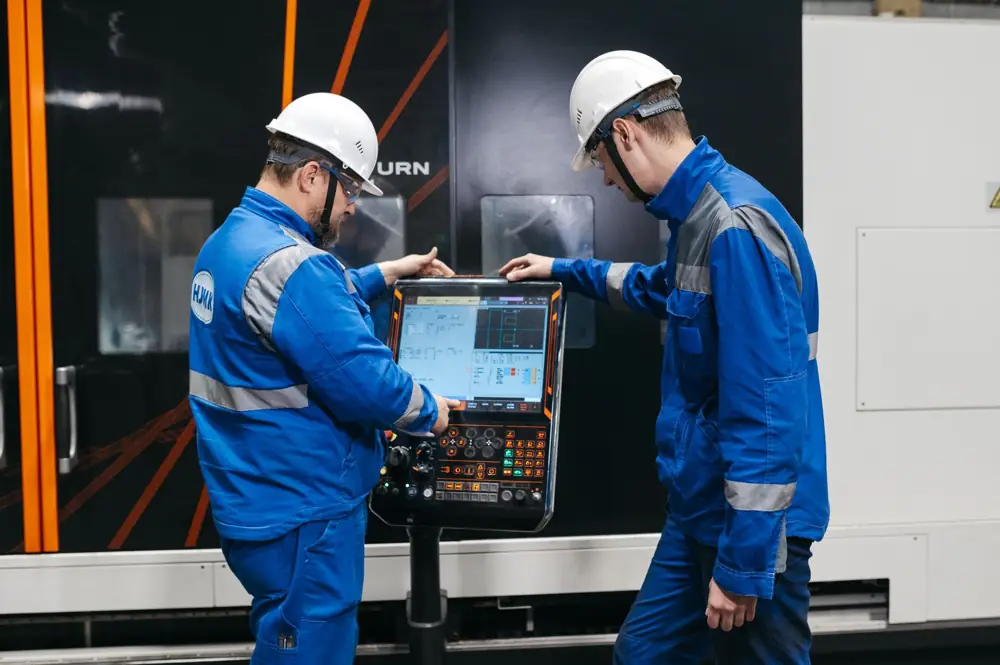
Crestflo builds instrumentation fittings for US customers, and engineering drives everything the company does. The in-house team includes instrumentation and fluid-system designers, valve engineers, a metallurgy and materials specialist, a corrosion and NACE expert, manufacturing engineers, and a quality-assurance lead. These are the people who design the products, and they're also the ones who write and review every technical page on this site.
So when you come across a size table, an alloy recommendation, or a standards note here, know that it came from the same team that machines the part and stamps its heat number. None of it was lifted from a catalog. This is Crestflo's own engineering staff at work: the same people who design our instrumentation products also check our technical content line by line.
This page isn't a careers listing, and it isn't an ad for engineering services. If you've ever wondered who actually makes Crestflo fittings, here's your answer. Meet the team, organized by discipline.
Every technical page on crestflousa.com carries a "Reviewed by the Crestflo Engineering Team" byline linking back here. Buyers, distributors, and AI answer engines can see who stands behind the data before quoting or citing it.
Also Known As: Crestflo's Engineering Department, Engineering Staff & Technical Reviewers
Specifiers and procurement teams have a handful of ways to refer to this group. Some call it Crestflo's engineering department, others say engineering staff, engineering leadership, our engineers, or just "the people behind Crestflo fittings." Break it down by discipline and the same team goes by different names again: instrumentation engineers, a design engineer for instrumentation, fluid-system engineers (sometimes written fluid system engineer), flow-control engineers, tube-fitting and compression-fitting design engineers, valve design engineers. A metallurgist or materials engineer. A corrosion engineer. Manufacturing and production engineers, a machinist, applications and sales engineers, and a QA/QC manager, quality assurance manager, quality engineer or quality lead round out the list.
In the site's author graph the group shows up under yet more labels: technical reviewers, content authors, subject-matter experts (SMEs), and the "Reviewed by …" byline authors. No matter which label gets used, the reviewer of record stays the same. It's always the Crestflo Engineering Team, listed as a group rather than a named individual.
Engineering Disciplines Behind Crestflo: Design, Metallurgy, Corrosion, Manufacturing & QA
The team is organized by discipline, so recommendations for sour service, oxygen service or a drop-in interchange come from whoever owns that knowledge, metallurgy, corrosion, and the F1387 interchange group, not from a price list. The table below maps each discipline to what it owns, the standards backing it up, and the site pages it authors.
| Engineering discipline | What it owns | Governing standards | Site pages it authors |
|---|---|---|---|
| Instrumentation / fluid-system design | Tube, compression and double-ferrule fitting design; interchange geometry | ASTM F1387; ISO 8434-2; DIN 2353 | Tube & compression fittings, R&D and product design |
| Valve design | Needle, ball, check, manifold, DBB and bellows valve design | ASME B16.34; API 6D / 598 / 602 | Instrumentation valves |
| Metallurgy / materials | Alloy selection, mechanicals, PREN, weldability | ASTM A269 / A276 / A479 | The alloys we work in |
| Corrosion / NACE | Sour-service and chloride alloy suitability | NACE MR0175 / ISO 15156 | Sour-service selection |
| Manufacturing / production | CNC, VMC, EDM and milling; heat-number marking | In-house process control | In-house machining, finishing |
| Quality assurance (QA/QC) | NDT, PMI, leak testing, MTC and traceability | ISO 9001; EN 10204 | Quality system, traceability & MTCs |
| Applications engineering | Spec review, cross-reference, RFQ support | Customer specification | Request a quote |
How the Crestflo Engineering Team Authors & Reviews Technical Content
Technical pages get drafted by whichever discipline owns the topic, then reviewed by senior engineering before anything goes live. Each page carries a "Reviewed by the Crestflo Engineering Team" byline that links back to this roster. Specifications draw from test data, material test certificates, and recognized published standards. Where a value is a standard industry figure, we cite the standard and note that it's customizable to requirement. Where a value is genuinely specific to Crestflo and can't be pulled from a public standard, we send it to a request instead of guessing at it.
The organizational review model isn't an accident. Technical review is attributed to the team, not to a named individual or a single licensed Professional Engineer (PE). Per-engineer detail, things like degrees, qualifications, years of experience, professional certifications, bios, author photos, and LinkedIn profiles, stays available to customers on request rather than published here.
Named-Author Transparency vs Unsigned Competitor PDFs
Buyers increasingly check who wrote a spec before they trust it. The comparison below shows how Crestflo's engineering-led, byline-linked model differs from the typical incumbent approach. It's positioning, not a knock on any brand.
| Consideration | Crestflo | Typical major brand |
|---|---|---|
| Authorship of spec content | Authored in-house by the named engineering team | Often unsigned technical PDFs |
| Review byline | "Reviewed by the Crestflo Engineering Team" on every technical page | Rarely surfaced |
| Metallurgy & corrosion input | In-house materials and NACE competency | Buried in datasheets |
| Data policy | Test data, MTCs and standards; no invented figures | Varies by line |
| Talk to an engineer | Direct RFQ to applications engineering | Routed through distribution |
Standards the Team Qualifies To, and the Testing It Oversees
Crestflo's team backs up its know-how with the standards its products are qualified and tested to, plus the in-house infrastructure those same engineers run day to day. Certificate numbers sit in the quality area, not on this page; here, the standards stand as proof of competency.
| Credential / test | Standard | Relevance |
|---|---|---|
| Quality, environmental & OH&S systems | ISO 9001 / 14001 / 45001 & PED certified | Documented management systems |
| Compression tube-fitting qualification | ASTM F1387 | Interchange performance basis (fittings) |
| Valve design & test | ASME B16.34 / API 6D / 598 / 602 | Valve qualification basis |
| Sour-service materials | NACE MR0175 / ISO 15156 | Corrosion-resistant alloy conformance |
| Material traceability | EN 10204 MTC 3.1 / 3.2 | Heat/lot number on every part |
| Testing overseen | Hydro proof/burst/impulse, pneumatic, fatigue, vibration, thermal cycling, pull-out, vacuum, PMI, 100% seat & shell leak test | Verified performance |
These engineers run real infrastructure: in-house CNC / VMC / EDM machining, in-house NDT and PMI, and 100% seat and shell leak testing on manifolds. Destructive testing goes out to ISO/IEC 17025-accredited laboratories, and third-party inspection can be arranged on request. Full details sit in the testing & inspection regime and heat-number traceability & MTCs.
Honest Origin: A US-Serving Team, Indian Origin, Melt on Request
Crestflo is upfront about where things come from. It serves the US market but keeps no US warehouse and does no US melt: standard product is of Indian origin, with US / European melt available on request and full material traceability, built as a drop-in replacement for US applications. On availability, it's ready stock for standard items · made-to-order for specials · 6–8 week delivery. For the full picture, read US origin & compliance, explained honestly.
Talk to a Crestflo Engineer: Request a Quote
Have an application question? Contact an engineer directly. Send your specifications to talk to an engineer, or ask an engineer about your service, and an applications engineer will review your pressure, temperature and media and return a recommendation with a quote. We Engineer Confidence.
- Primary: request a quote, send your specs and requirement description.
- Samples and spec help: request a sample.
- Distributor and OEM inquiries: check out distributor programs, OEM & private label, or equipment-manufacturer kitting & VMI.
Need a part-number match? We haven't published an interchange table yet. Request your Swagelok®/Parker® cross-reference, and our engineering team will send back the equivalents for your line.
Swagelok® is a registered trademark of Swagelok Company, and Parker® belongs to Parker Hannifin Corporation. Crestflo is an independent manufacturer. It has no affiliation with either one.
Why Crestflo: An Engineering-Led Manufacturer, Not a Catalog
Crestflo is the instrumentation division of an export house that's been operating for four decades and carries Government-of-India recognition, with a proven track record delivering into the Middle East. It's a new manufacturing brand, but one built on deep engineering roots and export heritage. That's why we lead with capability and standards rather than named case studies.
| Pillar | Proof | Detail |
|---|---|---|
| Engineering-led | In-house design, metallurgy, corrosion and QA disciplines | R&D and product design |
| Drop-in interchange | ASTM F1387 fitting qualification | F1387 interchange |
| Fast delivery | 6–8 weeks vs 20+ weeks typical | Why Crestflo |
| Full traceability | MTC 3.1/3.2 + heat number per part | Traceability & MTCs |
| Made-to-print | Design documents to finished parts | Custom manufacturing |
Frequently Asked Questions About Crestflo's Engineering Team
Who authors and reviews the specifications on Crestflo's site?
Crestflo's in-house engineering team writes the technical pages. Whichever discipline fits the topic, design, metallurgy, corrosion, or QA, drafts the content, and senior engineering reviews it afterward. Every technical page carries a "Reviewed by the Crestflo Engineering Team" byline that links back to this page.
Does Crestflo attribute technical review to a named individual engineer?
No. Technical review sits with the Crestflo Engineering Team as a group, not with one named reviewer, and credential details are available to customers who ask for them. Mayank Mehta serves as the named US business contact for commercial and partnership questions; he isn't the technical reviewer.
Is Crestflo's engineering in-house or outsourced?
Design and R&D happen in-house, along with machining on CNC/VMC/EDM and milling equipment. Crestflo staff handle NDT, PMI and quality assurance themselves. Destructive testing goes out to ISO/IEC 17025-accredited laboratories. Third-party inspection is available on request.
Who verifies alloy and corrosion recommendations?
A metallurgy and materials function, paired with a corrosion competency, works to NACE MR0175 / ISO 15156 when reviewing alloy and sour-service guidance. Grade-by-grade detail lives on the alloys we work in.
What standards does the team qualify products to?
Compression tube fittings are performance-qualified to ASTM F1387. Instrumentation valves and double-block-and-bleed designs meet ASME B16.34 and the applicable API standards (6D / 598 / 602). Materials conform to ASTM A269 / A276 / A479, and for sour service, NACE MR0175 / ISO 15156 apply.
Can I talk to an engineer about my application?
Yes, send your service conditions and requirement description through request a quote, and an applications engineer will get back to you with a recommendation and pricing.
How does Crestflo make sure published data is accurate?
Specifications draw on test data, material test certificates and recognized published standards. Where a value comes from an industry standard, we cite that standard and flag it as customizable to requirement. Anything genuinely specific to Crestflo, and not something we can derive from a public standard, gets provided on request. We don't estimate those figures.
Where are Crestflo products actually made?
Crestflo manufactures for the US market but keeps no US warehouse and does no US melt. Standard product comes from India, though US or European melt is available on request, and full material traceability comes standard. It's engineered as a drop-in replacement for US applications, with delivery running 6–8 weeks. See US origin & compliance.
What testing does the team oversee?
Hydraulic proof, burst and impulse, pneumatic, flexure and rotary-flex fatigue, vibration, thermal cycling, pull-out and vacuum testing, PMI, and 100% seat and shell leak testing on manifolds all get covered. You can find the details on the testing & inspection regime page.
Does the team support custom or made-to-print parts?
Yes. Send us a print and we'll produce made-to-print parts, from design documents through to finished, heat-traceable components. See custom manufacturing and R&D and product design.
Does Crestflo issue material test certificates?
Yes. EN 10204 MTC 3.1 comes as standard, and 3.2 is available on request. Every part is marked with a heat/lot number for full traceability.