
ISO 15848: Fugitive Emission Testing & Qualification for Industrial Valves
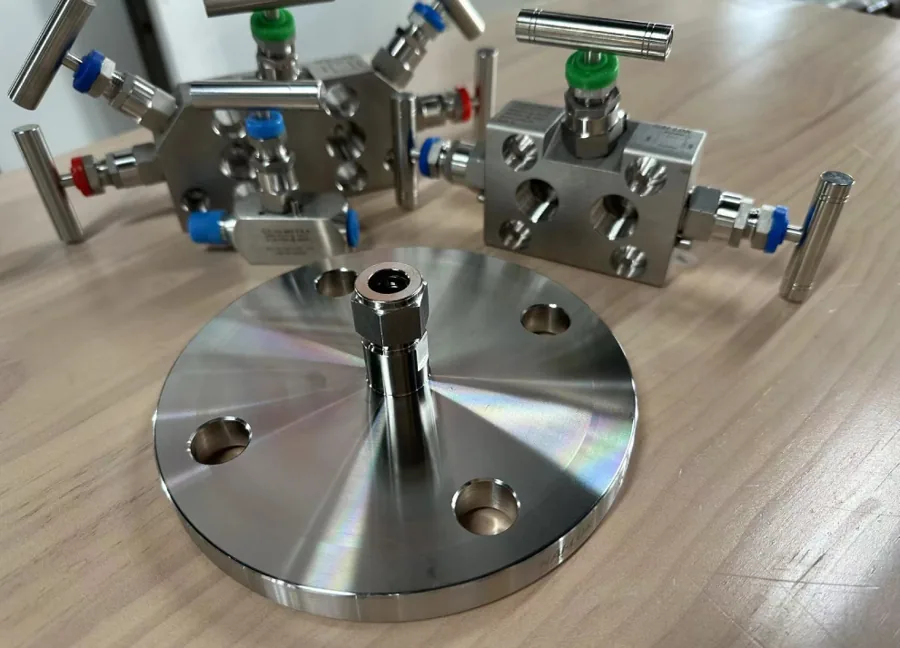
ISO 15848 is the international standard for measuring, testing and qualifying the fugitive emissions of industrial valves. In plain terms, it covers the external leakage of process fluid past the stem or shaft seal and the static body joints. The International Organization for Standardization published it through ISO/TC 153, the technical committee for valves, under the full title Industrial valves, Measurement, test and qualification procedures for fugitive emissions. It gives valve makers and end users a single, repeatable way to prove how little a valve leaks to atmosphere, and to express that result as a defined class.
Scope matters here. ISO 15848 measures external (fugitive) leakage to atmosphere, not internal seat tightness, which is the domain of ISO 5208 and API 598; not fire integrity, which is API 607; and not materials or sour-service limits, which are governed by NACE MR0175 / ISO 15156. The standard exists because volatile organic compound (VOC) and methane emissions from valve stem seals are a major target of leak-detection-and-repair (LDAR) programs, so operators specify a proven fugitive-emission class rather than trusting a generic leak claim.
Also Known As: ISO 15848-1, ISO 15848-2 & the Fugitive Emission Test Standard
Engineers and specifications refer to this standard in several ways. It is written as ISO 15848, split into ISO 15848-1 (type testing) and ISO 15848-2 (production acceptance testing), and cited by edition as ISO 15848-1:2015. In procurement and datasheets it also appears as the "fugitive emission test standard" or "fugitive emission valve standard," the "valve fugitive emission qualification," the "stem-seal emission test," and, in transactional sourcing, as the basis for a low-emission (low-E) valve or a packless / bellows-sealed valve. All of these point to the same entity described on this page.
ISO 15848 at a Glance: Scope, Parts, Classes & Test Fluids
| Attribute | Value |
|---|---|
| Standard number | ISO 15848 |
| Full title | Industrial valves, Measurement, test and qualification procedures for fugitive emissions |
| Issuing body | International Organization for Standardization (ISO), TC 153 |
| Parts | Part 1, classification system and qualification for type testing; Part 2, production acceptance test |
| Current edition | ISO 15848-1:2015 in force; ISO 15848-2:2015 for production testing (values per applicable standard) |
| What it measures | External leakage of a test fluid past the stem/shaft seal (primary) and static body joints, under defined mechanical and thermal cycling |
| Test fluids | Helium (measured leak rate) or methane (measured concentration) |
| Measurement methods | Helium: vacuum method or sniffing/flushing method; methane: sniffing/concentration probing |
| Tightness classes | A, B, C (subscript H = helium, M = methane); Class A is tightest |
| Endurance classes | CO1, CO2, CO3 (increasing mechanical cycles) |
| Temperature classes | −196 °C, −46 °C, −29 °C, room temperature, +200 °C, +400 °C |
| Applies to | Isolating and control valves of all types, ball, needle, gate, globe, plug, bellows-sealed, diaphragm |
| Does not cover | Internal seat tightness (ISO 5208 / API 598); fire integrity (API 607) |
Values per applicable standard; customizable to requirement.
ISO 15848-1 vs ISO 15848-2: Type Test vs Production Acceptance Test
ISO 15848 comes in two parts, and each one tackles a different question.
ISO 15848-1 lays out the classification system and the type test, which is a rigorous, one-time qualification of a valve design. A representative valve goes through mechanical cycling, thermal cycling and periodic leakage measurement, and the design then gets assigned a tightness class, an endurance class and a temperature class. This is what buyers actually mean when they ask whether a valve series "meets ISO 15848 Class A."
ISO 15848-2 sets out the production acceptance test, a shorter, routine check applied to manufactured valves so that series production keeps matching the qualified type-test performance. Think of it as batch or lot verification. It isn't a re-qualification.
The current type-test edition is ISO 15848-1:2015; the ISO 15848-1:2006 edition it superseded is no longer the reference. Part 2 is undergoing revision too, tracked as an ISO/AWI 15848-2 work item, so check the live edition before you specify anything. The full normative text is licensed and purchased from ISO. No legitimate free-download version of the complete standard exists, so treat any "ISO 15848 PDF" you specify against as one that should be a licensed copy.
ISO 15848 Tightness Classes A/B/C: Leak Rates & Test Fluids
A qualification is expressed as a triple: tightness class, endurance class, and temperature class, along with the test fluid used. The tightness class is the headline figure. It tells you how little the stem seal leaked.
| Class | Test fluid | Indicative stem-seal leakage basis | Typical stem-seal architecture |
|---|---|---|---|
| A (Aₕ) | Helium | Tightest, on the order of 10⁻⁵ mg·s⁻¹·m⁻¹ per ISO 15848-1 | Bellows-sealed / packless |
| B (Bₕ) | Helium | On the order of 10⁻⁴ mg·s⁻¹·m⁻¹ per ISO 15848-1 | High-performance graphite / PTFE packing |
| C (Cₕ) | Helium | On the order of 10⁻² mg·s⁻¹·m⁻¹ per ISO 15848-1 | Standard packing |
| Aₘ / Bₘ / Cₘ | Methane | Measured as concentration (ppmv) by sniffing | As above |
Leakage figures are shown at order-of-magnitude per ISO 15848-1; exact per-edition thresholds live in the licensed standard. Values follow the applicable standard and can be adjusted to requirement.
Class A sits at the tight end of the scale, and in practice that's the class you'll pair with a packless stem seal, a bellows or diaphragm design that does away with the packing leak path altogether. Class A and Class B differ mainly by leak path: B is one order looser and can usually be hit with high-performance graphite or PTFE packing, while Class C asks the least of the three. As for the subscript on a reported class, H or M just tells you whether the test used helium or methane.
Helium vs Methane: ISO 15848 Test Fluid & Measurement Method
ISO 15848 allows two test media. Helium is the more sensitive of the two: it's a small, inert molecule measured as a quantified leak rate, either by the vacuum method or by a sniffing/flushing method, and that sensitivity is what makes it the route to a helium Class A result. Methane, by contrast, is measured as a concentration by sniffing the seal region, which is a method closer to field LDAR probing. The class subscript, Aₕ versus Aₘ, always states which fluid produced the result. So two valves quoting "Class A" should be compared on the same fluid.
ISO 15848 Endurance Classes CO1, CO2 & CO3
The endurance test tracks the number of open/close cycles a valve completes during type testing while it still meets its tightness class. That's proof the seal holds up over time, not just on the first pass.
| Endurance class | Isolating valves | Control valves |
|---|---|---|
| CO1 | Lowest mechanical-cycle count | Lowest mechanical-cycle count |
| CO2 | Intermediate | Intermediate |
| CO3 | Highest | Highest |
Isolating valves and control valves don't share cycle counts, because control valves modulate continuously and have to survive many more actuations. Exact cycle counts per class are defined in ISO 15848-1; values per applicable standard, customizable to the service duty.
ISO 15848 Temperature Classes: Cryogenic to +400 °C
The temperature class states the test temperature at which the qualification holds. The type test includes thermal cycling between ambient and the class value. The standard set of temperature classes spans:
−196 °C (cryogenic / LNG) · −46 °C · −29 °C · room temperature · +200 °C · +400 °C
A valve qualified at −196 °C suits LNG and cryogenic service; higher classes cover hot hydrocarbon and steam duties. The temperature class and the tightness class together define where the low-emission claim is valid.
How a Valve Is Qualified to ISO 15848 (Type-Test Procedure)
Under ISO 15848-1, technicians mount a representative valve and pressurize it with the test fluid. They then run it through the mechanical cycles of its target endurance class and the thermal cycles of its target temperature class. Leakage gets measured at defined intervals throughout. If the valve holds the target leakage limit across the full mechanical and thermal regime, the test house issues a type-test report assigning the tightness/endurance/temperature triple. A separate ISO 15848-2 production acceptance test keeps series output aligned with that qualification after the fact. Certification applies to a specific tested configuration only, size, materials, seal design and temperature, so you always have to read a class together with the configuration it was earned on.
ISO 15848 vs API 622, API 624, API 641 & TA-Luft
ISO 15848 is the international standard covering fugitive emissions for all valve types. Several related standards approach the same goal from different angles, so a single valve can end up qualified under more than one.
| Standard | Scope | Valve types | Test fluid / method | Origin |
|---|---|---|---|---|
| ISO 15848-1 / -2 | Valve fugitive-emission type test + production test | All isolating & control valves | Helium (rate) or methane (concentration) | International (ISO) |
| API 622 | Qualification of the packing material itself | Packing (component) | Methane | US (API) |
| API 624 | Type test of rising-stem valves with API 622 packing | Rising-stem gate/globe | Methane | US (API) |
| API 641 | Type test of quarter-turn valves | Quarter-turn (ball, plug) | Methane | US (API) |
| TA-Luft / VDI 2440 | German clean-air technical instruction for valve emissions | Industrial valves | Helium or defined method | Germany |
| EPA Method 21 | Field leak-detection screening | In-service valves | VOC concentration | US (EPA) |
The API set is US-origin, and it's narrower: API 622 tests the packing, while API 624 and API 641 type-test rising-stem and quarter-turn valves, respectively. TA-Luft (VDI 2440) is the German instruction that's historically been used for valve emission acceptance, and EPA Method 21 is just a field screening method, not a shop qualification. Fire integrity is a separate question entirely. Crestflo covers it at API 607 fire-safe qualification.
Low-Emission & Packless Valves for ISO 15848-Critical Service
Crestflo builds the stem-seal designs most tied to the tightest ISO 15848 classes: bellows-sealed packless valves and diaphragm-sealed valves. Both eliminate the packing leak path that keeps conventional valves stuck in looser classes. For emission-critical instrument loops, we also make needle valves, ball valves, monoflange valves and double-block-and-bleed valves, spanning the full instrumentation valve range.
| Crestflo valve type | Stem-seal architecture | Fugitive-emission relevance |
|---|---|---|
| Bellows-sealed valve | Welded metal bellows (packless) | Removes the stem packing leak path, the Class A architecture |
| Diaphragm valve | Diaphragm isolation (packless) | Zero stem-packing emission path for low-E loops |
| Needle valve | Stem with high-performance packing | Instrument isolation in emission-monitored service |
| Ball valve | Quarter-turn stem seal | Fast isolation on emission-critical loops |
| Monoflange / DBB | Integral multi-valve stem seals | Reduced potential leak points at the instrument tap |
These valves are built in 1/16" to 1" sizes, metric or imperial, in stainless through exotic alloys, and qualify to the standard valve approvals, ASME B16.34 and the applicable API pressure/leak standards, with EN 10204 3.1 material test certificates (3.2 on request) and heat-number traceability on every part. Whether a given Crestflo valve series carries a formal ISO 15848 type-test report, and to which class, depends on the configuration; request the applicable fugitive-emission test report for your series and duty and our engineering team will confirm it.
Request a quote or spec help on a low-emission valve →
Why Crestflo for Low-Emission Instrumentation Valves
Crestflo is the instrumentation arm of a four-decade-old export house recognized by the Government of India, with a long track record delivering into the Middle East, engineering heritage backing a focused instrumentation brand. Serving customers across the US, we keep ready stock on standard items, build specials to order, and ship in 6-8 weeks, against the 20-plus-week lead times common from the majors.
Every valve is ISO 9001 / 14001 / 45001 & PED certified at the company level, built to the applicable ASME B16.34 / API valve standards, and supplied with heat-number traceability and EN 10204 3.1/3.2 material test certificates. Wetted and stem alloys for sour service are supplied to NACE MR0175 / ISO 15156. Testing is run in-house, hydraulic, pneumatic, vibration and thermal-cycle testing plus PMI, with destructive testing outsourced to ISO/IEC 17025-accredited laboratories and third-party inspection available on request. Standard product is of Indian origin, with US / European melt available on request and full material traceability, see our US-origin compliance position. Alloys run from 316/316L through 254 SMO, duplex and super-duplex, Alloy 20, Inconel, Monel, Hastelloy and Titanium Gr2; material selection by service helps match the grade to the medium.
Frequently Asked Questions About ISO 15848
What is ISO 15848?
ISO 15848 is the international standard for measuring, testing and qualifying the fugitive emissions of industrial valves. In plain terms, it deals with the external leakage of process fluid past a valve's stem seal and body joints. The standard's full title is Industrial valves, Measurement, test and qualification procedures for fugitive emissions.
What is the difference between ISO 15848-1 and ISO 15848-2?
ISO 15848-1 sets out the classification system and the type test, which qualifies a valve design through mechanical and thermal cycling. ISO 15848-2, by contrast, covers the shorter production acceptance test run on manufactured valves, the one that confirms series output still matches the qualified design.
What are the tightness classes in ISO 15848?
Class A, B and C, with a subscript H for helium or M for methane. Class A demands the most, and you'll usually need a bellows or packless stem seal to hit it. Class C asks the least. Class B falls in between; high-performance packing generally gets you there.
Does ISO 15848 use helium or methane?
Either. Helium gets measured as a quantified leak rate, using vacuum or sniffing methods, and it's the more sensitive fluid, so it supports the tightest classes. Methane, by contrast, only gets measured as a concentration through sniffing. Check the subscript on the reported class; that's what tells you which fluid was actually used.
What are the ISO 15848 endurance classes CO1, CO2 and CO3?
These cycle counts mark how many mechanical open-close cycles a valve completes during the type test while it holds its tightness class, CO1 is the fewest, CO3 the most. Isolating and control valves use different counts because control valves cycle far more often.
What is the difference between ISO 15848 and API 622, API 624 or API 641?
ISO 15848 covers fugitive emissions for all valve types and is the standard used internationally. Within the API set, the scope narrows: API 622 qualifies the packing material itself, while API 624 type-tests rising-stem valves and API 641 type-tests quarter-turn valves. The API set is US in origin, and it's narrower in scope than ISO 15848. Even so, a single valve can be qualified to both ISO 15848 and the relevant API standard.
Is ISO 15848 the same as testing seat leakage?
No. ISO 15848 measures external (fugitive) leakage to atmosphere. Internal seat tightness is a separate question covered by ISO 5208 and API 598.
Which valves best meet ISO 15848 Class A?
Valves with a packless stem seal, whether bellows-sealed or diaphragm, remove the packing leak path entirely. Crestflo makes both bellows and diaphragm packless valves. Ask for the fugitive-emission test report that matches the series and duty you need.
Related Standards & Products
- Instrumentation fitting & valve standards hub, the full standards library
- ASME B16.34, valve pressure-temperature design basis
- API 607, fire-safe valve qualification (distinct from fugitive emissions)
- NACE MR0175 / ISO 15156, sour-service materials for stem and wetted parts
- Bellows-sealed packless valves · diaphragm valves
- Oil & gas · hydrogen · carbon capture (CCS) applications
- Reviewed by the Crestflo Engineering Team · Houston, TX · sales@crestflousa.com · +1 346 594 9005