
NORSOK M-650: Qualification of Manufacturers of Special Materials
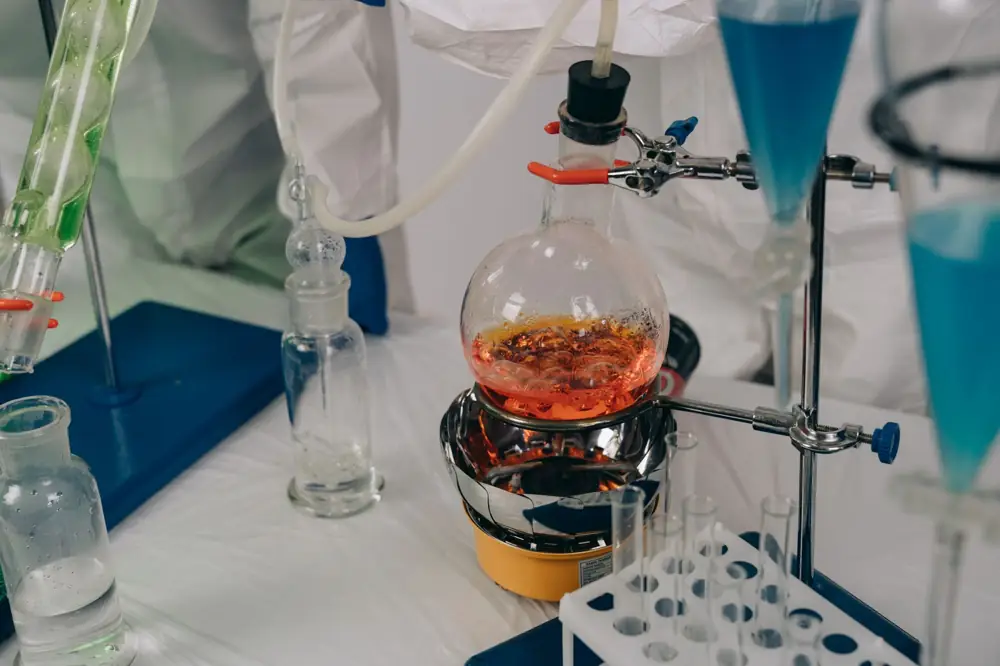
NORSOK M-650 is the Norwegian oil-and-gas standard that qualifies manufacturers to produce special corrosion-resistant materials. It verifies that a maker has the equipment, production route, heat-treatment control and expertise to consistently turn out duplex, 6Mo, nickel-alloy and titanium components to the required properties. Standards Norway (standard.no) issues and manages it, and the current version is Edition 4, dated September 2011. One line clears up the most common confusion around it: NORSOK M-650 qualifies the manufacturer; NORSOK M-630 specifies the material. M-650 is the credential proving who may make a grade. M-630 is the data sheet defining what that grade must be.
The standard belongs to the NORSOK M-series (materials), developed by the Norwegian petroleum industry to keep quality and cost in check on the Norwegian continental shelf. For offshore and subsea buyers, it's the vetting mechanism that takes the risk out of sourcing critical corrosion-resistant alloy (CRA) parts.
Also Known As: NORSOK M650, M-650, M 650 & "Special Material Qualification"
NORSOK M-650 shows up under several spellings: NORSOK M650, NORSOK M-650, NORSOK M 650, M-650, M650. You'll also see it cited as "NORSOK M-650 Edition 4," "M-650 Rev. 4 (September 2011)," or "NORSOK M-650:2011." The full title is Qualification of manufacturers of special materials, and engineers commonly call the process it governs manufacturer qualification or special material qualification (SMQ). People searching for it almost always pull up its paired standard too, NORSOK M-630 (Material Data Sheets), and it turns up in specifications right alongside the document it produces: the Qualification Test Record (QTR). At its core, M-650 is a manufacturer-qualification credential, not a material specification. That's the whole point of the standard, boiled down to one line.
NORSOK M-650 Attribute Snapshot: Designation, Issuer, Edition & Scope
| Attribute | Value |
|---|---|
| Designation | NORSOK M-650 |
| Title | Qualification of manufacturers of special materials |
| Issuing body | Standards Norway (standard.no); a NORSOK petroleum-industry standard |
| Current edition | Edition 4, September 2011 (M-650:2011) |
| Standard family | NORSOK M-series (materials) |
| What it qualifies | The manufacturer, its equipment, production route, heat-treatment control and capability |
| Core deliverable | Qualification Test Record (QTR) |
| Covered material families | Duplex & super-duplex stainless (22Cr/25Cr), high-alloy austenitic incl. 6Mo, nickel-base alloys, titanium & Ti alloys |
| Covered product forms | Forgings, castings, seamless/welded pipe, plate, bar, fittings and bolting, per the applicable MDS |
| Distinct from | NORSOK M-630 (Material Data Sheets), specifies the material itself |
| Primary application | Offshore & subsea oil & gas, critical CRA components |
Values per the applicable published standard; the definitive requirements sit in the current edition of NORSOK M-650 from Standards Norway.
What NORSOK M-650 Covers: Scope & Qualification Requirements
NORSOK M-650 lays out what a manufacturer has to prove before it can count as a qualified source for a special material. The requirement pillars are:
- Manufacturing summary, a documented account of the production route, covering everything from melt and forming through to final heat treatment.
- Heat-treatment control, verified furnace control and heat-treatment records. Properties in duplex and nickel alloys depend on getting thermal processing right.
- Test program, a full slate of destructive and non-destructive testing that proves the delivered properties, not just the nominal grade.
- Ranges of qualification, the grade, product form, size and thickness envelope, and manufacturing route the qualification covers. Supplied material has to fall inside these ranges.
Manufacturers qualify by grade and product form, not across the board. A shop cleared for one alloy and one form isn't automatically cleared for another. That's why buyers check a QTR's scope against the exact parts they mean to buy.
NORSOK M-630 vs M-650: The Difference Buyers Need
The two standards are complementary, not interchangeable. You spec the material to M-630, but you buy it from a maker qualified under M-650.
| Aspect | NORSOK M-630 | NORSOK M-650 |
|---|---|---|
| What it defines | Material Data Sheets (MDS), chemistry, properties and testing for each grade | Qualification of the manufacturer that makes the material |
| Object qualified | The material | The maker |
| Core deliverable | The MDS the material must meet | The Qualification Test Record (QTR) |
| Typical use in an RFQ | Specify the grade and MDS | Vet the supplier's capability and ranges |
In offshore work, a spec typically calls out an M-630 MDS for each component, then requires the supplier to hold M-650 qualification for that grade and form. For more on the data sheets, see Crestflo's NORSOK M-630 material data sheets page.
The NORSOK M-650 QTR (Qualification Test Record) & Test Scope
A Qualification Test Record sits at the center of M-650 as the documented proof of a maker's capability. It pulls together the manufacturing summary, heat-treatment control and a full test program to show that a maker can consistently produce a given grade and form within its defined ranges of qualification. A pre-qualification test record, or PQTR, covers this same ground, but before formal award.
The typical test scope mirrors the properties that matter for CRA service.
| Test category | Examples | Purpose |
|---|---|---|
| Chemistry | PMI / spectrographic analysis | Confirm the alloy composition |
| Mechanical | Tensile, low-temperature Charpy impact | Verify strength and toughness |
| Hardness | Hardness to NACE limits | Guard against sour-service cracking |
| Metallurgical | Ferrite content, microstructure | Confirm phase balance in duplex grades |
| Corrosion | ASTM G48 pitting test for duplex | Verify pitting resistance |
| Heat treatment | Heat-treatment verification | Confirm properties came from a controlled process |
Because qualification hinges on ranges, the delivered scope of supply has to fall within the size, thickness and manufacturing envelope the QTR covers.
Materials & Product Forms Governed by NORSOK M-650
NORSOK M-650 sets the rules for the special corrosion-resistant families used offshore and in subsea service. Crestflo builds instrumentation components in those same grade families, and each grade below links through to its material page.
| Family | Example grades | Material page |
|---|---|---|
| 22Cr duplex stainless | Duplex 2205 | Duplex 2205 |
| 25Cr super-duplex | Super Duplex 2507 (Zeron 100) | Super Duplex 2507 |
| 6Mo super-austenitic (6 moly) | 254 SMO, AL-6XN | 254 SMO · AL-6XN |
| Nickel-base alloys | Inconel 625, Inconel 825 | Inconel 625 · Inconel 825 |
| Titanium | Titanium Grade 2 | Titanium Gr2 |
The standard applies across wrought and cast product forms, forgings, castings, seamless and welded pipe, plate, bar, fittings and bolting, each qualified per the applicable MDS. Crestflo's own scope within these grades is instrumentation: tube fittings, instrumentation valves and alloy tubing. Explore the full instrumentation fitting alloys range for grade selection.
Related Standards: M-630, NACE MR0175 / ISO 15156, ISO 17781
NORSOK M-650 doesn't stand alone. It sits inside a web of specifications that offshore RFQs tend to cite together.
| Standard | Role | Reference |
|---|---|---|
| NORSOK M-630 | Material Data Sheets that define the grade | NORSOK M-630 |
| NACE MR0175 / ISO 15156 | Sour-service metallurgical limits (hardness, microstructure) | NACE MR0175 · ISO 15156 |
| EN 10204 | Material test certificate types (3.1 / 3.2) | EN 10204 MTC |
| ASTM F1387 | Performance qualification of compression tube fittings | ASTM F1387 |
| ISO 17781 | Test methods for duplex corrosion and microstructure | — |
| NORSOK M-601 / L-005 | Welding and piping requirements | — |
M-650 qualifies the maker of the CRA. NACE MR0175 / ISO 15156 sets the sour-service limits the material has to meet, and the two work together on offshore and subsea scopes.
Editions & Where to Get the NORSOK M-650 PDF
Edition 4, September 2011 (M-650:2011) is the version currently in force. Standards Norway (standard.no) publishes the official document, so pull the PDF straight from them rather than from third-party copies or "free download" sites, which can be outdated or missing pages. Offshore oil-and-gas and subsea projects lean on this standard constantly, and qualified special-material supply is often a condition of award on those jobs.
Why NORSOK M-650 Matters for Offshore & Subsea Buyers
Offshore and subsea installations put CRA components in touch with seawater, heavy chloride loads, sour production fluids, and the risk of hydrogen-induced stress cracking (HISC). In that environment, picking the right grade on paper isn't enough. The material has to be made under controlled conditions that actually deliver the microstructure, toughness, and corrosion resistance the job demands. M-650 qualification gives a buyer confidence that a supplier can hit that mark again and again, and that's why it shows up in specifications for offshore, subsea, and oil and gas scopes at Crestflo.
Crestflo & NORSOK Special Materials: Instrumentation in CRA Grades
Crestflo builds instrumentation fittings, valves and tubing in the exact alloy families NORSOK M-650 covers: Duplex 2205, Super Duplex 2507, 254 SMO, AL-6XN, Alloy 20, Inconel 625/825 and Titanium Gr2. Every part carries heat-number marking for full traceability and ships with an EN 10204 3.1 material test certificate, with 3.2 available on request. The company holds ISO 9001 / 14001 / 45001 and PED certification. In-house teams handle NDT and PMI, while destructive testing goes out to ISO/IEC 17025-accredited laboratories. Third-party inspection can be arranged on request, and manufacturing meets NACE MR0175 / ISO 15156 for sour service. Fittings are performance-qualified to ASTM F1387. Instrumentation valves, meanwhile, are built to the applicable ASME B16.34 / API basis.
Crestflo's product line covers the grades and forms NORSOK M-650 addresses. For NORSOK documentation tied to your project, or for the material certification your spec calls for, reach out to the engineering team so we can match the scope of supply to your qualification ranges.
Crestflo is the instrumentation arm of a four-decade-old export house recognized by the Government of India, with a track record of delivering across the Middle East. Standard items ship from ready stock; specials get made to order, ready stock for standard items, made-to-order for specials, 6–8 week delivery. Standard product comes from Indian origin, though US or European melt is available on request, and full material traceability is provided.
Request a quote: email sales@crestflousa.com, call +1 346 594 9005 (Houston, TX), or request a quote online. You can also request a sample for evaluation.
NORSOK M-650 FAQ
What is NORSOK M-650?
NORSOK M-650 is a NORSOK standard covering Qualification of manufacturers of special materials. It qualifies manufacturers to produce special corrosion-resistant materials for offshore oil and gas work, duplex, 6Mo, nickel alloys and titanium. What it checks isn't the material itself, but the maker's process, heat-treatment control and testing capability.
What is the difference between NORSOK M-630 and M-650?
NORSOK M-630 is the Material Data Sheet: it lays out the chemistry, properties and testing for each grade. NORSOK M-650 does something different, it qualifies the manufacturer to produce material that meets those data sheets. Put simply, M-630 specifies the material; M-650 qualifies the maker.
What is a NORSOK M-650 QTR?
A QTR, short for Qualification Test Record, is documented evidence that a manufacturer can turn out a given grade and product form consistently, within defined qualification ranges. It covers a manufacturing summary, heat-treatment control, and a full test program spanning mechanical and corrosion testing, both destructive and NDT.
Which materials does NORSOK M-650 cover?
It covers duplex and super-duplex stainless (22Cr and 25Cr), high-alloy austenitic grades including 6Mo super-austenitics, nickel-base alloys, and titanium and its alloys. These are the corrosion-resistant families relied on for critical offshore and subsea components.
What is the latest edition of NORSOK M-650?
Edition 4, dated September 2011 (M-650:2011), is the current revision. Standards Norway publishes and maintains it.
Where can I get the NORSOK M-650 PDF?
The official standard is published by Standards Norway (standard.no). Get the PDF straight from the issuer, not from third-party copies, which can be out of date.
What are "ranges of qualification" in NORSOK M-650?
Ranges of qualification cover the grade, product form, size or thickness range, and manufacturing route in a manufacturer's QTR. If supplied material doesn't fall inside those qualified ranges, it isn't covered by the qualification.
How long is a NORSOK M-650 qualification valid?
A qualification remains valid as long as the qualified manufacturing route stays unchanged. A significant change to the process, equipment or a key sub-supplier triggers re-qualification. The standard sets no fixed calendar interval for this, but operators commonly review validity on a periodic basis anyway. From there, they build an approved manufacturer list (also called an approved supplier list) drawing on suppliers that hold current M-650 qualifications for the required grades and forms.
Which tests does NORSOK M-650 typically require?
Testing typically covers chemistry (PMI/spectro), tensile and low-temperature Charpy impact tests, hardness checked against NACE limits, ferrite content and microstructure, corrosion tests like ASTM G48 for duplex, and verification of heat treatment.
Is NORSOK M-650 related to NACE MR0175 / ISO 15156?
Yes, they work together. NORSOK M-650 qualifies the maker of the CRA, and NACE MR0175 / ISO 15156 sets the sour-service metallurgical limits the material has to meet. Offshore sour-service scopes often cite both.
Does Crestflo supply NORSOK-grade instrumentation components?
Crestflo builds instrumentation fittings, valves and tubing in every alloy family NORSOK covers: Duplex 2205, Super Duplex 2507, 254 SMO, AL-6XN, Alloy 20, Inconel 625/825 and Titanium Gr2. Every part is traceable by heat number. Certification follows EN 10204 3.1/3.2 for material test certificates. Need project-specific NORSOK documentation for your spec? Contact the engineering team.