
R&D & Design Engineering for Instrumentation Fittings & Valves
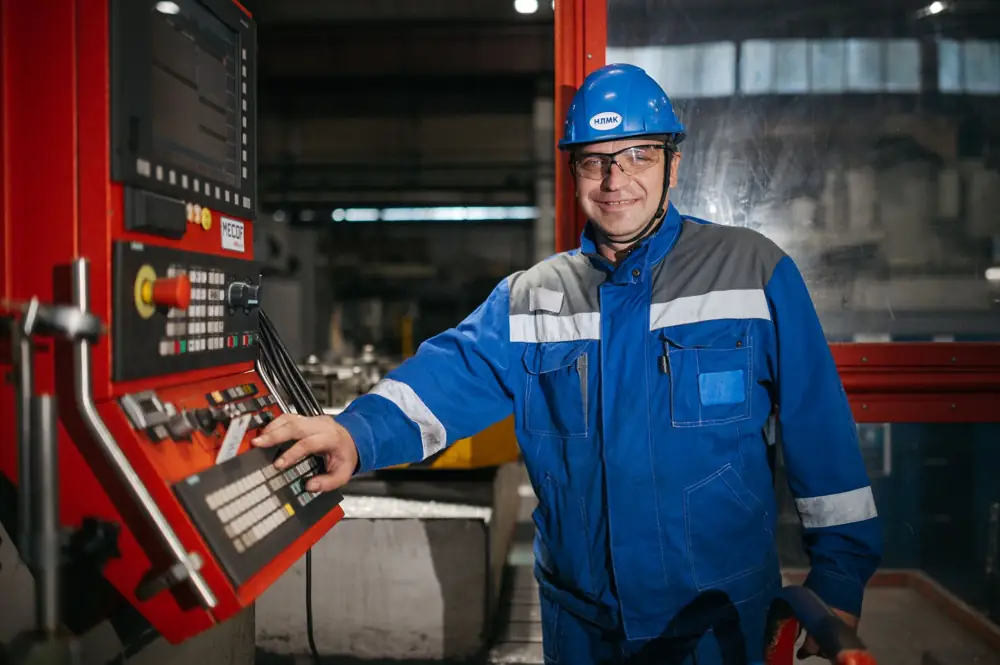
Crestflo's in-house design-engineering team takes your print, physical sample, or written spec and turns it into a qualified, drop-in instrumentation fitting or valve. We engineer parts made-to-print, reverse-engineer existing parts for dimensional interchange, and qualify compression tube fittings to ASTM F1387. From there, we produce them on in-house CNC, VMC, EDM and milling equipment, with a heat number on every part. This is design engineering for instrumentation fluid-system components: fittings, valves, manifolds, regulators and tubing, delivered as part of a manufacturing engagement, not electronics/PCB or standalone design consultancy. We Engineer Confidence.
What Our Design Engineering Covers: Made-to-Print, Reverse Engineering & Design-In
Our R&D and product-design-engineering work sits at the front end, ahead of manufacturing: application engineering, design-in support for equipment builders, new-product development, and engineer-to-order (ETO) work on fluid-system components. We serve equipment manufacturers sending us a print, OEMs who need a private-label design, and technical end users, EPC contractors and panel fabricators who need help with a spec. This isn't just a CAD desk. Behind the design front end sits a real, qualified factory, with in-house CNC/VMC/EDM machining, full alloy breadth, and heat-number traceability.
Also Known As: R&D, Design-In, Made-to-Print & Engineer-to-Order
Engineers describe this capability under a lot of different labels: R&D and research & development, design engineering and product design engineering, application engineering and design-in support, made-to-print or build-to-print engineering, engineer-to-order (ETO) and specials engineering. The same work also goes by reverse engineering for dimensional interchange or reverse engineering for manufacturing, design for manufacturability (DFM/DFMA) and design-for-manufacturing services, value engineering, concurrent engineering, GD&T per ASME Y14.5, tolerance stack-up analysis, CAD and engineering-drawing services, prototype and first-article development including prototype machining, custom valve and manifold design (bespoke instrumentation components), design review, design validation and verification, and new product development (NPD).
The Design-Engineering Process: Print → Qualified Part
| Step | What Crestflo does | Your input | Output |
|---|---|---|---|
| 1. Enquiry & scope | Review requirement, service conditions and target interchange | Application, media, pressure/temperature | Scoped design brief |
| 2. Print / sample / spec review | Interpret geometry and tolerances per ASME Y14.5 (GD&T) | Drawing, 3D CAD model, spec, or physical sample | Confirmed dimensions & tolerances |
| 3. Reverse-engineer / DFM | Match an existing part or optimize a new one for machinability, cost and lead time | Sample or competitor part number | Manufacturable design |
| 4. Material & GD&T spec | Select alloy for the service; fix threads, ends and tolerances | Service and code requirements | Released engineering drawing |
| 5. Qualification & validation plan | Set the ASTM F1387 (fittings) or ASME B16.34/API (valves) basis and the test regime | Qualification requirement | Validation plan |
| 6. Prototype / first article | Produce a sample or first article before the production run | Approval to proceed | Sample / first article |
| 7. Production release | Release to in-house machining with heat-number traceability | Purchase order | Qualified, traceable part |
What to Send Us: Inputs Accepted for a Custom Design
| Input type | Example | Notes |
|---|---|---|
| Engineering drawing / print | Dimensioned 2D print | Built to your tolerances |
| 3D CAD model | Solid model of the part | Common CAD and drawing formats accepted; share your format on the RFQ |
| Written specification | Datasheet or spec sheet | Design where no drawing exists |
| Physical sample | An existing or discontinued part | Reverse-engineered for interchange |
| Competitor part number | A named-brand part reference | Matched dimensionally, request your cross-reference |
Drawings are handled in confidence. A non-disclosure agreement can be executed on request.
Custom Design Envelope: Size, Pressure, Standard & Materials by Product Family
Values are per the applicable standard and customizable to requirement.
| Product family | Max size | Pressure envelope | Key standard | Materials |
|---|---|---|---|---|
| Compression / double-ferrule fittings | 2″ (50 mm) OD | Per ASTM F1387 qualification | ASTM F1387 | SS, CRA, high-nickel, titanium |
| Cone-and-thread high-pressure fittings | — | Up to 30,000 psi | Cone-and-thread design | High-tensile SS, CRA |
| 37° flare fittings | 2″ OD | Up to 15,000 psi / 350 °C | ISO 8434-2 | SS, CRA |
| DIN 2353 bite-type fittings | — | Per applicable standard | DIN 2353 | SS, CRA |
| Precision pipe-form fittings | — | Up to 15,000 psi | ASME B1.20.1 (NPT) | SS, high-nickel, Ti |
| Instrumentation valves | 1/16″–1″ | Per rating | ASME B16.34 / API | SS, CRA, high-nickel |
| Manifolds (2/3/5-way) | — | Up to 10,000 psi | 100% seat & shell leak test | SS, 6Mo, DSS, high-nickel |
| Double block & bleed (DBB) | — | Up to 3,000 psi | ASME B16.34 | SS, CRA |
Reverse Engineering for Dimensional Interchange & Dual-Unit Design
Send us a physical sample or a competitor part number and we'll reverse-engineer the part so it interchanges dimensionally and drops right into your existing system. It's engineered to be dimensionally equivalent, never sold as a genuine part of another brand. We design in both imperial and metric, handling dual-unit interchanges, plus thread and end-connection engineering for NPT (ASME B1.20.1), ISO 8434-2 37° flare, and DIN 2353 bite-type ends. For compression tube fittings, ASTM F1387 performance qualification is what proves the interchange. Use our thread-identification guide to confirm end connections, or request your cross-reference to match a named part.
Design for Manufacturability, GD&T & Material Selection Engineering
Beyond geometry, the team applies design for manufacturability (DFM/DFMA), value engineering to cut cost, and concurrent engineering to shrink lead time. Each design gets optimized for machinability, alloy availability and inspection. Drawings are dimensioned to GD&T per ASME Y14.5, with tolerance stack-up analysis wherever fit and interchange call for it. Pressure ratings get set against the applicable design standards. Take ASME B31.3 allowable-stress values for tube as an example. Results can be tailored to the requirement, and additional stress or finite-element analysis, a design-FMEA (DFMEA), or PPAP-style production-part-approval documentation can be scoped on request. Alloy selection follows the service, using our material selection by service logic.
Made-to-Print vs. Reverse Engineering: Which Design Route Fits
| Attribute | Made-to-print / engineer-to-order | Reverse engineering for interchange |
|---|---|---|
| Your input | Drawing, 3D model or written spec | Physical sample or competitor part number |
| Goal | Build a new or non-standard part to your design | Match an existing part so it drops in |
| Interchange basis | Your dimensions and tolerances | Dimensional equivalence; ASTM F1387 (fittings) |
| Typical use | New product, special size, hybrid configuration | Discontinued, unmarked or sole-sourced part |
| Output | Qualified part to your print | Dimensionally equivalent, drop-in part |
Standards, Qualification & Design Validation
Crestflo holds ISO 9001, ISO 14001, ISO 45001 and PED certification. Every design gets checked against the relevant standard, then validated through testing. Our testing & inspection team handles the testing itself, along with first-article inspection.
| Standard | What it governs | Where applied in design |
|---|---|---|
| ASTM F1387 | Performance qualification of mechanically attached fittings | Compression tube fitting interchange |
| ASME Y14.5 | GD&T and tolerancing | Every engineering drawing |
| ASME B16.34 | Valve pressure-temperature ratings | Valve and DBB design |
| API 598 / API 602 | Valve inspection, test & compact valve design | Valve qualification |
| ASME B1.20.1 | NPT threads | Thread and end-connection design |
| NACE MR0175 / ISO 15156 | Sour-service metallurgy | Sour-service design |
| EN 10204 | Inspection documents / MTC | Traceable design record |
Design validation runs across the full regime: hydraulic proof, burst and impulse, pneumatic, flexure fatigue, rotary flex, vibration, thermal cycling, pull-out and vacuum, plus PMI and 100% seat & shell leak testing on manifolds. NDT happens in-house. Destructive testing goes out to ISO/IEC 17025-accredited labs, with third-party inspection available on request. Every part carries a heat/lot number, with EN 10204 MTC 3.1 standard and 3.2 available on request, see material traceability. Engineering-change handling (ECR/ECN) and revision control are tied to the released drawing.
Products We Engineer & How to Start
We engineer and produce the full instrumentation range: compression and tube fittings, high-pressure cone-and-thread fittings, 37° flare fittings, DIN 2353 bite-type fittings, all instrumentation valve types, 2/3/5-way manifolds, regulators, accessories and tubing. Ready to have a part engineered? Send your print for a quote and our engineering team will get back to you with material options, an interchange basis, pricing and lead time. If you'd rather prove the design first, request a sample or first article. We provide datasheets and CAD to customers on request. For volume programs, go through private-label, and check how to buy for the rest.
Why Engineer Your Custom Part With Crestflo
- 6–8 week delivery on made-to-order specials, against the 20+ weeks common from the major brands. Ready stock for standard items · made-to-order · 6–8 week delivery.
- F1387-backed drop-in, compression fittings performance-qualified to ASTM F1387. Valves qualify to ASME B16.34 and the applicable API standards.
- In-house machining, CNC, VMC, EDM and milling, so a new design is produced under one roof, not brokered.
- Full alloy range, stainless through Inconel, Hastelloy, Monel, duplex and titanium, available in both imperial and metric.
- Traceability on every part, heat number, EN 10204 MTC 3.1/3.2 and PMI.
- Small MOQ and private label, prototype, low-volume and OEM runs supported.
- Honest origin, built for US drop-in use, made in India; US or European melt is available if you ask for it, and we'll back it with full material traceability. See US-origin & compliance.
Crestflo is the instrumentation division within a Government-of-India-recognized export house with four decades behind it and a delivery record across the Middle East. That's heritage manufacturing depth standing behind a focused instrumentation brand. Technical content gets reviewed by the Crestflo Engineering Team.
R&D & Design Engineering FAQ
Can you make a fitting from my drawing?
Crestflo works made-to-print: send a drawing, a 3D CAD model, a written spec, or a physical sample, and our design-engineering team turns it into the part. Just tell us your file format on the RFQ.
Can you reverse-engineer or match an existing part?
Yes. We reverse-engineer for dimensional interchange so the part drops into your existing system, with compression fittings qualified to ASTM F1387.
Will a custom Crestflo part drop into my Swagelok or Parker system?
We engineer our fittings to interchange dimensionally with other manufacturers' parts, and they're qualified under ASTM F1387. That said, we have no affiliation with any other brand, and we don't sell these as genuine parts from another maker. Swagelok® and Parker® remain trademarks of their respective owners. Check our cross-reference for details.
What materials can you engineer in?
304/304L, 316/316L and 904L stainless are all part of the lineup, alongside Duplex 2205, Super Duplex 2507, 254 SMO, AL-6XN and Alloy 20. Inconel, Incoloy, Monel, Hastelloy and Nickel 200/201 round things out further, and Titanium Gr2 is also available.
Imperial or metric?
Both, every fitting comes in imperial and metric, and we design dual-unit interchanges.
Do you prototype or supply a first article before production?
Samples and first articles are ready to go before you commit to a full production run, and MOQs stay small. Request a sample to get started.
How is a design validated?
Against the applicable spec, our testing regime covers hydraulic proof/burst/impulse, pneumatic, fatigue, vibration, thermal cycling, pull-out, vacuum, PMI, and 100% seat & shell leak on manifolds. NDT happens in-house, while destructive testing runs at ISO/IEC 17025 labs. See testing & inspection.
How do valves qualify versus fittings?
Compression tube fittings earn their performance qualification under ASTM F1387, which serves as the interchange basis; valves qualify to ASME B16.34 and whatever API standards apply, such as API 598 and API 602.
How long does a custom part take?
Typically 6–8 weeks for made-to-order specials, versus 20+ weeks for the major brands. See our lead-time basis.
Where is the part made, and is it US-origin?
Designed for US drop-in use and made in India; US or European melt is available on request, with full material traceability. See US-origin & compliance.
Can you private-label the design?
Yes, private-label and OEM programs are available. See private-label and OEM programs.
Related Pages
- Custom & made-to-print manufacturing
- In-house CNC, VMC & EDM machining
- Design validation & first-article inspection
- Private-label & OEM programs
- 6–8 week lead-time basis
- ASTM F1387 interchange qualification
- Material traceability & MTC
- Alloy selection by service
- Thread & end-connection identification
- Tube fitting cross-reference
- Crestflo Engineering Team