
Monoflange vs Manifold: How to Choose the Right Instrument Isolation Assembly
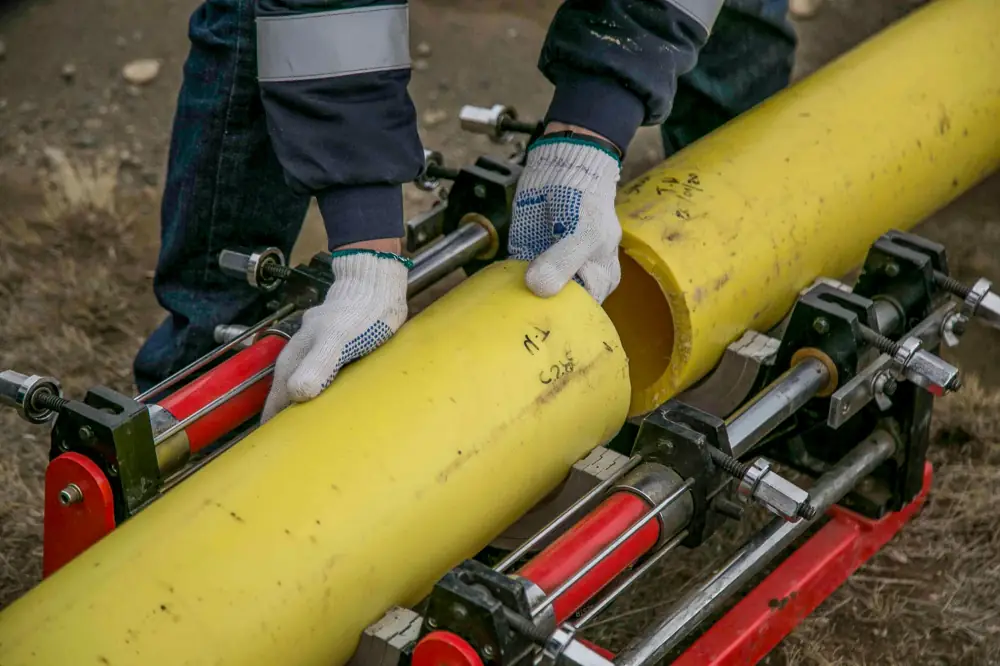
A monoflange folds isolation, and an optional block-and-bleed feature, into a single direct-mount, flanged monoblock body that bolts straight onto a process tap. Valve manifolds work differently: they're compact blocks of 2, 3 or 5 valves that isolate, equalize and vent a gauge or transmitter. Go with a monoflange when weight, footprint and leak-path reduction on one flanged tap matter most. Offshore topsides, transmitter-mounted points, pipeline pressure taps, that sort of thing. A valve manifold suits standard gauge hookups (2-valve) and differential-pressure transmitter hookups (3/5-valve), where equalization, calibration venting, remote mounting and flexible valve count carry more weight.
On this page, "manifold" means an instrument valve manifold, a 2/3/5-valve block built for gauge and transmitter isolation. It doesn't mean an exhaust manifold, an intake manifold, a pneumatic air manifold, a hydraulic power-unit manifold, or an HVAC/PEX plumbing manifold. Crestflo makes both sides of this comparison. Monoflange valves and 2/3/5-valve manifolds come from the same shop, alongside double block & bleed and gauge root valves. That means the metallurgy, the ratings, and the sourcing question all get answered in one place.
Also Known As: Monoflange and Valve Manifold Designations
Piping drawings and engineers label these two isolation assemblies under a range of names. A monoflange shows up as mono flange, monoflange valve, monoblock valve, integral-flange valve, flanged monoflange, monoflange assembly, direct-mount monoflange or primary-isolation monoflange. By style, it's a single-block-and-bleed (SBB) monoflange or a double-block-and-bleed (DBB) monoflange. "Monoflange manifold" is a common trade name for the monoflange itself, not some hybrid device. A valve manifold, meanwhile, appears as instrument manifold, instrumentation manifold, manifold valve, gauge manifold, DP transmitter manifold, differential-pressure manifold, block-and-bleed manifold, close-coupled manifold or remote-mount manifold. By valve count, you'll see it called a 2-valve, 3-valve or 5-valve manifold. People search the comparison itself as monoflange vs manifold, manifold vs monoflange, monoflange or manifold, and monoflange vs valve manifold. Both assemblies function as instrument isolation packages at gauge, pressure-transmitter and DP-transmitter tapping points.
Monoflange vs Manifold at a Glance: Footprint, Leak Paths, Weight & Cost
Both devices solve the same problem: isolating an instrument from a live process tap. They just don't do it the same way. The monoflange builds isolation into one flanged body. The manifold instead packs the valves an instrument needs into a single machined block. The table below puts the practical differences a specifying engineer has to weigh right up front.
| Factor | Monoflange | Valve manifold (2/3/5-valve) |
|---|---|---|
| What it is | Single monoblock body that bolts directly to a flanged process tap, integrating isolation (and optional block-and-bleed) | Compact block of isolate/equalize/vent valves connecting an instrument to the process |
| Isolation blocks / bleed | 1 block + bleed (SBB) or 2 blocks + bleed (DBB) | 2-valve: 1 block + 1 bleed; 3-valve: 2 block + 1 equalize; 5-valve: 3-valve + 2 vent/calibration |
| Typical instrument | Single-tap pressure gauge or transmitter | Gauge (2-valve); DP transmitter (3/5-valve) |
| Mounting | Direct flange mount to the process tap | Direct-mount (close-coupled) or remote-mount |
| Footprint / weight | Lower part count, smaller footprint, lighter | Larger multi-valve stack; heavier |
| Leak paths | Fewer, one integral body removes inter-component joints | More threaded / mechanical joints |
| Equalization | Not applicable (single tap) | Equalize valve on 3/5-valve for DP zeroing |
| Pressure rating | Process flange per ASME B16.5 class; instrument-side ports to standard working pressures | Up to 10,000 psi |
| Materials | 316/316L, 904L, Duplex 2205, Super Duplex 2507, 254 SMO, AL-6XN, Alloy 20, Inconel 625/825, Monel, Hastelloy, Titanium Gr2 | Same SS, high-nickel and CRA alloy menu |
| Sour service | NACE MR0175 / ISO 15156 material options | NACE MR0175 / ISO 15156 material options |
| Testing | Seat and shell leak test; qualified to the applicable valve standard | 100% seat and shell leak tested |
| Relative cost | Lower installed weight and cost for a single compact tap | Lower unit cost for standard DP hook-ups; flexible valve count |
| Typical service | Offshore, topside, transmitter-mounted, pipeline single taps | Standard gauge and DP transmitter hook-ups, remote instruments |
Ratings listed are the standard published figures for this assembly type, drawn from the applicable standard, and can be adjusted to fit your requirements. Need exact certified ratings, ordering codes or connection schedules for a specific configuration? Those are available on request.
What Is a Monoflange Valve, and How Does It Work?
A monoflange valve packs instrument isolation into a single forged monoblock that bolts straight onto a flanged process tap, orifice tapping or flanged transmitter, with an instrument-side outlet on the opposite face. By swapping out a train of separate valves, adaptors and tubing for one machined body, it eliminates the joints between components. Fewer joints means fewer leak paths, less weight and a lower installed height. Since it's a single body, a monoflange stands as a compact, self-supporting primary isolation valve rather than an assembly hanging off the tap. "Monoflange manifold" refers to this same device, and "monoblock valve" is a fluid-system synonym; don't confuse it with the automotive engine sense of the term.
That savings in weight and leak paths explains why offshore platforms, topside skids and pipeline pressure taps favor the monoflange. It also shows up on transmitter-mounted installations, where a compact isolation body beats a full valve train. Crestflo builds its monoflanges with the process flange rated to ASME B16.5 flange class, and instrument-side ports sized to standard working pressures: values follow the applicable standard, and they're customizable to requirement. For connection and configuration options, see the monoflange valve product page.
Monoflange Styles: Single vs Double Block & Bleed (SBB & DBB)
A monoflange comes in two basic forms. There's the single configuration, one block valve plus a bleed, known as single-block-and-bleed (SBB), and the double configuration, with two blocks in series plus a bleed, called double-block-and-bleed (DBB). The double style gives you verifiable, redundant isolation: two blocks and a vented cavity let you confirm both seats are holding before you break into the line. Choosing between SBB and DBB comes down to the isolation you actually need, not the construction itself. For the separate question of a double-block-and-bleed valve versus a monoflange, where the DBB is built from discrete valves rather than integrated into one body, see Crestflo's DBB vs monoflange resource.
What Is a Valve Manifold? Purpose of an Instrument Manifold
A valve manifold is a compact, machined block that groups together the valves an instrument needs to be isolated, equalized, and vented from a single body. Its job comes down to three things: isolating the instrument (gauge or DP transmitter) from the process, equalizing pressure across a differential-pressure cell so it can be zeroed, and providing a bleed or vent for safe calibration and removal. Grouping those functions into one block does away with a hand-built cluster of separate valves and tubing. That's exactly why the instrument valve manifold has become the standard hook-up for gauges and transmitters in process plants. In piping terms, it sits at the interface between the impulse line and the instrument. It isn't the pneumatic, hydraulic, or plumbing manifold that happens to share the name.
Crestflo manifolds come in stainless, high-nickel, 6Mo and duplex alloys. Every unit undergoes 100% seat and shell leak testing, handles working pressure up to 10,000 psi, and carries a non-rotating stem tip. Full heat-number traceability comes standard across the line. For more detail, check the 2-valve, 3-valve and 5-valve manifold product pages.
Manifold Configurations: 2-Valve, 3-Valve & 5-Valve Manifolds
Instrument manifolds fall into two categories. First, by mounting: direct-mount, meaning close-coupled to the instrument, versus remote-mount. Second, by valve count. And it's the valve count that determines the function.
| Configuration | Valves | Function | Typical instrument |
|---|---|---|---|
| 2-valve manifold | 1 block + 1 bleed/vent | Isolate and vent a single-tap instrument | Pressure gauge, pressure transmitter |
| 3-valve manifold | 2 block + 1 equalize | Isolate both sides and equalize for zeroing | Differential-pressure transmitter |
| 5-valve manifold | 2 block + 1 equalize + 2 vent/calibration | Isolate, equalize and add calibration/vent ports | DP transmitter, flow / level service |
For choosing among the three, see 2 vs 3 vs 5-valve manifold selection.
Monoflange vs Manifold Specifications: Pressure, Materials & Testing
The spec table lays out what governs each assembly. A monoflange answers to two separate standards: its flange class controls the process face, and standard port ratings control the instrument side. A manifold's basis is different. It's governed by its valve pressure-temperature basis, backed by a 100% leak-test regime.
| Specification | Monoflange | Valve manifold |
|---|---|---|
| Pressure rating | Process flange per ASME B16.5 class; instrument-side ports to standard working pressures | Up to 10,000 psi |
| Temperature rating | Governed by packing / seal grade (PTFE, graphite, PEEK) per the applicable standard | Governed by packing / seal grade per the applicable standard |
| Isolation element | Needle / rising-stem bonnet; non-rotating tip | Needle block / equalize; non-rotating tip |
| Materials | 316/316L, 904L, Duplex 2205, Super Duplex 2507, 254 SMO, AL-6XN, Alloy 20, Inconel 625/825, Monel, Hastelloy, Titanium Gr2 | Same SS, high-nickel, 6Mo and duplex menu |
| Sour service | NACE MR0175 / ISO 15156 options | NACE MR0175 / ISO 15156 options |
| Testing | Seat and shell leak test | 100% seat and shell leak test |
| Valve standard | Qualified to applicable ASME B16.34 / API valve standards | Qualified to applicable ASME B16.34 / API valve standards |
| Traceability | EN 10204 MTC 3.1 (3.2 on request); heat-number marked | EN 10204 MTC 3.1 (3.2 on request); heat-number marked |
Values are the standard published figures for this assembly type, in line with the applicable standard, and can be adjusted to requirement. For a specific build, we confirm exact certified ratings and ordering codes on request.
Key Decision Factors: Leak Paths, Weight, Mounting, Pressure & Cost
Chase the installation constraints first, then pick whichever assembly clears them with the least weight and the fewest joints.
Leak paths and integrity. A monoflange builds isolation into a single forged body. That removes the inter-component joints you'd get with a discrete build, which means fewer potential leak points on a tap where fugitive emissions matter. A manifold carries more mechanical joints, but every one of them is accessible on its own.
Weight and footprint. The monoflange is compact and self-supporting, a real advantage offshore and topside, where every kilogram and every leak point comes at a premium. A manifold's multi-valve stack, by contrast, is heavier and taller.
Mounting: direct vs remote. A monoflange bolts straight onto a single tap as a direct flange mount. Simple as that. A manifold gives you more options: direct-mount, or close-coupled, if you prefer, and remote-mount, which lets you position a DP transmitter well away from a tap that's running hot or shaking with vibration.
A DP transmitter needs an equalize valve to zero the cell, and that points you toward a 3 or 5-valve manifold rather than a monoflange. But where the tap is a single pressure point, a monoflange or a 2-valve manifold does the job just fine.
Pressure headroom. Crestflo manifolds carry a rating up to 10,000 psi; a monoflange, though, follows its own process-flange class. Match the assembly to the tap rating. Not the other way round.
Cost and lifecycle. For a single compact tap, a monoflange usually comes out ahead on installed weight and cost, since it does away with separate valves and tubing. A manifold, on the other hand, tends to cost less per unit for standard DP hook-ups and gives you more flexibility in valve count. Neither option wins across the board. The right pick is whichever meets the isolation duty with the least weight and fewest joints.
When to Use a Monoflange vs When to Use a Manifold
| Selection driver | Favors a monoflange | Favors a valve manifold |
|---|---|---|
| Weight and footprint | Compact, self-supporting, lighter | Acceptable where weight is not limiting |
| Leak-path minimisation | Fewer joints in one forged body | More joints, each individually accessible |
| Offshore / topside service | Preferred for weight and integrity | Suitable onshore and where duty is less weight-sensitive |
| Single pressure tap | One compact isolation body | 2-valve manifold also suits a single tap |
| DP transmitter hook-up | Not applicable, no equalize | 3 or 5-valve manifold with equalize |
| Remote mounting | Direct flange mount only | Remote-mount option available |
| Calibration / venting | Integral bleed | Dedicated vent/calibration ports on 5-valve |
Pick a monoflange when weight, footprint and leak-path risk make isolation critical on a single flanged tap. That's the right call for a pressure gauge or transmitter, whether it sits offshore, topside or along a pipeline. A valve manifold serves a different need: standard gauge (2-valve) and DP transmitter (3/5-valve) hook-ups, remote instruments, and any setup that calls for equalization and calibration venting. Weight tends to drive the decision most often in offshore, subsea and midstream oil & gas service.
Where DBB Valves and Gauge Root Valves Fit
There's a third way to isolate a tap: the double block & bleed (DBB) valve, which uses two block valves in series with a bleed between them. You can verify the isolation, but it's built from separate valves rather than one integrated unit. A DBB monoflange packages that same function into a single flanged body, while a block-and-bleed manifold packages it into a valve block instead. A gauge root valve, by contrast, is just the single primary isolation valve at a gauge tapping, meant for cases where full block-and-bleed isn't required. Which to choose depends on the isolation duty at hand. Single-valve isolation points to a gauge root valve; when you need verifiable double isolation, look at a double block & bleed valve or a DBB monoflange. The DBB-versus-monoflange decision gets its own treatment in DBB vs monoflange, and the choice of isolation element is covered in needle vs ball valve.
Monoflange & Manifold Materials: 316L, Duplex, 254 SMO, Inconel & Monel
Both assemblies draw from the same instrumentation alloy menu. The choice comes down to service severity, not valve type. When picking an alloy, weigh the medium, the chloride level and the temperature together. For that decision, the material-selection-by-service guide and the materials hub walk you through it.
| Alloy family | Example grades | Typical driver |
|---|---|---|
| Austenitic stainless | 316 / 316L, 904L | General instrumentation, moderate chloride |
| Duplex / super-austenitic | Duplex 2205, Super Duplex 2507, 254 SMO, AL-6XN, Alloy 20 | Higher strength, chloride and seawater resistance |
| Nickel alloys | Inconel 625 / 825, Monel 400, Hastelloy C-276 | Sour, high-temperature and aggressive-media service |
| Titanium | Titanium Gr2 | Seawater and chloride service where weight matters |
For sour, H2S-bearing service, Crestflo offers both monoflange and manifold assemblies in options that meet NACE MR0175 / ISO 15156. Start with the sour-service selection guide to find the right one. Compositions and mechanical properties are standard published values under the applicable ASTM specifications, though each can be adjusted to suit specific requirements.
Standards & Proof: ASME B16.34, B16.5, API, NACE & Traceability
Isolation valves have to meet valve standards, and the connection ends have to meet whatever standard applies to their connection type. The table shows which one governs for a monoflange or manifold isolation assembly.
| Standard | What it governs here | Applies to |
|---|---|---|
| ASME B16.34 | Valve pressure-temperature design basis | Isolation valve bodies in both assemblies |
| API 598 / API 6D | Valve inspection and testing | Seat and shell leak testing |
| ASME B16.5 | Pipe-flange pressure-temperature class | Monoflange process-flange face |
| NACE MR0175 / ISO 15156 | Sour-service material limits | Material options for H2S service |
| EN 10204 MTC 3.1 / 3.2 | Material traceability certification | Every part, heat-number marked |
| ASTM F1387 | Compression tube-fitting qualification | Tube-fitting instrument ends, where fitted |
Both assemblies' isolation valves are built and qualified to the applicable ASME B16.34 / API standards. ASTM F1387 covers the compression tube-fitting ends, not the valve body. Manifolds get a full seat and shell leak test, every one of them, rated up to 10,000 psi. Heat-number marking runs on every part, backed by EN 10204 3.1 material test certificates, with 3.2 available on request. Full traceability, no exceptions. Crestflo holds ISO 9001 / 14001 / 45001 certification and carries PED as well.
Get Monoflange & Manifold Isolation Assemblies from Crestflo
Crestflo builds both sides of this comparison: monoflange valves and 2/3/5-valve manifolds, along with the double block & bleed and gauge root valves that go with them, in stainless, high-nickel and CRA alloys. Every manifold gets a 100% seat and shell leak test and carries a rating up to 10,000 psi with a non-rotating tip. Monoflanges, meanwhile, are built to whichever flange class and valve standard applies. Compression tube-fitting ends are tested per ASTM F1387 for drop-in tube connections, and NACE MR0175 material options come standard, with heat-number traceability running through the whole process. Crestflo is the instrumentation arm of an export house that's been recognized by the Government of India for four decades, with a delivery record across the Middle East.
- Availability: Ready stock for standard items · made-to-order for specials · 6–8 week delivery.
- Origin: Indian origin; US / European melt available on request, with full material traceability.
- Contact: sales@crestflousa.com · +1 346 594 9005 · Houston, TX.
Datasheets and CAD files are available to customers on request. Take a look at the monoflange valve page, the 2-valve, 3-valve and 5-valve manifold pages, or browse the full instrumentation valves range. Matching a Swagelok®, Parker® or WIKA® monoflange or manifold isn't a matter of pulling a number off a published part chart. Instead, request your cross-reference from the engineering team, since Crestflo confirms every equivalent build case by case; each brand name remains the trademark of its respective owner. From there, request a quote or request a sample. Distributors and OEMs can also check out the private-label program.
Why Crestflo for Monoflange & Manifold Isolation
Most comparison articles never make it past theory. Crestflo builds both assemblies, so this one pairs the metallurgy with a straight path to specify and buy: monoflanges built to the applicable flange class and valve standard; 2/3/5-valve manifolds, each 100% seat- and shell-leak tested to 10,000 psi; ASTM F1387-qualified compression ends for drop-in tube connections; NACE MR0175 options for sour service; EN 10204 3.1 / 3.2 certificates with heat-number traceability on every part; and imperial and metric sizes throughout. Lead time runs 6–8 weeks, against the 20-plus weeks typical of the majors. Small MOQs are available. So is private label. The comparison doesn't play favorites. It points to whichever assembly clears your duty at the lowest weight and joint count, not the priciest one, because what matters is getting the right specification delivered. We Engineer Confidence.
Frequently Asked Questions: Monoflange vs Manifold
What is the difference between a monoflange and a manifold?
A monoflange is a single monoblock valve that bolts straight onto a flanged process tap, combining isolation, with optional single or double block-and-bleed, into one body. A valve manifold, by contrast, is a compact block of 2, 3 or 5 valves built to isolate, equalize and vent an instrument. Where the monoflange wins is weight, footprint and fewer leak paths on a single tap. The manifold gives you equalization, a flexible valve count and the option to mount remotely for gauge and DP transmitter hook-ups.
When should you use a monoflange instead of a manifold?
This matters most when weight, footprint and leak-path reduction on a single flanged tap are the priority. Offshore and topside work. Transmitter-mounted points. Pipeline pressure-gauge or transmitter isolation, too. In these cases, building isolation into one forged body cuts weight and removes joints you'd otherwise need.
Is a monoflange a type of manifold?
Their purposes overlap, but their forms don't. People often call a monoflange a "monoflange manifold," though that's really just a trade name. Functionally, it's an integral-flange monoblock valve built for a single tap. An instrument valve manifold, by contrast, is a multi-valve block designed to isolate, equalize and vent an instrument.
What is the purpose of a valve manifold?
Isolating an instrument, whether a pressure gauge or a DP transmitter, from the process. Equalizing pressure across the differential-pressure cell so it can be zeroed. And giving you a bleed or vent for calibration and safe removal. All three functions live in one machined block.
What are the two styles of manifold?
For instrument manifolds direct-mount versus remote-mount is what matters in practice, direct-mount sits close-coupled to the instrument, while remote-mount doesn't. A second classification comes from valve count. Manifolds are built as 2-valve, 3-valve or 5-valve designs, and that count determines the isolate, equalize and vent function.
What is the difference between a monoflange and a 5-valve manifold?
A 5-valve manifold is a multi-valve block, mounted direct or remote, built for DP transmitters. It carries two block valves, one equalizing valve, and two vent or calibration valves. A monoflange, by contrast, is a single flanged monoblock. It's typically built for a single pressure tap, and it comes with fewer connections and less weight. Pick the 5-valve manifold when the DP hook-up calls for equalization. For compact, single-tap isolation, the monoflange is the better choice.
Do monoflanges and manifolds support sour service?
Yes. Crestflo carries both, in NACE MR0175 / ISO 15156-compliant alloys: 316/316L, 904L, Duplex 2205, Super Duplex 2507, 254 SMO, AL-6XN, Inconel 625/825, Monel and Hastelloy. Every batch ships with heat-number traceability, plus EN 10204 3.1 material test certificates as standard; 3.2 is available on request.
What pressure ratings are available for monoflanges and manifolds?
Crestflo instrument manifolds carry a rating of 10,000 psi, and every unit gets 100% seat and shell leak testing. A monoflange follows its process-flange class per ASME B16.5, while the instrument-side ports hold to standard working pressures. For a specific configuration, exact certified ratings are confirmed on request.
Is a "manifold" here the same as a pneumatic or exhaust manifold?
No. The scope here is instrument valve manifolds only, 2/3 and 3/5-valve blocks built for gauge and transmitter isolation. Pneumatic air manifolds are a different animal. Same goes for exhaust and intake manifolds, hydraulic manifold blocks, and plumbing or PEX manifolds. They just happen to share the word.
What is the lead time to the US for monoflanges and manifolds?
Standard items ship straight from stock. Specials are made to order, and delivery runs 6 to 8 weeks, well under the 20-plus weeks typical of the major brands. Small MOQs and private label options are both available.
Can Crestflo match my existing brand's monoflange or manifold?
Crestflo builds equivalent isolation assemblies with ASTM F1387-qualified compression ends. Instead of pulling from a published part chart, ask the engineering team for your cross-reference, and they'll confirm a matching configuration to ASTM F1387 case by case.
Do you provide certificates and testing?
EN 10204 3.1 / 3.2 certificates come standard, with heat and lot traceability tracked on every part. Every manifold gets 100% seat and shell leak testing, and third-party inspection is available on request. Crestflo holds ISO 9001 / 14001 / 45001 certification, along with PED.