
API 6FA: Standard for Fire Test for Valves
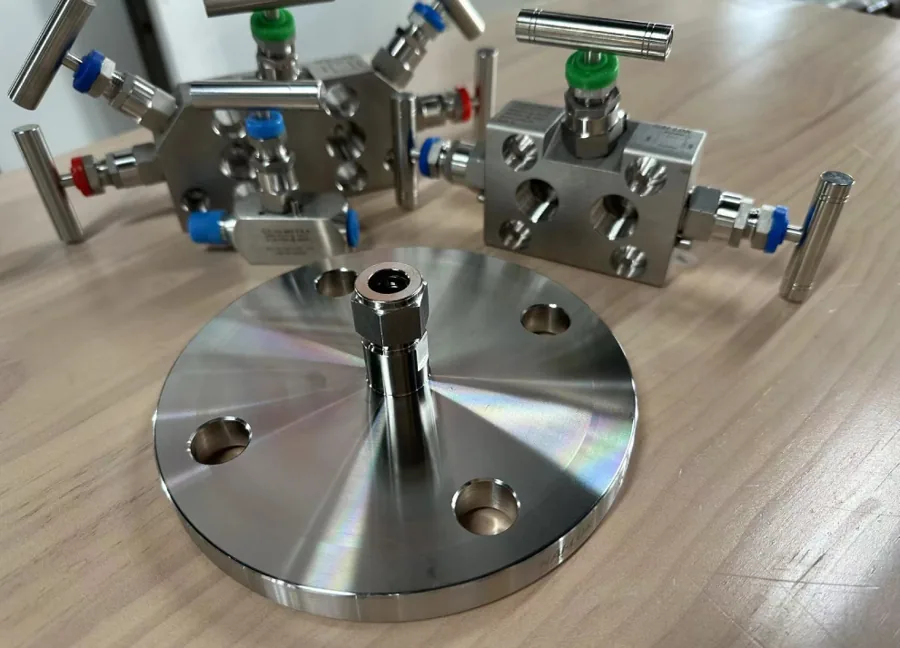
> In one line: API 6FA, "Specification for Fire Test for Valves," is the American Petroleum Institute (API) standard that defines the fire-test method and acceptance criteria for API 6A (wellhead and production) and API 6D (pipeline) valves. It proves a valve maintains pressure containment and keeps internal and external leakage within limits during and after a hydrocarbon pool fire, a controlled flame envelope of about 1,400–1,800 °F (760–980 °C) for a 30-minute burn, followed by cooldown and a post-fire operation and leak re-test. For small-bore instrumentation valves, the equivalent fire test is API 607 / ISO 10497; Crestflo offers a fire-safe valve configuration with that documentation on request, EN 10204 traceability and 6–8 week delivery.
Scope note: API 6FA is a valve fire-test standard, it defines how a valve is proven to hold pressure and limit leakage during a fire. It is not a valve type, not a material grade, and it is distinct from API 6A (the wellhead/production equipment specification) and from API 607 (the fire test for quarter-turn, soft-seated valves). On this site, "valve" means an instrumentation valve, not a plumbing or automotive valve.
Request fire-safe valve documentation & RFQ → · sales@crestflousa.com · +1 346 594 9005
Also known as: API 6FA designations & related terms
Specifications, purchase orders and datasheets all write this standard differently. Whatever form you see below, they point to the same API fire-test standard for valves.
| Category | Terms covered |
|---|---|
| Primary designation | API 6FA, API Spec 6FA, API Specification 6FA, API Std 6FA, API Standard 6FA, API-6FA, API 6 FA |
| Full title | "Specification for Fire Test for Valves" (also cited as "Standard for Fire Test for Valves") |
| Descriptive phrasings | API fire test for valves, fire-test standard for API 6A / API 6D valves, API 6A fire test, API 6D fire test, API 6FA valves, fire-tested valve standard, valve fire integrity test |
| Concept phrasings | fire safe valve, fire-safe valve test, fire rated valve, fire tested valve |
| Test call-outs | API 6FA fire test, API 6FA fire test procedure, API 6FA test temperature, API 6FA burn time, API 6FA 30 minutes, API 6FA acceptance criteria, API 6FA leakage limits, API 6FA requirements |
| Comparison phrasings | API 6FA vs API 607, API 607 vs 6FA, API 6FA vs ISO 10497, API 6FA vs API 6D Annex F |
| Edition call-outs | API 6FA latest edition, API 6FA current edition, API 6FA 4th edition, API 6FA fourth edition |
| Related standards | API 607, API 6D, API 6A, ISO 10497, ISO 15848 |
| Document call-outs | API 6FA PDF, API Spec 6FA download |
API 6FA standard at a glance: attributes
| Attribute | Value (standard published reference) |
|---|---|
| Standard number | API 6FA (also written API Spec 6FA, API Std 6FA, API-6FA) |
| Full title | "Specification for Fire Test for Valves" |
| Issuing body | American Petroleum Institute (API) |
| Standard class | Fire type-test standard, test method + acceptance criteria; not a design or material specification |
| Scope, valves covered | API 6A (wellhead & production) and API 6D (pipeline) valves; metal- and soft-seated |
| What it evaluates | Pressure containment, through-seat (internal) leakage, external (through-body/stem) leakage, post-fire operability |
| Flame temperature envelope | Approximately 1,400–1,800 °F (760–980 °C), per the current edition |
| Burn (soak) duration | 30-minute controlled burn, followed by cooldown |
| Post-fire test | Operational cycle (valve must open/close) plus leakage re-measurement |
| Current edition | The 4th (Fourth) Edition is widely cited, cite the edition your project specification requires and confirm it against the current API catalog |
| Related fire test | API 607 / ISO 10497 (quarter-turn, soft-seated valves) |
| Neighboring standards | API 6D, API 6A, API 598, API 602, ISO 15848 |
The standard's exact flame-temperature envelope, timings and numeric leakage limits are copyrighted and fixed by the current edition; this page summarizes scope, test method and acceptance logic rather than reproducing the document. Values per applicable standard; customizable to requirement.
What is API 6FA?
API 6FA, "Specification for Fire Test for Valves," is an American Petroleum Institute standard covering the fire-test method and acceptance criteria for valves used in wellhead, production and pipeline service. The American Petroleum Institute (API) publishes it, and it sits within the API 6-series, which governs upstream and midstream valve and wellhead equipment.
API 6FA is a type-test standard, not a design standard. It won't tell a manufacturer how to size a body wall or rate a valve; that job belongs to the base equipment specifications, API 6A for wellhead and production equipment and API 6D for pipeline valves. What API 6FA does is define how a representative valve gets burned, for how long, under what pressure, and how much it may leak before it counts as fire-tested. Pass that test, and the valve is qualified across a defined size and pressure range represented by the sample.
API 6FA proves that a 6A or 6D valve holds pressure containment and keeps leakage within limits during a hydrocarbon pool fire, and still works once things cool down. That matters because a valve on a hydrocarbon line is itself a potential fuel source in a fire. Heat can wreck seats or seals, and an untested valve might leak product right back into the flames, feeding it further.
Is API 6FA the same as API 6A?
API 6A is the equipment specification for wellhead and Christmas-tree components. It defines how the equipment is designed and manufactured. API 6FA, by contrast, is a fire-test method applied to certain valves that fall under API 6A (and API 6D) scope. Put simply: API 6A defines the valve; API 6FA defines how that valve is fire-tested. People search for the two together often, but they do different jobs.
Who publishes API 6FA, and what is the latest edition?
The American Petroleum Institute (API) writes and maintains API 6FA. The 4th (Fourth) Edition gets cited most often in current specifications. API revises its standards on a periodic cycle, so cite the edition named in your project specification and check it against the current API catalog. Contract references vary by edition.
Where can I get the API 6FA PDF?
API Spec 6FA's full text, sometimes searched as the "API 6FA PDF," is a copyrighted, licensed document sold by API and authorized resellers such as ANSI and Accuris. This page summarizes the standard's scope, test method and acceptance logic for engineering reference. It doesn't reproduce or distribute the document itself. For compliance work, buy the current official edition. Don't rely on unofficial "free PDF" copies floating around online; they may well be superseded.
What API 6FA evaluates: containment, leakage & operability
Under API 6FA, a representative valve gets pressurized and then engulfed in a controlled hydrocarbon pool fire while leakage is monitored throughout. The standard evaluates four things:
- Pressure containment, the valve body and pressure boundary must hold pressure through the burn and cooldown.
- Through-seat (internal) leakage, leakage past the closed seat must stay within the standard's allowable limits.
- External leakage, leakage past the body, bonnet and stem seals to atmosphere must stay within limits.
- Post-fire operability, after the fire and cooldown, the valve must still open and close.
The valve doesn't have to come out of the burn unscathed, seats and secondary seals can be sacrificed. What matters is that containment holds, leakage stays within the standard's limits, and the valve keeps working, both during the fire and after it.
API 6FA fire-test method: temperature, 30-minute burn & procedure
API 6FA sets a controlled flame envelope and a fixed burn duration, then moves into cooldown, a post-fire operation check, and a leak re-test. This sequence proves three things: the valve holds its seal through the burn, it survives the thermal shock of cooldown, and it still works once everything settles.
| Test parameter | Requirement (standard published reference) | Note |
|---|---|---|
| Valve state during test | Closed and held under pressure | Fire challenges the closed valve's ability to seal and contain |
| Fire type | Controlled hydrocarbon pool fire | Represents an external process fire |
| Flame temperature envelope | Approximately 1,400–1,800 °F (760–980 °C) | Fixed by the current edition |
| Burn (soak) duration | 30-minute controlled burn | The core fire-exposure period |
| Cooldown | Extinguish and cool per the standard's procedure | Thermal-shock survival is part of the qualification |
| Post-fire operation | Valve must operate after cooldown | Confirms the valve can still be closed/opened |
| Post-fire leakage | Internal and external leakage re-measured | Judged against the standard's allowable limits |
The flame envelope, timings and numeric leakage limits are exact figures set by the current edition of the standard. Values follow the applicable standard and can be adjusted to requirement.
API 6FA acceptance criteria & leakage limits
A valve earns API 6FA when it holds pressure containment, keeps measured leakage inside the standard's limits, and still operates after the fire. Three things get judged.
| Criterion | Requirement |
|---|---|
| Pressure containment | The pressure boundary must hold through the burn and cooldown without loss of containment |
| Through-seat (internal) leakage | Leakage past the closed seat must stay within the standard's size-based allowable limit |
| External leakage | Leakage past the body, bonnet and stem seals to atmosphere must stay within the standard's allowable limit |
| Post-fire operability | The valve must be operable (close/open) after the fire and cooldown |
The API 6FA edition sets the allowable leakage, and it's size-dependent, with units and rates fixed in that standard's own tables. Both internal and external limits get measured against those figures. Since the exact numeric limits are copyrighted, they're summarized here rather than reproduced. Values per applicable standard; customizable to requirement.
Which valves API 6FA covers: API 6A & API 6D
API 6FA governs the fire testing of API 6A and API 6D valves. These are large-bore wellhead, production and pipeline valves, typically gate, globe and check valves with metal or soft seats.
- API 6A valves, wellhead and Christmas-tree valves used in drilling and production.
- API 6D valves, pipeline valves used in transmission and gathering systems.
Because these are large-bore pipeline and wellhead valves, API 6FA is the fire test that applies to them. Small-bore instrumentation quarter-turn valves, the family Crestflo builds, are fire-tested to API 607 / ISO 10497 rather than API 6FA. Both routes prove the same principle (fire integrity), but each is written for a different valve population. Crestflo supplies fire-safe-configured instrumentation valves into oil and gas and offshore service where these standards are specified.
API 6FA edition & current status (API 6D Annex F / API 6A)
The 4th (Fourth) Edition of API Spec 6FA is the version most widely cited, and dealers still keep it in stock through API and authorized standards resellers. Fire-test requirements for pipeline and wellhead valves show up in the base equipment standards too, particularly API 6D (Annex F) and API 6A. That means a project can point to the fire test through API 6FA directly or through the fire-test provisions written into API 6D and 6A. Standards don't stay still, though. They get revised and cross-referenced on a regular cycle. So check which edition is active, and check which citation path your project specification actually names, standalone 6FA, or API 6D Annex F, or API 6A. Then verify it against the current API catalog before relying on it.
API 6FA vs API 607 vs API 598: fire test comparison
API 6FA is one member of a family of API valve standards, and specifiers aren't always sure how it stacks up against its close relatives. For pipeline and wellhead valves, API 6FA is the fire test for API 6A / 6D. API 607, by contrast, covers the fire test for general industrial quarter-turn and soft-seated valves. API 598 is different again: a non-fire pressure and leak test.
| Standard | Purpose | Valve population | Fire test? | Reference page |
|---|---|---|---|---|
| API 6FA | Fire test for API 6A / 6D valves | Pipeline & wellhead valves (gate, globe, check) | Yes | This page |
| API 607 | Fire test for quarter-turn & soft-seated valves | Ball, plug, butterfly (soft-seated) | Yes, harmonized with ISO 10497 | API 607 |
| ISO 10497 | Fire type-testing of valves (international) | Same scope as API 607 | Yes, API 607 equivalent | — |
| API 6D | Pipeline valve specification | Pipeline valves | No, design/build (fire test in Annex F) | API 6D |
| API 598 | Valve inspection & pressure/leak testing | General industrial valves | No, pressure/leak only | API 598 |
| API 602 | Compact steel gate/globe/check valve spec | Compact industrial valves | No, design spec | API 602 |
| ISO 15848 | Fugitive-emission (stem-seal) testing | Industrial valves | No, emissions | ISO 15848 |
API 6FA fires on API 6A/6D pipeline and wellhead valves, gate, globe, and check types, in metal or soft seat. API 607 fires on quarter-turn, soft-seated valves like ball, plug, and butterfly. That's the key distinction between API 6FA vs API 607. Both share a similar flame envelope and a 30-minute burn, and API publishes both standards. What separates them isn't the test method so much as the valve population each one targets. A pipeline gate valve gets qualified to API 6FA. A soft-seated instrument ball valve gets qualified to API 607 / ISO 10497.
API 6FA standards & proof: how fire integrity is documented
A valve's fire qualification is only as good as the paperwork behind it. Under both API 6FA and API 607, qualification comes down to a type test of a representative valve, recorded in a fire-test report that ties the sample tested to the qualified size and pressure range. Buyers ask for that report, not just the phrase "fire-safe." They also want the material and traceability records showing that the valve as built matches the valve that was tested.
Crestflo builds valves to the standard approvals applicable to instrumentation valves, ASME B16.34 and the relevant API valve standards, with EN 10204 3.1 material test certificates (3.2 on request) and a heat/lot number on every part for full traceability. Every valve is 100% seat- and shell-leak tested in house, backed by the full test regime: hydraulic proof, burst and impulse, pneumatic, PMI (positive material identification) and in-house NDT; destructive testing is outsourced to ISO/IEC 17025-accredited laboratories, and third-party inspection is available on request. Crestflo is ISO 9001 / 14001 / 45001 & PED certified.
Fire-safe instrumentation valves from Crestflo
Crestflo builds a fire-safe valve configuration into its quarter-turn and soft-seated instrumentation valves: ball, plug, double block & bleed and monoflange, made in stainless and high-nickel/CRA alloys. Small-bore instrumentation valves call for a different fire-type-test than large-bore ones do: API 607 / ISO 10497 applies here, not the API 6FA regime. Where your spec calls for that qualification, ask the Engineering Team for the relevant fire-test documentation. Conformance gets confirmed against whatever standard your project names, and it's customizable to what you need.
| Valve type | Crestflo product | Fire-safe configuration | Applicable fire test | Materials |
|---|---|---|---|---|
| Ball valve | Instrumentation ball valve | Available | API 607 / ISO 10497 on request | 316/316L, 904L, duplex/super-duplex, 6Mo, nickel alloys, titanium Gr2 |
| Plug valve | Plug valve | Available | API 607 / ISO 10497 on request | 316/316L through nickel alloys |
| Double block & bleed | DBB valve | Available | API 607 / ISO 10497 on request | SS / high-nickel / 6Mo / duplex |
| Monoflange | Monoflange valve | Available | API 607 / ISO 10497 on request | SS / high-nickel / CRA alloys |
Crestflo valves span 1/16" to 1" with threaded or tube-fitting ends, in imperial and metric sizes, and double-block-and-bleed valves are designed per ASME B16.34. Select a corrosion-resistant alloy for fire and sour service on the materials pages, for example 316/316L for general duty through duplex and nickel alloys for aggressive media; sour service adds NACE MR0175 / ISO 15156 compliance. Certificates and traceability records are held in quality / traceability; the full program is described under testing & inspection.
RFQ, tell us what you need:
- Name
- Company name
- Phone
- Requirement description (valve type, material, size, rating, quantity, fire-test/service conditions)
Request the RFQ & fire-safe valve documentation →
Secondary paths: browse instrumentation valves · request your part-number cross-reference · become a distributor · contact Crestflo.
US contact: sales@crestflousa.com · +1 346 594 9005 · Houston, TX.
Ready stock covers standard items; specials get made to order. Delivery runs 6–8 weeks. Material is Indian origin, though US or European melt is available on request, with full traceability included.
Where fire-safe valves are required: applications
Fire-tested valves show up wherever a fire could turn a leaking valve into a fuel source: wellheads and production trees, pipelines and gathering systems, refineries and downstream processing, offshore platforms, LNG and fuel-storage terminals, and petrochemical plants. In these services, isolation valves on hydrocarbon lines are routinely required to be fire-safe, so an external fire can't escalate through a failed seal.
Crestflo builds fire-safe-configured instrumentation valves for oil and gas, offshore, subsea, LNG / cryogenic and petrochemical & chemical applications. Alloy and end connections are matched to whatever each service demands.
Why Crestflo for fire-safe valves
The standard is published, not buried. API 6FA's test method, acceptance logic and comparison to API 607 and API 598 are set out here as HTML-native data, and Crestflo offers a fire-safe configuration across ball, plug, DBB and monoflange valves.
A manufacturer, not a reseller. Crestflo makes the valves and runs the tests itself, hydraulic proof, burst and impulse, pneumatic, PMI and NDT, all in house. Destructive testing happens at ISO/IEC 17025-accredited labs, and third-party inspection is available on request.
Traceability on every part. Every part carries an EN 10204 3.1 MTC (3.2 on request) and a heat/lot number. That's the documentary link between the valve and its record.
- Lead time that moves projects. Ready stock for standard items, made-to-order for specials, 6–8 week delivery.
- Honest origin. Indian origin; US / European melt available on request, with full material traceability.
- Full alloy range, both imperial and metric, small MOQ and private label, customizable to requirement.
- Certified quality system: ISO 9001 / 14001 / 45001 & PED certified.
Crestflo is the instrumentation arm of a four-decade-old export house recognized by the Government of India, with a long delivery record across the Middle East. Manufacturing pedigree, focused instrumentation brand, built for the US market. We Engineer Confidence.
Frequently asked questions
What is API 6FA?
API 6FA is the American Petroleum Institute standard "Specification for Fire Test for Valves." It sets out the fire-test method and acceptance criteria for API 6A (wellhead and production) and API 6D (pipeline) valves. The point is to prove they hold pressure, keep leakage within limits during and after a controlled hydrocarbon pool fire, and still work once things cool down.
What does API 6FA test?
API 6FA evaluates pressure containment, through-seat (internal) leakage, external (through-body and stem) leakage, and post-fire operability. Testing takes a representative, pressurized valve and engulfs it in a controlled hydrocarbon pool fire. Once it's cooled, technicians operate the valve and re-measure leakage against the standard's limits.
What temperature and duration does API 6FA use?
A flame envelope of roughly 1,400–1,800 °F (760–980 °C) for a 30-minute burn, then cooldown, followed by a post-fire operation and leakage test. The exact figures come from whatever edition of the standard is current.
What is the difference between API 6FA and API 607?
API 6FA covers API 6A and 6D valves, pipeline and wellhead gate, globe and check valves, metal or soft seat. API 607 covers quarter-turn, soft-seated types: ball, plug and butterfly. Both call for a similar flame envelope and a 30-minute burn, and both come out of API. What separates them is simply which valves each one is written for.
Is API 6FA the same as API 6A?
API 6A is the wellhead and production equipment specification. It defines how the equipment is designed and built. API 6FA is the fire-test method applied to certain valves that fall under API 6A (and API 6D) scope. API 6A defines the valve; API 6FA is the fire, defining how it is fire-tested.
What is the latest edition of API 6FA?
The 4th (Fourth) Edition gets cited more than any other version. Check your project specification for the edition it actually calls for, then confirm that against the current API catalog, since contract references don't always match across editions. The full text is a licensed API document, and you can buy it from API and authorized resellers such as ANSI and Accuris.
Is API 6FA withdrawn or replaced?
API Spec 6FA remains cataloged for sale by API and authorized resellers, and fire-test requirements for pipeline and wellhead valves are also carried within the base equipment standards, notably API 6D (Annex F) and API 6A. A project may therefore reference the fire test either through API Spec 6FA directly or through those provisions. Confirm the active edition and citation path with API before relying on it.
Where can I download the API 6FA PDF?
Purchase the official standard from API or an authorized reseller such as ANSI or Accuris. API Spec 6FA is a copyrighted, licensed document, and Crestflo doesn't host or distribute it. Below is a summary of the standard's scope, test method and acceptance logic, provided for engineering reference.
Does Crestflo supply fire-safe valves?
Crestflo offers a fire-safe configuration on ball, plug, double-block-and-bleed and monoflange instrumentation valves in stainless and high-nickel/CRA alloys, with EN 10204 3.1 MTC and heat-number traceability. Small-bore instrumentation valves fall under API 607 / ISO 10497 for fire-type testing, not the large-bore API 6FA regime. Documentation for the applicable fire test can be requested from the Engineering Team.
Which materials suit fire-safe valve service?
Selection hinges on the media and the temperature involved. Crestflo builds fire-safe-configured valves in 316/316L through duplex and super-duplex, 6Mo and nickel alloys such as Inconel and Monel. For sour service, that means NACE MR0175 / ISO 15156 compliance, along with EN 10204 3.1 MTC and heat-number traceability. The valve body alloy carries the pressure boundary, while a secondary metal seal and graphite seals keep things fire-tight.
Explore related standards, valves & documentation
Standards: Standards hub · API 607 · API 6D · API 598 · API 602 · ASME B16.34 · ISO 15848 · NACE MR0175 · ISO 15156 · EN 10204 MTC
Valves: Instrumentation valves · Ball valve · Plug valve · Double block & bleed · Monoflange valve
Materials & quality: Materials · 316/316L · Traceability · Testing & inspection
Industries: Oil & gas · Offshore · Subsea · LNG / cryogenic · Petrochemical & chemical